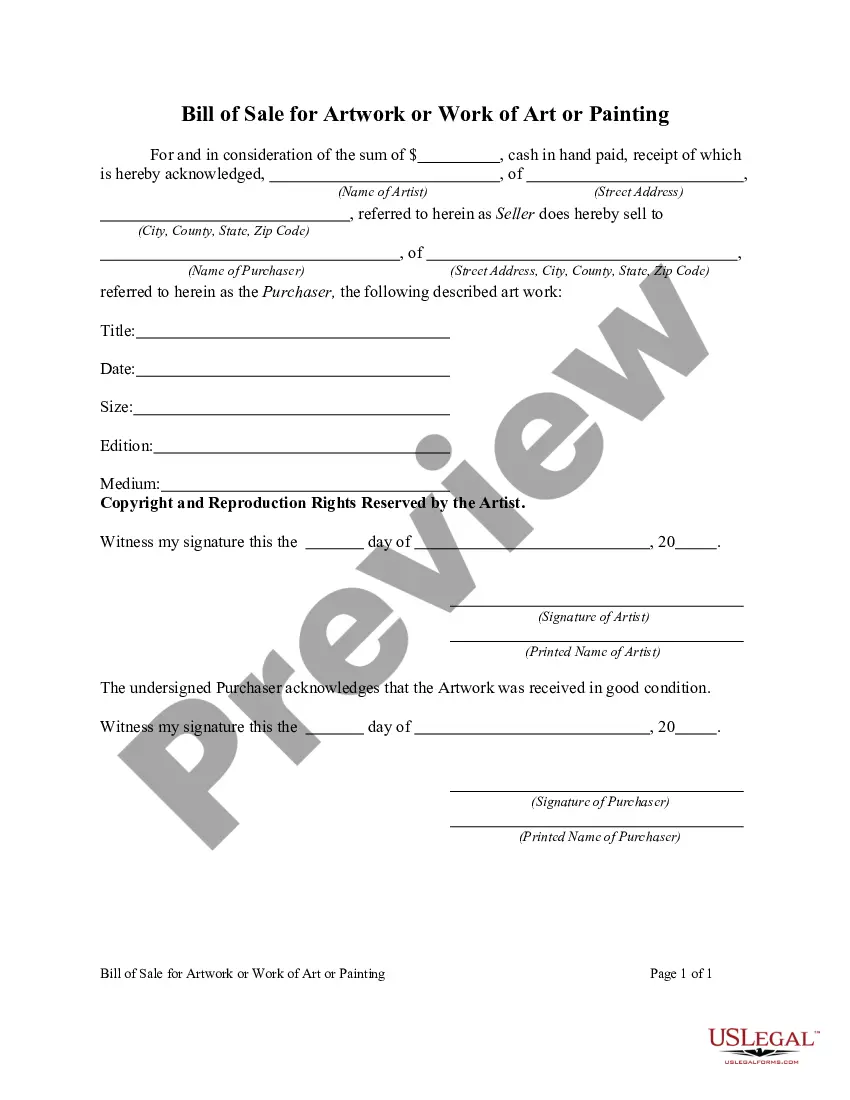
Law With Legal Force In Washington
Description



Get your form ready online
Our built-in tools help you complete, sign, share, and store your documents in one place.
Make edits, fill in missing information, and update formatting in US Legal Forms—just like you would in MS Word.
Download a copy, print it, send it by email, or mail it via USPS—whatever works best for your next step.
Sign and collect signatures with our SignNow integration. Send to multiple recipients, set reminders, and more. Go Premium to unlock E-Sign.
If this form requires notarization, complete it online through a secure video call—no need to meet a notary in person or wait for an appointment.
We protect your documents and personal data by following strict security and privacy standards.

Make edits, fill in missing information, and update formatting in US Legal Forms—just like you would in MS Word.

Download a copy, print it, send it by email, or mail it via USPS—whatever works best for your next step.

Sign and collect signatures with our SignNow integration. Send to multiple recipients, set reminders, and more. Go Premium to unlock E-Sign.

If this form requires notarization, complete it online through a secure video call—no need to meet a notary in person or wait for an appointment.

We protect your documents and personal data by following strict security and privacy standards.
Looking for another form?


Form popularity
FAQ
There are no general rules related to the time period to file a case. However, you almost always have at least a year to file a civil lawsuit. Depending on the type of case or civil action, it could be much longer. Different statutes of limitations apply to different types of cases and causes of action.
The statute of limitations for most personal injury claims is outlined under the Revised Code of Washington (RCW) §4.16. 080. Under this law, victims of personal injuries have three years from the date of the injury to file a lawsuit in court.
Someone age 18 or older besides you must hand deliver the papers to the other party, or to someone old enough living at their home. The person who delivers the papers is your "server." You do not need court permission for personal service. Personal service is usually the cheapest way to get the other party served.
Washington Civil Statute of Limitations Laws: At a Glance Injury to PersonThree years (R.C.W. § 4.16.080) Libel/Slander Two years (R.C.W. § 4.16.100(1)) Fraud Three years (R.C.W. § 4.16.080(4)) Injury to Personal Property Three years (R.C.W. § 4.16.080(2))6 more rows
Contact your local district court; contact information may be located in your local phone book or at urts.wa. First you will prepare a Notice of Small Claim form that is provided by the clerk. You are required to sign the Notice in the presence of the clerk, unless otherwise instructed by the court.
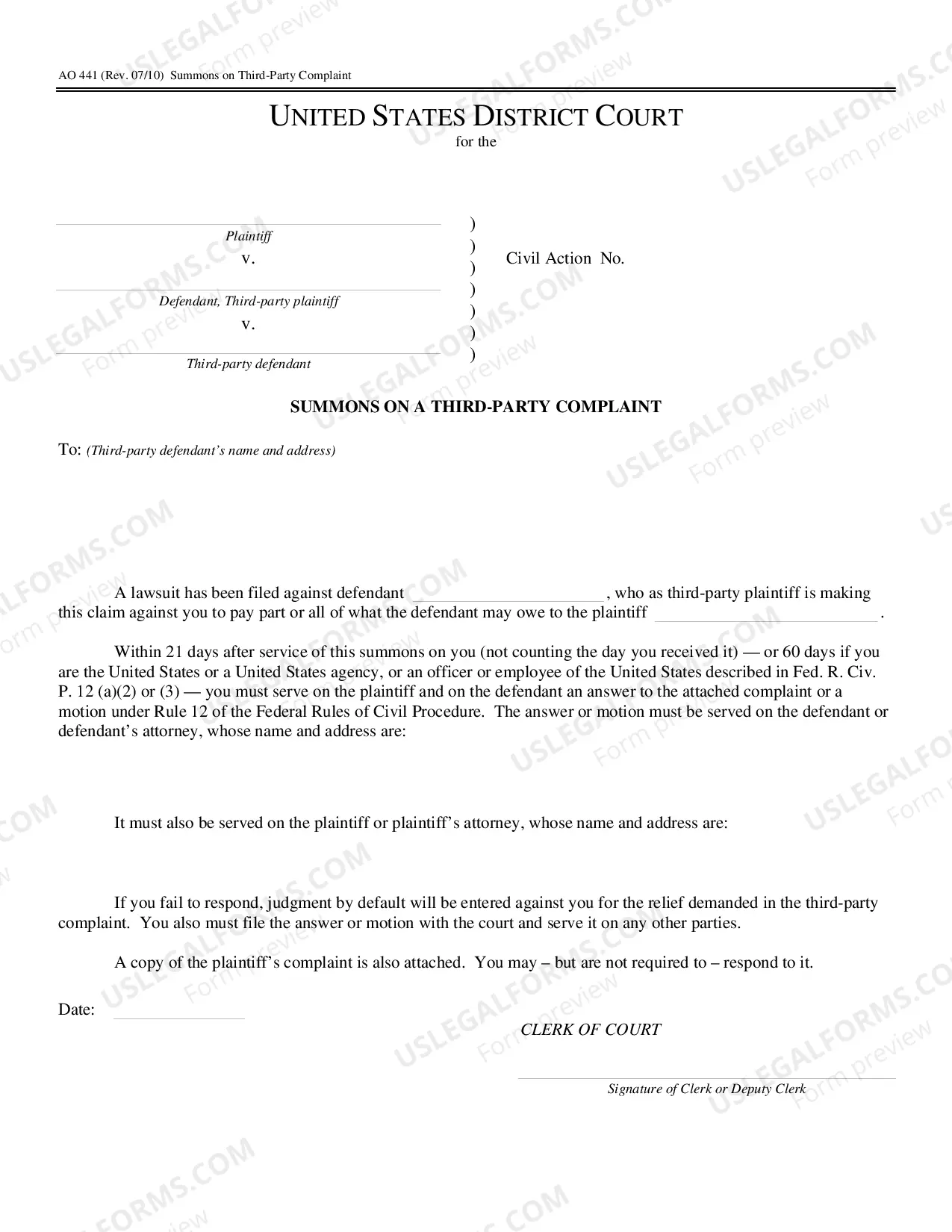
(4) No summons is necessary for a counterclaim or cross claim for any person who previously has been made a party. Counterclaims and cross claims against an existing party may be served as provided in rule 5.
A defendant may use necessary force against a malicious trespass or other malicious interference with real or personal property lawfully in that person's possession even though the defendant does not reasonably believe that he is about to be injured. See State v. Bland, 128 Wn. App.
Before you can practice law, you will need to choose a state that will allow you to take the bar exam without completing law school. Currently, Washington, Vermont, California and Virginia are the only four states that allow this process.
16.020, individuals are justified in using reasonable force to defend themselves or others from imminent threat or harm. The law specifies that the use of force must be necessary and proportional to the threat faced. In other words, individuals may use force only to the extent reasonably necessary to repel the threat.
In four US states -- California, Vermont, Virginia, and Washington -- you can complete a formal four-year apprenticeship instead of attending law school. It is important to note that the apprenticeship is designed to replace only law school. It doesn't replace your undergraduate education.