Requesting Discovery Form For Divorce In California
Description
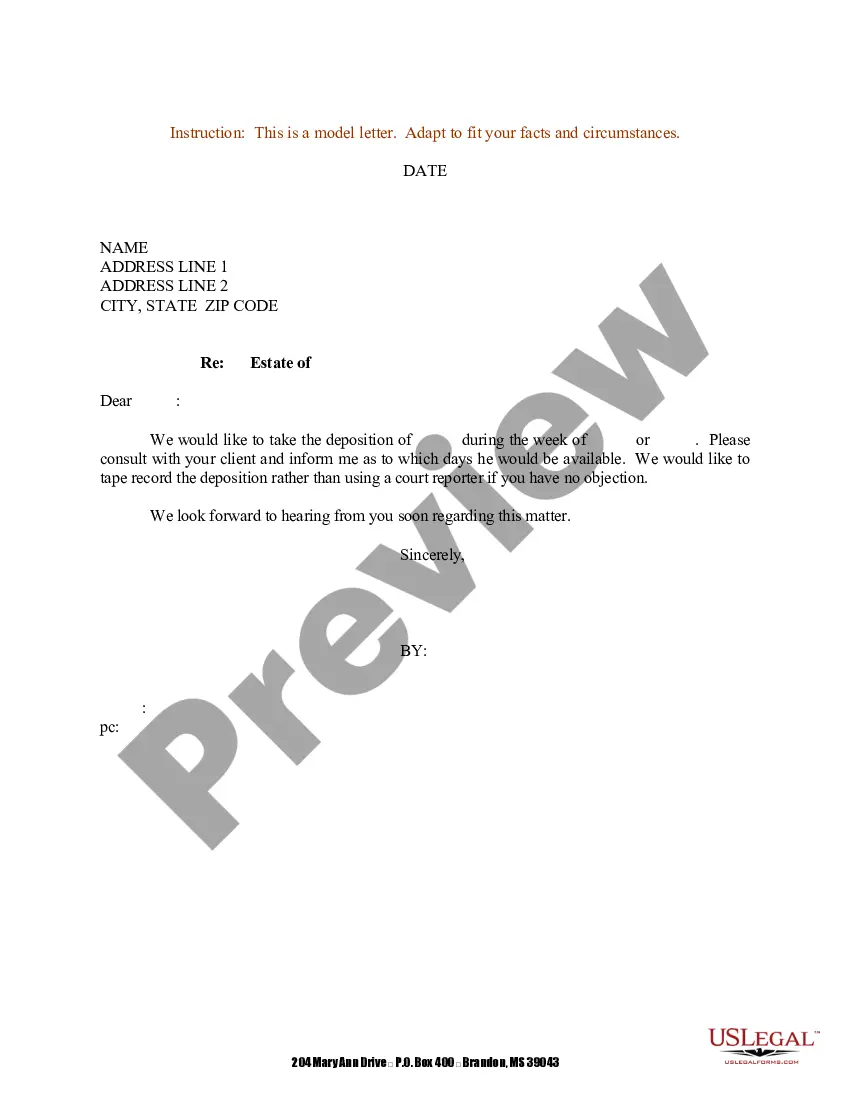
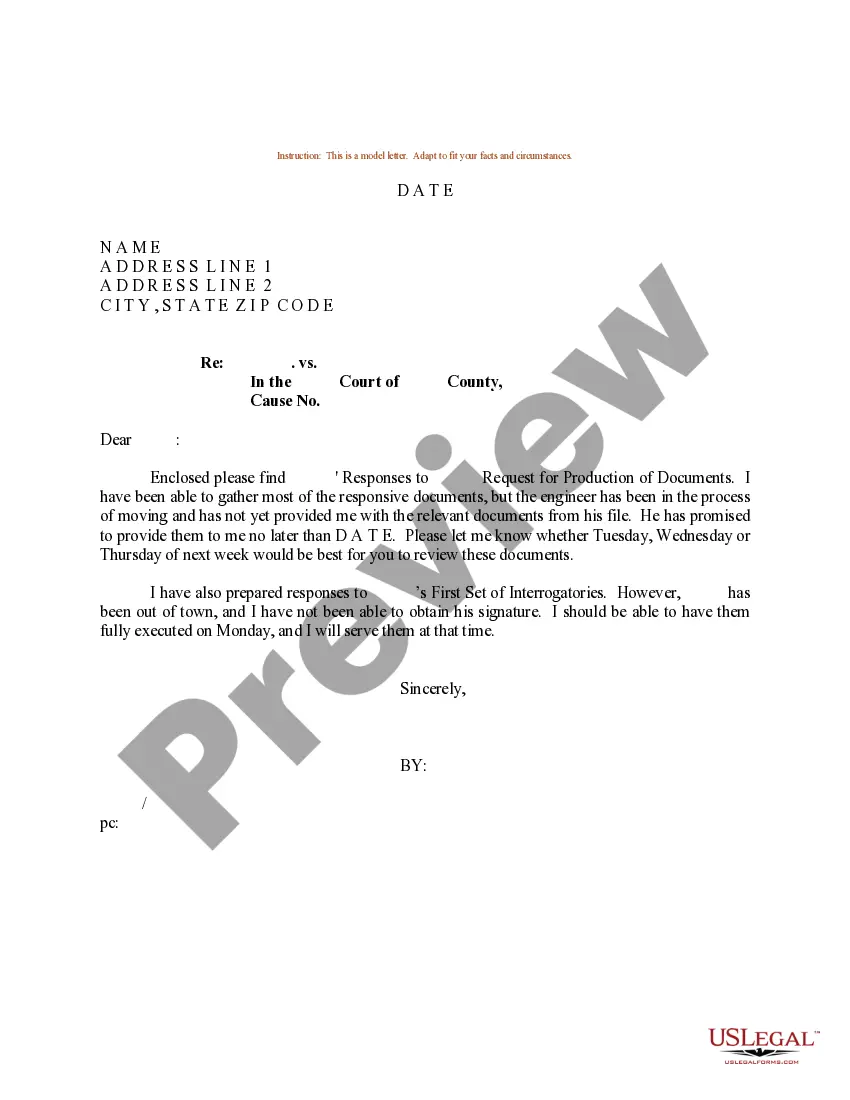
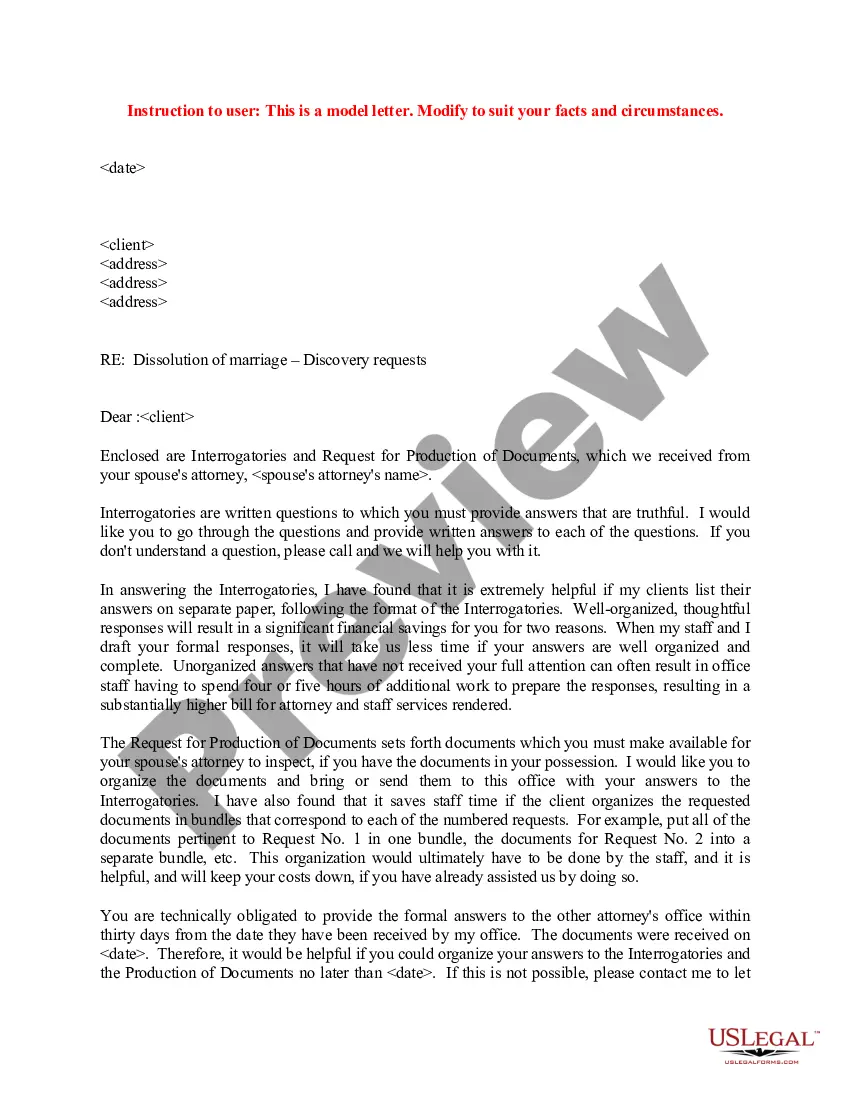
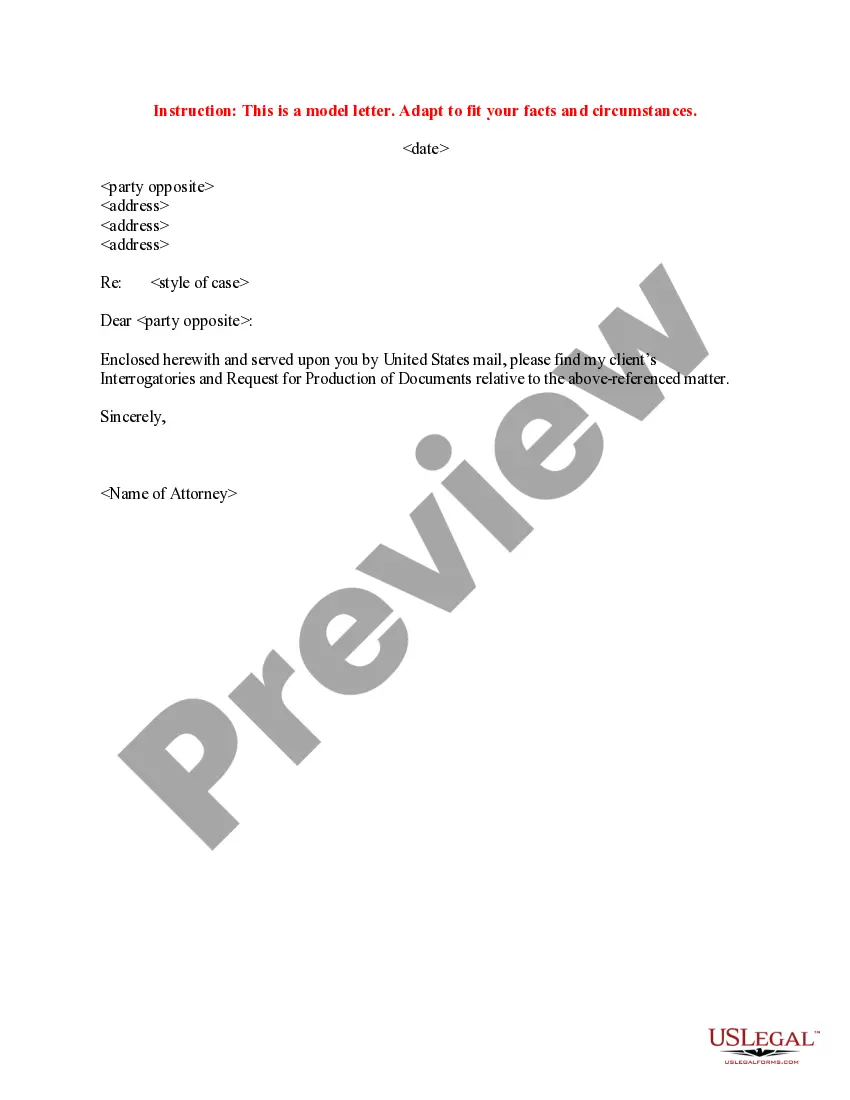
Get your form ready online
Our built-in tools help you complete, sign, share, and store your documents in one place.
Make edits, fill in missing information, and update formatting in US Legal Forms—just like you would in MS Word.
Download a copy, print it, send it by email, or mail it via USPS—whatever works best for your next step.
Sign and collect signatures with our SignNow integration. Send to multiple recipients, set reminders, and more. Go Premium to unlock E-Sign.
If this form requires notarization, complete it online through a secure video call—no need to meet a notary in person or wait for an appointment.
We protect your documents and personal data by following strict security and privacy standards.

Make edits, fill in missing information, and update formatting in US Legal Forms—just like you would in MS Word.

Download a copy, print it, send it by email, or mail it via USPS—whatever works best for your next step.

Sign and collect signatures with our SignNow integration. Send to multiple recipients, set reminders, and more. Go Premium to unlock E-Sign.

If this form requires notarization, complete it online through a secure video call—no need to meet a notary in person or wait for an appointment.

We protect your documents and personal data by following strict security and privacy standards.
Looking for another form?







Form popularity
FAQ
Parties usually send their discovery requests and responses to the other party electronically, by email. But, parties may also send or respond to discovery requests by U.S. mail or a parcel service. Discovery requests and responses should not be sent to the Administrative Judge, except to support a motion.
The discovery process can play a foundational role in any divorce case and play a crucial role in gathering extensive financial details of both parties. This process, typically initiated by legal counsel, can take a considerable amount of time to finalize, often lasting several weeks to months or longer.
As to the method of serving papers upon a party whose address is unknown, see Rule 5(b). The amendment makes clear that all papers relating to discovery which are required to be served on any party must be served on all parties, unless the court orders otherwise.
Service may be completed by mail, by a person over the age of 18 who is not a party to the case. The person serving your requests must complete a proof of service form, typically a Proof of Service by First Class Mail (POS-030).
Discovery is a way to get the information you need to support your case in court or make informed decisions before you reach an agreement. You use discovery to find out: What your spouse plans to say about an issue. What facts or witnesses support their side.
A party or other person may serve documents electronically directly, by an agent, or through a designated electronic filing service provider.
Beginning on January 1, 2024, parties will be required to make initial witness and document disclosures within 60 days of another party's request. Failure to comply or act in good faith with the new law will result in a court-imposed sanction of $1,000.
How to fill out Form Interrogatories Fill in basic information at the top of the form. Provide basic information about your case. Select the questions. On Page 2, check the box next to each question you want to ask your spouse to answer. Make copies. Make 1 copy of the completed Form Interrogatories – Family Law.
Forms to start a divorce or separation Form NameForm Number Petition — Marriage/Domestic Partnership FL-100 Summons (Family Law) FL-110 Declaration Under Uniform Child Custody Jurisdiction and Enforcement Act (UCCJEA) FL-105 Proof of Service of Summons (Family Law — Uniform Parentage — Custody and Support) FL-1153 more rows
A: The quickest and least expensive way to get a divorce in California is to have an uncontested divorce. This means that both parties are amicable and able to reach a reasonable agreement on the terms of the divorce. The process can take much longer if one or both parties are unwilling to come to an agreement.

