Arbitration Agreement With Employer In Wayne
Description

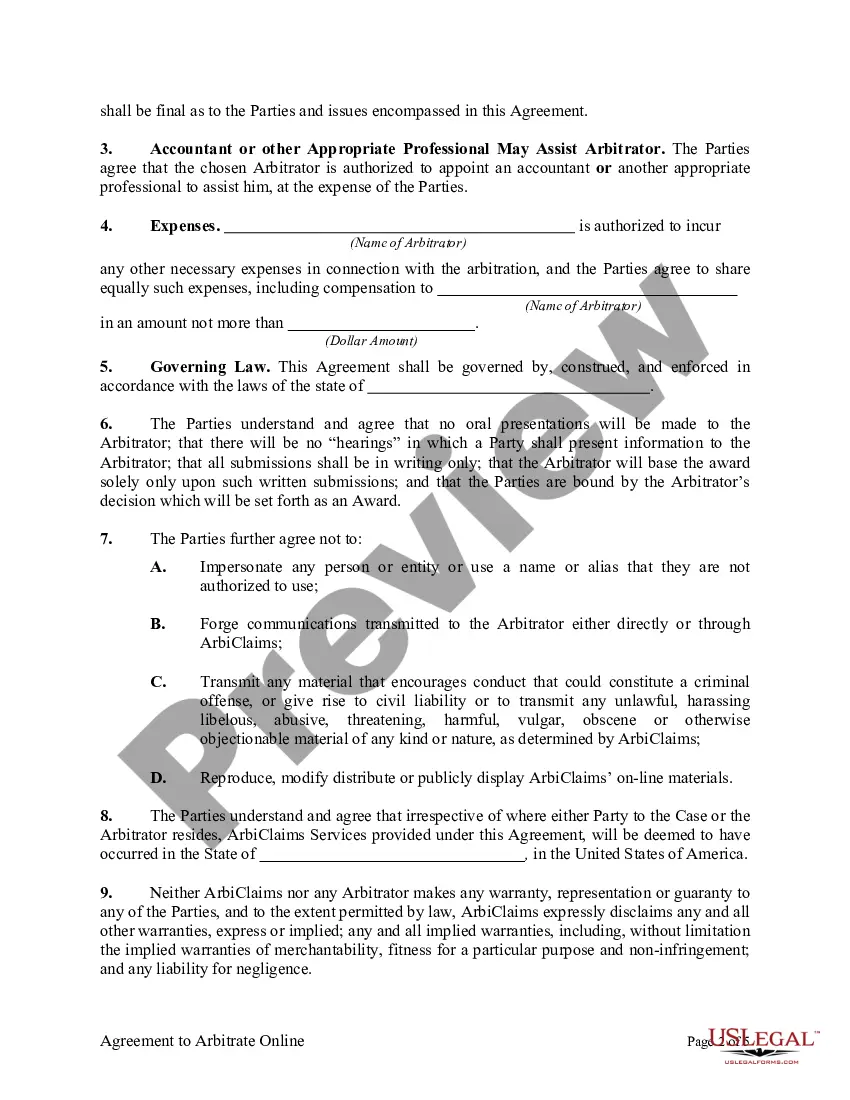
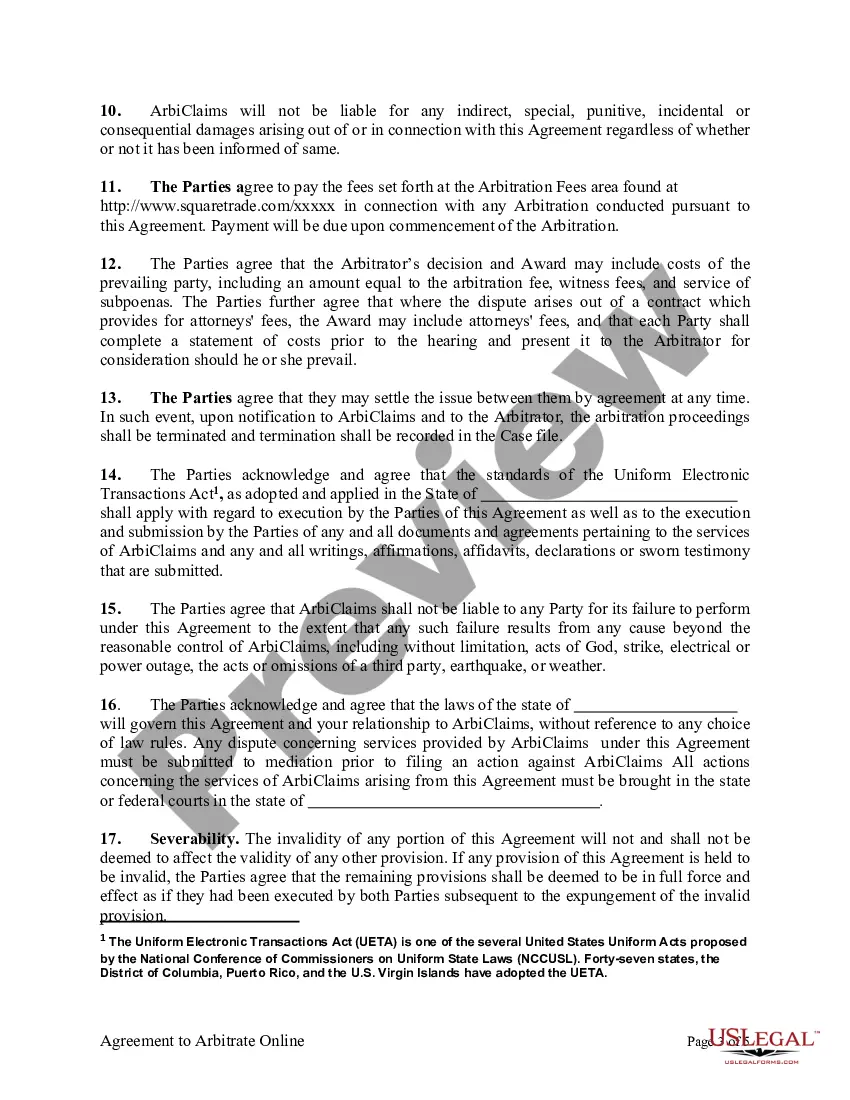




Get your form ready online
Our built-in tools help you complete, sign, share, and store your documents in one place.
Make edits, fill in missing information, and update formatting in US Legal Forms—just like you would in MS Word.
Download a copy, print it, send it by email, or mail it via USPS—whatever works best for your next step.
Sign and collect signatures with our SignNow integration. Send to multiple recipients, set reminders, and more. Go Premium to unlock E-Sign.
If this form requires notarization, complete it online through a secure video call—no need to meet a notary in person or wait for an appointment.
We protect your documents and personal data by following strict security and privacy standards.

Make edits, fill in missing information, and update formatting in US Legal Forms—just like you would in MS Word.

Download a copy, print it, send it by email, or mail it via USPS—whatever works best for your next step.

Sign and collect signatures with our SignNow integration. Send to multiple recipients, set reminders, and more. Go Premium to unlock E-Sign.

If this form requires notarization, complete it online through a secure video call—no need to meet a notary in person or wait for an appointment.

We protect your documents and personal data by following strict security and privacy standards.
Looking for another form?









Form popularity
FAQ
Courts and legislatures have historically favored arbitration because the process is usually more efficient and less expensive than resolving a dispute through the court system. Arbitration also shifts the burden of managing disputes and deciding issues away from the often-overburdened public courts.
In these agreements, the employer and employee agree to resolve any employment-related dispute through a binding arbitration as opposed to a jury trial.
There are some benefits to arbitration if something goes wrong for you alone because it can be easier and faster to navigate than going to court. That being said, if you would prefer to have access to class action lawsuits, then opting out might be the better option for you.
Arbitration agreements have become a common feature in employment contracts across the United States, including California. These agreements require employees to waive their right to sue their employers in court and instead resolve disputes through arbitration.
If you continue to work after you are informed that a forced arbitration agreement governs your employment, you may be bound by it, even if you refuse to sign it. If you quit – or if you are fired for refusing to sign the “agreement”- you may not have any grounds to sue.
Settlement by agreement is the cheapest option and gives you the most control. Both mediation and arbitration are expensive, and arbitration is usually binding, so the ultimate decision is out of your control.
A claimant will typically start arbitration by sending a document known as a “request for arbitration” or a “notice to arbitrate” to its opponent.
Always get straight to the merits without berating the other side or whining about how badly it has treated you. Another threat to your credibility is the “kitchen sink” arbitration demand or a response that includes numerous claims or defenses that have little chance of succeeding.
A claimant will typically start arbitration by sending a document known as a “request for arbitration” or a “notice to arbitrate” to its opponent.
