Arbitration Agreement For Medical Malpractice In Suffolk
Description

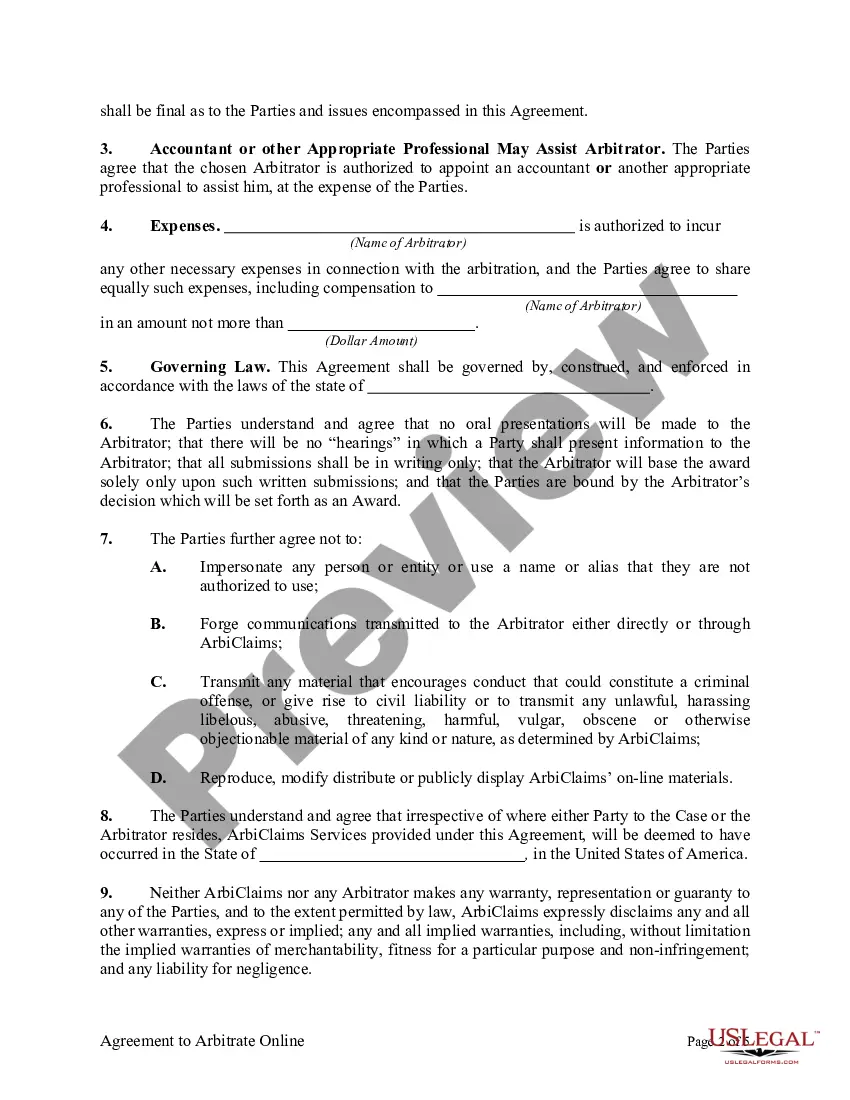
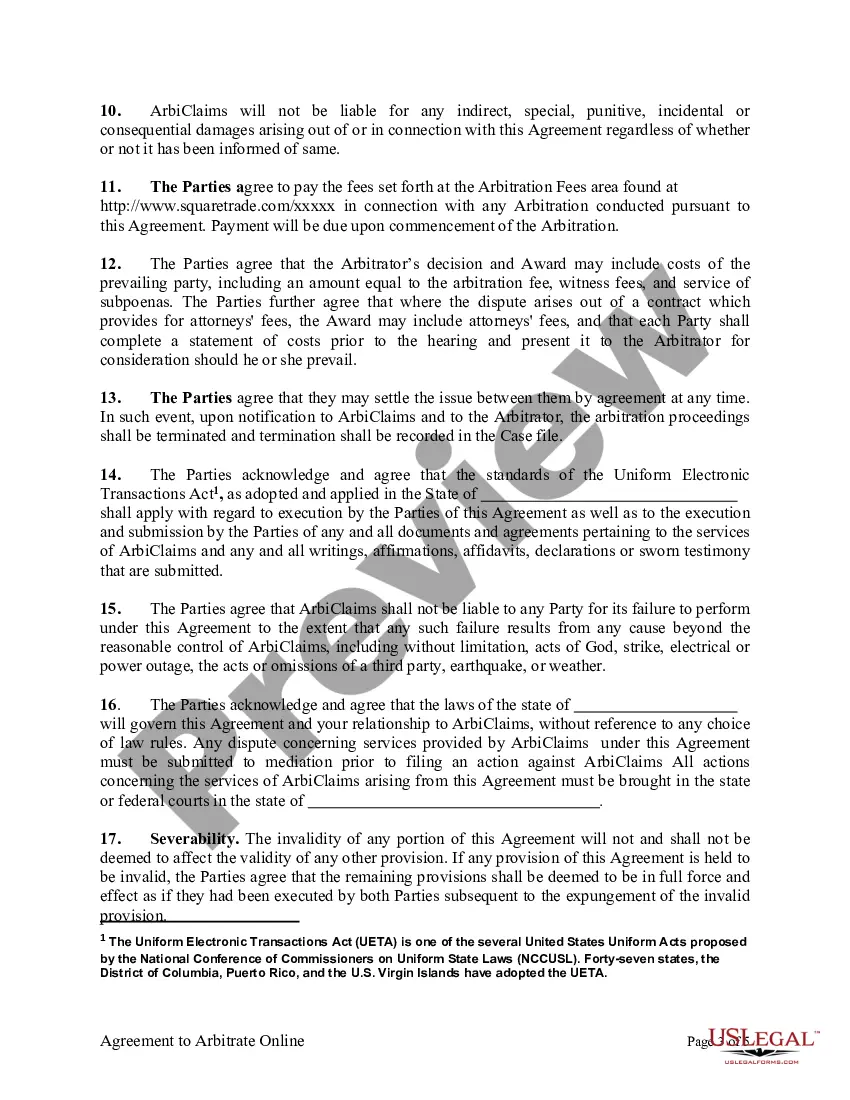





Get your form ready online
Our built-in tools help you complete, sign, share, and store your documents in one place.
Make edits, fill in missing information, and update formatting in US Legal Forms—just like you would in MS Word.
Download a copy, print it, send it by email, or mail it via USPS—whatever works best for your next step.
Sign and collect signatures with our SignNow integration. Send to multiple recipients, set reminders, and more. Go Premium to unlock E-Sign.
If this form requires notarization, complete it online through a secure video call—no need to meet a notary in person or wait for an appointment.
We protect your documents and personal data by following strict security and privacy standards.

Make edits, fill in missing information, and update formatting in US Legal Forms—just like you would in MS Word.

Download a copy, print it, send it by email, or mail it via USPS—whatever works best for your next step.

Sign and collect signatures with our SignNow integration. Send to multiple recipients, set reminders, and more. Go Premium to unlock E-Sign.

If this form requires notarization, complete it online through a secure video call—no need to meet a notary in person or wait for an appointment.

We protect your documents and personal data by following strict security and privacy standards.
Looking for another form?







Form popularity
FAQ
The current options include different types of arbitration. Some states have voluntary binding and non-binding arbitration; others have mandatory arbitration for all medical malpractice claims, while in others it is mandatory if the damage claims are under a specific amount.
In a mediation process, a neutral, trained mediator works to help disputants come to a consensus on their own. In arbitration, a neutral, trained arbitrator serves as a judge who is responsible for resolving the dispute.
Disadvantages of med-arb There is a risk that an arbitrator's impartiality may be affected by overseeing a facilitative mediation. It may be difficult for an arbitrator not to be influenced by supposedly "without prejudice" disclosures or proposals made by the parties during the course of settlement negotiations.
Many surgeons use an arbitration clause. This does not mean you give up any rights but rather than going to court your case would go to an arbitration panel. It's actually better for you because you wouldn't have to go to court and face a jury if there is a dispute.
Med-Arb is a hybrid, two-stage Alternative Dispute Resolution (ADR) process to resolve commercial disputes and has been recognized as a preferred mode for resolving wide range of commercial disputes.
Instead of a judge or a jury deciding the outcome, a private arbitrator (or panel of three arbitrators) determines: whether the patient has proven that the health care professional committed medical malpractice, and if so, how much compensation ("medical malpractice damages") the patient should receive.
There are typically seven stages of the arbitration process: Claimant Files a Claim. Respondent Submits Answer. Parties Select Arbitrators. Parties Attend Initial Prehearing Conference. Parties Exchange Discovery. Parties Attend Hearings. Arbitrators Deliberate and Render Award.
Arbitration is a form of alternative dispute resolution (ADR) that offers parties involved in a legal dispute an alternative to traditional courtroom litigation. Unlike litigation, where disputes are resolved in court, arbitration takes place in a private setting, typically chosen by the parties involved.
Alternative dispute resolution (ADR) refers to techniques used to resolve conflicts without going to the courtroom. As healthcare and malpractice costs continue to rise, there is growing interest in tactics such as early apology, mediation, and arbitration in the medical arena.
Healthcare arbitration agreements are written agreements between patients and healthcare providers that state that any dispute that arises will be handled through arbitration. The patients sign the agreement before a procedure or treatment.
