Agreement To Arbitrate Meaning In San Antonio
Description

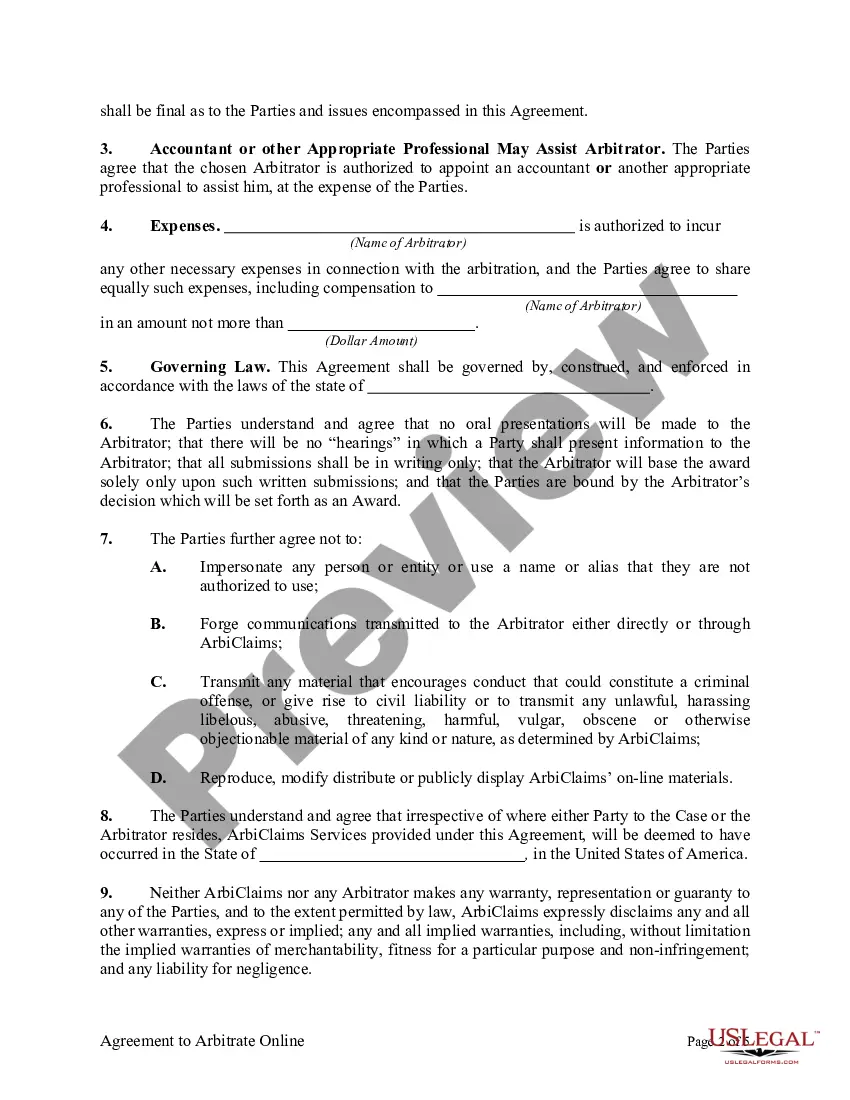
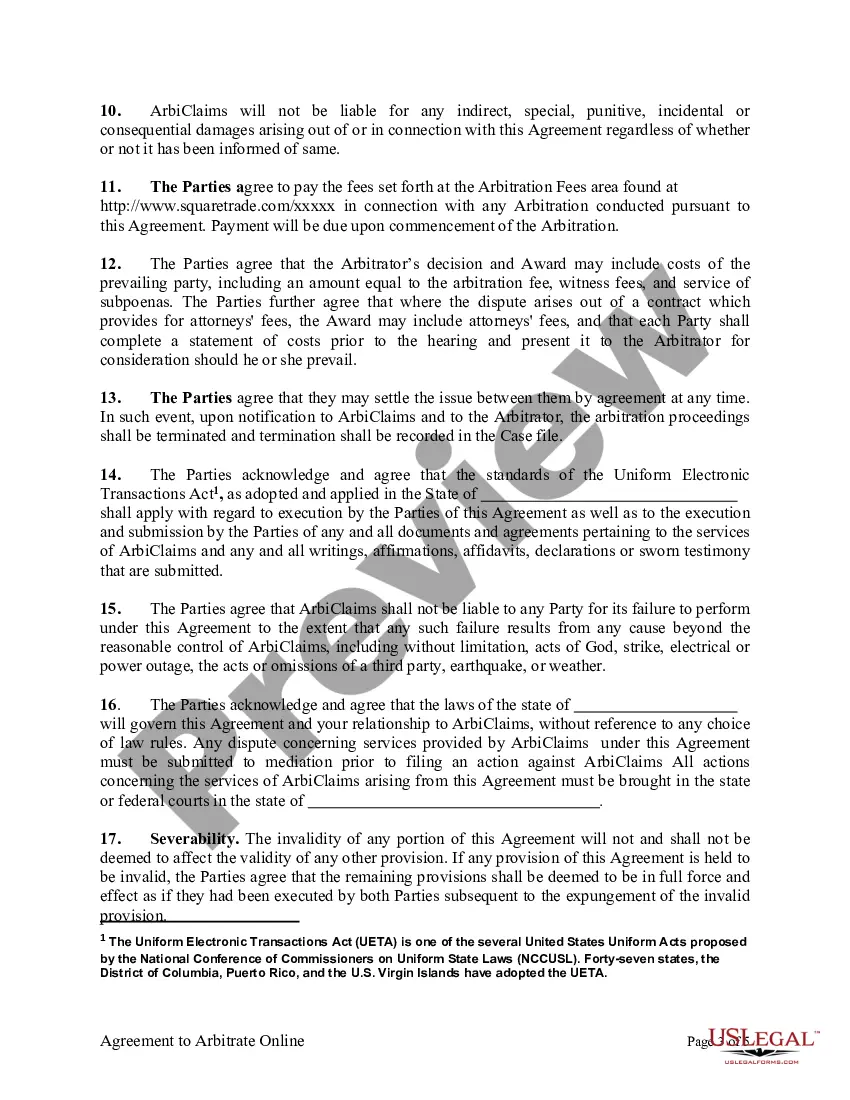




Get your form ready online
Our built-in tools help you complete, sign, share, and store your documents in one place.
Make edits, fill in missing information, and update formatting in US Legal Forms—just like you would in MS Word.
Download a copy, print it, send it by email, or mail it via USPS—whatever works best for your next step.
Sign and collect signatures with our SignNow integration. Send to multiple recipients, set reminders, and more. Go Premium to unlock E-Sign.
If this form requires notarization, complete it online through a secure video call—no need to meet a notary in person or wait for an appointment.
We protect your documents and personal data by following strict security and privacy standards.

Make edits, fill in missing information, and update formatting in US Legal Forms—just like you would in MS Word.

Download a copy, print it, send it by email, or mail it via USPS—whatever works best for your next step.

Sign and collect signatures with our SignNow integration. Send to multiple recipients, set reminders, and more. Go Premium to unlock E-Sign.

If this form requires notarization, complete it online through a secure video call—no need to meet a notary in person or wait for an appointment.

We protect your documents and personal data by following strict security and privacy standards.
Looking for another form?


Form popularity
FAQ
At arbitration, the arbitrator will listen as the parties offer evidence about the issues. Witnesses will answer questions under oath, and each party will explain its side of the case. After the arbitration, the arbitrator will review the evidence and make a decision (enter an award) on each issue.
This can put employees at a disadvantage as they may have less access to crucial information to support their case. Much Smaller Awards: Several studies have concluded that arbitration awards are, on average 60 to 85 percent less than similar cases decided by juries.
There are some benefits to arbitration if something goes wrong for you alone because it can be easier and faster to navigate than going to court. That being said, if you would prefer to have access to class action lawsuits, then opting out might be the better option for you.
Arbitration might be the right choice for some cases. Limited discovery rights and costs might be useful when less is at stake. Arbitration might feel less adversarial, which could be an advantage where ongoing relationships are hoped to be preserved. Arbitration lends some confidentiality.
Even if you don't currently have a dispute with the company, it is a good idea to opt out of the forced arbitration clause to preserve your options. You can always agree later to use an arbitrator to resolve any dispute. Moreover, if you have opted out, you will have more negotiating power if there is a problem.
Arbitration agreements are a way that employers try to avoid being sued by employees for employment law violations, such as wage and hour violations or sexual harassment.
Arbitration is similar to going to court, but faster, cheaper and less complex than litigation. If the case settles, an arbitration will last around one year. If the case goes to hearing, an arbitration typically takes 16 months. Watch these videos to learn more.
Validity of Arbitration Agreements Under Section 171.001 of the TAA, written agreements to arbitrate are generally valid and enforceable in Texas. This section ensures that, barring any specific legal exceptions, parties bound by a written agreement to arbitrate must settle their disputes outside of court.
To file the parties' request for arbitration, mail or fax DWC Form-044 to: Chief Clerk of Proceedings, Hearings. Texas Department of Insurance, Division of Workers' Compensation. Hearings, Mail Code HRG. PO Box 12050. Austin, TX 78711-2050. or. 512-804-4011 (fax number)
