Arbitration Agreement For Medical Malpractice In Philadelphia
Description

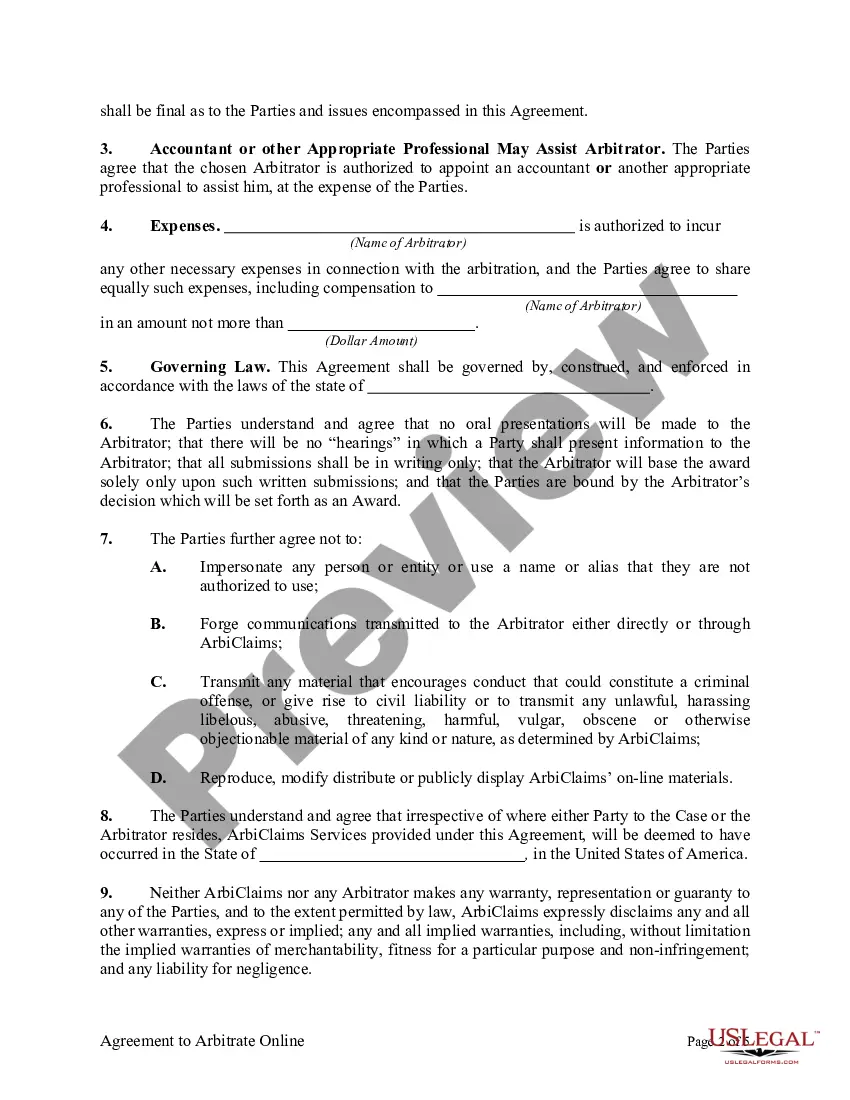
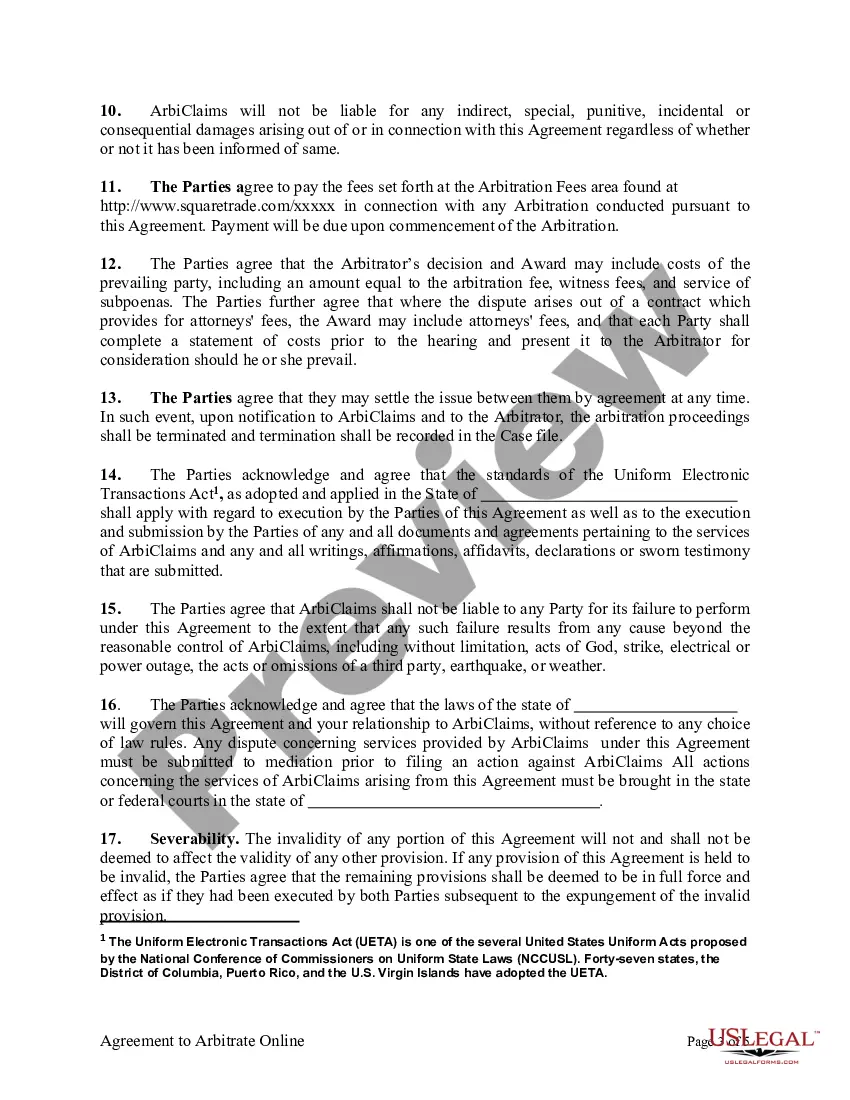





Get your form ready online
Our built-in tools help you complete, sign, share, and store your documents in one place.
Make edits, fill in missing information, and update formatting in US Legal Forms—just like you would in MS Word.
Download a copy, print it, send it by email, or mail it via USPS—whatever works best for your next step.
Sign and collect signatures with our SignNow integration. Send to multiple recipients, set reminders, and more. Go Premium to unlock E-Sign.
If this form requires notarization, complete it online through a secure video call—no need to meet a notary in person or wait for an appointment.
We protect your documents and personal data by following strict security and privacy standards.

Make edits, fill in missing information, and update formatting in US Legal Forms—just like you would in MS Word.

Download a copy, print it, send it by email, or mail it via USPS—whatever works best for your next step.

Sign and collect signatures with our SignNow integration. Send to multiple recipients, set reminders, and more. Go Premium to unlock E-Sign.

If this form requires notarization, complete it online through a secure video call—no need to meet a notary in person or wait for an appointment.

We protect your documents and personal data by following strict security and privacy standards.
Looking for another form?
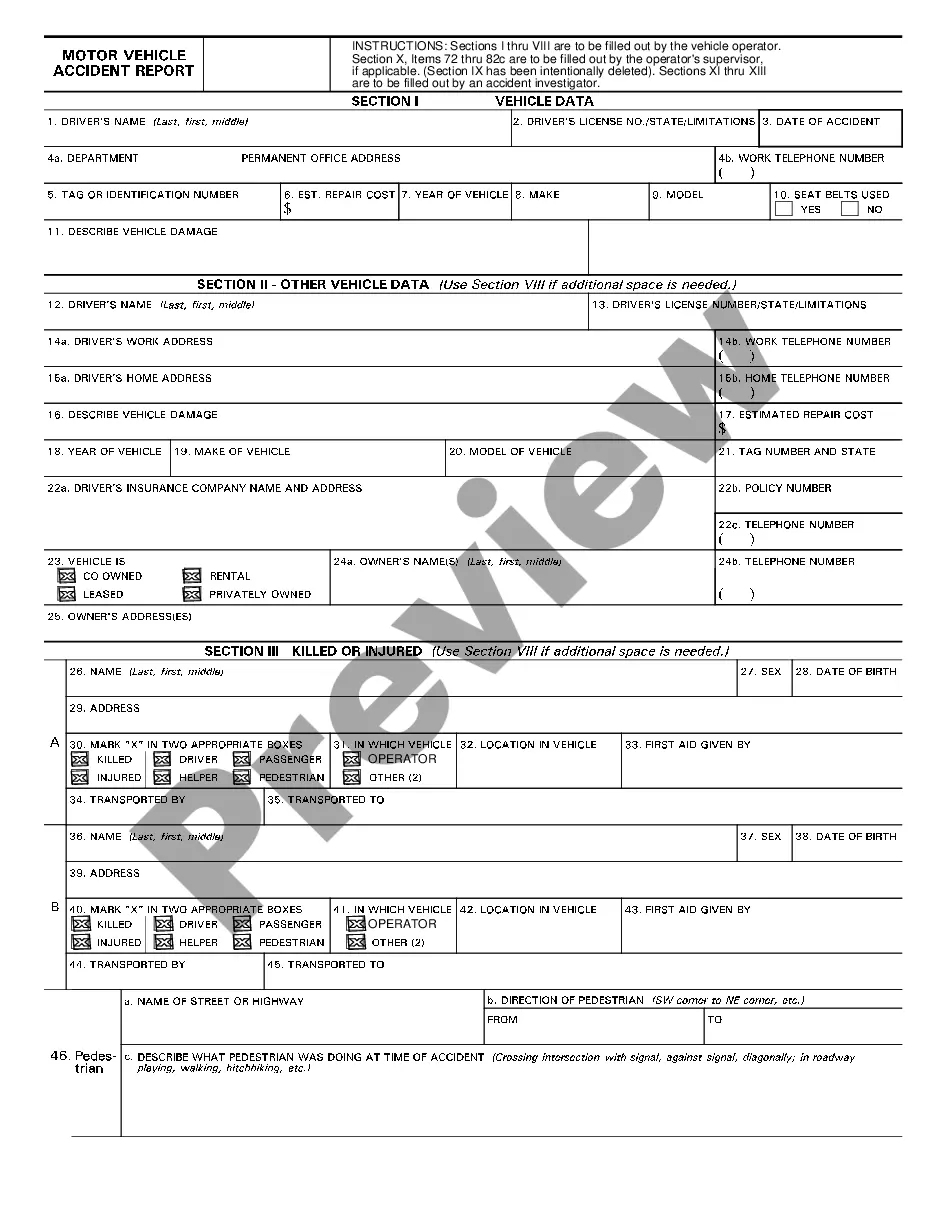

Form popularity
FAQ
Yes. The Federal Arbitration Act, or FAA, was passed in 1925 in response to a variety of court decisions that held arbitration agreements unenforceable. This law provides that arbitration agreements are generally valid and enforceable.
The four C's of medical malpractice – compassion, communication, competence and charting – serve as a cornerstone to help doctors and other care providers navigate their interactions with patients in order to avoid medical malpractice lawsuits.
Proving causation is often the most difficult element of a medical malpractice case. However, it is not impossible. With the help of an experienced medical malpractice lawyer, plaintiffs may be able to overcome the challenges of proving causation and win their cases.
The current options include different types of arbitration. Some states have voluntary binding and non-binding arbitration; others have mandatory arbitration for all medical malpractice claims, while in others it is mandatory if the damage claims are under a specific amount.
As a general rule, only strong evidence of duress or fraud are sufficient to invalidate an arbitration clause.
A few of the initial medical malpractice lawsuit steps include: Finding an attorney who will represent you. Gathering evidence, such as medical records and communications. Identifying the proper court with jurisdiction. Filing paperwork with the court.
To do so, four legal elements must be proven: (1) a professional duty owed to the patient; (2) breach of such duty; (3) injury caused by the breach; and (4) resulting damages.
In some instances, you may be able to sue if you signed a valid arbitration agreement. While courts generally favor arbitration agreements, they will allow you to file a lawsuit if either you didn't understand your rights or your claims fall outside the arbitration provision's scope.
Ing to one large-scale study of medical malpractice claims, physicians win: 80 to 90 percent of jury trials involving weak evidence of medical negligence. 70 percent of jury trials in borderline cases. 50 percent of cases with strong evidence of medical negligence.
In some instances, you may be able to sue if you signed a valid arbitration agreement. While courts generally favor arbitration agreements, they will allow you to file a lawsuit if either you didn't understand your rights or your claims fall outside the arbitration provision's scope.