Agreement Arbitration Sample With Employer In Nevada
Description

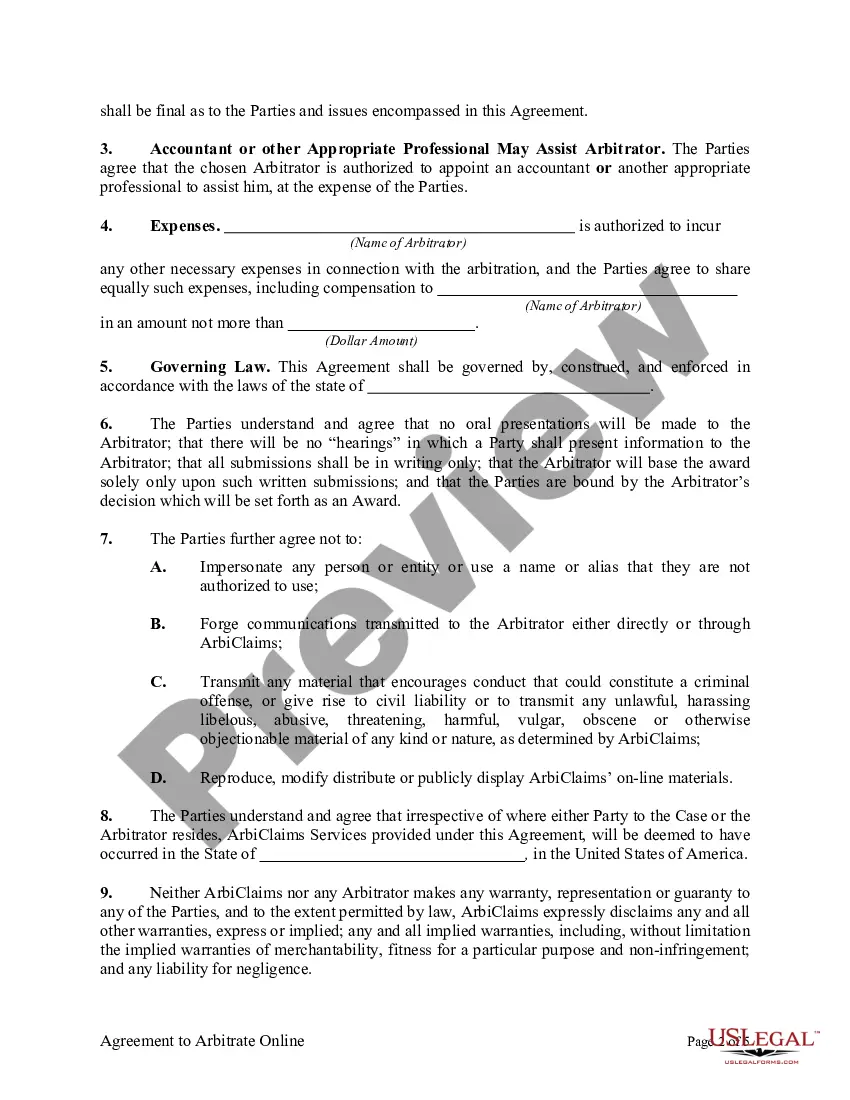
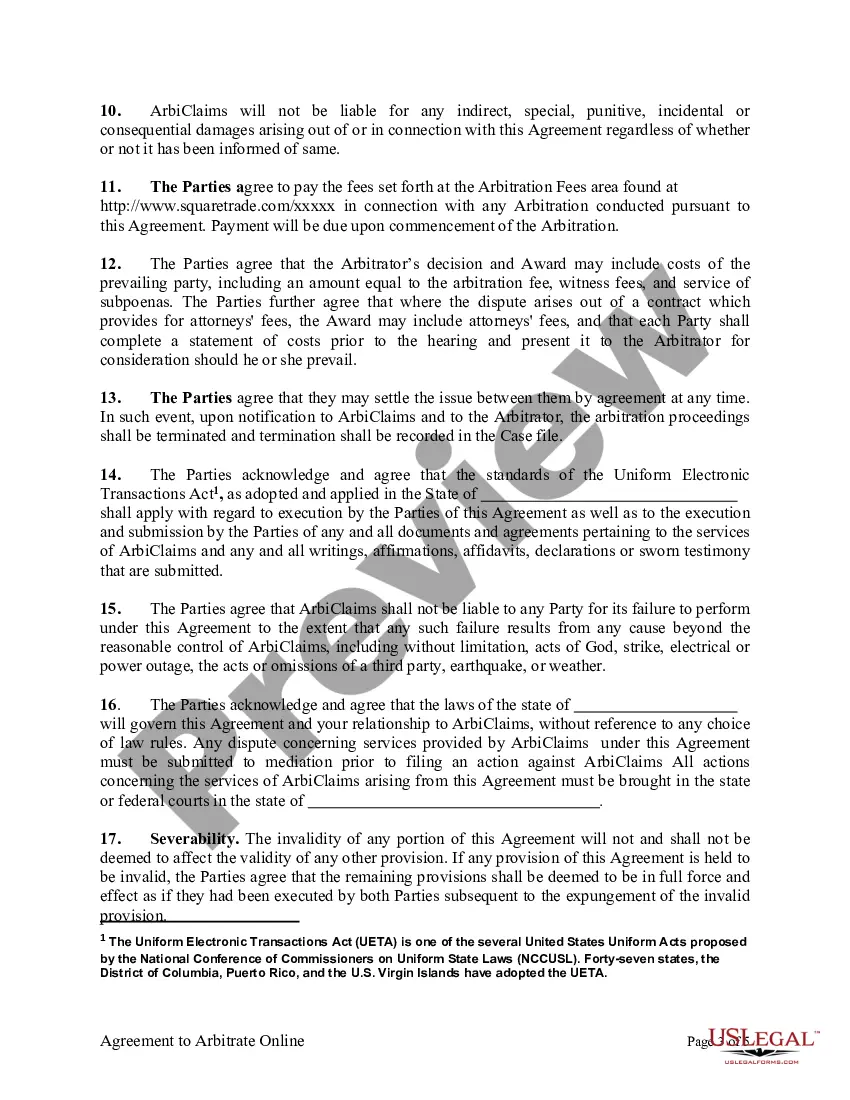




Get your form ready online
Our built-in tools help you complete, sign, share, and store your documents in one place.
Make edits, fill in missing information, and update formatting in US Legal Forms—just like you would in MS Word.
Download a copy, print it, send it by email, or mail it via USPS—whatever works best for your next step.
Sign and collect signatures with our SignNow integration. Send to multiple recipients, set reminders, and more. Go Premium to unlock E-Sign.
If this form requires notarization, complete it online through a secure video call—no need to meet a notary in person or wait for an appointment.
We protect your documents and personal data by following strict security and privacy standards.

Make edits, fill in missing information, and update formatting in US Legal Forms—just like you would in MS Word.

Download a copy, print it, send it by email, or mail it via USPS—whatever works best for your next step.

Sign and collect signatures with our SignNow integration. Send to multiple recipients, set reminders, and more. Go Premium to unlock E-Sign.

If this form requires notarization, complete it online through a secure video call—no need to meet a notary in person or wait for an appointment.

We protect your documents and personal data by following strict security and privacy standards.
Looking for another form?








Form popularity
FAQ
Example 1. Arbitration. All claims and disputes arising under or relating to this Agreement are to be settled by binding arbitration in the state of insert state in which parties agree to arbitrate or another location mutually agreeable to the parties.
The Scope of the Clause. This section of the clause is critical; it sets the boundaries for which disputes the tribunal is authorised to determine. Choice of Rules. The Number of Arbitrators. Appointing Authority. Choice of Venue. The language of the proceedings. Finality. Exclusion of the right of appeal.
1. An agreement contained in a record to submit to arbitration any existing or subsequent controversy arising between the parties to the agreement is valid, enforceable and irrevocable except as otherwise provided in NRS 597.995 or upon a ground that exists at law or in equity for the revocation of a contract. 2.
LCCP 2 We, the undersigned parties, hereby agree to submit to arbitration administered by the American Arbitration Association under its applicable Procedures for Large, Complex Commercial Disputes the following controversy describe briefly. Judgment of any court having jurisdiction may be entered on the award.
Drafting the “perfect” arbitration agreement Clear and precise language. Clarity and brevity are key to avoiding an unenforceable arbitration clause and the costs and delays that follow. Scope. Seat of arbitration. Governing law. Arbitral Rules. Language. Arbitrators. Other common issues.
"A dispute having arisen between the parties concerning , the parties hereby agree that the dispute shall be referred to and finally resolved by arbitration under the LCIA Rules. The number of arbitrators shall be one/three. The seat, or legal place, of arbitration shall be City and/or Country.
The Scope of the Clause. This section of the clause is critical; it sets the boundaries for which disputes the tribunal is authorised to determine. Choice of Rules. The Number of Arbitrators. Appointing Authority. Choice of Venue. The language of the proceedings. Finality. Exclusion of the right of appeal.
Courts and legislatures have historically favored arbitration because the process is usually more efficient and less expensive than resolving a dispute through the court system. Arbitration also shifts the burden of managing disputes and deciding issues away from the often-overburdened public courts.
Drafting the “perfect” arbitration agreement Clear and precise language. Clarity and brevity are key to avoiding an unenforceable arbitration clause and the costs and delays that follow. Scope. Seat of arbitration. Governing law. Arbitral Rules. Language. Arbitrators. Other common issues.
