Agreement Arbitrate Sample With Replacement In Maricopa
Description

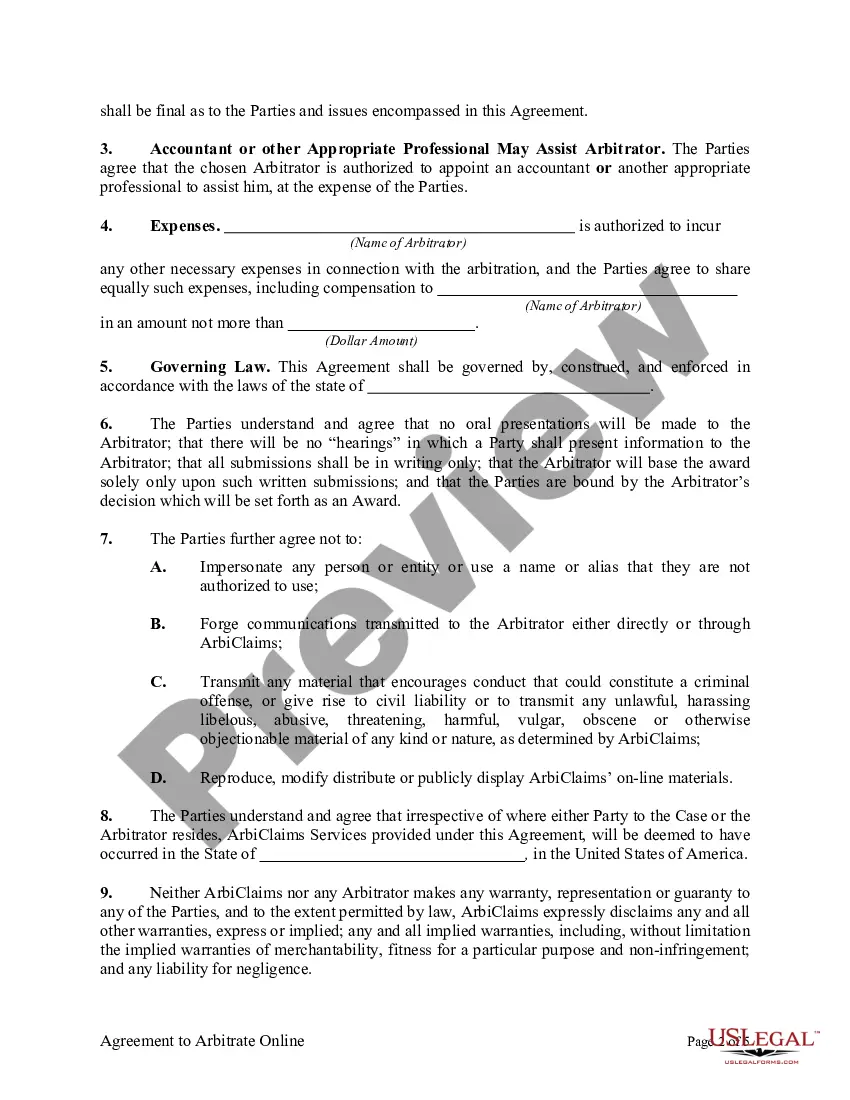
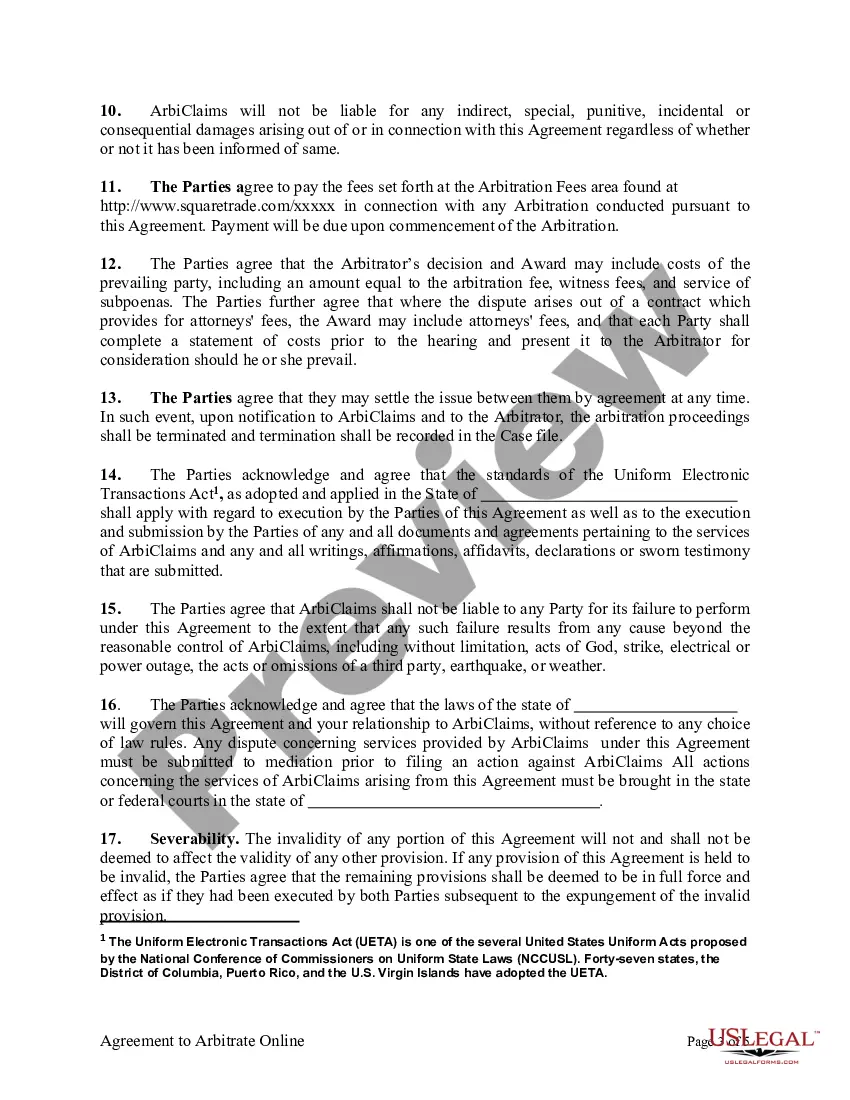

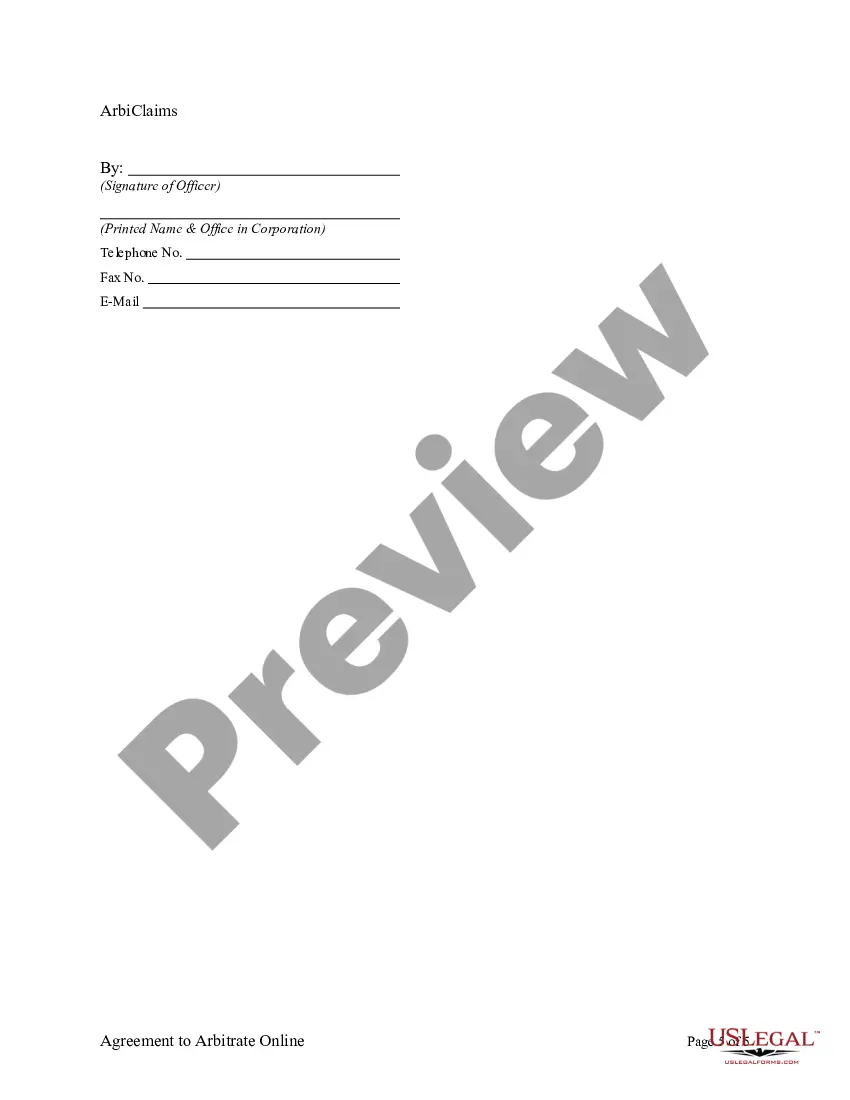



Get your form ready online
Our built-in tools help you complete, sign, share, and store your documents in one place.
Make edits, fill in missing information, and update formatting in US Legal Forms—just like you would in MS Word.
Download a copy, print it, send it by email, or mail it via USPS—whatever works best for your next step.
Sign and collect signatures with our SignNow integration. Send to multiple recipients, set reminders, and more. Go Premium to unlock E-Sign.
If this form requires notarization, complete it online through a secure video call—no need to meet a notary in person or wait for an appointment.
We protect your documents and personal data by following strict security and privacy standards.

Make edits, fill in missing information, and update formatting in US Legal Forms—just like you would in MS Word.

Download a copy, print it, send it by email, or mail it via USPS—whatever works best for your next step.

Sign and collect signatures with our SignNow integration. Send to multiple recipients, set reminders, and more. Go Premium to unlock E-Sign.

If this form requires notarization, complete it online through a secure video call—no need to meet a notary in person or wait for an appointment.

We protect your documents and personal data by following strict security and privacy standards.
Looking for another form?

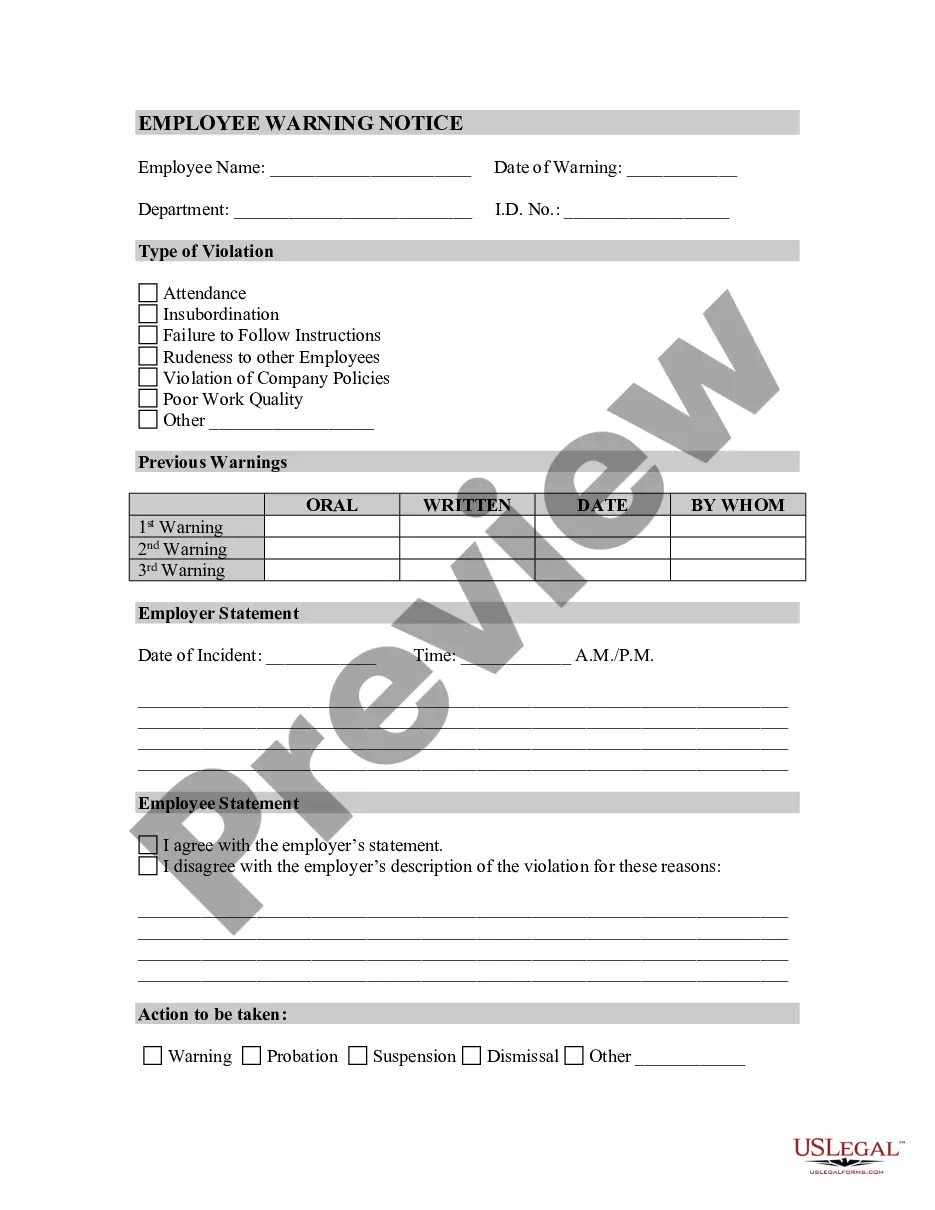






Form popularity
FAQ
A scheduling order is an order issued by a Judge before trial that sets deadlines on when certain events in a case must occur. Often the most significant deadlines concern discovery and exchange of trial exhibits.
Counsel shall file an original and two copies of the joint status report at the District Court Clerk's Office. The report shall be filed with the Clerk ninety (90) days after the issue has joined, or in the alternative, as directed by the Court.
This meeting is called a “scheduling conference.” The schedule for the identification of potential witnesses, the time for and manner of discovery, and the exchange of any prehearing materials including witness lists, statements of issues, stipulations, exhibits, and any other materials may also be determined at the ...
Compulsory Arbitration is a mandatory program for disputes valued under $50,000. A court-appointed arbitrator reviews the case to decide a just resolution and award. Arbitration is intended to lower court costs for litigants and allow the Court to utilize judicial resources more effectively.
The Joint Scheduling Report shall contain the following items by corresponding numbered paragraphs: 1. Summary of the factual and legal contentions set forth in the pleadings of each party, including the relief sought by any party presently before the Court. 2. Summary of major disputed facts and contentions of law.
A joint report is a document prepared collaboratively by the parties involved in a legal dispute, summarizing the progress of the case and addressing various issues that may arise before trial.
It's typically a clause in a broader contract in which you agree to settle out of court, through arbitration cases, any dispute that arises with your counterpart.
Arbitration might be the right choice for some cases. Limited discovery rights and costs might be useful when less is at stake. Arbitration might feel less adversarial, which could be an advantage where ongoing relationships are hoped to be preserved. Arbitration lends some confidentiality.
If you don't respond to a validly issued arbitration notice then the proceedings can continue without your participation (ex - parte) and a binding award may be rendered by the Arbitrator.
Arbitration agreements are a way that employers try to avoid being sued by employees for employment law violations, such as wage and hour violations or sexual harassment.
