Agreement To Arbitrate Meaning In Chicago
Description

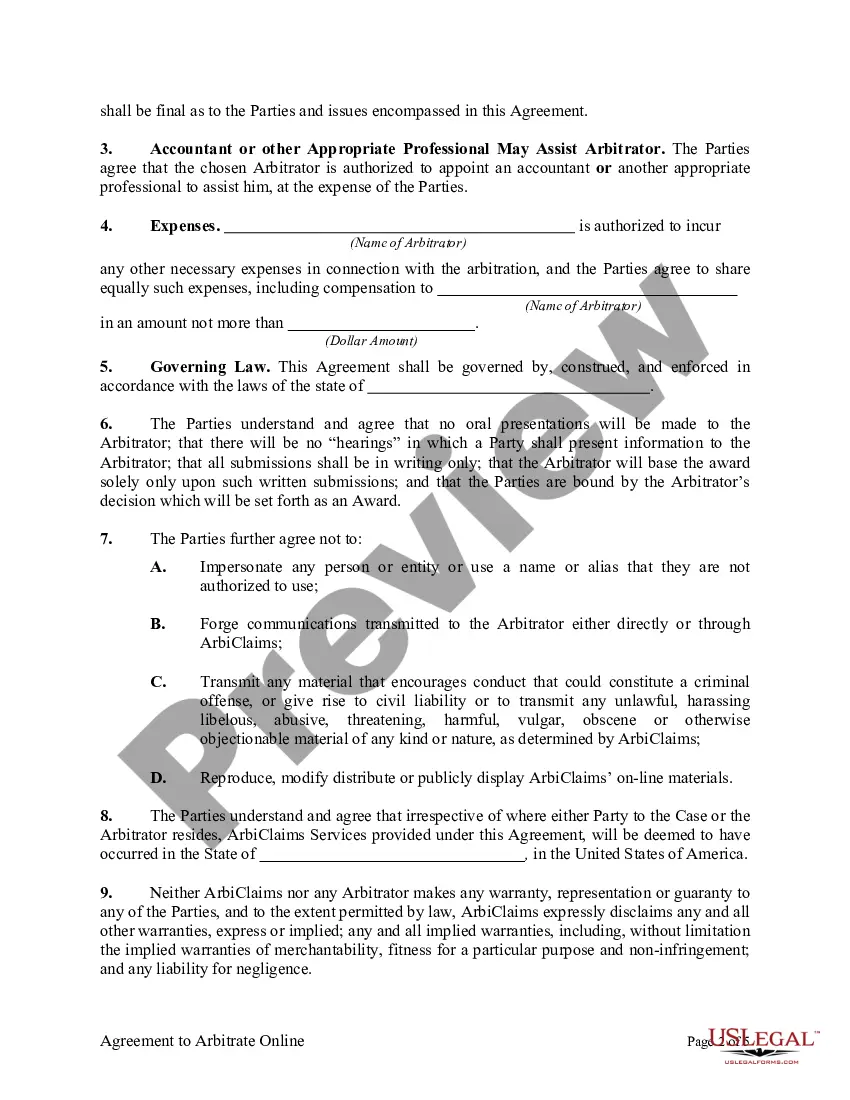
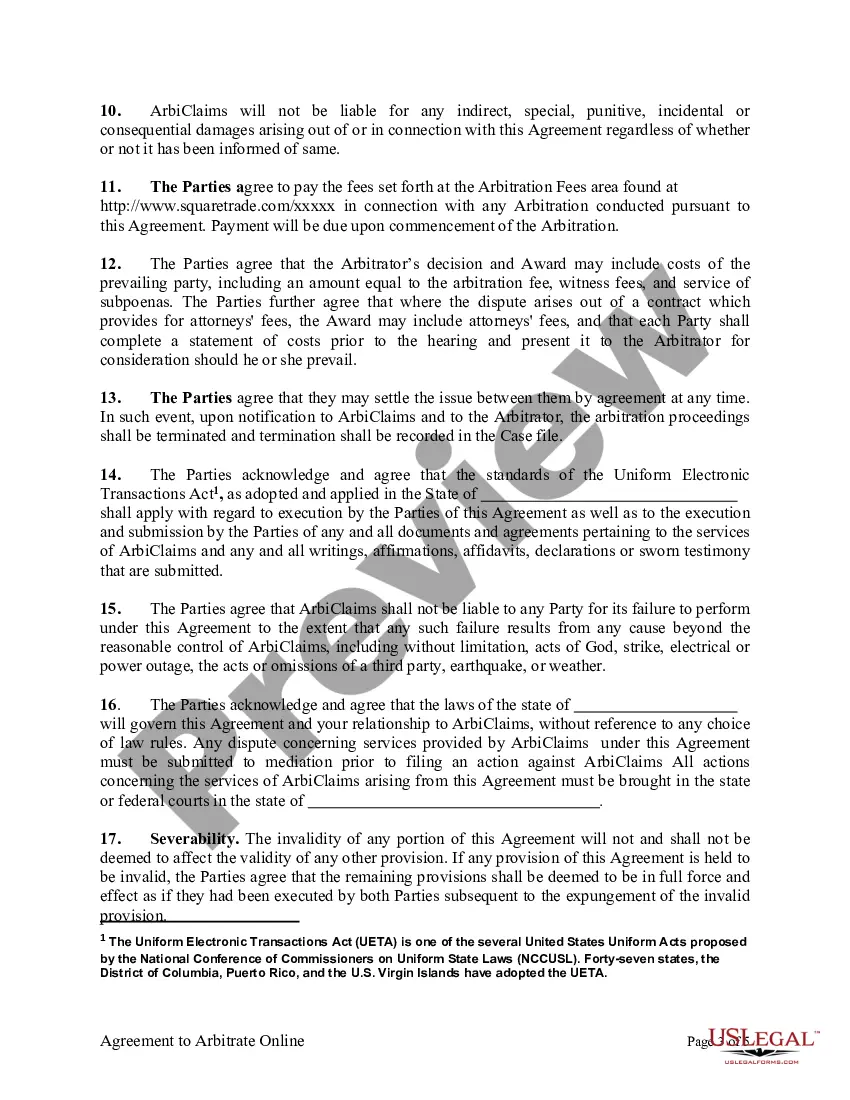

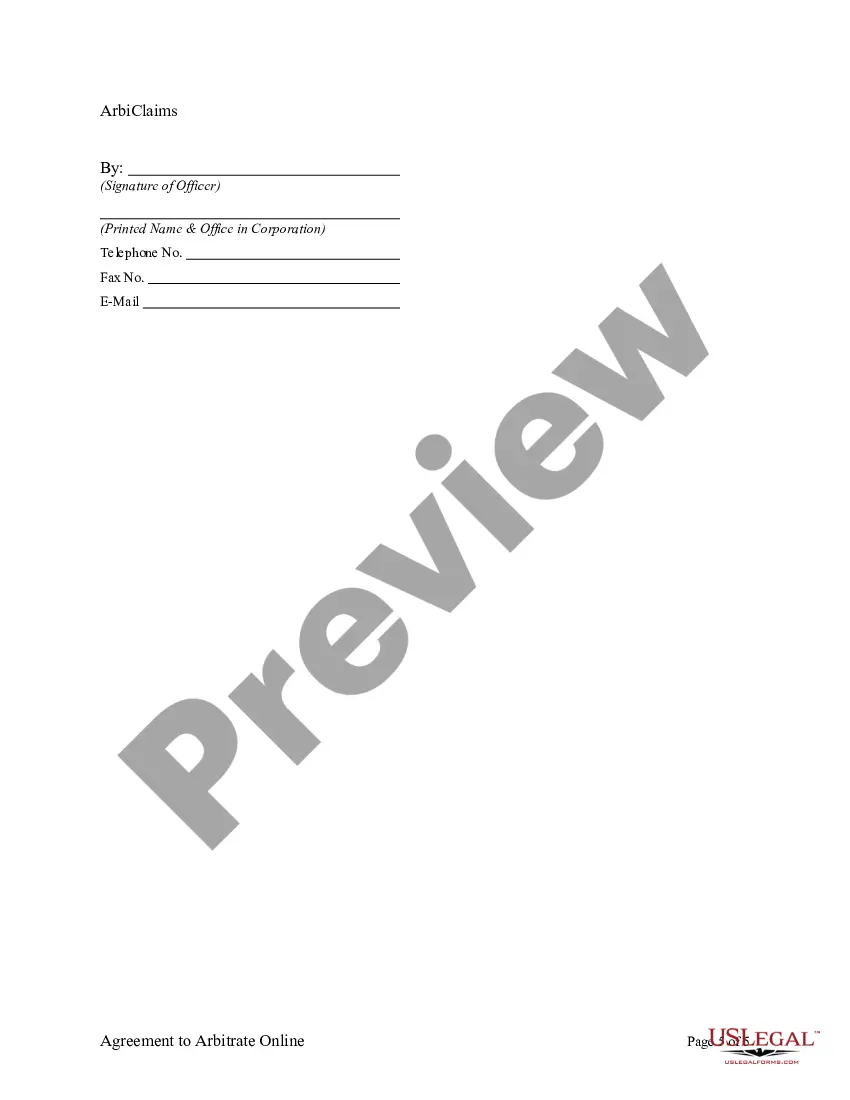



Get your form ready online
Our built-in tools help you complete, sign, share, and store your documents in one place.
Make edits, fill in missing information, and update formatting in US Legal Forms—just like you would in MS Word.
Download a copy, print it, send it by email, or mail it via USPS—whatever works best for your next step.
Sign and collect signatures with our SignNow integration. Send to multiple recipients, set reminders, and more. Go Premium to unlock E-Sign.
If this form requires notarization, complete it online through a secure video call—no need to meet a notary in person or wait for an appointment.
We protect your documents and personal data by following strict security and privacy standards.

Make edits, fill in missing information, and update formatting in US Legal Forms—just like you would in MS Word.

Download a copy, print it, send it by email, or mail it via USPS—whatever works best for your next step.

Sign and collect signatures with our SignNow integration. Send to multiple recipients, set reminders, and more. Go Premium to unlock E-Sign.

If this form requires notarization, complete it online through a secure video call—no need to meet a notary in person or wait for an appointment.

We protect your documents and personal data by following strict security and privacy standards.
Looking for another form?
Form popularity
FAQ
Questionable Fairness Mandatory arbitration. If arbitration is mandatory by contract, then the parties do not have the flexibility to choose arbitration upon mutual consent. Subjective Arbitrator. Unbalanced. “Arbitrarily” (inconsistently) following the law. No jury. Lack of transparency.
Arbitration agreements mean that employees are forced to give up their Constitutional right to trial by jury if they want to keep their job. Instead, all workplace disputes – including an employee's claims for discrimination – are decided by a private arbitrator hired by the employer, rather than in court.
Usually such agreements provide that you have no right to go outside the arbitration system and present your claims to the public courts. In forced arbitration situations, your job may depend on accepting such a provision: your only other choice is to not take the job. Is arbitration bad? No.
Arbitration might be the right choice for some cases. Limited discovery rights and costs might be useful when less is at stake. Arbitration might feel less adversarial, which could be an advantage where ongoing relationships are hoped to be preserved. Arbitration lends some confidentiality.
Arbitration agreements are a way that employers try to avoid being sued by employees for employment law violations, such as wage and hour violations or sexual harassment.
Arbitration is a fairer, faster, and less expensive way to resolve disputes than time-consuming and expensive litigation.
Opting out of the arbitration agreement isn't damaging to you. You can always do arbitration if you would prefer that, although if you'd like to join class actions or sue the judge will throw out your case if you are still in this agreement.
In entering into an arbitration agreement, the parties agree to refer their dispute to a neutral tribunal to decide their rights and obligations. Although sometimes described as a form of alternative dispute resolution, arbitration is not the same as mediation or conciliation.
If neither party appeals the decision, it will be binding, like an order by a judge. However, a party unhappy with the arbitrator's decision can request a new trial before a judge.
