Arbitration Agreement For Divorce In Arizona
Description

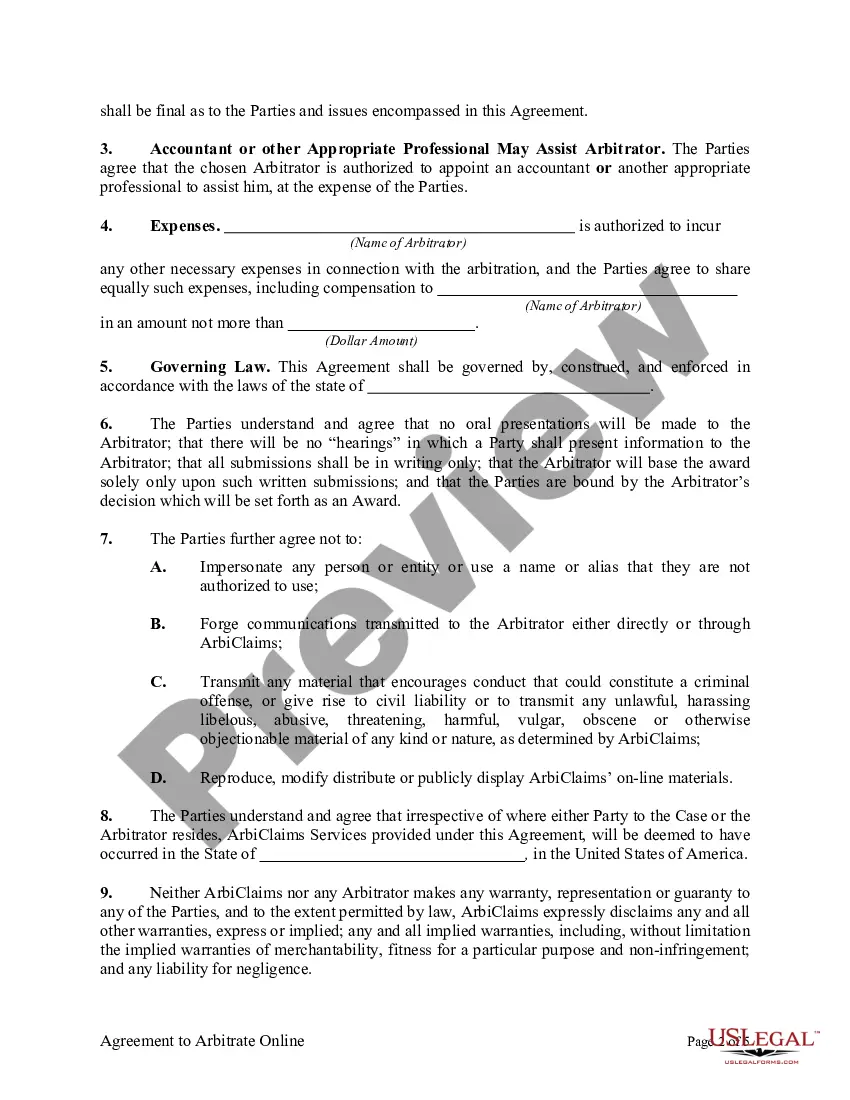
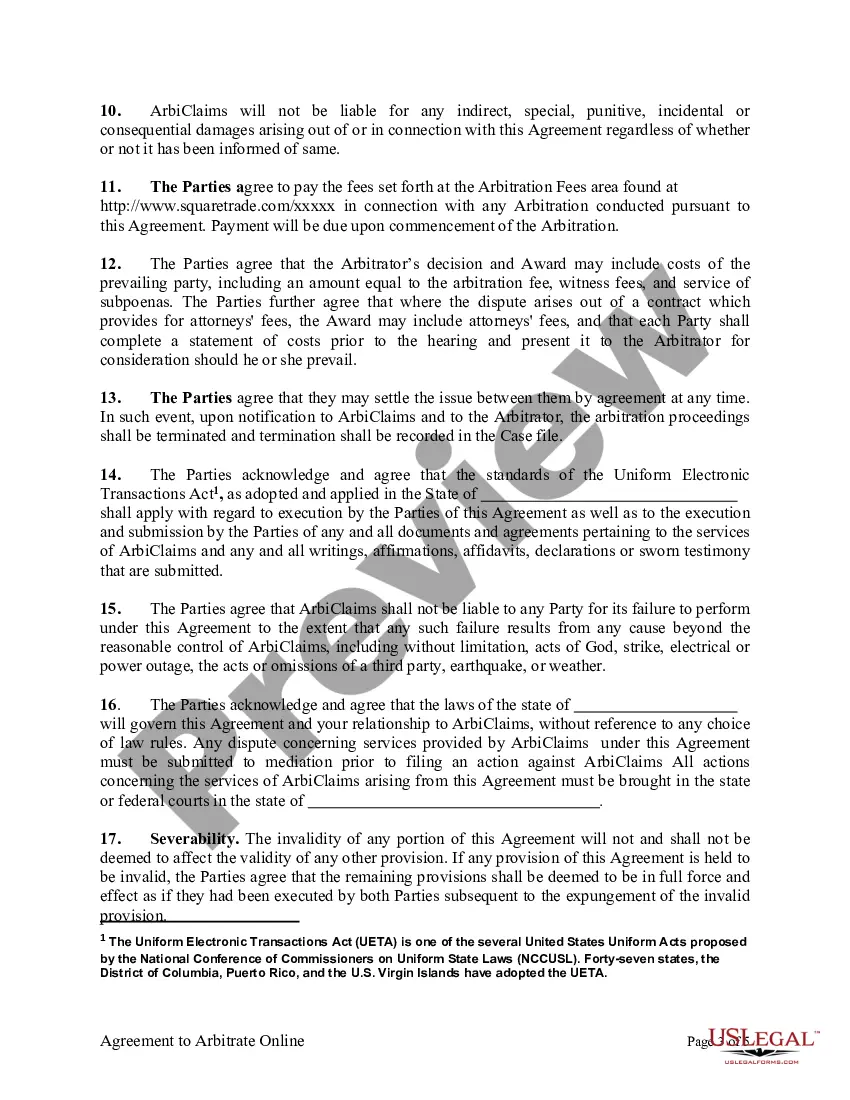

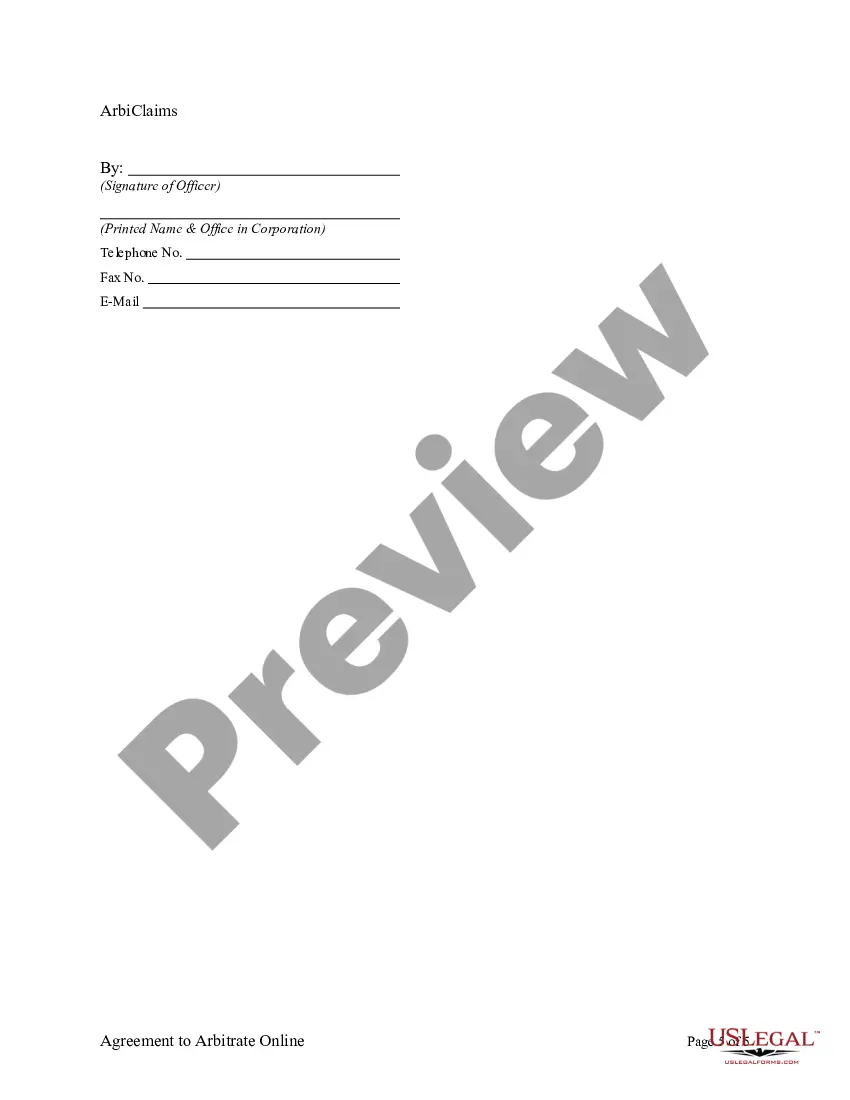



Get your form ready online
Our built-in tools help you complete, sign, share, and store your documents in one place.
Make edits, fill in missing information, and update formatting in US Legal Forms—just like you would in MS Word.
Download a copy, print it, send it by email, or mail it via USPS—whatever works best for your next step.
Sign and collect signatures with our SignNow integration. Send to multiple recipients, set reminders, and more. Go Premium to unlock E-Sign.
If this form requires notarization, complete it online through a secure video call—no need to meet a notary in person or wait for an appointment.
We protect your documents and personal data by following strict security and privacy standards.

Make edits, fill in missing information, and update formatting in US Legal Forms—just like you would in MS Word.

Download a copy, print it, send it by email, or mail it via USPS—whatever works best for your next step.

Sign and collect signatures with our SignNow integration. Send to multiple recipients, set reminders, and more. Go Premium to unlock E-Sign.

If this form requires notarization, complete it online through a secure video call—no need to meet a notary in person or wait for an appointment.

We protect your documents and personal data by following strict security and privacy standards.
Looking for another form?
Form popularity
FAQ
The arbitrator listens to both sides, looks at the evidence you've sent in and decides what the outcome should be. In some cases, the arbitrator may choose to have several meetings with you both. When the arbitrator makes a decision, this is called an award and it's legally binding.
During arbitration, you and your spouse will each state your cases, with or without legal representatives, along with evidence to support your argument. The panel of judges will listen to both sides and decide things such as asset division, spousal support, child custody and child support.
The arbitrator's final decision on the case is called the “award.” This is like a judge's or jury's decision in a court case. Once the arbitrator decides that all of the parties' evidence and arguments have been presented, the arbitrator will close the hearings. This means no more evidence or arguments will be allowed.
Arbitration is often in a condition of employment. For example, an employee complained that she's been biased and unfair. For example, research by Colvin reveals employees win 36.4 percent of discrimination cases in federal court and 43.8 percent in state court, but only 21.4 percent in arbitration.
The Scope of the Clause. This section of the clause is critical; it sets the boundaries for which disputes the tribunal is authorised to determine. Choice of Rules. The Number of Arbitrators. Appointing Authority. Choice of Venue. The language of the proceedings. Finality. Exclusion of the right of appeal.
One of the unique modifiers that arbitrations have is that a random warframe. And weapon willMoreOne of the unique modifiers that arbitrations have is that a random warframe. And weapon will receive a 300 power strength buff and a 300 damage buff respectively.
A claimant will typically start arbitration by sending a document known as a “request for arbitration” or a “notice to arbitrate” to its opponent.
Either Party to a contract in which there is an Arbitration clause can either himself or through an authorised agent may invoke Arbitration so as to refer the dispute to arbitration, as per provisions of the arbitration clause.
Necessary Elements Details of the Parties. Details of the relationship between the parties. Demand for Arbitration. The mention of agreement/contract (if any). The mention of already existing arbitration agreement between the parties pursuant to which the concerned notice of arbitration has been sent (if any).
A claimant will typically start arbitration by sending a document known as a “request for arbitration” or a “notice to arbitrate” to its opponent.
