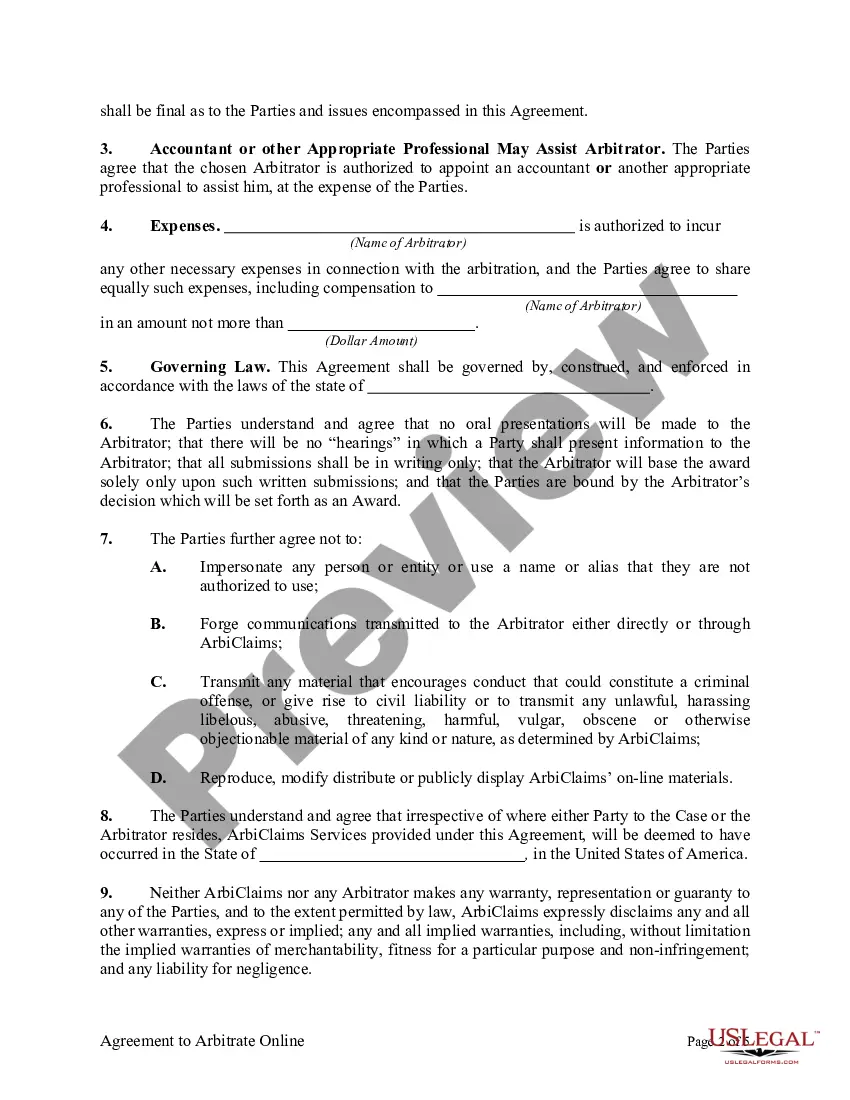
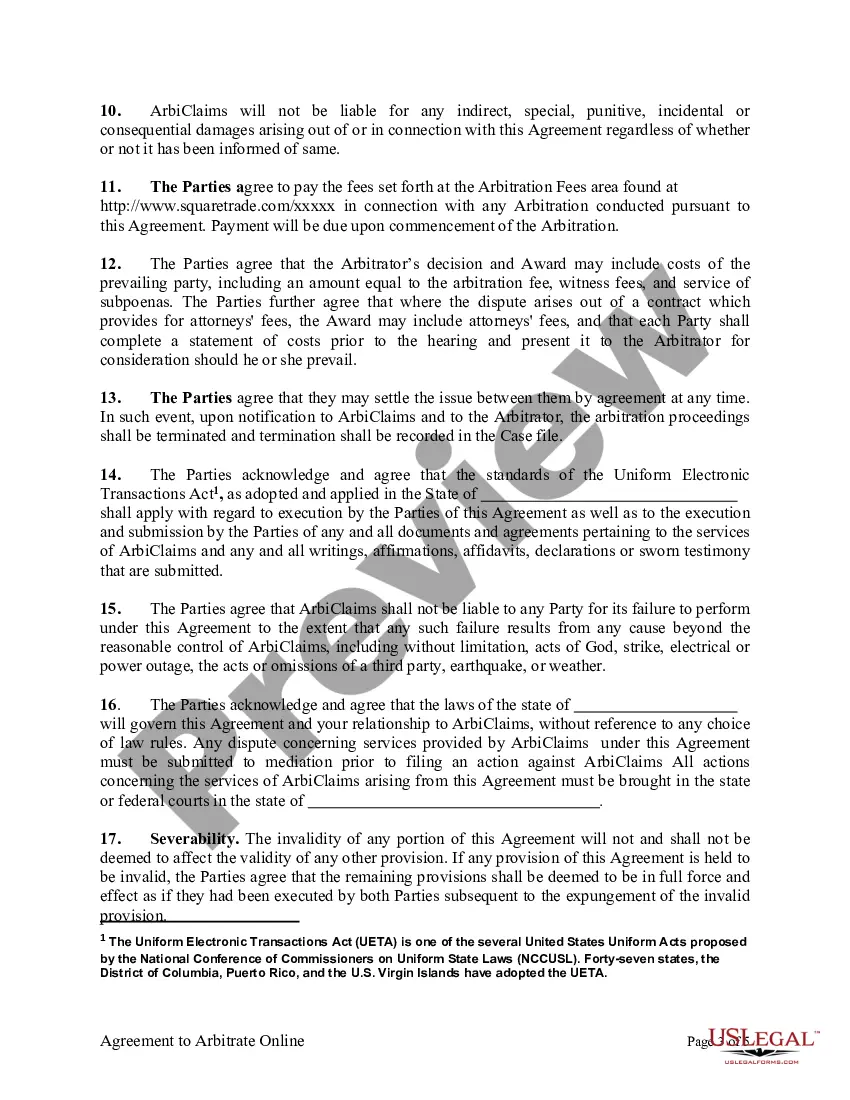
Arbitration Agreement For Divorce In Alameda
Description





Get your form ready online
Our built-in tools help you complete, sign, share, and store your documents in one place.
Make edits, fill in missing information, and update formatting in US Legal Forms—just like you would in MS Word.
Download a copy, print it, send it by email, or mail it via USPS—whatever works best for your next step.
Sign and collect signatures with our SignNow integration. Send to multiple recipients, set reminders, and more. Go Premium to unlock E-Sign.
If this form requires notarization, complete it online through a secure video call—no need to meet a notary in person or wait for an appointment.
We protect your documents and personal data by following strict security and privacy standards.

Make edits, fill in missing information, and update formatting in US Legal Forms—just like you would in MS Word.

Download a copy, print it, send it by email, or mail it via USPS—whatever works best for your next step.

Sign and collect signatures with our SignNow integration. Send to multiple recipients, set reminders, and more. Go Premium to unlock E-Sign.

If this form requires notarization, complete it online through a secure video call—no need to meet a notary in person or wait for an appointment.

We protect your documents and personal data by following strict security and privacy standards.
Looking for another form?








Form popularity
FAQ
Mediation is a more amicable and less expensive way to divorce than arbitration or litigation. Mediation doesn't create legally binding outcomes unless you ask the court to approve your agreement. Arbitration and litigation are legally binding.
Mediation is not useful if the parties cannot engage in open dialogue with each other or if your spouse is more aggressive than you. If your spouse is hiding assets, the mediator may not ever find out.
More than 80 percent of mediations result in a settlement, and in most cases the process is significantly faster and less costly than arbitration. Mediation does not impose a solution and it is not binding until the parties reach and sign a settlement agreement.
There are some cases when both mediation and arbitration are necessary to reach a solution. This is called med-arb.
Alternative Dispute Resolution (ADR) Information Packet. The person who files a civil lawsuit (plaintiff) must include the ADR Information Packet with the complaint when serving the defendant. Cross complainants must serve the ADR Information Packet on any new parties named to the action.
The arbitrator will explain the process. Each side may present an uninterrupted opening statement setting forth its position as to the facts and the law. After opening statements, the parties present their evidence and witnesses. The arbitrator swears in the witnesses and makes rulings on the admissibility of evidence.
During arbitration, you and your spouse will each state your cases, with or without legal representatives, along with evidence to support your argument. The panel of judges will listen to both sides and decide things such as asset division, spousal support, child custody and child support.
Alameda County/Family Court Services Program/OrganizationAlameda County/Family Court Services Complete Address Office Location: First Floor 2233 Shoreline Drive Alameda, CA 94501 Phone 510-263-4311 telephone service is available from AM - PM Website more rows
The United States District Court for the Northern District of California has jurisdiction in Alameda County. Appeals from the Northern District go to the United States Court of Appeals for the 9th Circuit.
Superior Court of Alameda County.
