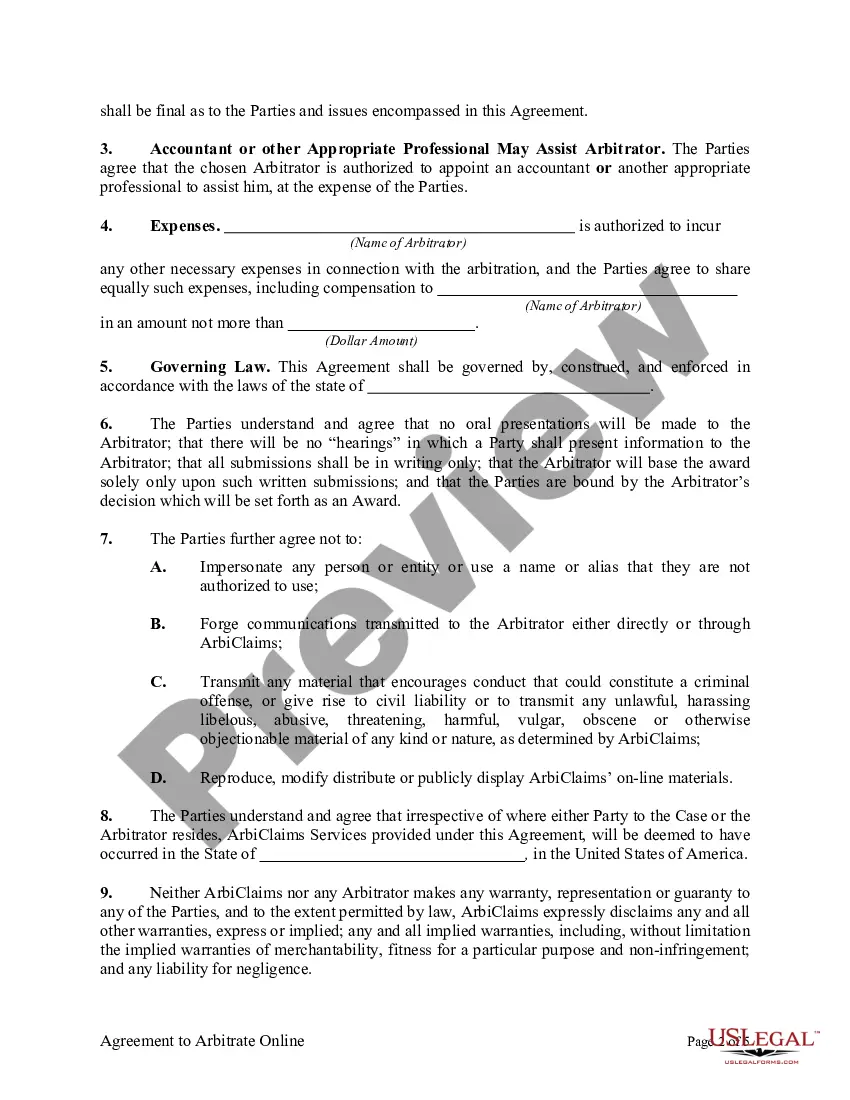
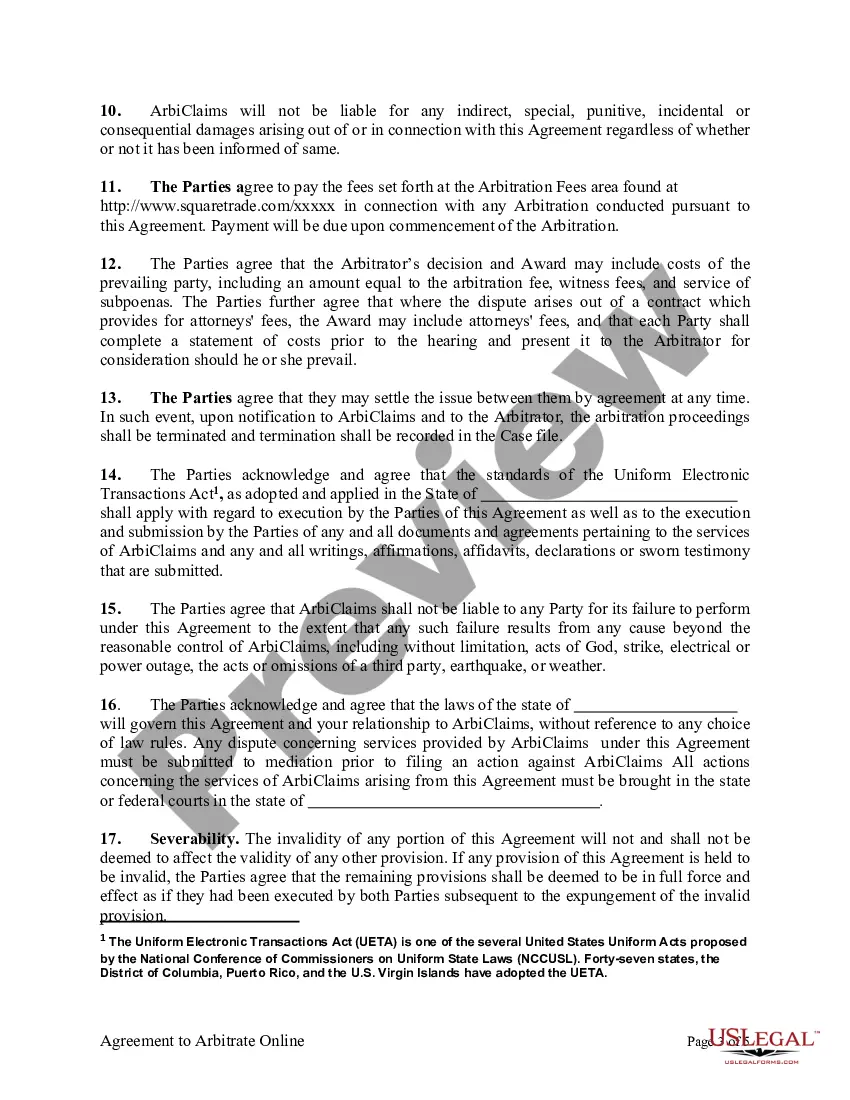
Agreement Arbitrate Sample For Insurance In Alameda
Description





Get your form ready online
Our built-in tools help you complete, sign, share, and store your documents in one place.
Make edits, fill in missing information, and update formatting in US Legal Forms—just like you would in MS Word.
Download a copy, print it, send it by email, or mail it via USPS—whatever works best for your next step.
Sign and collect signatures with our SignNow integration. Send to multiple recipients, set reminders, and more. Go Premium to unlock E-Sign.
If this form requires notarization, complete it online through a secure video call—no need to meet a notary in person or wait for an appointment.
We protect your documents and personal data by following strict security and privacy standards.

Make edits, fill in missing information, and update formatting in US Legal Forms—just like you would in MS Word.

Download a copy, print it, send it by email, or mail it via USPS—whatever works best for your next step.

Sign and collect signatures with our SignNow integration. Send to multiple recipients, set reminders, and more. Go Premium to unlock E-Sign.

If this form requires notarization, complete it online through a secure video call—no need to meet a notary in person or wait for an appointment.

We protect your documents and personal data by following strict security and privacy standards.
Looking for another form?






Form popularity
FAQ
FINRA requires investors and other parties to file their arbitration claims via the DR Portal—except for investors representing themselves, who have the option to file by mail. If you are new to the DR Portal, please create an account. Login to the DR Portal and select “File a New Arbitration Claim” in the left column.
Arbitration is a procedure in which a dispute is submitted, by agreement of the parties, to one or more arbitrators who make a binding decision on the dispute. In choosing arbitration, the parties opt for a private dispute resolution procedure instead of going to court.
There are typically seven stages of the arbitration process: Claimant Files a Claim. The first step for parties who want to file an arbitration claim is to submit the following to FINRA. Respondent Submits Answer. Parties Select Arbitrators. Parties Attend Initial Prehearing Conference. Parties Exchange Discovery.
The arbitrator will explain the process. Each side may present an uninterrupted opening statement setting forth its position as to the facts and the law. After opening statements, the parties present their evidence and witnesses. The arbitrator swears in the witnesses and makes rulings on the admissibility of evidence.
A claimant will typically start arbitration by sending a document known as a “request for arbitration” or a “notice to arbitrate” to its opponent.
Rule 3.31. Unless otherwise authorized by the court, discovery meet and confer obligations require an in-person, telephonic, or video conference between parties.
There are typically seven stages of the arbitration process: Claimant Files a Claim. Respondent Submits Answer. Parties Select Arbitrators. Parties Attend Initial Prehearing Conference. Parties Exchange Discovery. Parties Attend Hearings. Arbitrators Deliberate and Render Award.
