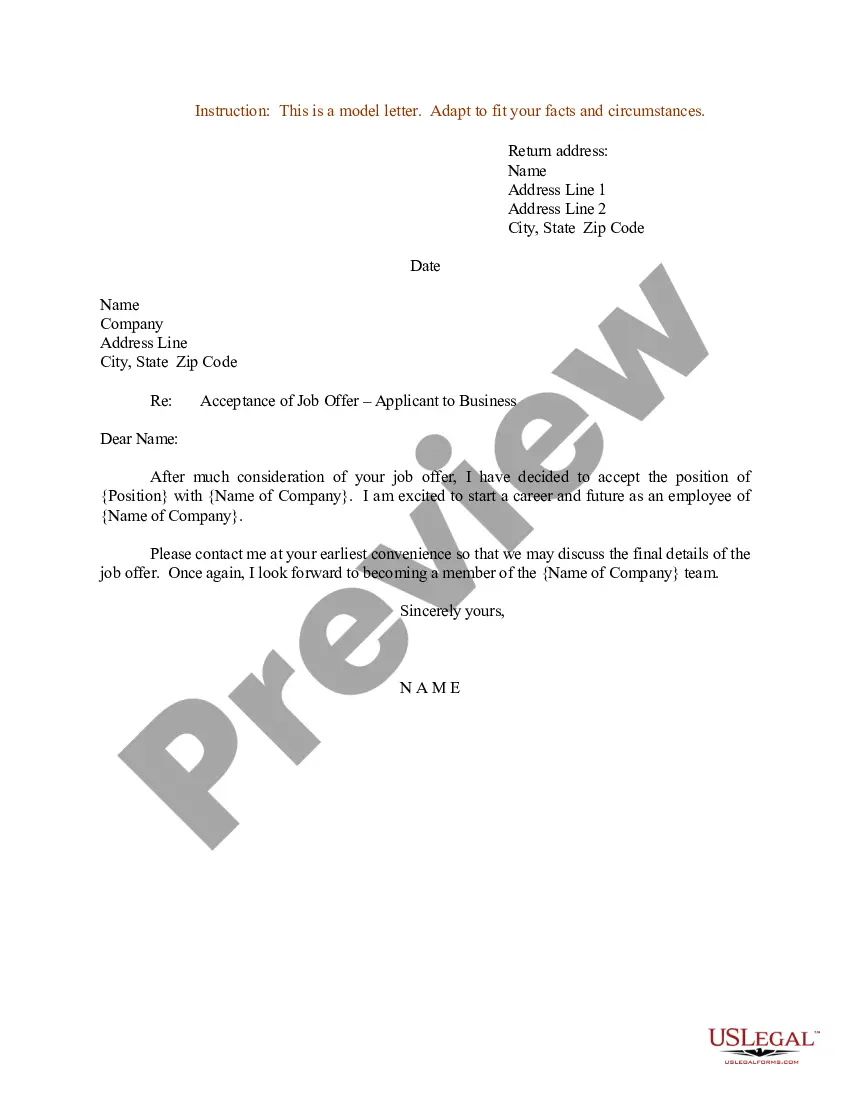
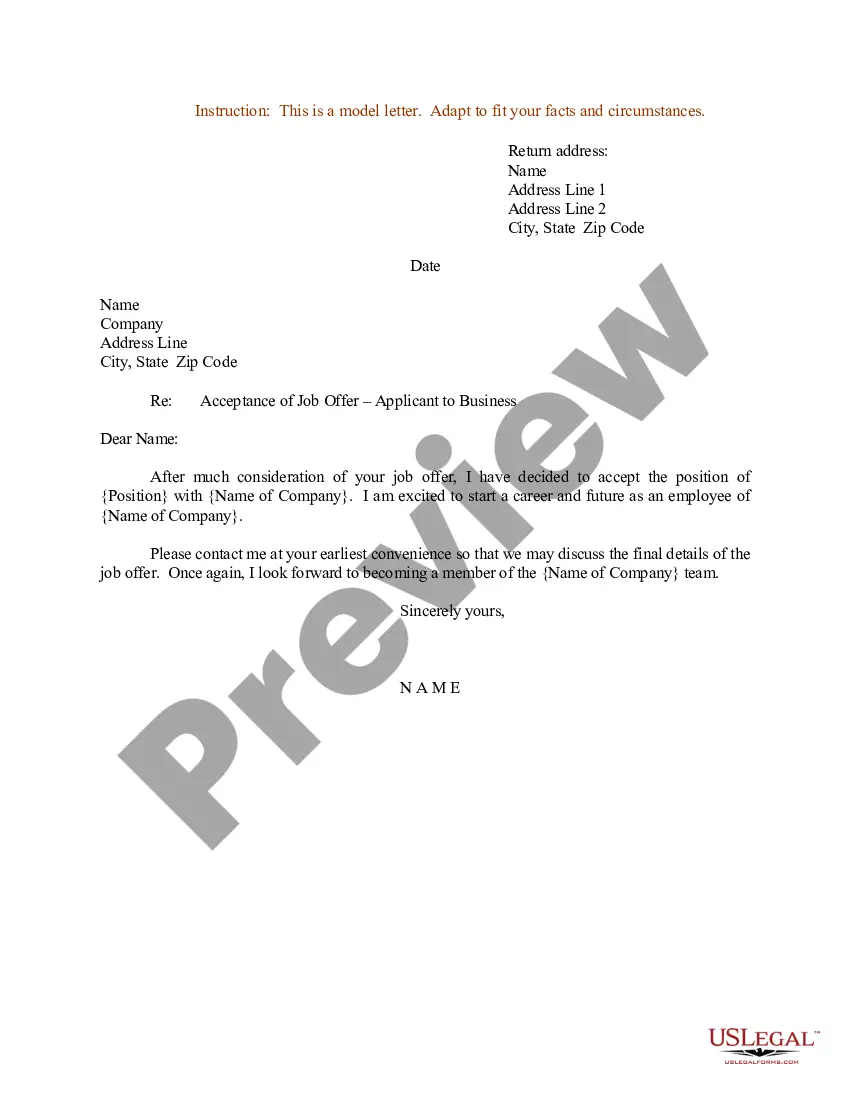
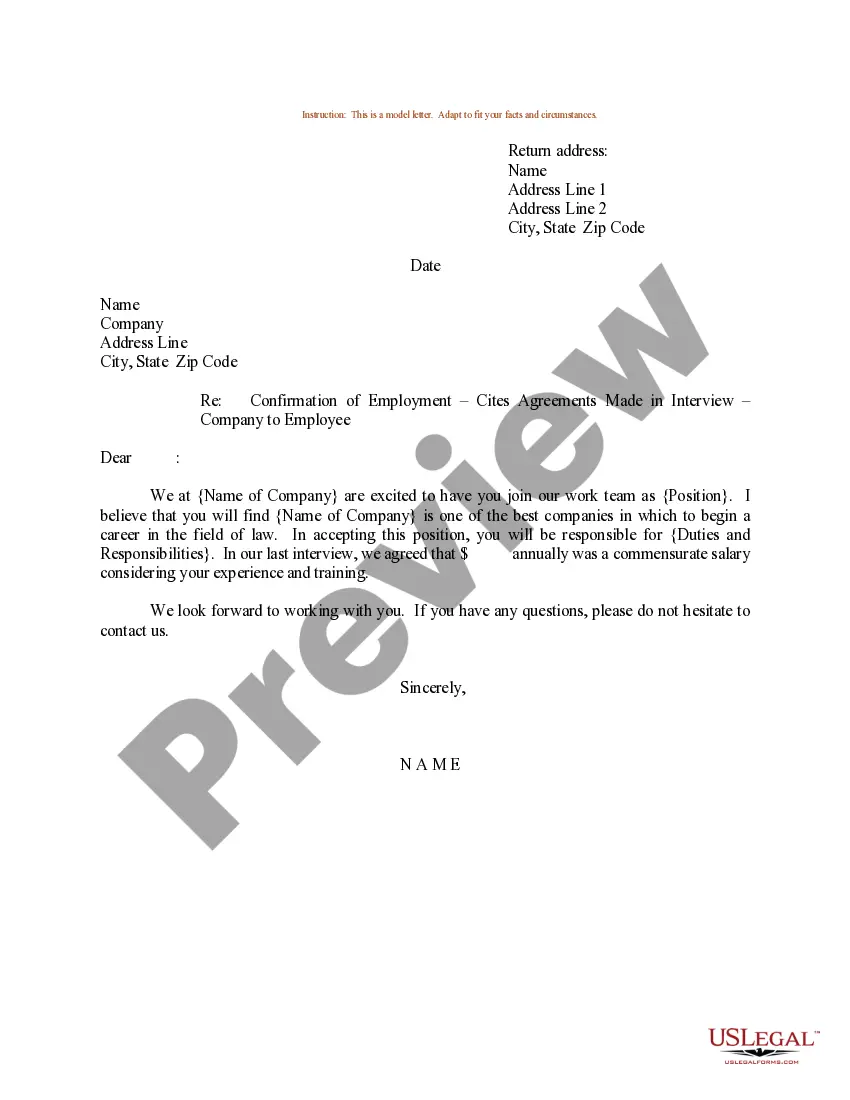
Letter Job Offer Sample With Resume In Suffolk
Description

Get your form ready online
Our built-in tools help you complete, sign, share, and store your documents in one place.
Make edits, fill in missing information, and update formatting in US Legal Forms—just like you would in MS Word.
Download a copy, print it, send it by email, or mail it via USPS—whatever works best for your next step.
Sign and collect signatures with our SignNow integration. Send to multiple recipients, set reminders, and more. Go Premium to unlock E-Sign.
If this form requires notarization, complete it online through a secure video call—no need to meet a notary in person or wait for an appointment.
We protect your documents and personal data by following strict security and privacy standards.

Make edits, fill in missing information, and update formatting in US Legal Forms—just like you would in MS Word.

Download a copy, print it, send it by email, or mail it via USPS—whatever works best for your next step.

Sign and collect signatures with our SignNow integration. Send to multiple recipients, set reminders, and more. Go Premium to unlock E-Sign.

If this form requires notarization, complete it online through a secure video call—no need to meet a notary in person or wait for an appointment.

We protect your documents and personal data by following strict security and privacy standards.
Looking for another form?







Form popularity
FAQ
The subject of the email can simply say ``cv'' or ``resume.'' In the content of the email, reiterate your interest in the position and mention that your CV is attached.
Does the employer specify what type of documents to send? If nothing is specified, attach your résumé and cover letter to the email, both as PDF documents. Finally, remember to include a closing sentence (followed by your name) within your email.
It's generally recommended to submit your resume and cover letters in PDF format. Here are a few reasons why: Formatting Consistency: PDFs preserve the formatting regardless of the device or software used to open them, ensuring that your document looks exactly as you intended.
Absolutely send the cover letter along with your resume to the email provided. It shows initiative and attention to detail. If you're looking to streamline your cover letter creation for future applications, check out tools like jobfly that can help tailor your cover letters efficiently.
Short answer: yes, you should submit a cover letter alongside your resume. Here's why: Most job openings require you to submit a cover letter. Recruiters might not have the time to read ALL the cover letters they receive, but they will definitely read cover letters if they're on the fence for a candidate.
How to Create a Resume and Cover Letter Use clear, easy-to-read formatting with heading and contact information. Include education information that highlights achievement (GPA, honors) and pertains to skills and capabilities. Make sure each line demonstrates your value proposition.
How to write a job application email Write a clear subject line. Include a salutation. Introduce yourself in the first sentence. Turn your cover letter into the body of your email. Close with details. Sign your email. Attach your materials. Proofread before you hit “send.”
You can either type your cover letter directly into the email message, copy and paste it from a word processing document, or if the company requests an attachment, send your cover letter and resume with the email message.
How To Email A Resume To Hiring Managers? Review any instructions carefully. Save your resume in the preferred format. Include an appropriate subject line. Determine if a cover letter is necessary. End your mail with a proper signature. Proofread your email.
The preferred method for submitting a job application online depends on the employer's instructions. If they don't specify, it's generally safest to submit your CV and cover letter as separate attachments.

