Approval Letter For Job In Collin
Description

Get your form ready online
Our built-in tools help you complete, sign, share, and store your documents in one place.
Make edits, fill in missing information, and update formatting in US Legal Forms—just like you would in MS Word.
Download a copy, print it, send it by email, or mail it via USPS—whatever works best for your next step.
Sign and collect signatures with our SignNow integration. Send to multiple recipients, set reminders, and more. Go Premium to unlock E-Sign.
If this form requires notarization, complete it online through a secure video call—no need to meet a notary in person or wait for an appointment.
We protect your documents and personal data by following strict security and privacy standards.

Make edits, fill in missing information, and update formatting in US Legal Forms—just like you would in MS Word.

Download a copy, print it, send it by email, or mail it via USPS—whatever works best for your next step.

Sign and collect signatures with our SignNow integration. Send to multiple recipients, set reminders, and more. Go Premium to unlock E-Sign.

If this form requires notarization, complete it online through a secure video call—no need to meet a notary in person or wait for an appointment.

We protect your documents and personal data by following strict security and privacy standards.
Looking for another form?









Form popularity
FAQ
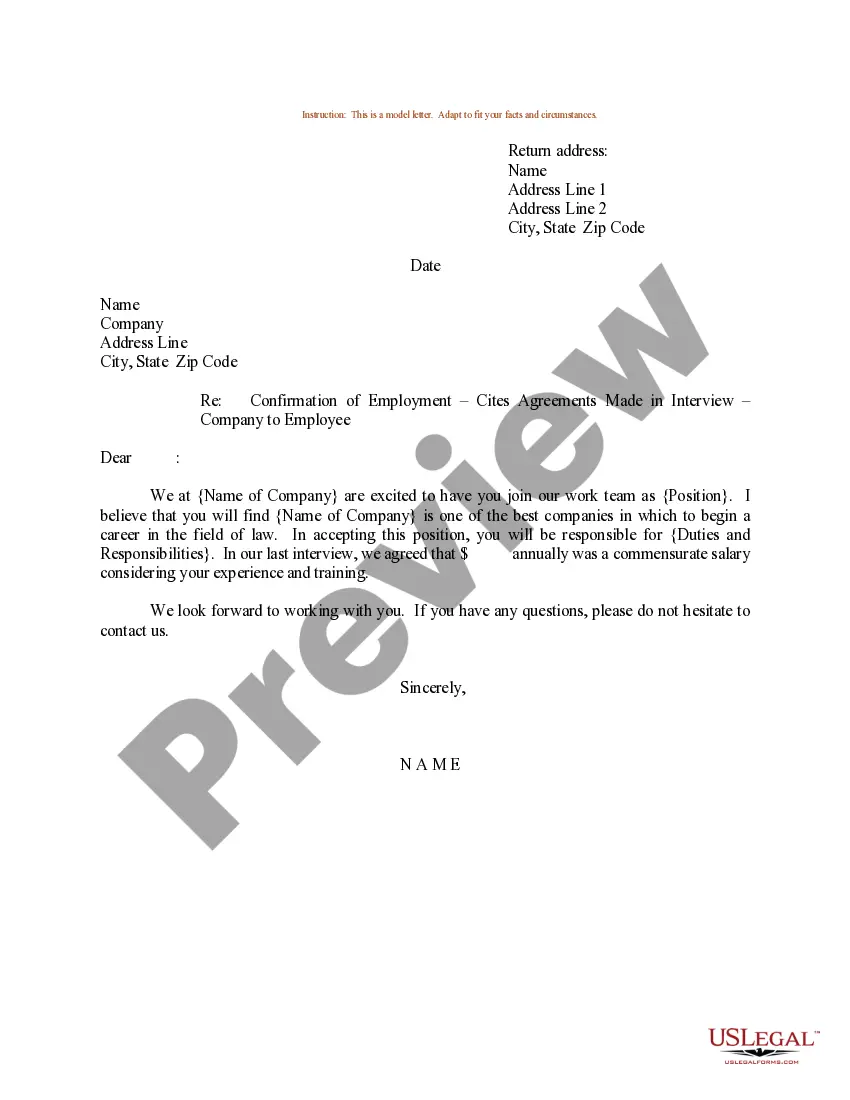
After the employee receives the offer letter, they should sign their signature indicating that they agree with the terms and formally accept the position. Most offer letters are also reviewed and signed by the hiring manager or a senior member of the company.
The hiring manager is the final say when providing a job offer; however, HR staff or recruiters may contribute different perspectives or advice about a particular candidate – this is why communication between these departments is important.
The offer letter can be written by the HR department, a hiring manager, or by their supervisor. No matter who oversees creating and sending out offer letters, there are elements that should be included in a great offer letter.
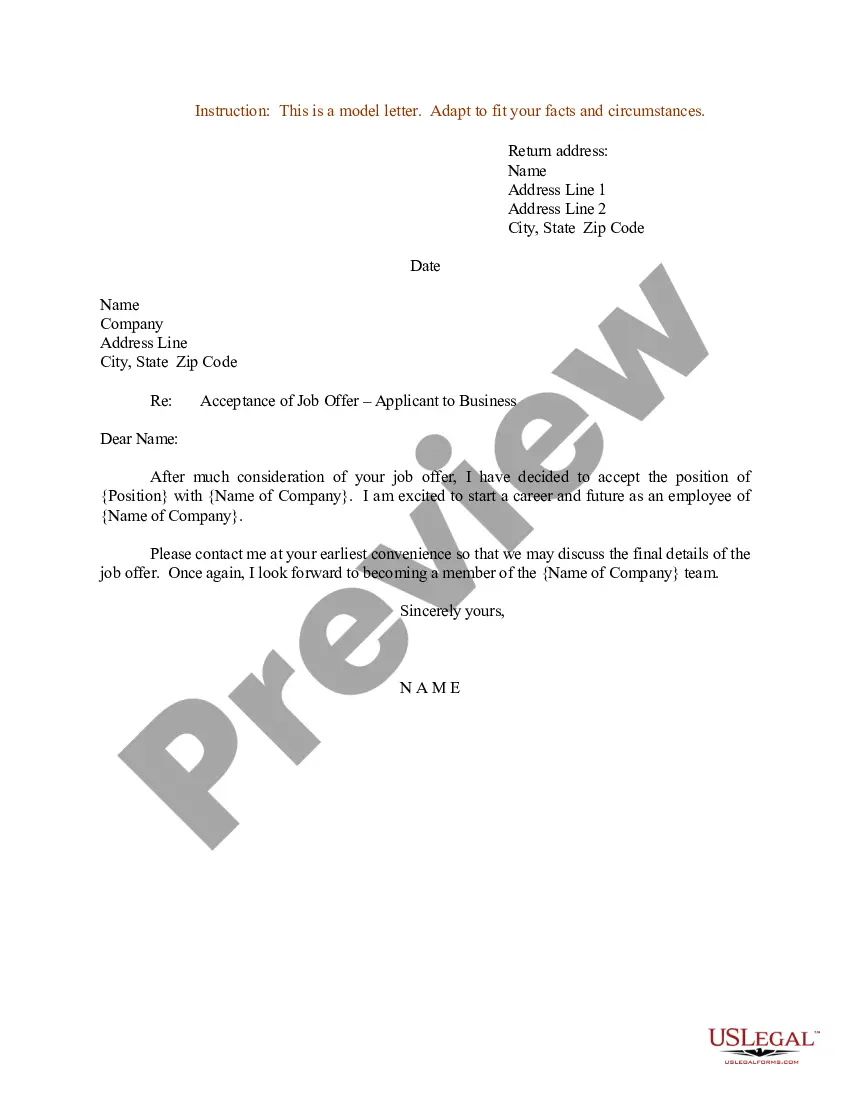
A job offer acceptance letter can be fairly brief, but needs to contain the following: An expression of your gratitude for the job offer and the opportunity. Written formal acceptance of the job offer. The terms and conditions (your salary, job title, and any other benefits)
I am pleased to accept your job offer as (position title) at (Company XYZ). I look forward to working under (Supervisor) and hope to meet the goals outlined with the position. The duties of this role are well aligned with my qualifications and skills.
While some employers send job offers and rejections over email, phone calls are an extremely common method for updating applicants. Being prepared for a job offer call at the right times can help you manage the anxiety and uncertainty of waiting for that final call.
Follow these steps to compose a compelling application letter: Research the company and job opening. Use a professional format. State the position you're applying for. Explain why you're the best fit for the job. Summarize your qualifications. Mention why you want the job. Include a professional closing.
Employers or recruiters can send candidates letters with job offers for a position with a company, which can be an exciting part of your job search. When you receive one of these letters, it can mean you have valuable skills or experience and the company wishes to hire you.
How to email a cover letter Review the job listing. Follow the hiring manager's instructions. Use a professional email address. Choose a subject line. Pick the right salutation. Attach your cover letter. Include a brief email. Send your cover letter as the body of the email.

