Agenda For Board Meeting Sample In Washington
Description
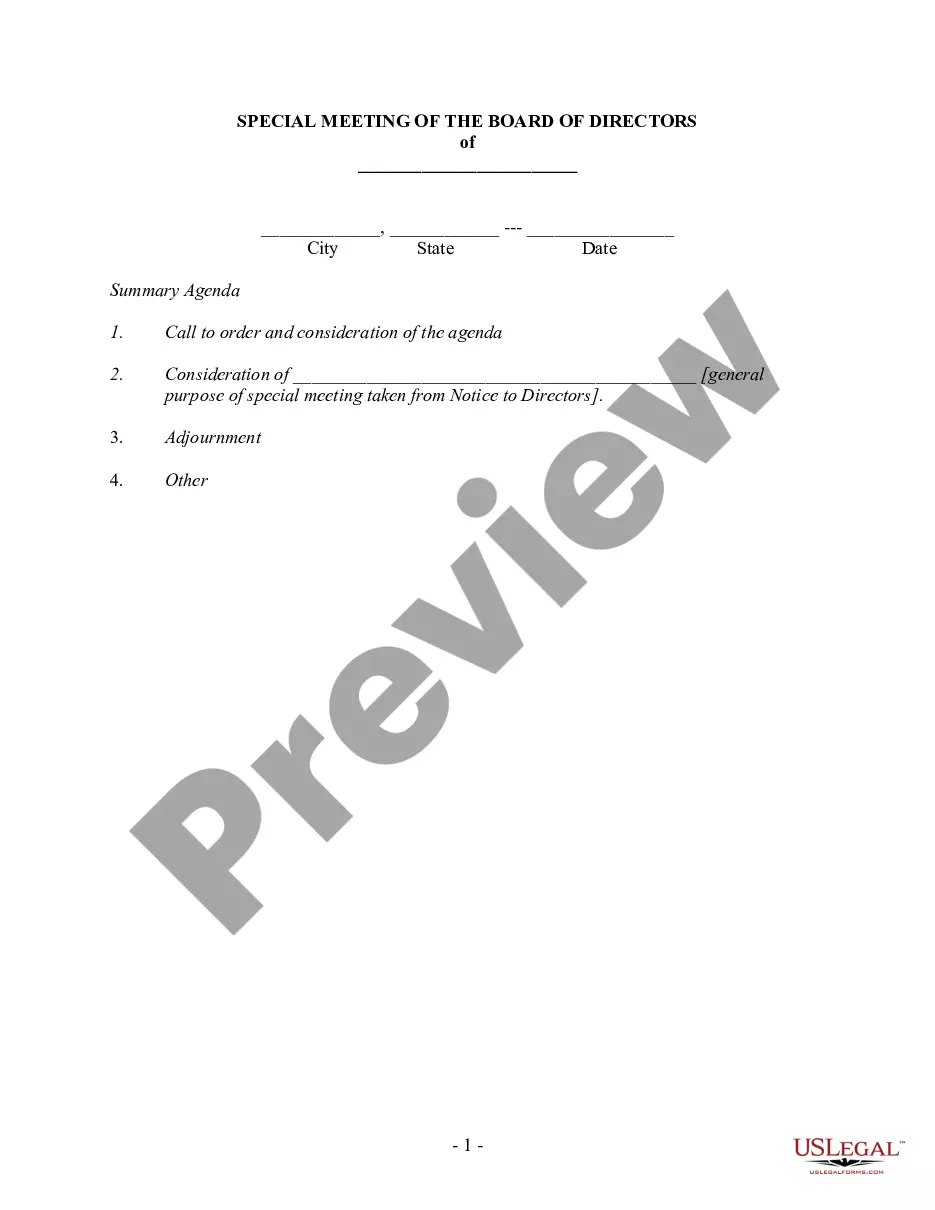
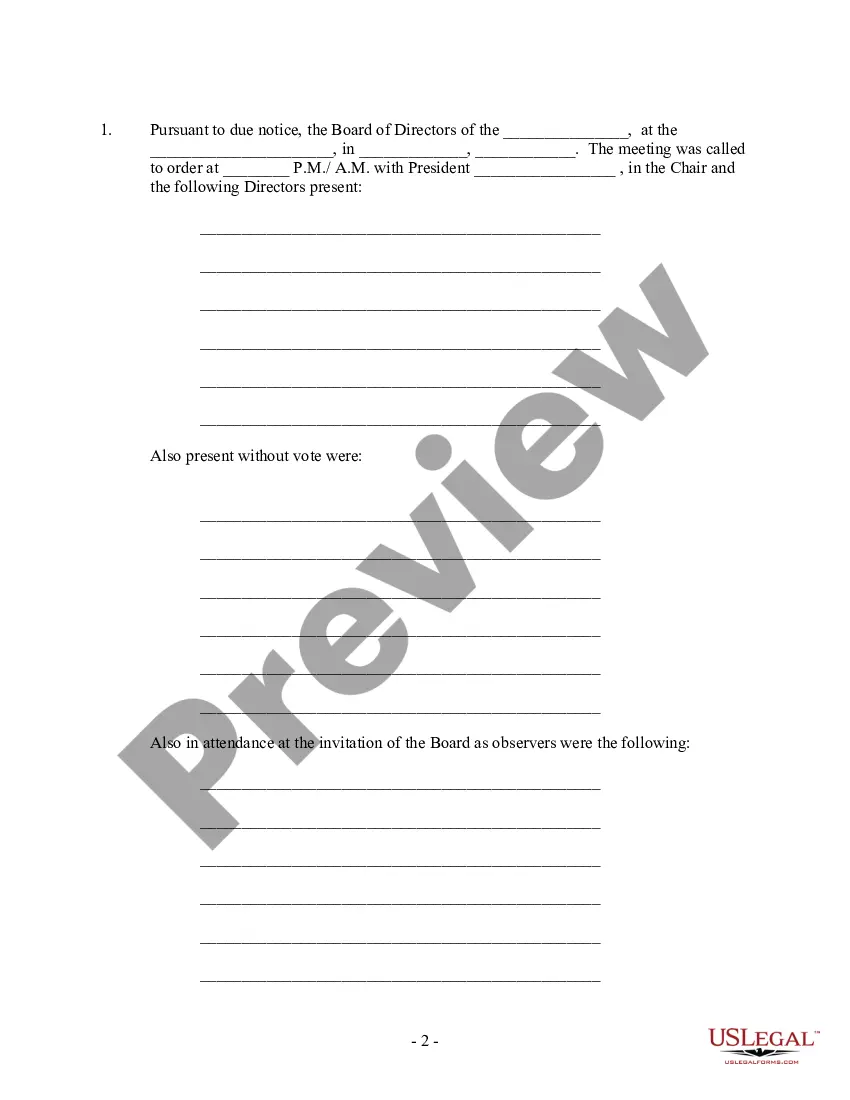




Get your form ready online
Our built-in tools help you complete, sign, share, and store your documents in one place.
Make edits, fill in missing information, and update formatting in US Legal Forms—just like you would in MS Word.
Download a copy, print it, send it by email, or mail it via USPS—whatever works best for your next step.
Sign and collect signatures with our SignNow integration. Send to multiple recipients, set reminders, and more. Go Premium to unlock E-Sign.
If this form requires notarization, complete it online through a secure video call—no need to meet a notary in person or wait for an appointment.
We protect your documents and personal data by following strict security and privacy standards.

Make edits, fill in missing information, and update formatting in US Legal Forms—just like you would in MS Word.

Download a copy, print it, send it by email, or mail it via USPS—whatever works best for your next step.

Sign and collect signatures with our SignNow integration. Send to multiple recipients, set reminders, and more. Go Premium to unlock E-Sign.

If this form requires notarization, complete it online through a secure video call—no need to meet a notary in person or wait for an appointment.

We protect your documents and personal data by following strict security and privacy standards.
Looking for another form?





Form popularity
FAQ
The chair owns the agenda Usually the company secretary, the CEO or the board secretary. This then needs to be approved or amended by the chair. The agenda and the board papers need to be sent to all directors at least 5 days plus a weekend, prior to the board meeting.
A consent agenda helps to streamline a board meeting. It's part of the regular agenda and it includes routine items and reports that usually have clear consensus from the board, like the minutes and the financial report. Board directors then approve all items on the consent agenda with one vote.
A consent agenda (also known by Roberts Rules of Order as a “consent calendar”) groups routine meeting discussion points into a single agenda item. In so doing, the grouped items can be approved in one action, rather than through the filing of multiple motions.
Examples of consent agenda items may include the previous meetings' minutes, financial reports, informational reports, the executive's report, program reports, department reports, committee appointments, and staff appointments that require board confirmation.
The agenda should include the meeting's goal, a list of topics to be discussed with their purposes, time allocations, and assigned facilitators. This structure provides a clear roadmap for the meeting, ensuring that all important points are covered. Share the agenda with all participants well in advance of the meeting.
9. What is the difference between Consent Agenda and Regular Agenda – What does it mean? A consent agenda is a bundle of items that is voted on, without discussion, as a package. It differentiates between routine matters not needing explanation and more complex or controversial issues needing examination.
Steps for planning a meeting agenda Define results first. What are the results your group needs to achieve by the end of the meeting? ... Identify the meeting's time frame. List the meeting's topics. Allot time frames by topic. Plan participation strategies to address each topic. Do a sanity check.
Understanding the 4 Ps of a Meeting Agenda. The 4 Ps—Purpose, Product, People, and Process—are crucial elements of a well-planned meeting. They provide a roadmap for structuring meetings to ensure that they are both efficient and effective.
What to include in a meeting agenda The purpose, goals, and objectives of the meeting. Points to be discussed, including time reserved for asking questions after each point. Timeframes for each point (including questions afterward) Name of person leading each action point. Final question round.
During the meeting itself, the agenda should be followed in order from top to bottom, and each point needs to be addressed or voted on before moving on to the next items of business. The agenda should always be prepared in advance by the president or chairman (also known as the presiding officer) or the secretary.
