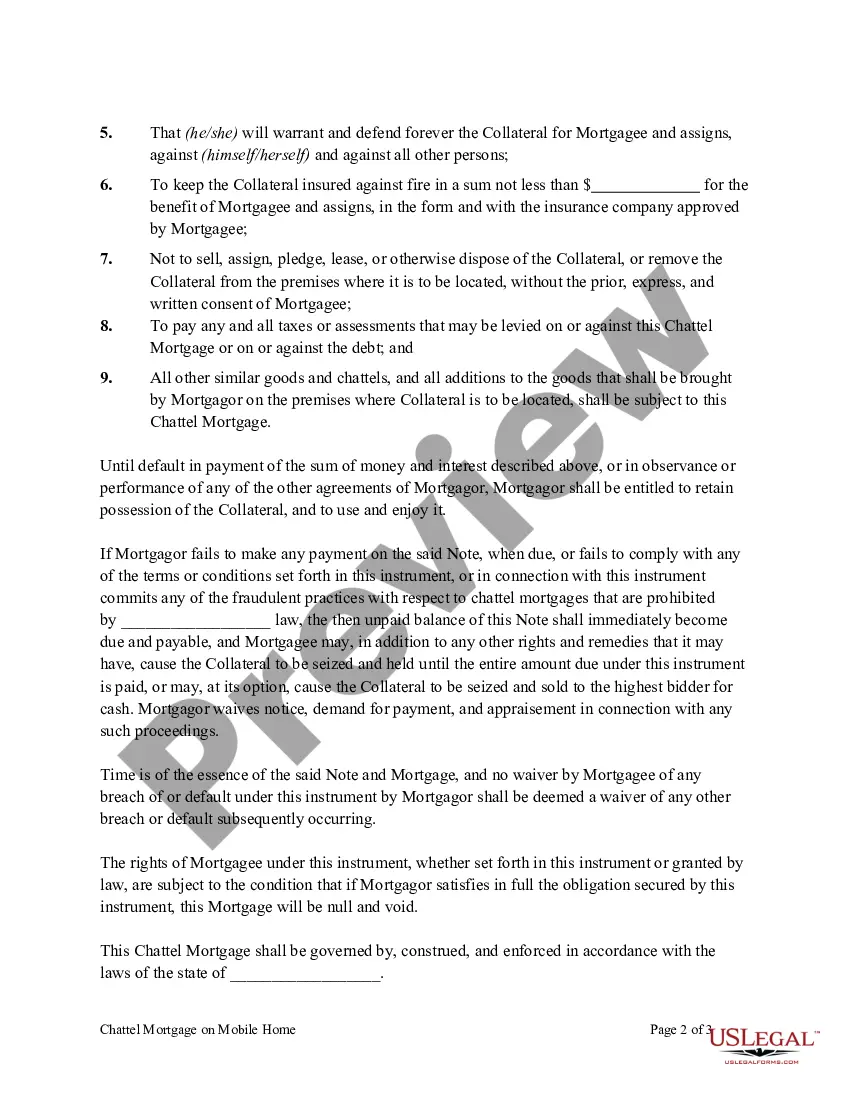
Chattel Mortgage Form With Decimals In Wayne
Description

Get your form ready online
Our built-in tools help you complete, sign, share, and store your documents in one place.
Make edits, fill in missing information, and update formatting in US Legal Forms—just like you would in MS Word.
Download a copy, print it, send it by email, or mail it via USPS—whatever works best for your next step.
Sign and collect signatures with our SignNow integration. Send to multiple recipients, set reminders, and more. Go Premium to unlock E-Sign.
If this form requires notarization, complete it online through a secure video call—no need to meet a notary in person or wait for an appointment.
We protect your documents and personal data by following strict security and privacy standards.

Make edits, fill in missing information, and update formatting in US Legal Forms—just like you would in MS Word.

Download a copy, print it, send it by email, or mail it via USPS—whatever works best for your next step.

Sign and collect signatures with our SignNow integration. Send to multiple recipients, set reminders, and more. Go Premium to unlock E-Sign.

If this form requires notarization, complete it online through a secure video call—no need to meet a notary in person or wait for an appointment.

We protect your documents and personal data by following strict security and privacy standards.
Looking for another form?








Form popularity
FAQ
Chattel is any tangible personal property that is movable. Examples of chattel are furniture, livestock, bedding, picture frames, and jewelry.
The Bottom Line Chattel mortgages are a little-known but potentially good option if you're looking to finance a manufactured home or heavy equipment. These loans are smaller than conventional loans and tend to have higher rates, but they have shorter terms and quicker payoffs.
A form of security interest, typically a legal mortgage, taken over tangible movable property (known as chattels).
LTO MEMORANDUM CIRCULAR NO. 17 of the said manual of operations provides that “In all dealings or transactions on motor vehicles, a chattel mortgage or release thereof shall first be registered with the office of the Register of Deeds before any registration transaction is effected.”
Information maintained at the Wayne County Treasurer's Office regarding ownership is available online: . Additionally, .MakeLoveland includes an interactive map of the City that provides property ownership information.
The biggest difference between a title and a deed is the physical component. A deed is an official written document declaring a person's legal ownership of a property, while a title is a legal concept that refers to ownership rights.
Property records can be found in many places. Deeds are filed with the local county register of deeds office. Michigan has 83 counties and an office for each one. The treasury and income tax office in each county handles property taxes.
If you do not have your deed, then you can get a recorded copy of it at the Register of Deeds; and a recorded copy is just as good as the original. You can come in person, send us a request by mail, or search online. Search and copy fees will apply.
