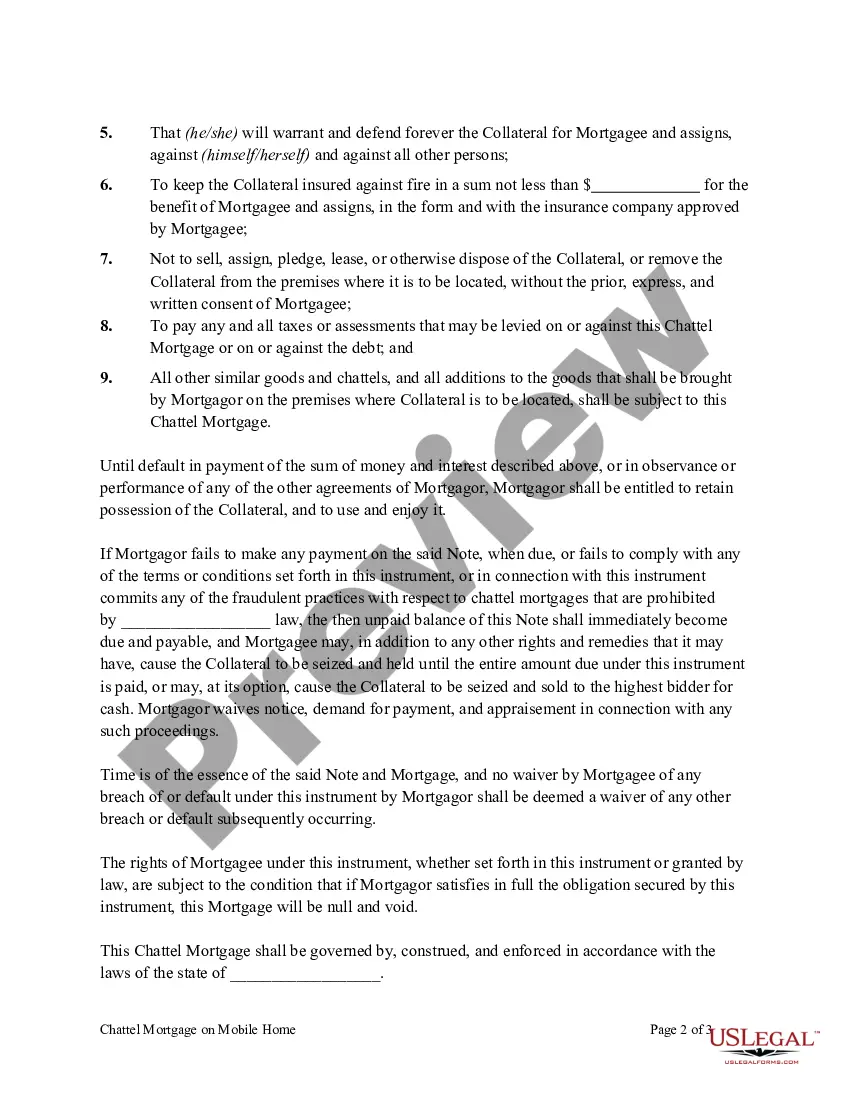
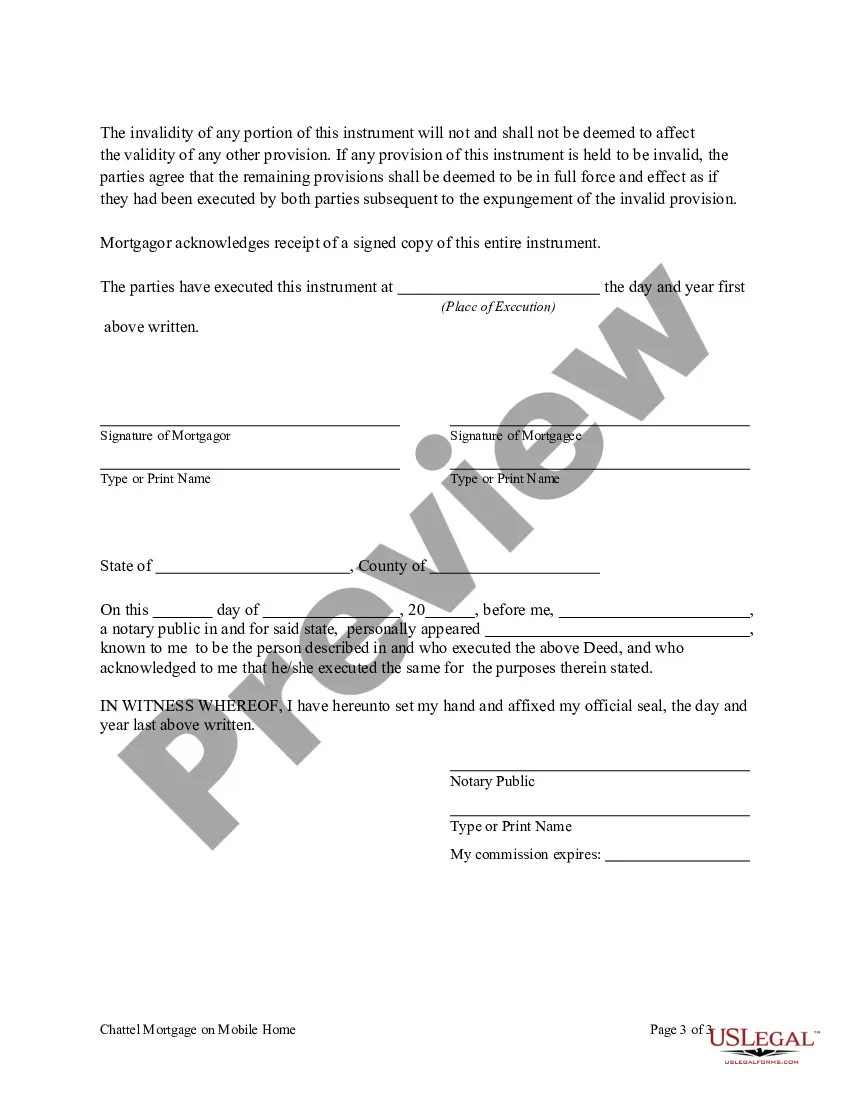
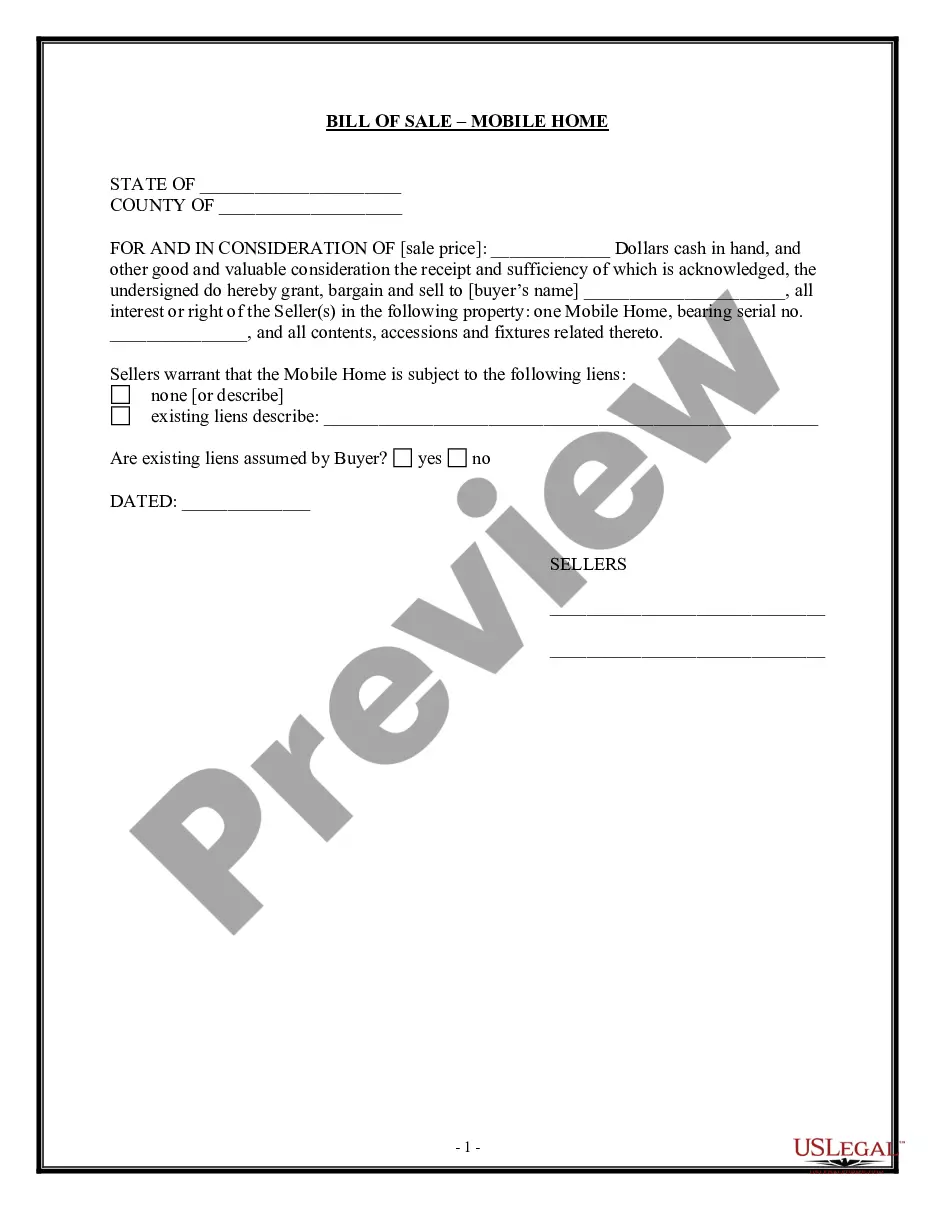
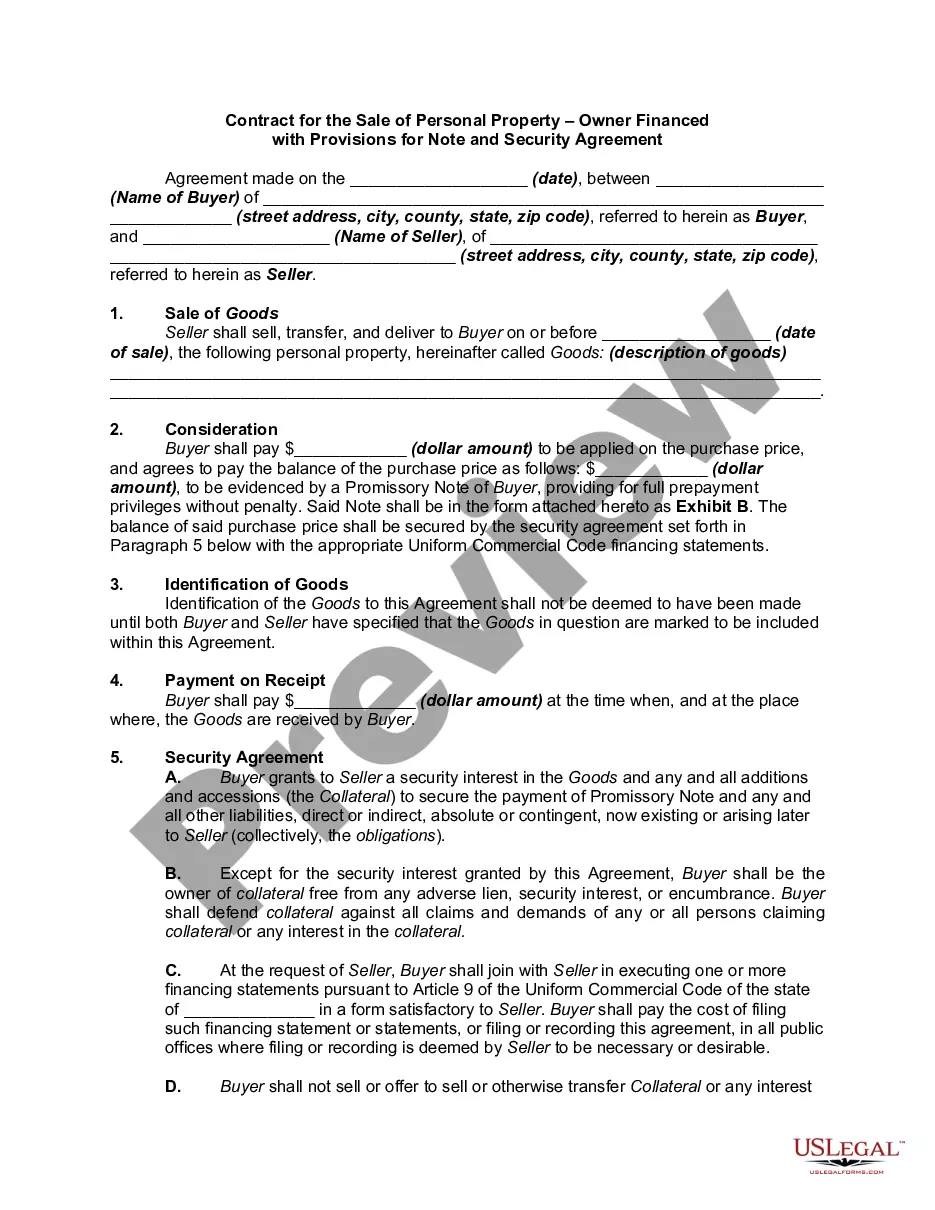
Chattel Mortgage Form With Extra Judicial Foreclosure In San Antonio
Description

Get your form ready online
Our built-in tools help you complete, sign, share, and store your documents in one place.
Make edits, fill in missing information, and update formatting in US Legal Forms—just like you would in MS Word.
Download a copy, print it, send it by email, or mail it via USPS—whatever works best for your next step.
Sign and collect signatures with our SignNow integration. Send to multiple recipients, set reminders, and more. Go Premium to unlock E-Sign.
If this form requires notarization, complete it online through a secure video call—no need to meet a notary in person or wait for an appointment.
We protect your documents and personal data by following strict security and privacy standards.

Make edits, fill in missing information, and update formatting in US Legal Forms—just like you would in MS Word.

Download a copy, print it, send it by email, or mail it via USPS—whatever works best for your next step.

Sign and collect signatures with our SignNow integration. Send to multiple recipients, set reminders, and more. Go Premium to unlock E-Sign.

If this form requires notarization, complete it online through a secure video call—no need to meet a notary in person or wait for an appointment.

We protect your documents and personal data by following strict security and privacy standards.
Looking for another form?


Form popularity
FAQ
As part of the lawsuit, the foreclosing party includes a petition for foreclosure that explains why a judge should issue a foreclosure judgment. In most cases, the court will do so, unless the borrower has a defense that justifies the delinquent payments.
Texas is a combination of a judicial and non-judicial foreclosure state; in short it allows for non-judicial foreclosures but ONLY if the lender or lienholder has a deed of trust as stated previously. Without a deed of trust the lender must obtain a court order to proceed with the foreclosure sale.
Generally, surplus funds are distributed in 30 to 120 days.
(a) A person, including a taxing unit and the Title IV-D agency, may file a petition in the court that ordered the seizure or sale setting forth a claim to the excess proceeds. The petition must be filed before the second anniversary of the date of the sale of the property.
In nonjudicial foreclosures, a lawsuit must be filed in order to obtain a judgment to collect the deficiency. In judicial foreclosures, a second lawsuit needs to be filed. These lawsuits must be filed within two years of the sale.
Mortgage Foreclosure Surplus Recovery in Texas Generally, a borrower will have to submit a claim to the trustee administrator for their surplus funds. The administrator usually sends a notice about the available funds to the borrower sometime after the foreclosure sale asking if the borrower wants to make a claim.
The Texas foreclosure process has roughly 160 days from start to finish until a home goes into auction, so knowing where you stand can help you decide what might be the next best course of action.
Texas is a power of sale jurisdiction, meaning that a lender can go through with the sale of your property without having to go to court. As a result, foreclosures in Texas can be very quick, sometimes being completed about two or three months after the process begins, though this is quicker than average.
The "right of redemption" refers to one's ability to reclaim the property even after the foreclosure sale takes place. In Texas, the "right of redemption" is only available for specific kinds of foreclosure actions such as foreclosures of certain tax liens and property owners association assessment liens.
If you default on your mortgage payments in Texas, the lender may foreclose using a judicial or nonjudicial method.
