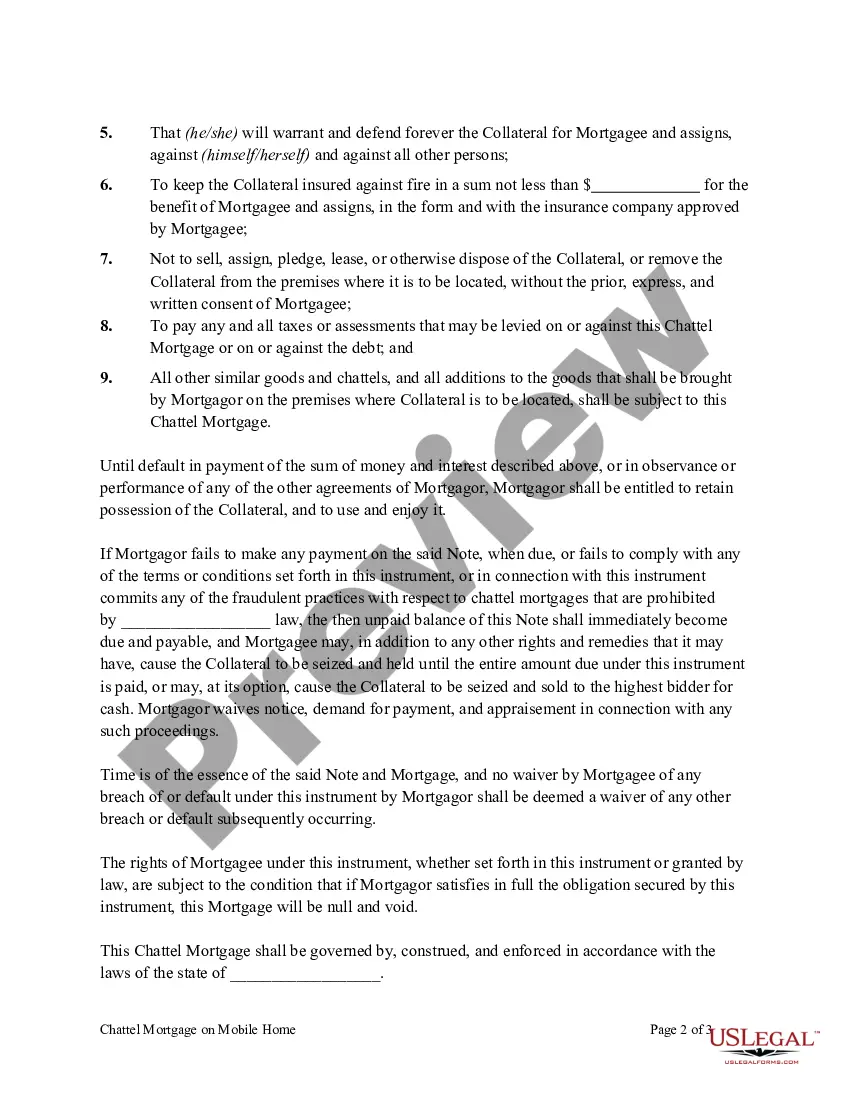
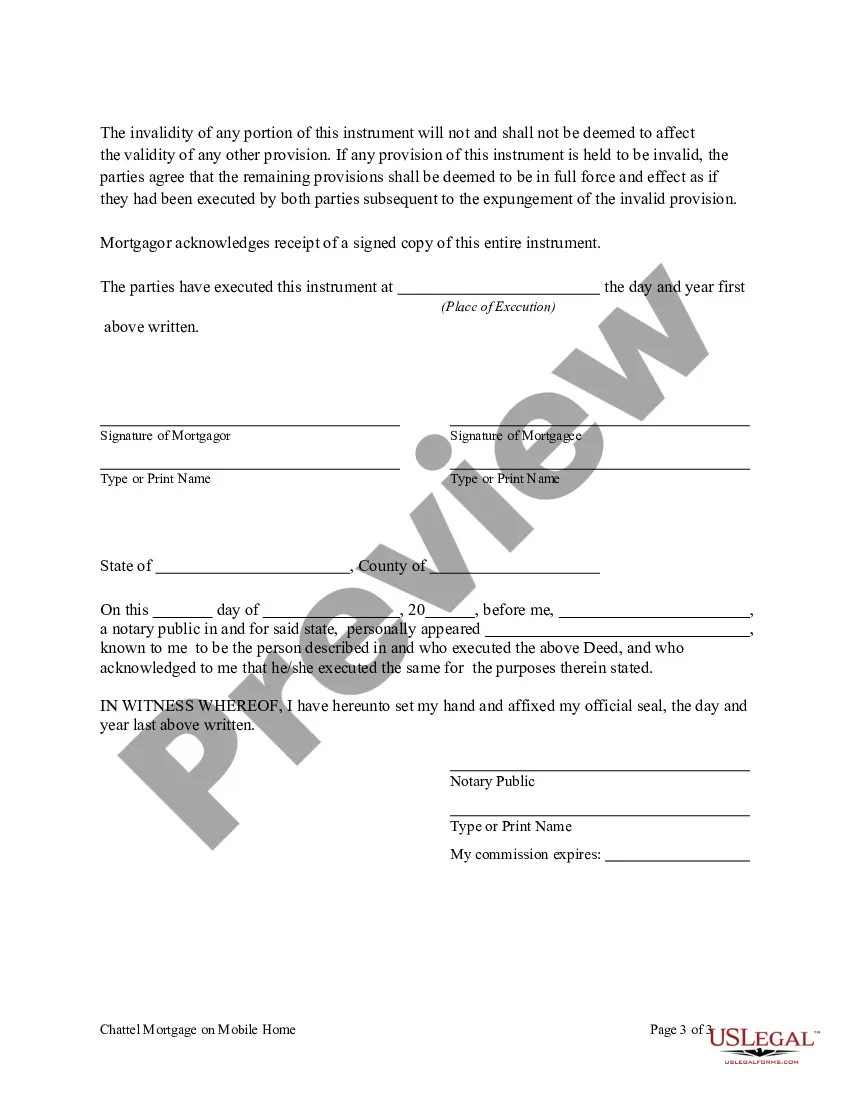
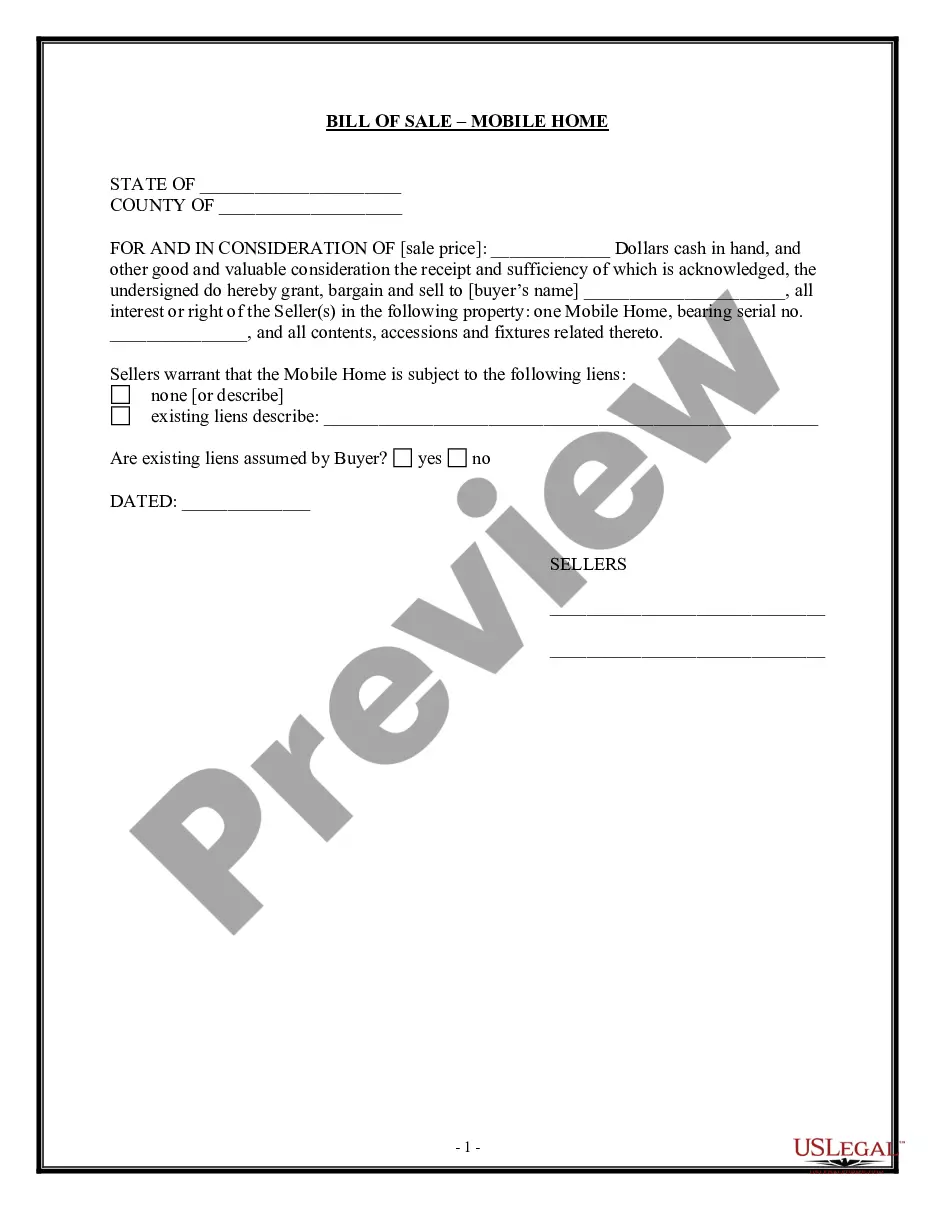
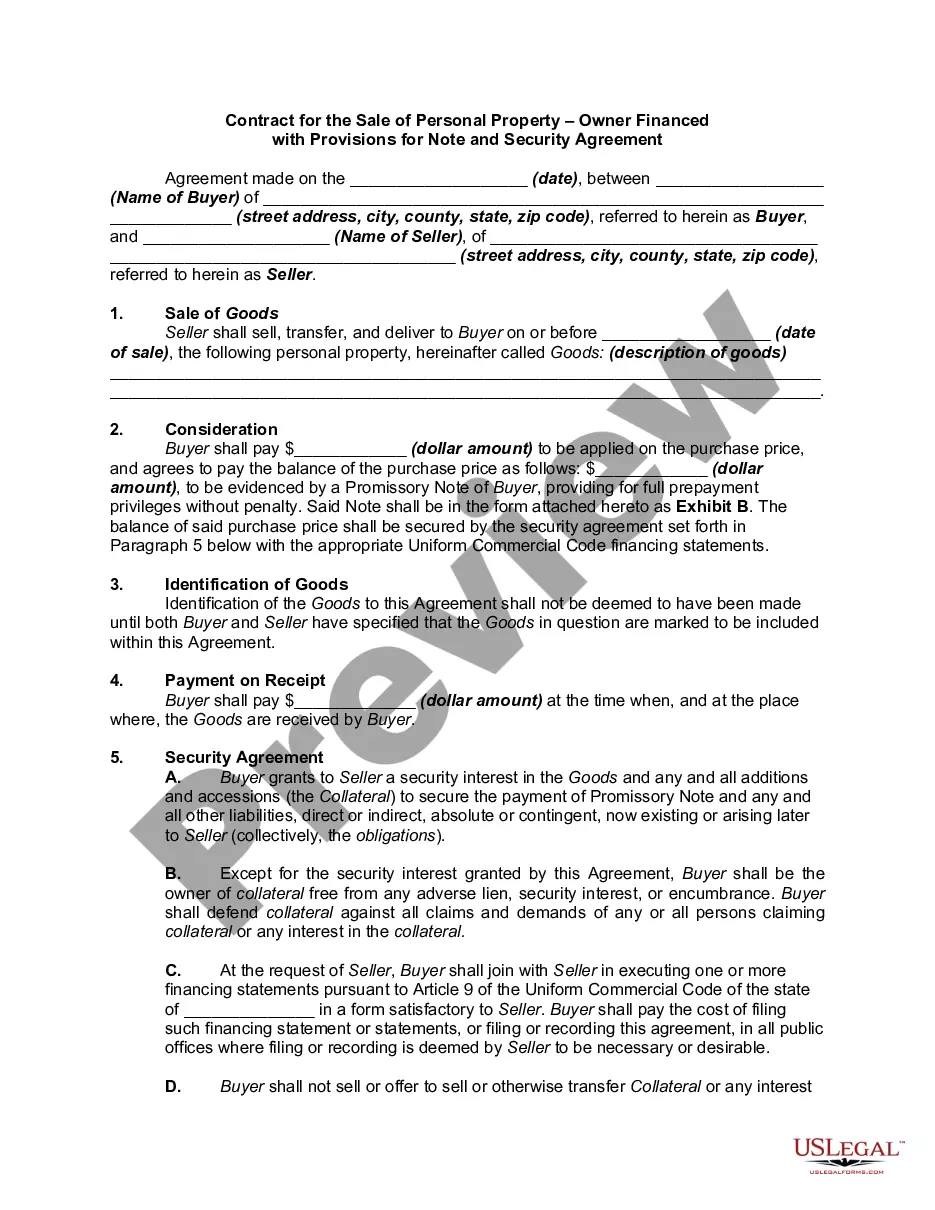
Chattel Mortgage Form Format In Sacramento
Description

Get your form ready online
Our built-in tools help you complete, sign, share, and store your documents in one place.
Make edits, fill in missing information, and update formatting in US Legal Forms—just like you would in MS Word.
Download a copy, print it, send it by email, or mail it via USPS—whatever works best for your next step.
Sign and collect signatures with our SignNow integration. Send to multiple recipients, set reminders, and more. Go Premium to unlock E-Sign.
If this form requires notarization, complete it online through a secure video call—no need to meet a notary in person or wait for an appointment.
We protect your documents and personal data by following strict security and privacy standards.

Make edits, fill in missing information, and update formatting in US Legal Forms—just like you would in MS Word.

Download a copy, print it, send it by email, or mail it via USPS—whatever works best for your next step.

Sign and collect signatures with our SignNow integration. Send to multiple recipients, set reminders, and more. Go Premium to unlock E-Sign.

If this form requires notarization, complete it online through a secure video call—no need to meet a notary in person or wait for an appointment.

We protect your documents and personal data by following strict security and privacy standards.
Looking for another form?










Form popularity
FAQ
How to fill out the Grant Deed Form Instructions for California? Enter the names of the grantor(s) and grantee(s). Fill in the property details including APN and address. Complete the documentary transfer tax section carefully. Sign the document in front of a notary public.
The simplest way to add a spouse to a deed is through a quitclaim deed. This type of deed transfers whatever ownership rights you have so that you and your spouse now become joint owners. No title search or complex transaction is necessary. The deed will list you as the grantor and you and your spouse as grantees.
Judicial foreclosures are more expensive and time-consuming than non-judicial foreclosures. This means that in states that allow them, a deed of trust is preferable to a mortgage from the lender's point of view.
California mainly uses two types of deeds: the “grant deed” and the “quitclaim deed.” Most other deeds you will see, such as the common “interspousal transfer deed,” are versions of grant or quitclaim deeds customized for specific circumstances.
In Sacramento County, as in many counties, the recorder's office is combined with the county clerk's office. The office is located at: 3636 American River Drive, Ste. 110, Sacramento CA 95864, and can be phoned at (916) 874-6334.
Is California a Mortgage State or a Deed of Trust State? California is a Deed of Trust state.
If you have a deed of trust, you'll usually face a nonjudicial foreclosure — meaning the trustee can just impose it. If you have a mortgage, your lender will need to seek a court judgment to seize the home.
If you think a quitclaim deed may be appropriate for you, consult an estate planning attorney. They can draft a quitclaim deed for you transferring ownership of the real property from the grantor (or property owner) to the grantee (person receiving the interest). You should sign the deed in front of a notary public.
This can have several consequences. First without recording the deed. There is no public record ofMoreThis can have several consequences. First without recording the deed. There is no public record of the transfer. This can lead to confusion and disputes over ownership in the future.
