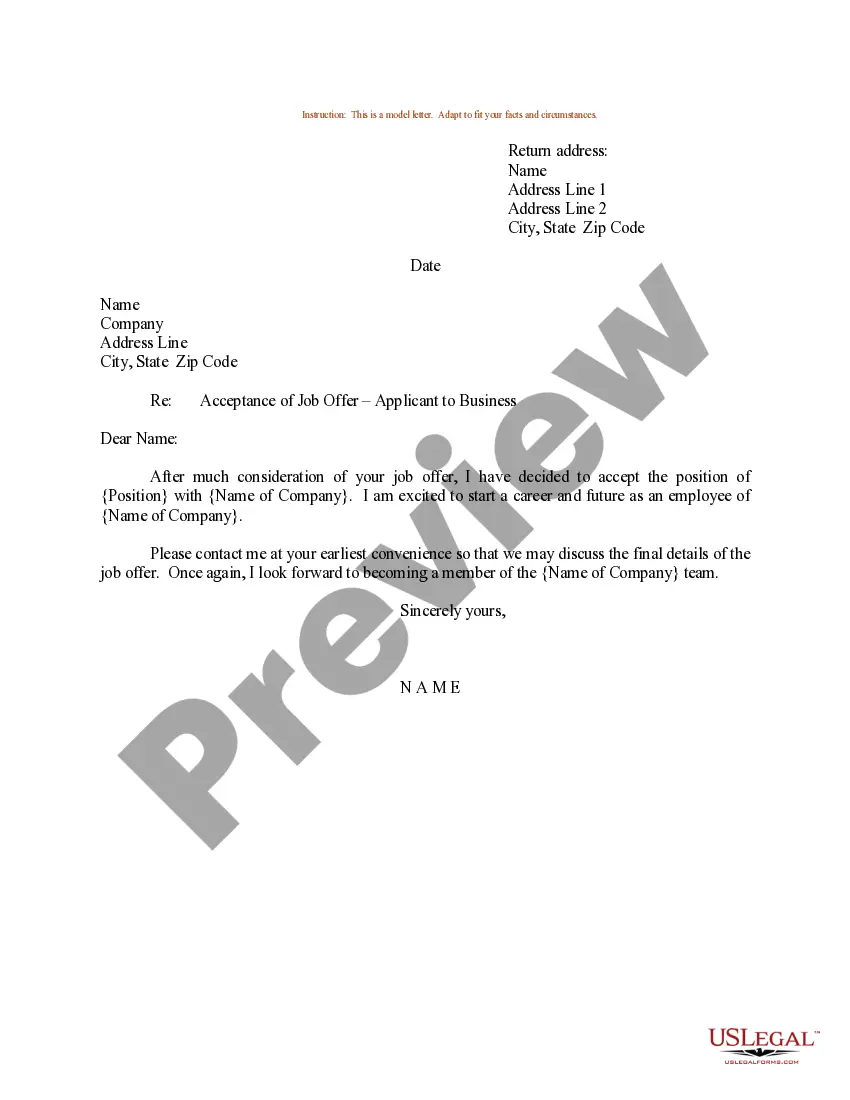
Carta Exemplo Formal In Minnesota
Description
Get your form ready online
Our built-in tools help you complete, sign, share, and store your documents in one place.
Make edits, fill in missing information, and update formatting in US Legal Forms—just like you would in MS Word.
Download a copy, print it, send it by email, or mail it via USPS—whatever works best for your next step.
Sign and collect signatures with our SignNow integration. Send to multiple recipients, set reminders, and more. Go Premium to unlock E-Sign.
If this form requires notarization, complete it online through a secure video call—no need to meet a notary in person or wait for an appointment.
We protect your documents and personal data by following strict security and privacy standards.

Make edits, fill in missing information, and update formatting in US Legal Forms—just like you would in MS Word.

Download a copy, print it, send it by email, or mail it via USPS—whatever works best for your next step.

Sign and collect signatures with our SignNow integration. Send to multiple recipients, set reminders, and more. Go Premium to unlock E-Sign.

If this form requires notarization, complete it online through a secure video call—no need to meet a notary in person or wait for an appointment.

We protect your documents and personal data by following strict security and privacy standards.
Looking for another form?




Form popularity
FAQ
In general, when no complicating factors exist, informal probate is easier and less expensive than formal probate. Most probate proceedings in Minnesota are informal. If you initiate probate as an interested party in the estate, you must initiate formal probate, not informal probate.
Informal probate simplifies the process of probate by removing the step-by-step oversight of the probate court. Instead, informal probate consists mostly of paperwork. Eligibility for Informal Probate. The key requirement for informal probate is that there are no disputes to be resolved in court.
The length of the probate process will vary greatly depending on things such as the size and complexity of the estate. More often than not, however, probate will wrap up in about six months to one year. Some estates, however, can take years to go through probate.
First and foremost, there are a number of asset types that typically do not pass through probate. This includes life insurance policies, bank accounts, and investment or retirement accounts that require you to name a beneficiary.
In general, when no complicating factors exist, informal probate is easier and less expensive than formal probate. Most probate proceedings in Minnesota are informal. If you initiate probate as an interested party in the estate, you must initiate formal probate, not informal probate.
In Minnesota, if a decedent has less than $75,000 of assets and no real estate, they may bypass the probate process. If a trust is involved, there will be a trustee or trustees. The trust must go through an administrative phase, the process for closing out the trust.
Many states have laws that give creditors 7 months (or similar time limit) to submit verified claims. There is a specific legal procedure to become an official creditor or else the executor is not personally liable for that debt.
In Minnesota, creditors have 1 year from the decedent's death to file a claim against the estate, or 4 months from the initial publication of the creditor notice, whichever comes earlier (this 4-month period changes to 28 days from date of individual notification in the case where the creditor was entitled to ...
Therefore, the first step in determining whether you have been nominated as the personal representative of an estate is to check the decedent's last will and testament. The last will and testament should be located at the probate court in the county where the decedent resided.
Formal probate proceedings are commenced by filing a petition for formal probate with the court. The petitioner then must appear before a court at a hearing. Formal probate matters can be either supervised or unsupervised by the court.

