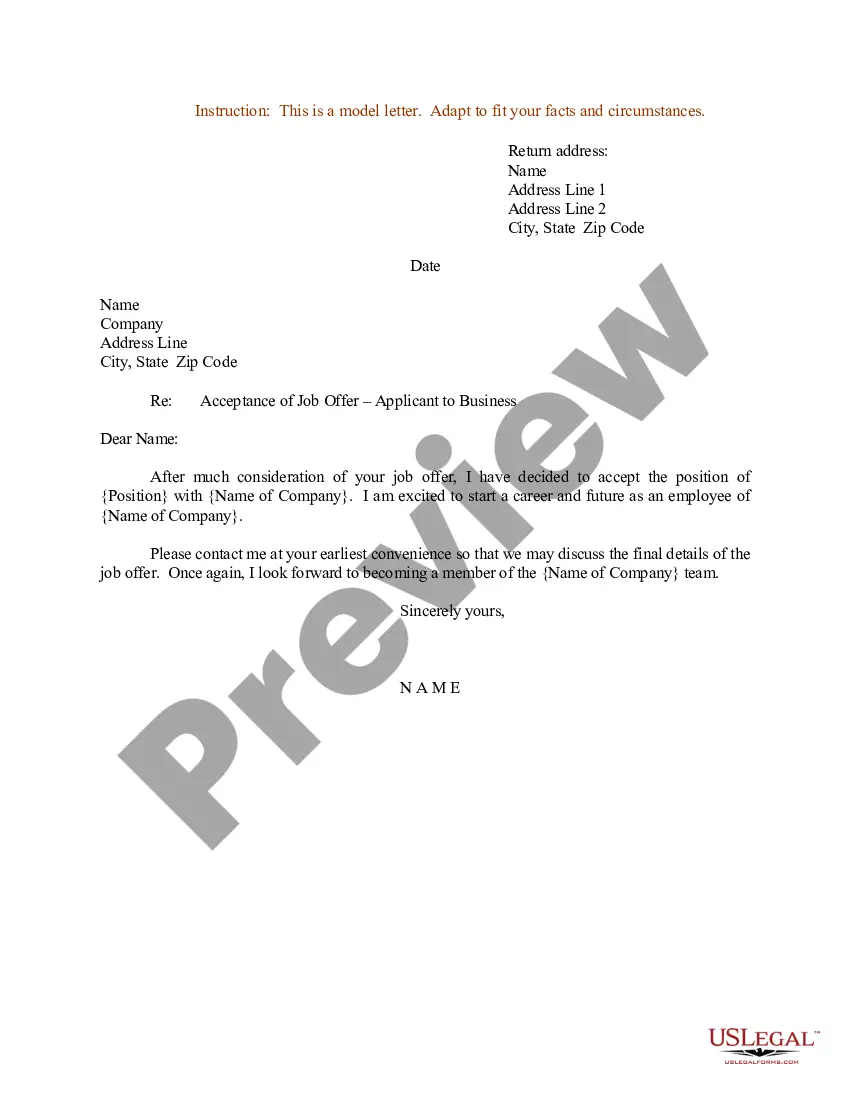
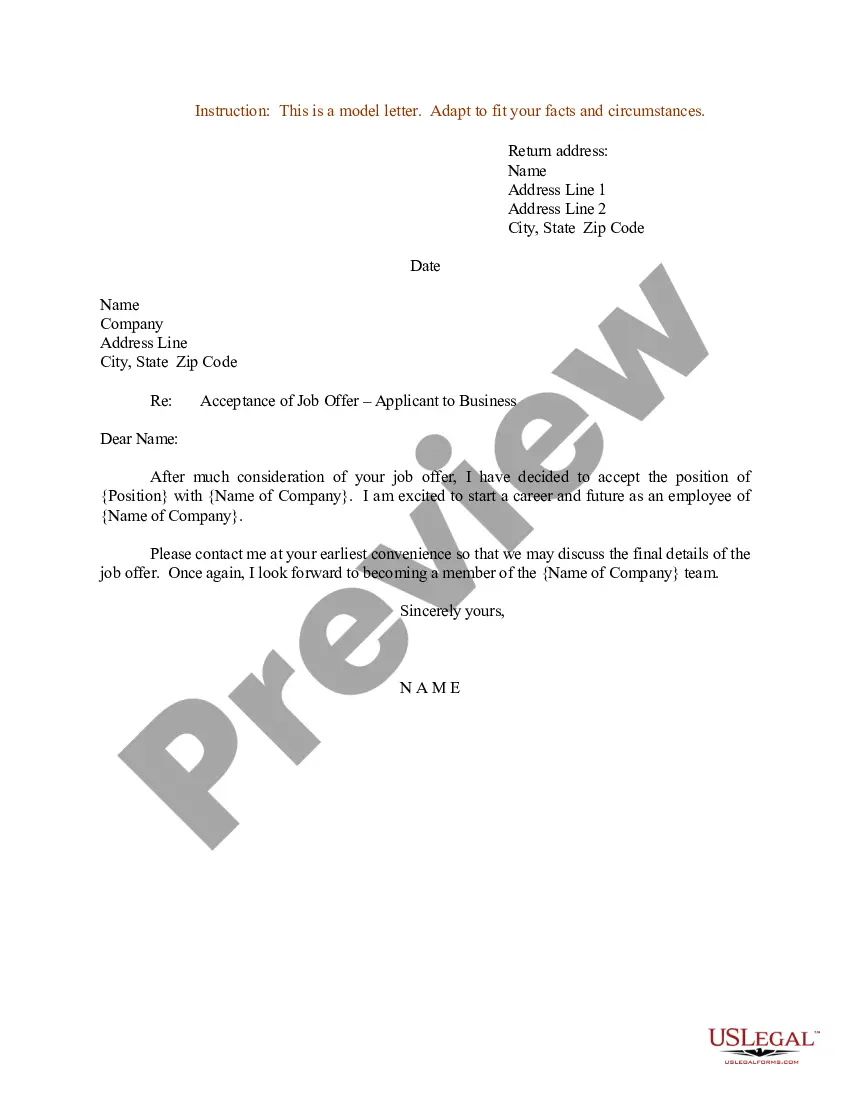
Job Acceptance Letter From Employer In Minnesota
Description
Get your form ready online
Our built-in tools help you complete, sign, share, and store your documents in one place.
Make edits, fill in missing information, and update formatting in US Legal Forms—just like you would in MS Word.
Download a copy, print it, send it by email, or mail it via USPS—whatever works best for your next step.
Sign and collect signatures with our SignNow integration. Send to multiple recipients, set reminders, and more. Go Premium to unlock E-Sign.
If this form requires notarization, complete it online through a secure video call—no need to meet a notary in person or wait for an appointment.
We protect your documents and personal data by following strict security and privacy standards.

Make edits, fill in missing information, and update formatting in US Legal Forms—just like you would in MS Word.

Download a copy, print it, send it by email, or mail it via USPS—whatever works best for your next step.

Sign and collect signatures with our SignNow integration. Send to multiple recipients, set reminders, and more. Go Premium to unlock E-Sign.

If this form requires notarization, complete it online through a secure video call—no need to meet a notary in person or wait for an appointment.

We protect your documents and personal data by following strict security and privacy standards.
Looking for another form?




Form popularity
FAQ
An offer letter is generally not considered a legal contract in the traditional sense. It outlines the terms of employment but usually doesn't bind the employee or employer legally, especially in at-will employment scenarios.
The legal implications of signing an offer letter can vary based on jurisdiction but generally imply a mutual agreement to the terms outlined. This means, once signed, you are legally obligated to adhere to the conditions set forth, and failure to do so could result in legal repercussions.
Some important details about an offer letter are: It is NOT a legally binding contract. It does NOT include promises of future employment or wages. It includes an employment “at-will” statement.
Follow these simple steps to ensure you include the important details in your acceptance letter: Address the letter to the recruiter. Express your gratitude for the offer. Confirm the terms of employment. Format your letter appropriately. Proofread your letter. Send your letter and follow up with the recruiter.
Minnesota has long required that an employer provide written notice of basic terms of employment to newly hired employees. Most companies will comply with these requirements in the offer letter provided to the employee.
Yes, it is generally acceptable to decline a job offer after initially accepting it, but it should be done thoughtfully and professionally. Here's a brief template for an email if you decide to decline: This approach helps you to leave the door open for future opportunities while maintaining professionalism.
An employer can give out the following information only with a Release signed by you: written employee evaluations and your response to them, written disciplinary warnings and actions in the last 5 years, and. written reasons for why you left the job.
Unless you're signing a contract of employment or are being given some kind of sign on bonus that needs to be repaid, there is nothing to stop you from accepting a job offer and then backing out.
Although not required in the U.S., providing a candidate a written job offer is considered a good practice. Following up a verbal offer with a written offer will not only set expectations for the new employee, but also clarify any matters that were discussed during the interview phase.
Although not required in the U.S., providing a candidate a written job offer is considered a good practice. Following up a verbal offer with a written offer will not only set expectations for the new employee, but also clarify any matters that were discussed during the interview phase.