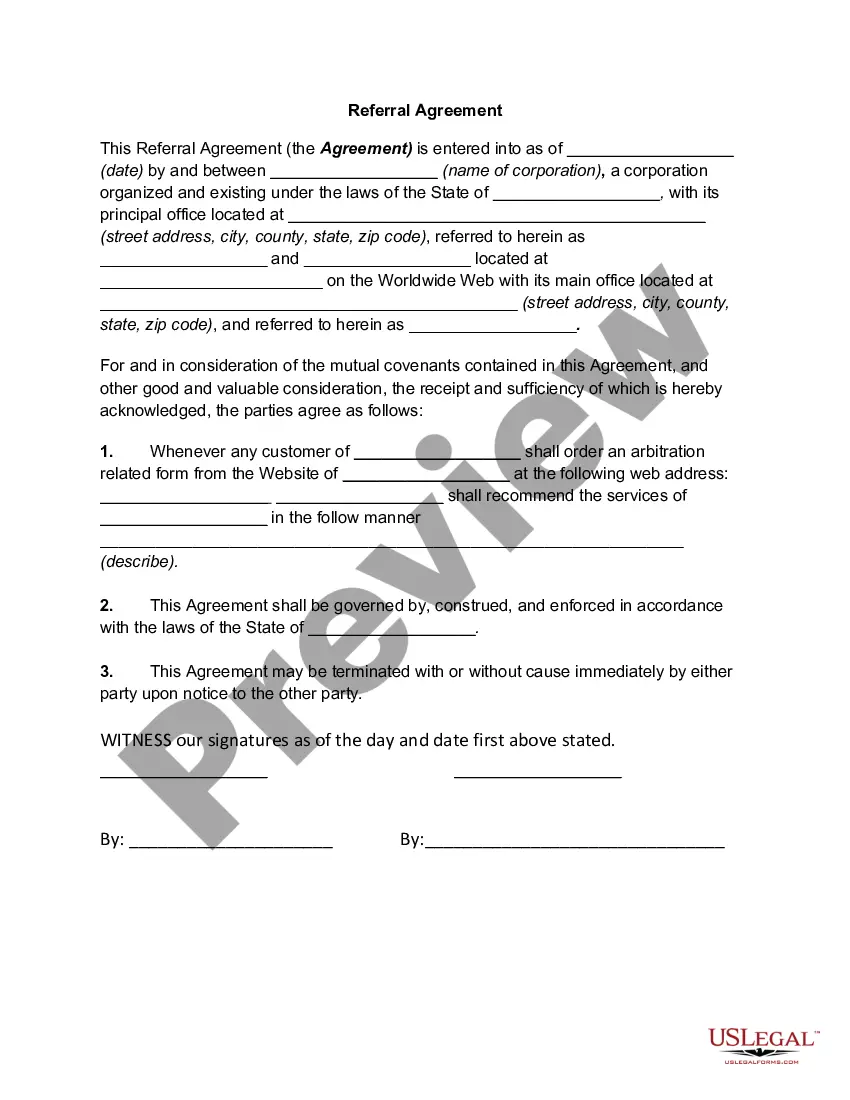
Client Referral Agreement For Financial Advisors In Montgomery
Description
Get your form ready online
Our built-in tools help you complete, sign, share, and store your documents in one place.
Make edits, fill in missing information, and update formatting in US Legal Forms—just like you would in MS Word.
Download a copy, print it, send it by email, or mail it via USPS—whatever works best for your next step.
Sign and collect signatures with our SignNow integration. Send to multiple recipients, set reminders, and more. Go Premium to unlock E-Sign.
If this form requires notarization, complete it online through a secure video call—no need to meet a notary in person or wait for an appointment.
We protect your documents and personal data by following strict security and privacy standards.

Make edits, fill in missing information, and update formatting in US Legal Forms—just like you would in MS Word.

Download a copy, print it, send it by email, or mail it via USPS—whatever works best for your next step.

Sign and collect signatures with our SignNow integration. Send to multiple recipients, set reminders, and more. Go Premium to unlock E-Sign.

If this form requires notarization, complete it online through a secure video call—no need to meet a notary in person or wait for an appointment.

We protect your documents and personal data by following strict security and privacy standards.
Looking for another form?









Form popularity
FAQ
Financial advisors can ask clients for referrals in several ways, such as by offering incentives or, if the relationship is strong, simply just asking. Advisors should be careful when asking for referrals because a client may not want to share their advisor.
2 What to include in a referral agreement A referral agreement should cover several aspects, such as the scope and duration of the agreement, the referral process and criteria, compensation and payment terms, performance and quality standards, as well as confidentiality and non-compete clauses.
Your referral letter should be concise and to the point. Highlight how you know the candidate, why they're qualified for the role, and the value they can bring to the company. Be professional and avoid overly effusive praise.
Here is how to write an effective letter of referral: Include both addresses. Write a brief introduction. Give an overview of the applicant's strengths. Share a story of the applicant. Add a closing statement. Leave a signature.
Tell them you appreciate them as a client and their decision to choose your business for their financial advising. Explain the qualities that make them an ideal client and how this makes them ideal for referring potential new clients. Avoid being vague!
Parts of a referral agreement Date. The date should appear at the beginning and end of the contract. Names and roles of the parties involved. Identify the parties to the agreement. Duration of the agreement. State how long the agreement will last. Consideration. Acceptance.
Thank them for their service, and let them know you are going a different direction. They may ask why, but they probably already know the answer to that question. If you feel comfortable in letting them know why, go ahead and tell them.
If you're handling your finances moving forward. Be sure to follow the termination instructions in your contract. Include all the necessary information in a letter to your advisor, but keep it brief and professional. You don't owe them a lengthy explanation, and a quick, clean break is in everyone's best interest.
It's a business decision, not a personal rejection. While you're not required to, letting your advisor know you're leaving is a classy move. A quick call or email does the trick. Your new advisor will handle the account transfer, so just keep it simple, professional, and as always, kind.
Client contact. Another requirement of the safe harbor is that each client be contacted at least annually to determine whether his or her financial situation and/or investment objectives have changed. We strongly recommend that preparation for these meetings be documented in the client file.