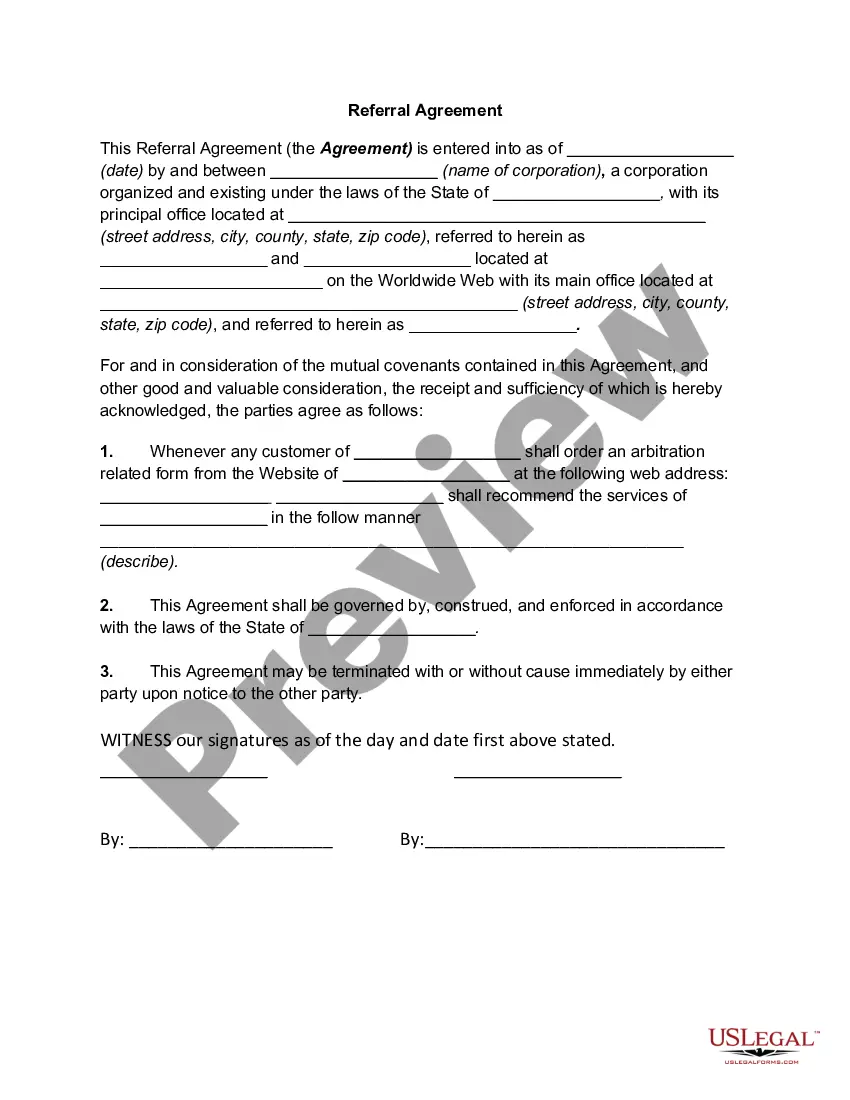
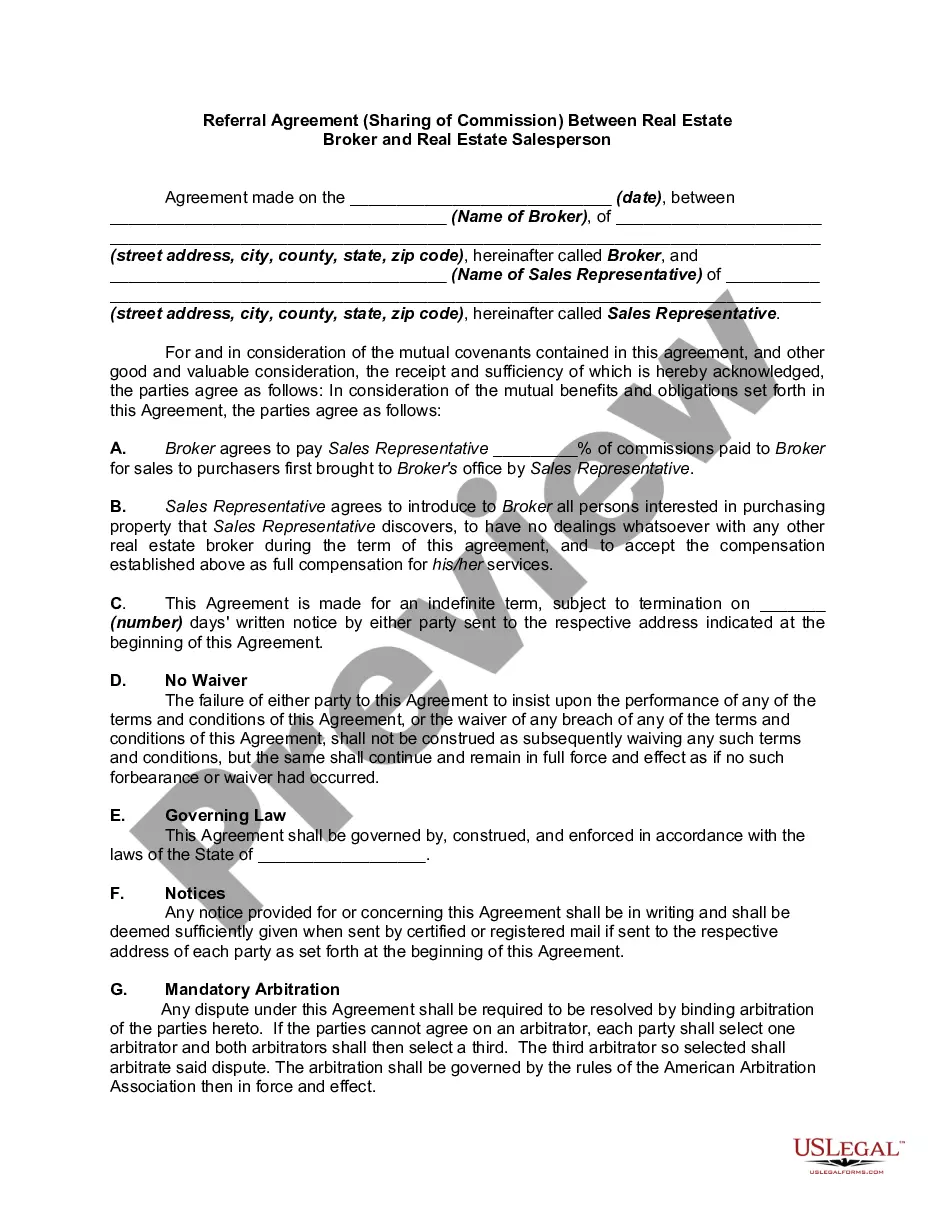
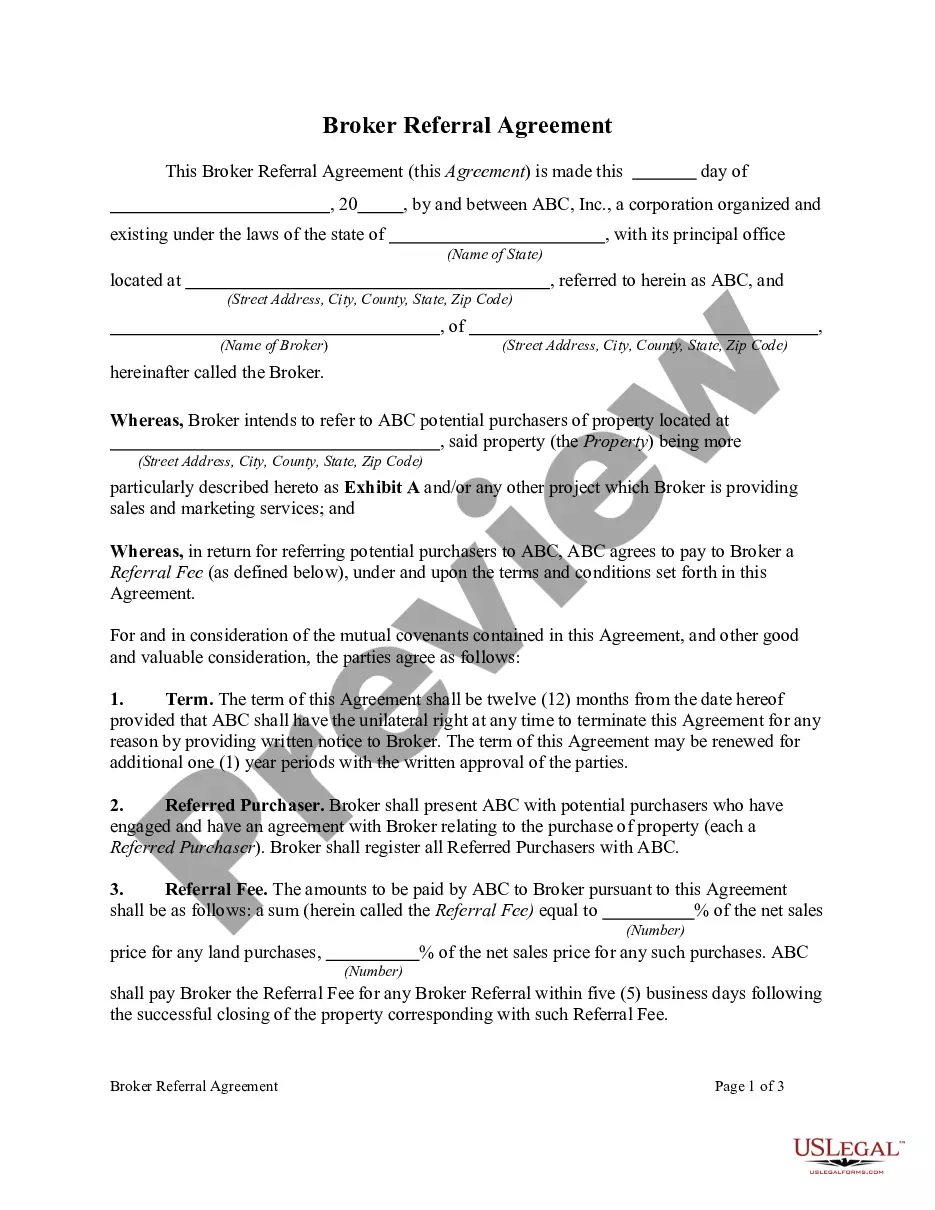
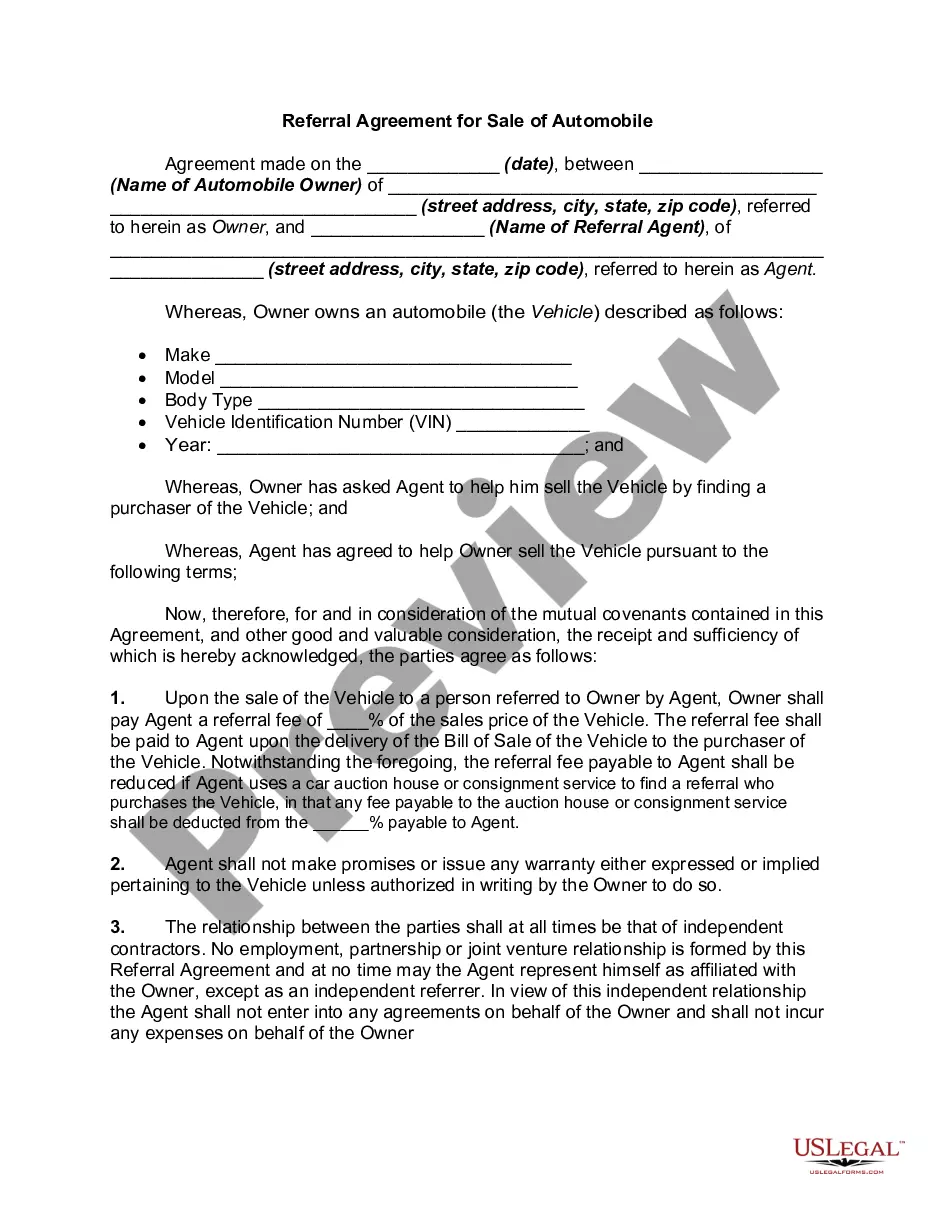
Client Referral Agreement For Services In Chicago
Description
Get your form ready online
Our built-in tools help you complete, sign, share, and store your documents in one place.
Make edits, fill in missing information, and update formatting in US Legal Forms—just like you would in MS Word.
Download a copy, print it, send it by email, or mail it via USPS—whatever works best for your next step.
Sign and collect signatures with our SignNow integration. Send to multiple recipients, set reminders, and more. Go Premium to unlock E-Sign.
If this form requires notarization, complete it online through a secure video call—no need to meet a notary in person or wait for an appointment.
We protect your documents and personal data by following strict security and privacy standards.

Make edits, fill in missing information, and update formatting in US Legal Forms—just like you would in MS Word.

Download a copy, print it, send it by email, or mail it via USPS—whatever works best for your next step.

Sign and collect signatures with our SignNow integration. Send to multiple recipients, set reminders, and more. Go Premium to unlock E-Sign.

If this form requires notarization, complete it online through a secure video call—no need to meet a notary in person or wait for an appointment.

We protect your documents and personal data by following strict security and privacy standards.
Looking for another form?




Form popularity
FAQ
Parts of a referral agreement Date. The date should appear at the beginning and end of the contract. Names and roles of the parties involved. Identify the parties to the agreement. Duration of the agreement. State how long the agreement will last. Consideration. Acceptance.
The agreement usually provides guidelines for compensating the party that refers the customer, safeguards the referred clients or customers, and maintains confidentiality. It's essentially a win-win situation for both parties.
Client referrals occur when an existing customer recommends a company's products or services to another person. Whether referrals happen organically or through strategic marketing efforts, they can be an effective way for companies to build trust with their clients and expand their reach to gain new customers.
8 Steps You Can Follow To Create A Referral Program Step 1: Define Your Referral Program Goals. Step 2: Design Your Referral Program. Step 3: Choose Your Rewards And Incentives. Step 4: Make sure you have a killer offer! ... Step 5: Build Your Referral Program.
Your referral letter should be concise and to the point. Highlight how you know the candidate, why they're qualified for the role, and the value they can bring to the company. Be professional and avoid overly effusive praise.
7 steps to a successful referral program Identify and understand your audience. A successful referral program relies on a deep knowledge of your audience. Personalize your incentives. Promote your program. Enable participants with technology. Manage your workflow. Monitor the program. Assess and adjust your program.
Parts of a referral agreement Date. The date should appear at the beginning and end of the contract. Names and roles of the parties involved. Identify the parties to the agreement. Duration of the agreement. State how long the agreement will last. Consideration. Acceptance.
Ask at the right time. It's important to ask clients for referrals at the right time to increase your chances of success. Only ask for referrals after you've successfully provided a quality product or service to a client and they've expressed their satisfaction with their experience.
Here are a few polite ways to ask clients for referrals: ``I'm always looking to help more clients like yourself. If you know anyone who could benefit from my services, I would really appreciate if you could pass along my contact information to them.'' ``Customer referrals are invaluable to my business.
When writing one, remember to include essential patient information, explain the reason for the referral, summarize relevant history, and outline expected outcomes. Using this approach ensures continuity of care and clear communication between healthcare providers.