Board Meeting For Directors In Minnesota
Description

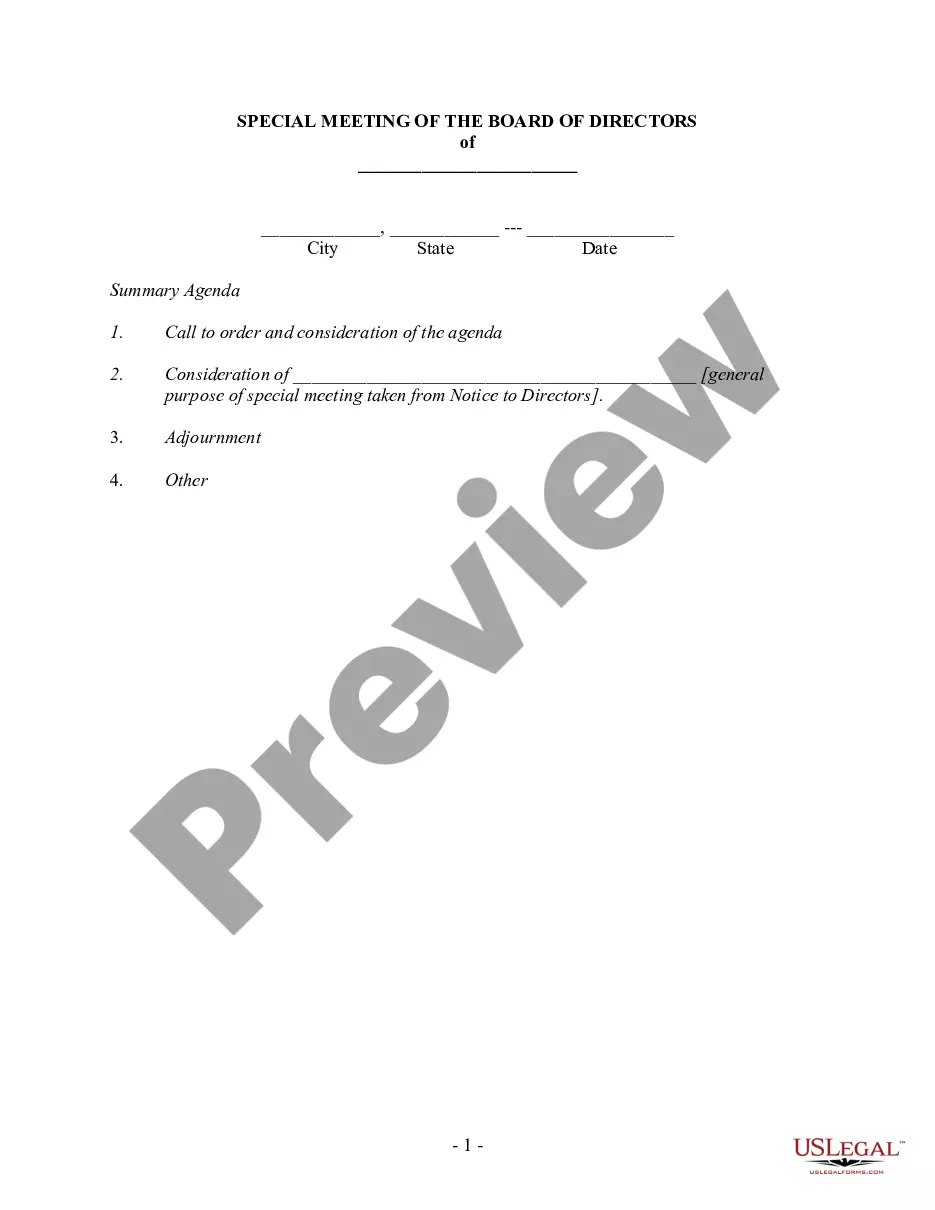


Get your form ready online
Our built-in tools help you complete, sign, share, and store your documents in one place.
Make edits, fill in missing information, and update formatting in US Legal Forms—just like you would in MS Word.
Download a copy, print it, send it by email, or mail it via USPS—whatever works best for your next step.
Sign and collect signatures with our SignNow integration. Send to multiple recipients, set reminders, and more. Go Premium to unlock E-Sign.
If this form requires notarization, complete it online through a secure video call—no need to meet a notary in person or wait for an appointment.
We protect your documents and personal data by following strict security and privacy standards.

Make edits, fill in missing information, and update formatting in US Legal Forms—just like you would in MS Word.

Download a copy, print it, send it by email, or mail it via USPS—whatever works best for your next step.

Sign and collect signatures with our SignNow integration. Send to multiple recipients, set reminders, and more. Go Premium to unlock E-Sign.

If this form requires notarization, complete it online through a secure video call—no need to meet a notary in person or wait for an appointment.

We protect your documents and personal data by following strict security and privacy standards.
Looking for another form?


Form popularity
FAQ
In essence, Robert's Rules of Order boil down to three guiding principles: Everyone should be allowed to speak once before anyone speaks again. Everyone has the right to know what is happening, and speakers should only be interrupted in urgent situations. Consider only one motion at a time.
When addressing the board, always use the title Mr. Chairman” or Madam Chairwoman.” If you are unsure of the proper title, Board of Directors” is always acceptable. When speaking to the board, always refer to them as sir” or ma'am.”
The chair calls the meeting to order with a simple statement. They should say something along the lines of: “Good morning/evening, everyone! It's state the date and time, and I'd like to call the meeting of organization name to order.”
In such cases, the vacation of the director's office may not be enforceable. In conclusion, it is important for directors to attend Board meetings, as failure to attend all meetings for 12 months will result in the automatic vacating of their office.
Board meetings can be called at any time by the chairman of the board or an individual director. Reasonable notice of the meeting must be provided to all directors, but there is no provision in the Companies Act regarding a minimum notice period for board meetings.
Most board meeting agendas follow a classic meeting structure: Calling meeting to order – ensure you have quorum. Approve the agenda and prior board meeting minutes. Executive and committee reports – allow 25% of time here for key topic discussion. Old/new/other business. Close the meeting and adjourn.
The following steps to running a board meeting are: Recognizing a quorum. Calling the meeting to order. Approving the agenda and minutes. Allowing for communication and reports. Addressing old/new/other business. Closing the meeting.
The chair owns the agenda Who prepares the first draft? Usually the company secretary, the CEO or the board secretary. This then needs to be approved or amended by the chair. The agenda and the board papers need to be sent to all directors at least 5 days plus a weekend, prior to the board meeting.
Confidentiality is included in the board's fiduciary responsibilities, which is the legal or ethical obligation to act in the best interest of another party. Maintaining confidentiality includes any personal or sensitive information they acquire during their service to the board.
In short, yes. Non Board members can attend meetings. There are a number of reasons you might want to have this policy. Perhaps you need to invite senior staff members of your organisation.
