Board Meeting With In Massachusetts
Description



Get your form ready online
Our built-in tools help you complete, sign, share, and store your documents in one place.
Make edits, fill in missing information, and update formatting in US Legal Forms—just like you would in MS Word.
Download a copy, print it, send it by email, or mail it via USPS—whatever works best for your next step.
Sign and collect signatures with our SignNow integration. Send to multiple recipients, set reminders, and more. Go Premium to unlock E-Sign.
If this form requires notarization, complete it online through a secure video call—no need to meet a notary in person or wait for an appointment.
We protect your documents and personal data by following strict security and privacy standards.

Make edits, fill in missing information, and update formatting in US Legal Forms—just like you would in MS Word.

Download a copy, print it, send it by email, or mail it via USPS—whatever works best for your next step.

Sign and collect signatures with our SignNow integration. Send to multiple recipients, set reminders, and more. Go Premium to unlock E-Sign.

If this form requires notarization, complete it online through a secure video call—no need to meet a notary in person or wait for an appointment.

We protect your documents and personal data by following strict security and privacy standards.
Looking for another form?






Form popularity
FAQ
At a regular meeting, the public is also permitted to comment on matters not on the agenda. California law imposes important guidelines on how and when boards can regulate public comment.
Electronic Communications and Open Meetings Emails, group texts and even social media posts can constitute an illegal meeting. While a non-elected official may 'push' information to elected members of a board, the board members cannot 'reply all' or use these forums for discussions of district business.
The Davis-Stirling Act in California spells out the rules for open meetings, which greatly affects when and how HOA boards can have closed meetings. Section 4900 of the Act says that all HOA board meetings must be open to all association members, with a few exceptions for private sessions.
Except in cases of emergency, a public body must provide the public with notice of its meeting 48 hours in advance, excluding Saturdays, Sundays, and legal holidays. Notice of emergency meetings must be posted as soon as reasonably possible prior to the meeting.
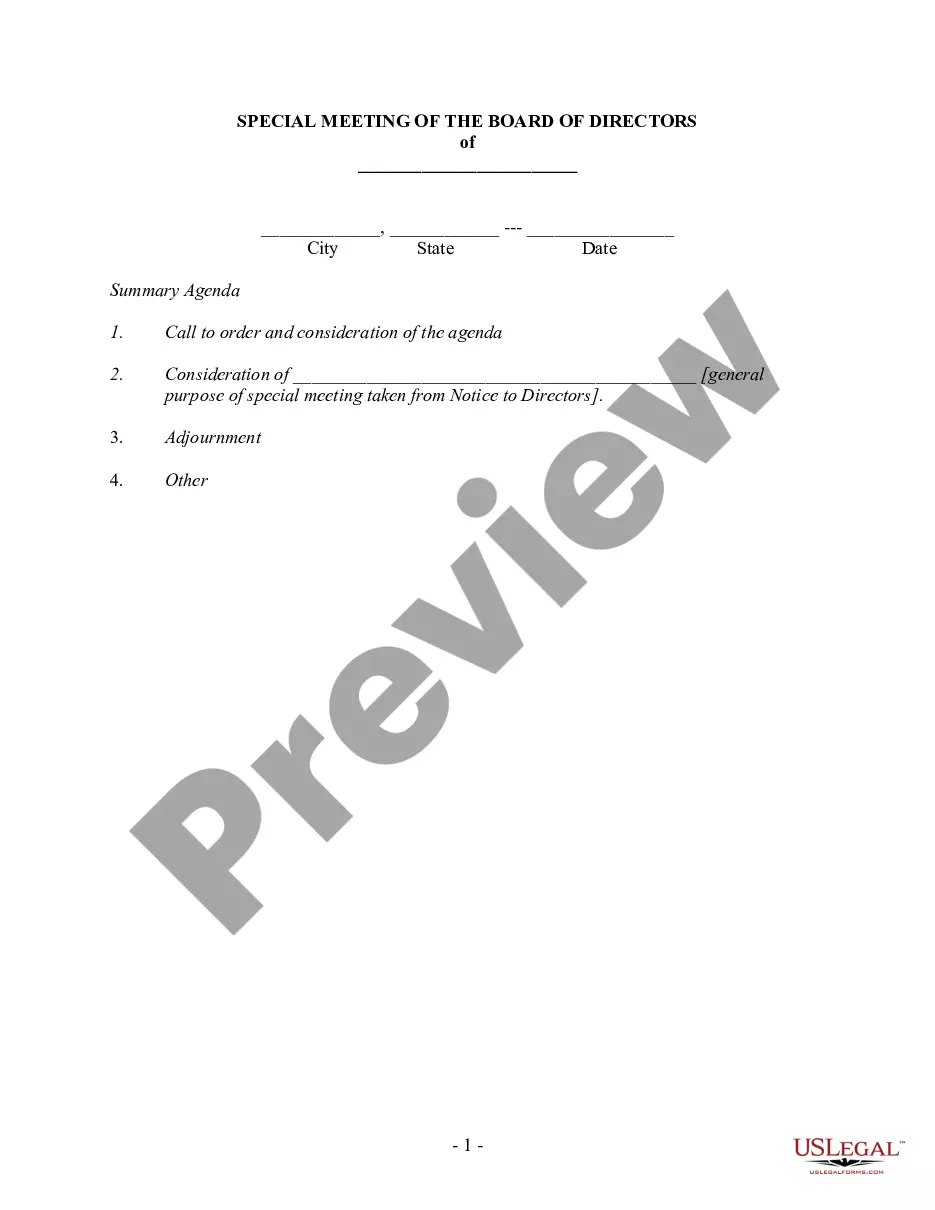
Essentially, the meeting protocol is a template workflow from calling the meeting to signing off the minutes from the previous meeting. The technical details that must be met to ensure the board can make its decisions. This could be the minimum number of members required for a quorum or the type of majority needed.
Non-‐Members at a Board Meeting: Non-‐members or ex-‐officio members of the board may participate in discussion or present reports at the discretion of the chair, but may not make motions or vote.
Table of contents Failing to Understand Fiduciary Duties. Failing to Provide Effective Oversight. Deference to the Executive Committee, Board Chair, or the Organization's Founder. Micro-managing Staff. Avoiding The Hard Questions. Insufficient Conflict Management. Lack of Awareness of Laws Governing Tax-Exempts.
What should be included in a meeting protocol template? An effective meeting protocol template should include sections for the date and time of the meeting, participants, agenda items, main discussions, decisions made, tasks assigned with responsibilities and deadlines, and details of the next scheduled meeting.
1 Decide if a meeting is necessary. 2 Only include people that are actually needed. 3 Create and share a meeting agenda before the meeting. 4 Set up technology before the meeting starts. 5 Start and end the meeting on time. 6 Stay on topic. 7 Have clear action items.

