Annual Board Directors Sample With Replacement In Houston
Description

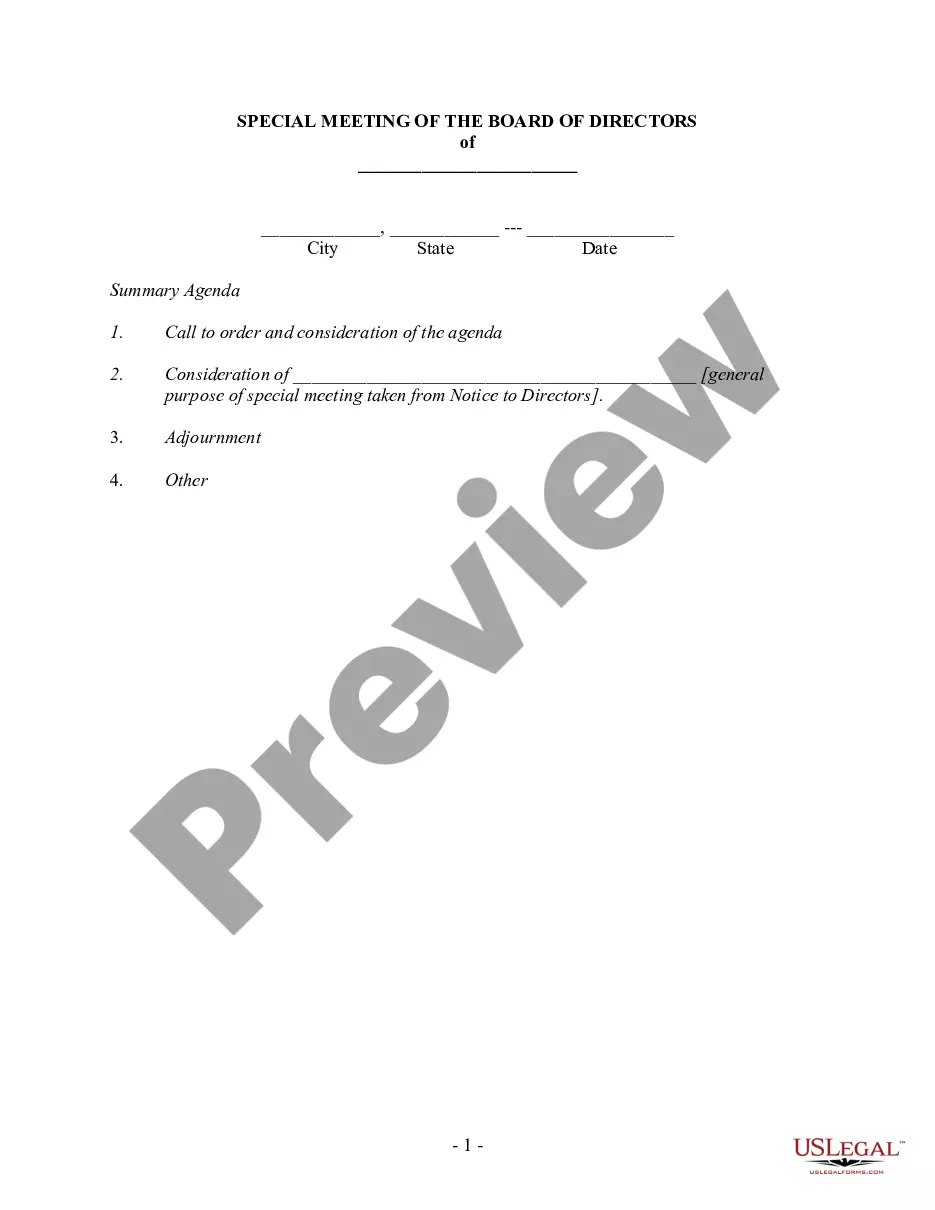


Get your form ready online
Our built-in tools help you complete, sign, share, and store your documents in one place.
Make edits, fill in missing information, and update formatting in US Legal Forms—just like you would in MS Word.
Download a copy, print it, send it by email, or mail it via USPS—whatever works best for your next step.
Sign and collect signatures with our SignNow integration. Send to multiple recipients, set reminders, and more. Go Premium to unlock E-Sign.
If this form requires notarization, complete it online through a secure video call—no need to meet a notary in person or wait for an appointment.
We protect your documents and personal data by following strict security and privacy standards.

Make edits, fill in missing information, and update formatting in US Legal Forms—just like you would in MS Word.

Download a copy, print it, send it by email, or mail it via USPS—whatever works best for your next step.

Sign and collect signatures with our SignNow integration. Send to multiple recipients, set reminders, and more. Go Premium to unlock E-Sign.

If this form requires notarization, complete it online through a secure video call—no need to meet a notary in person or wait for an appointment.

We protect your documents and personal data by following strict security and privacy standards.
Looking for another form?









Form popularity
FAQ
The most common policy for member organizations is to call a meeting of members and notify the board member in writing that they will be voted upon during said meeting. From there, bylaws can require the majority of (or sometimes more) members to vote to remove the board member.
A petition to remove a board member should include: A greeting to the board and reason for writing your letter. A list of the reasons with evidence as to why you think they should be removed. The form of action you are asking to be taken. A conclusion and statement of the identities of the petitioners. Signature spaces.
Information about members of a company's current board of directors can be found in standard directory resources such as PitchBook, or S&P Capital IQ (see access details). S&P Capital IQ also includes prior board members and the ability to screen for board members by title, board job function or committee assignment.
Steps for Dealing With a Toxic Board Member Review the Organization's Bylaws and Policies. Document the Behavior. Consult With Board Leadership. Have a Private Conversation. Conduct a Performance Review. Seek Legal Advice.
Typically, if the entirety of the board agrees to remove the member, you might not need to call a vote. Instead, you will need to prepare an Action by Unanimous Written Consent document that specifies the changes that will be made. Every single member, including the one who will be removed, needs to sign it.
Easiest: Action by Unanimous Written Consent The Board shall prepare, and ALL Directors shall sign, an “Action by Unanimous Written Consent” document, specifying the changes to the Board of Directors.
The following are legitimate grounds for the removal of a board member: Breaching fiduciary responsibilities. Having a conflict of interest. Failing to comply with bylaws. Engaging in illegal and unethical activities. Missing qualifications. Term limits. Passing of ordinary resolution. Retirement of directors by rotation.
How To Remove An Entire Board Of Directors? Hold a shareholder meeting. Give notice to the current board of directors. Prepare replacement candidates. Elect the new board of directors.
There are a variety of reasons why a board might be removed from power, but it ultimately comes down to a vote by the shareholders. If the majority of shareholders feel that the board is not acting in the best interests of the company, they can vote to remove the board and replace them with new leadership.
There are a variety of reasons why a board might be removed from power, but it ultimately comes down to a vote by the shareholders. If the majority of shareholders feel that the board is not acting in the best interests of the company, they can vote to remove the board and replace them with new leadership.

