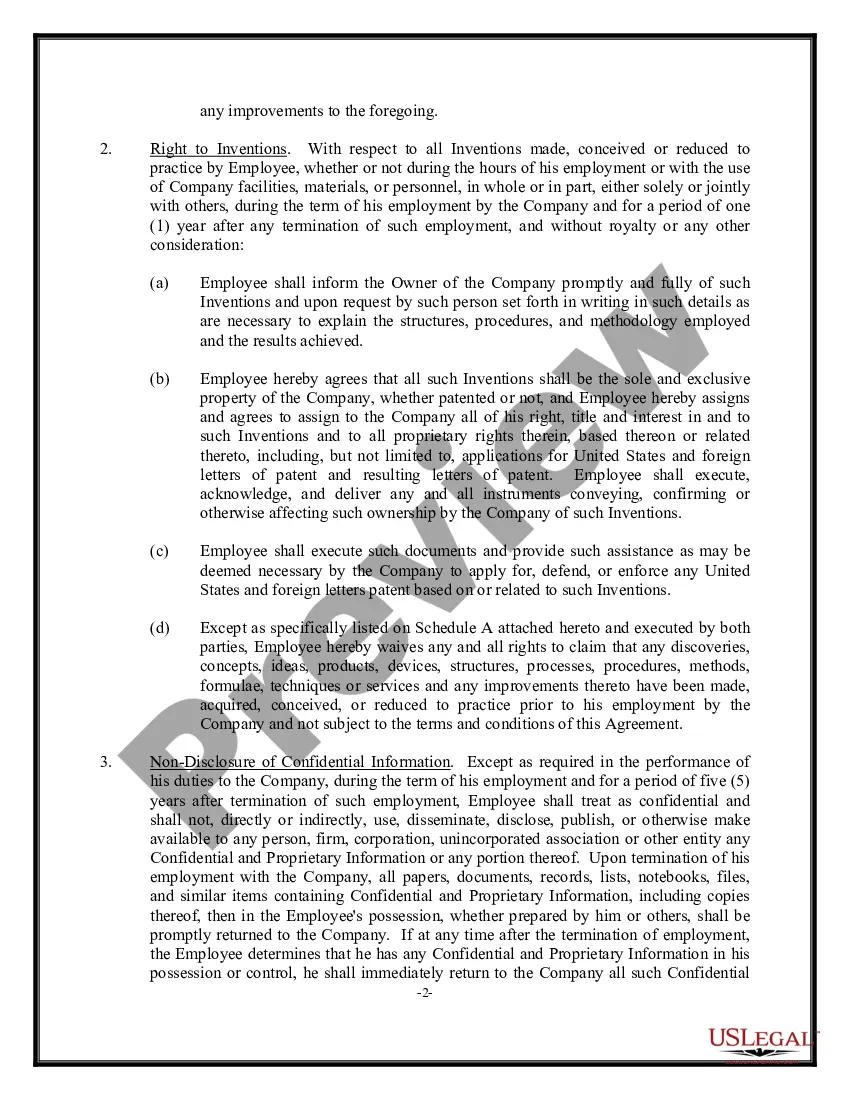
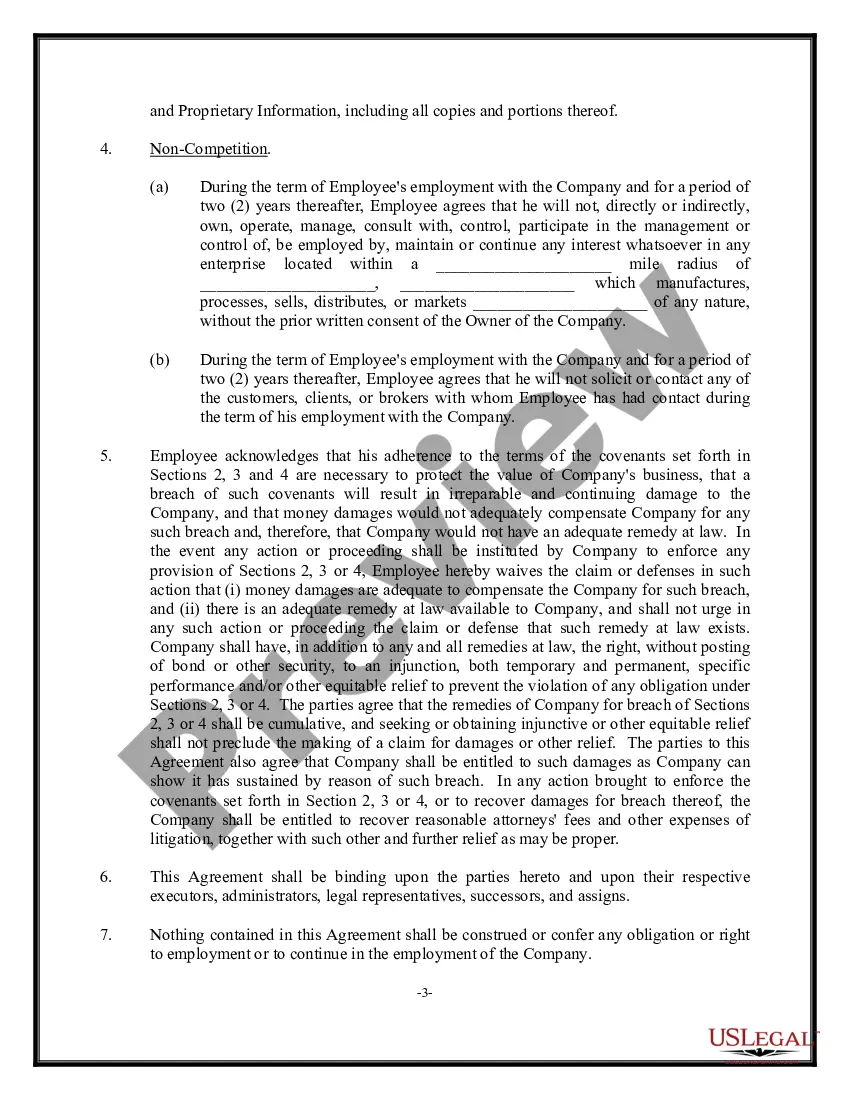
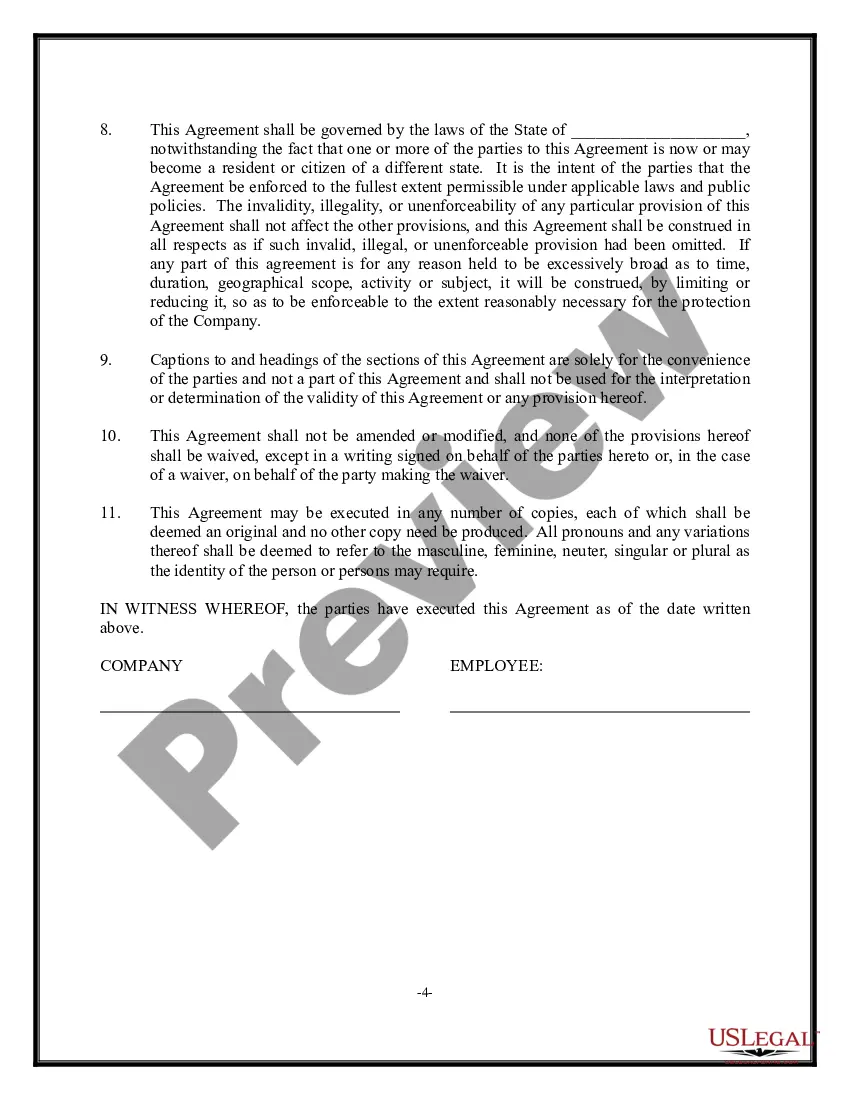
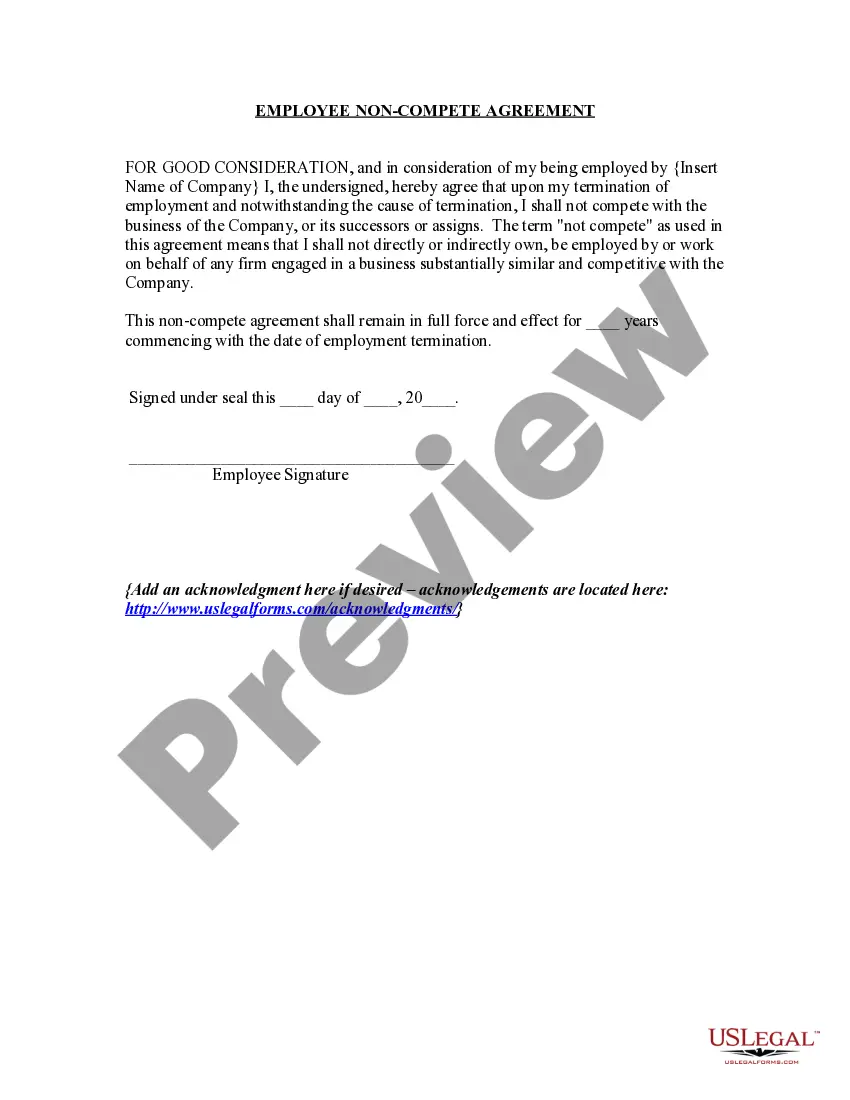
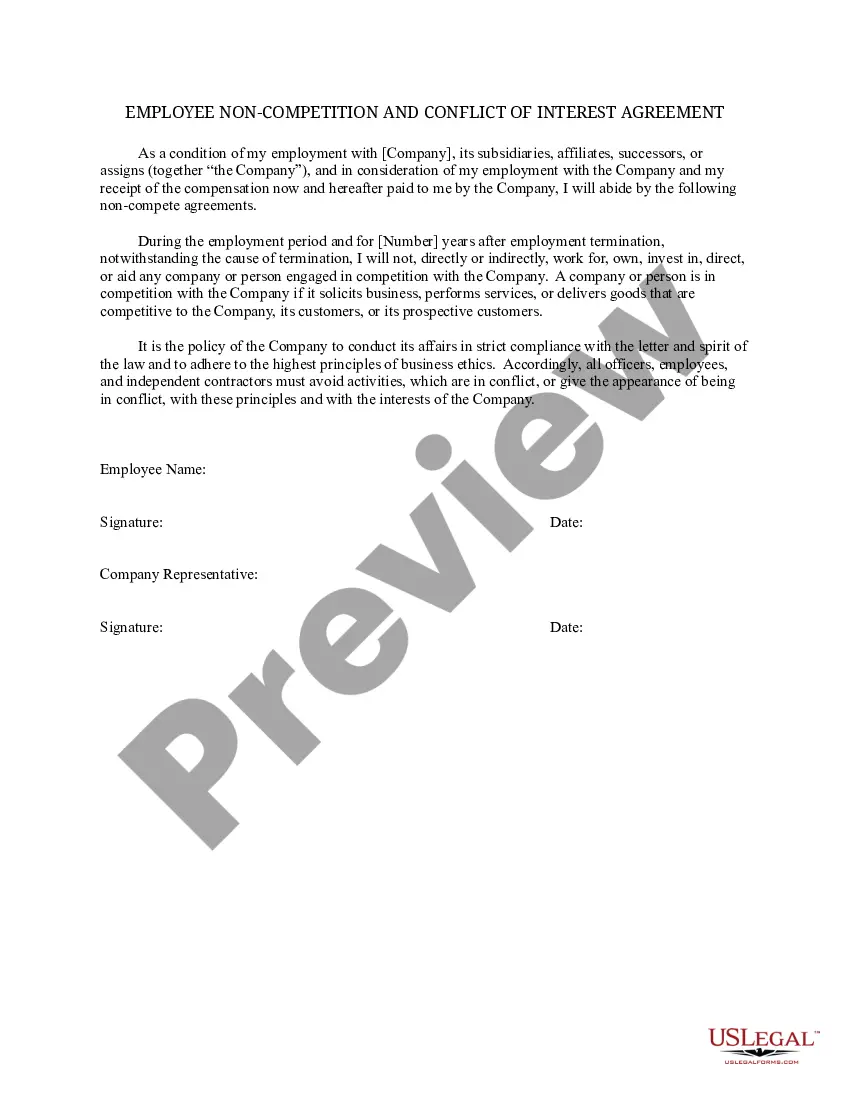
Competition Noncompetition For Employees In Nassau
Description

Get your form ready online
Our built-in tools help you complete, sign, share, and store your documents in one place.
Make edits, fill in missing information, and update formatting in US Legal Forms—just like you would in MS Word.
Download a copy, print it, send it by email, or mail it via USPS—whatever works best for your next step.
Sign and collect signatures with our SignNow integration. Send to multiple recipients, set reminders, and more. Go Premium to unlock E-Sign.
If this form requires notarization, complete it online through a secure video call—no need to meet a notary in person or wait for an appointment.
We protect your documents and personal data by following strict security and privacy standards.

Make edits, fill in missing information, and update formatting in US Legal Forms—just like you would in MS Word.

Download a copy, print it, send it by email, or mail it via USPS—whatever works best for your next step.

Sign and collect signatures with our SignNow integration. Send to multiple recipients, set reminders, and more. Go Premium to unlock E-Sign.

If this form requires notarization, complete it online through a secure video call—no need to meet a notary in person or wait for an appointment.

We protect your documents and personal data by following strict security and privacy standards.
Looking for another form?









Form popularity
FAQ
Here's what you can do... provide a copy of the non-compete to the new employer, and ask them if they are ok with hiring you. At least, then the new employer can't say they didn't know and then sue you. Let them make the determination on their end about whether they want to proceed.
The simplest way to get out of that kind of contract is merely to ask them to release your from it. If they refuse, you might need to get a lawyer to aid you in doing so. Non-compete contracts usually have penalties specified and certainly have durations. A contract that the courts deem to be unfair can be nullified.
compete agreement may affect your chances of being hired. Your prospective employer may not be willing to hire you if you have a noncompete that could be tripped. However, as Alexandra pointed out, you would likely be the one in breach of your noncompete and not your new employer.
A noncompete is unenforceable if it restricts an employee's ability to exercise their rights under federal law. No employer may enter into a covenant not to compete or a covenant not to solicit with any employee. Existing noncompetes are void and unenforceable, including out-of-state noncompetes.
The following are the most common ways to get out of a non-compete agreement: Determine that the terms of the contract do not in fact prevent you from a desired course of action. Recognize when a non-compete contradicts the law. Negotiate a release agreement with the involved parties. Ignore the agreement.
New York courts will only enforce them in only very rare limited situations. As explained more below, we are able to defeat most non-compete agreements by using the Legitimate Business Interests Test. A court will only enforce a non-compete agreement if the company can satisfy this test and most companies cannot do so.
To help, here are four tips to provide a smooth job transition with a non-compete contract in place. Talk with a lawyer. Before you start actively seeking new employment, have an attorney review your non-compete agreement with you. Job hunt on your own time. Be honest with prospective employers. Leave on good terms.
Non-compete Agreements or Clauses A background check reveals a list of old employers and allows the verification team to run relevant inquiries on any such clauses that may still be binding on the employee.
compete is only allowed and enforceable to the extent it (1) is necessary to protect the employer's legitimate interests, (2) does not impose an undue hardship on the employee, (3) does not harm the public, and (4) is reasonable in time period and geographic scope.
Several factors can void or limit the enforceability of a non-compete agreement, including overly broad restrictions, unreasonable time frames or geographical limits, lack of consideration (such as compensation or job opportunities provided in exchange for the agreement), and violation of public policy.
