Competition Noncompetition For 2023 In King
Description

Get your form ready online
Our built-in tools help you complete, sign, share, and store your documents in one place.
Make edits, fill in missing information, and update formatting in US Legal Forms—just like you would in MS Word.
Download a copy, print it, send it by email, or mail it via USPS—whatever works best for your next step.
Sign and collect signatures with our SignNow integration. Send to multiple recipients, set reminders, and more. Go Premium to unlock E-Sign.
If this form requires notarization, complete it online through a secure video call—no need to meet a notary in person or wait for an appointment.
We protect your documents and personal data by following strict security and privacy standards.

Make edits, fill in missing information, and update formatting in US Legal Forms—just like you would in MS Word.

Download a copy, print it, send it by email, or mail it via USPS—whatever works best for your next step.

Sign and collect signatures with our SignNow integration. Send to multiple recipients, set reminders, and more. Go Premium to unlock E-Sign.

If this form requires notarization, complete it online through a secure video call—no need to meet a notary in person or wait for an appointment.

We protect your documents and personal data by following strict security and privacy standards.
Looking for another form?









Form popularity
FAQ
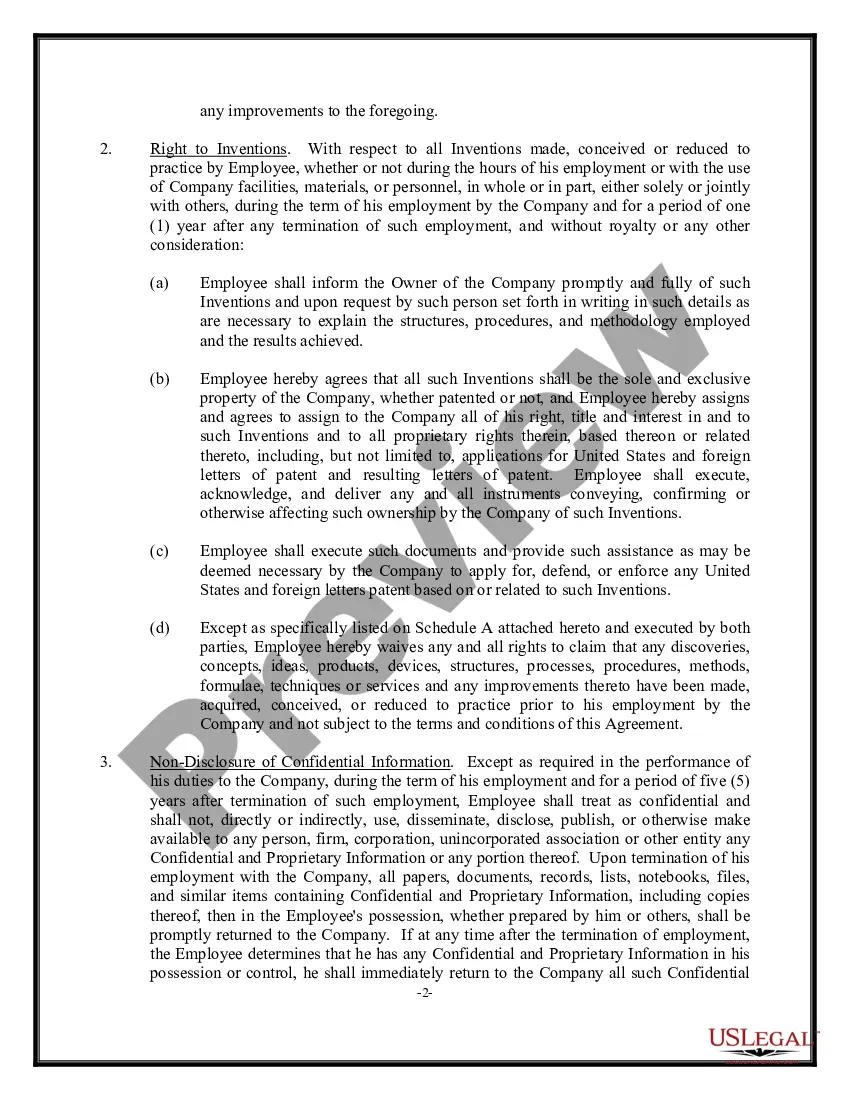
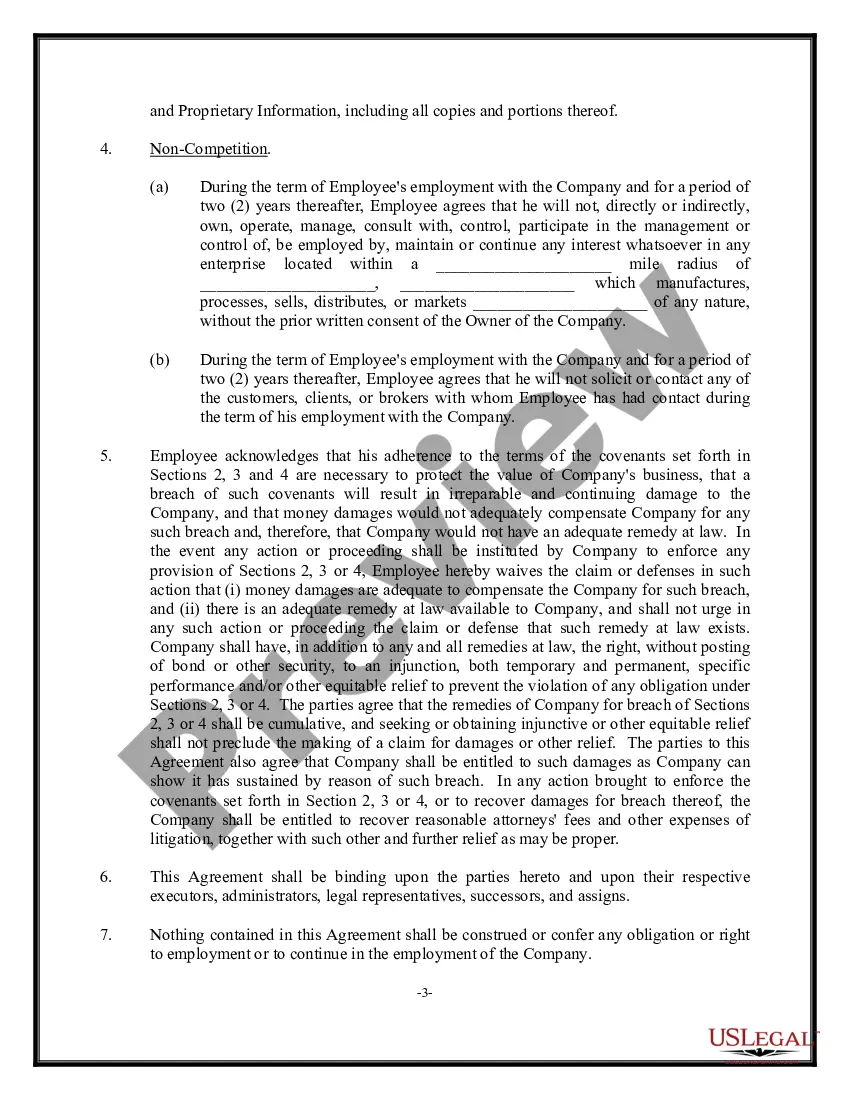
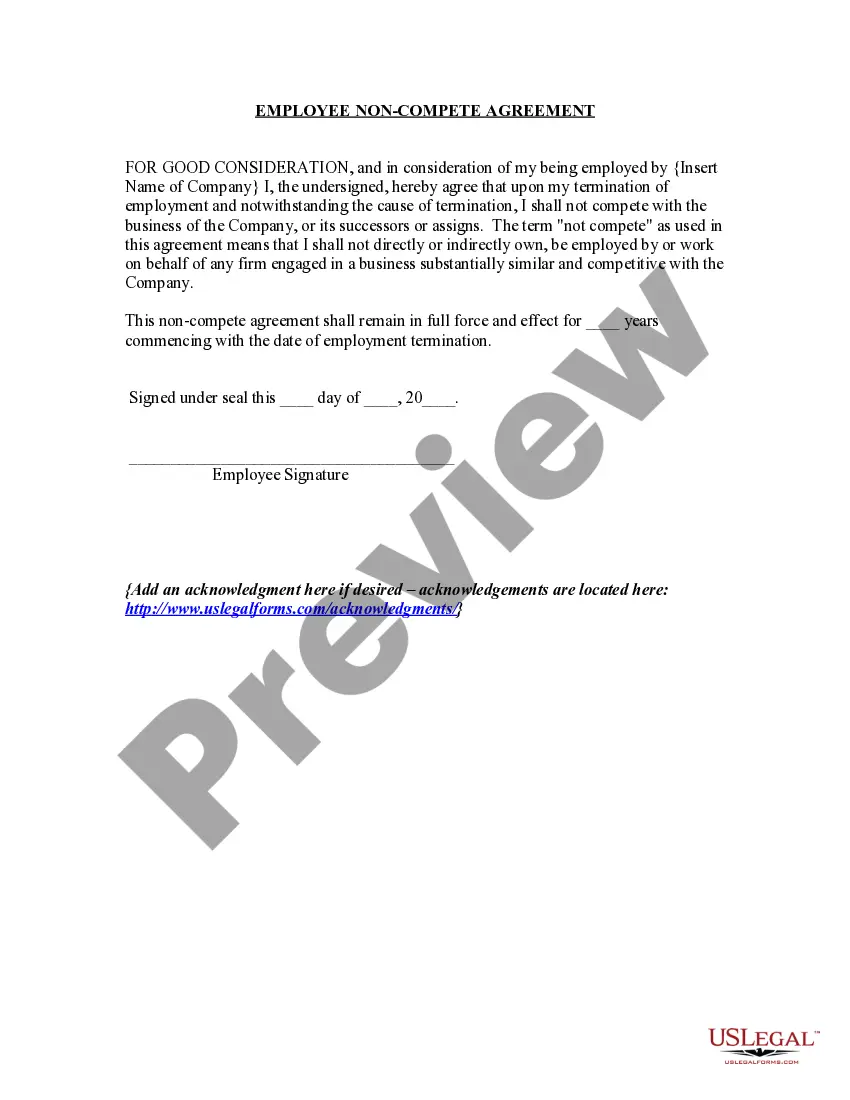
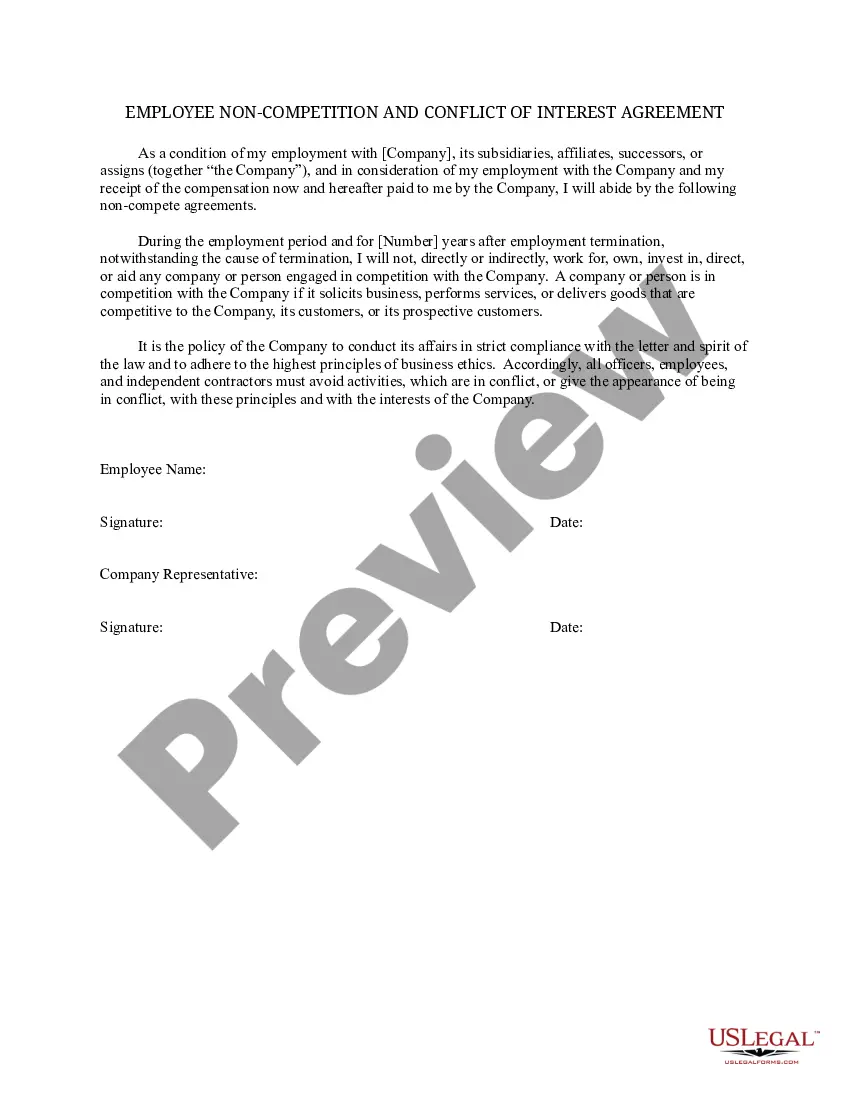
(c) Employee name agrees not to set up in business as a direct competitor of company name within a radius of number miles of company name and location for a period of number and measure of time (e.g., “four months” or “10 years”) following the expiration or termination of this agreement.
compete is only allowed and enforceable to the extent it (1) is necessary to protect the employer's legitimate interests, (2) does not impose an undue hardship on the employee, (3) does not harm the public, and (4) is reasonable in time period and geographic scope.
Most New York courts will not enforce a non-compete agreement if the restriction is for over a year. For example, courts will generally find this time frame too long if the agreement attempts to restrict an employee for two years or more.
The simplest way to get out of that kind of contract is merely to ask them to release your from it. If they refuse, you might need to get a lawyer to aid you in doing so. Non-compete contracts usually have penalties specified and certainly have durations. A contract that the courts deem to be unfair can be nullified.
If there is a shortage of people in a particular specialty, or in a particular geographic area, then the employer cannot enforce a non-compete even if all the other requirements are met.
The following are the most common ways to get out of a non-compete agreement: Determine that the terms of the contract do not in fact prevent you from a desired course of action. Recognize when a non-compete contradicts the law. Negotiate a release agreement with the involved parties. Ignore the agreement.
5 Ways to Defeat a New York Non-Compete Agreement Fired Without Cause. If your employer is not willing to employ you, courts generally will not enforce a non-compete agreement. The Legitimate Business Interests Test. Unclean Hands – Breach of Contract by Employer. The Janitor Rule. There Is No Competition.
On April 23, 2024, the Federal Trade Commission issued its long-awaited Final Non-Compete Clause Rule, which operates to ban most post-employment non-compete agreements between employers and their workers.
The case is noteworthy because the Supreme Court has now decisively shut the legal door on non-competition agreements that do not fit within specific statutory exceptions. The federal courts interpreting California law had permitted some non-compete agreements under a narrow-restraint exception.
Now that the FTC is permanently enjoined from enforcing the rule, (unless and until a successful FTC appeal), non-competes return to the status quo and are legal and enforceable on the same terms as they were before the FTC passed the non-compete rule.
