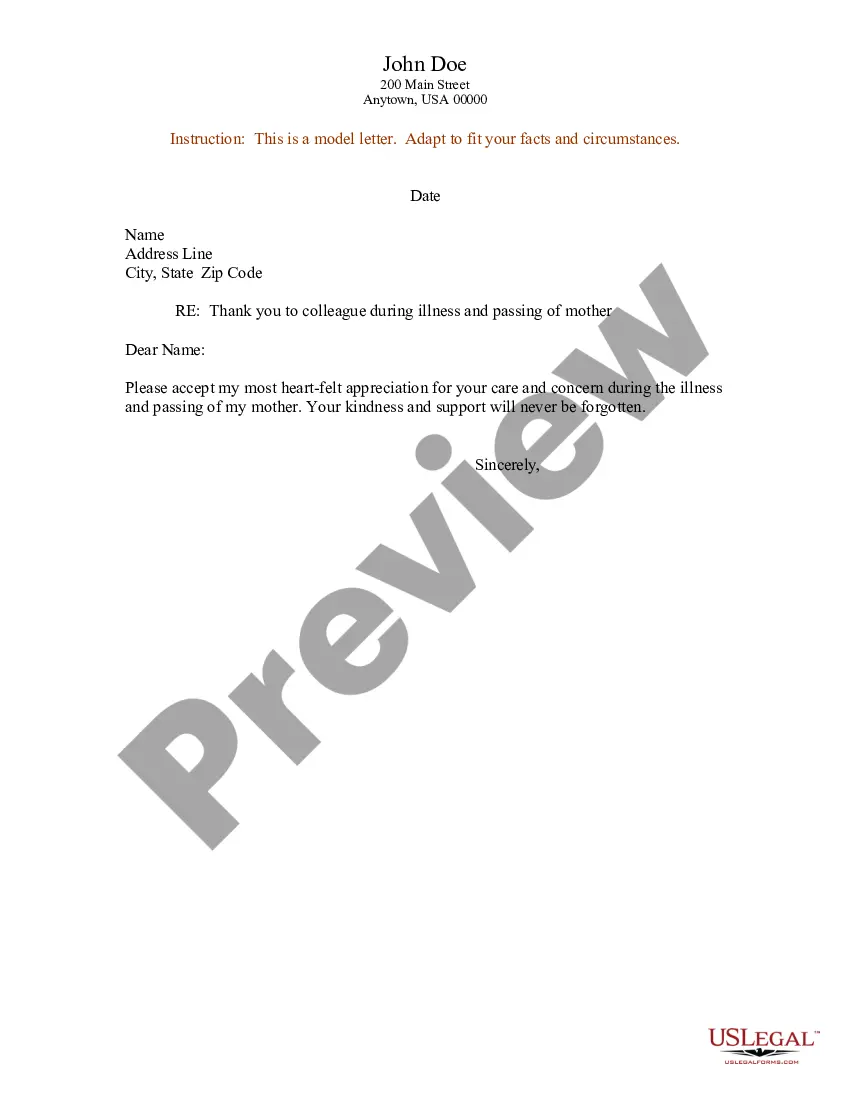
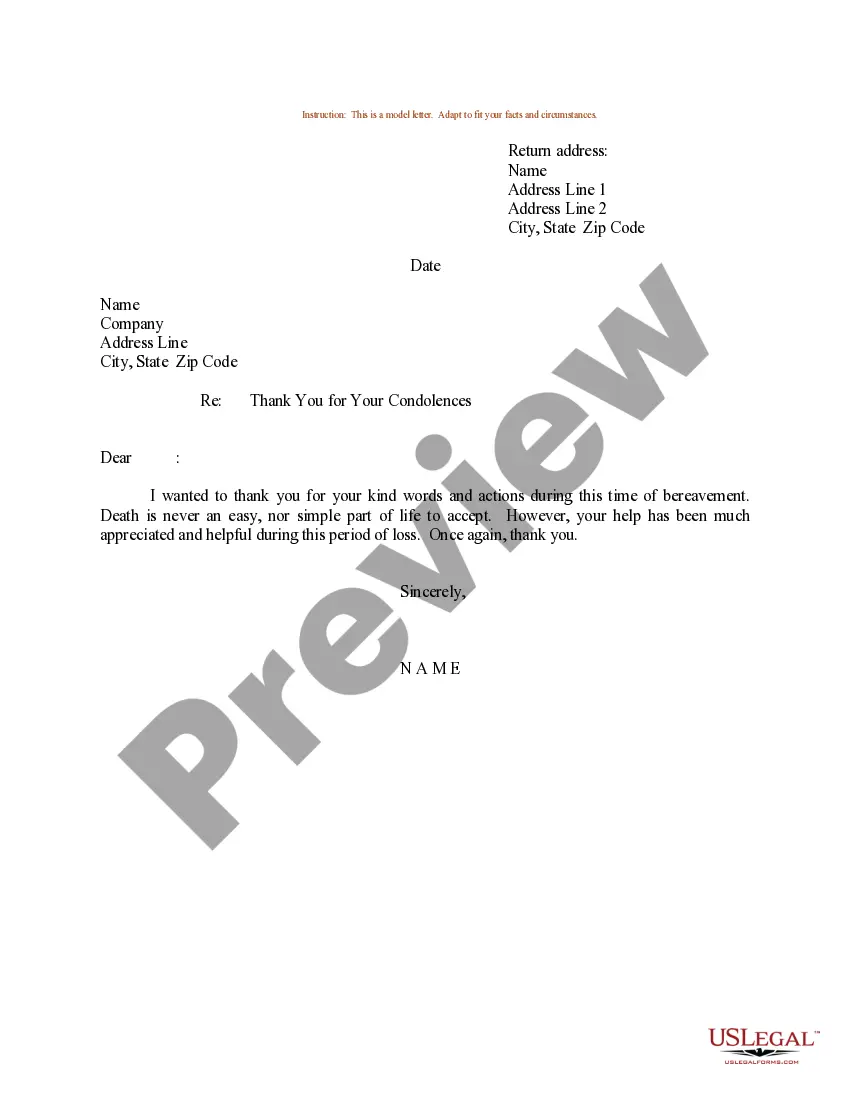
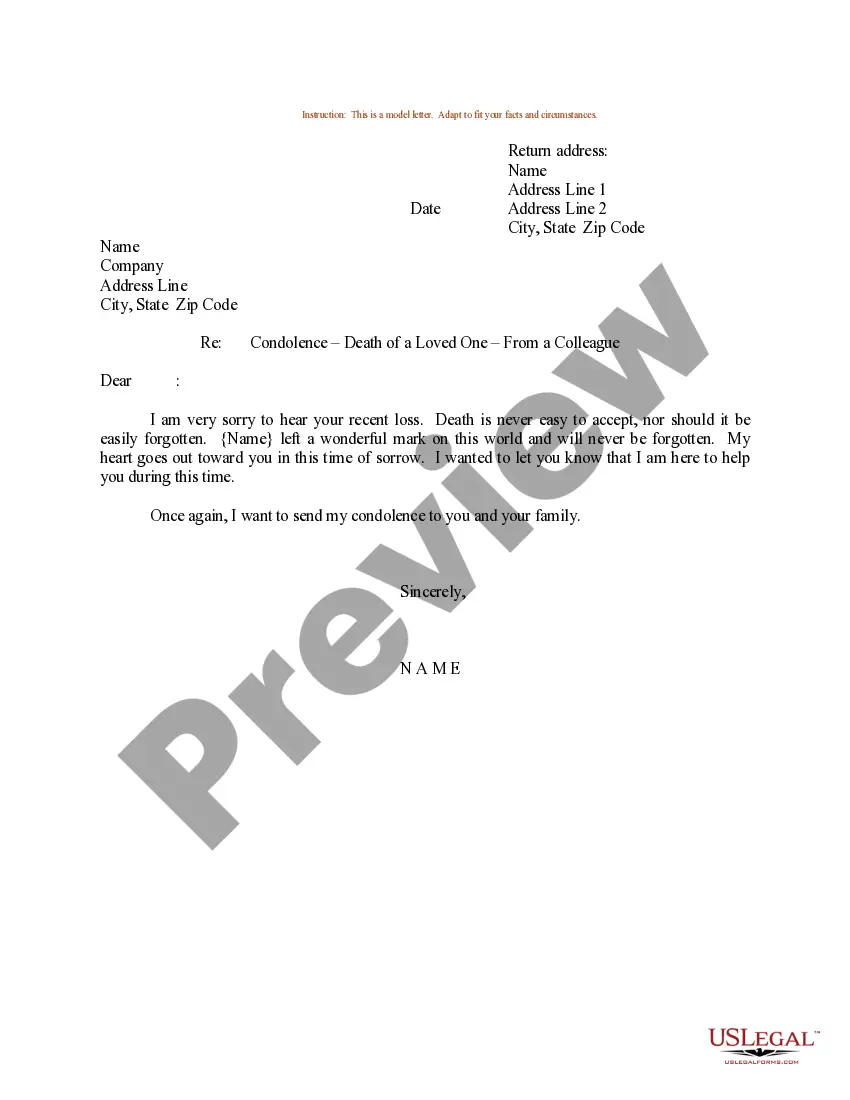
Condolences Letter For Death In Wayne
Description
Get your form ready online
Our built-in tools help you complete, sign, share, and store your documents in one place.
Make edits, fill in missing information, and update formatting in US Legal Forms—just like you would in MS Word.
Download a copy, print it, send it by email, or mail it via USPS—whatever works best for your next step.
Sign and collect signatures with our SignNow integration. Send to multiple recipients, set reminders, and more. Go Premium to unlock E-Sign.
If this form requires notarization, complete it online through a secure video call—no need to meet a notary in person or wait for an appointment.
We protect your documents and personal data by following strict security and privacy standards.

Make edits, fill in missing information, and update formatting in US Legal Forms—just like you would in MS Word.

Download a copy, print it, send it by email, or mail it via USPS—whatever works best for your next step.

Sign and collect signatures with our SignNow integration. Send to multiple recipients, set reminders, and more. Go Premium to unlock E-Sign.

If this form requires notarization, complete it online through a secure video call—no need to meet a notary in person or wait for an appointment.

We protect your documents and personal data by following strict security and privacy standards.
Looking for another form?







Form popularity
FAQ
Tips for writing condolence letters Handwrite the note if possible. Keep it simple. Be sincere and authentic. Share memories and make a personal connection. Avoid giving advice. Be careful about sharing religious beliefs.
I am here to support you.” “My heartfelt condolences for your loss.” “I am here if you need to talk.” “I will remember your co-worker fondly.”
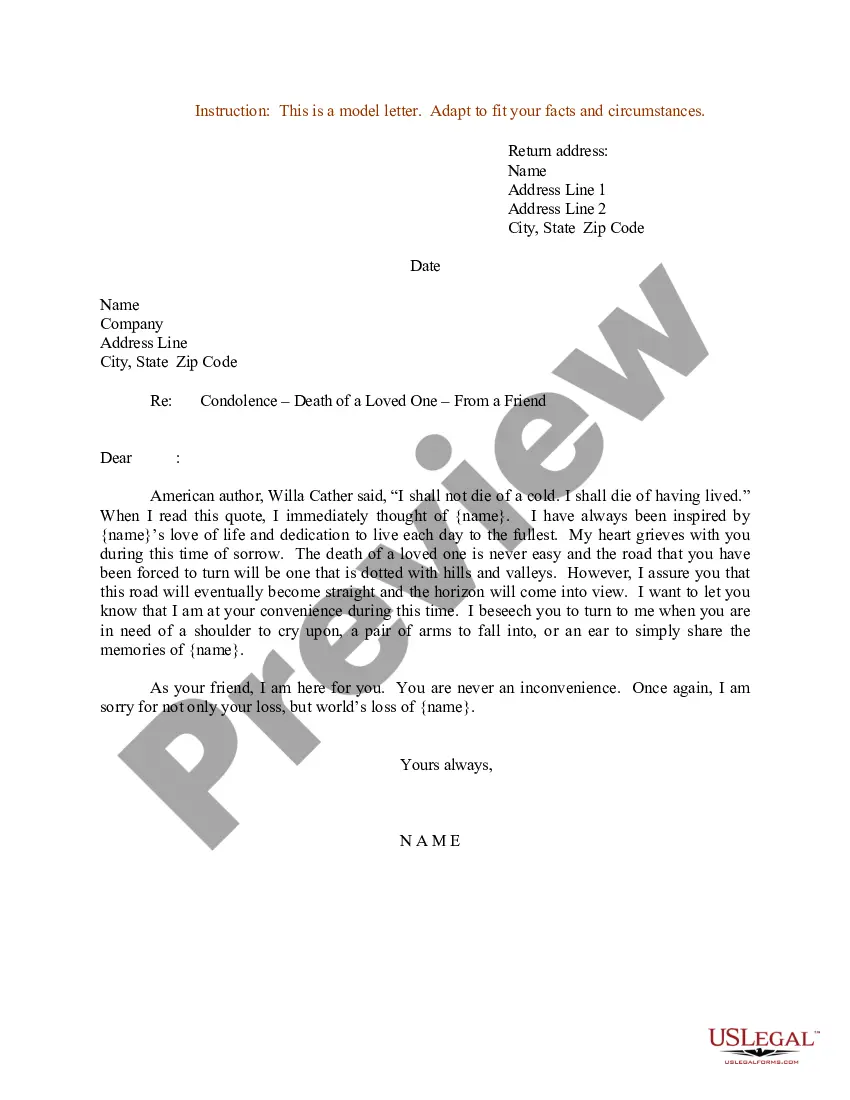
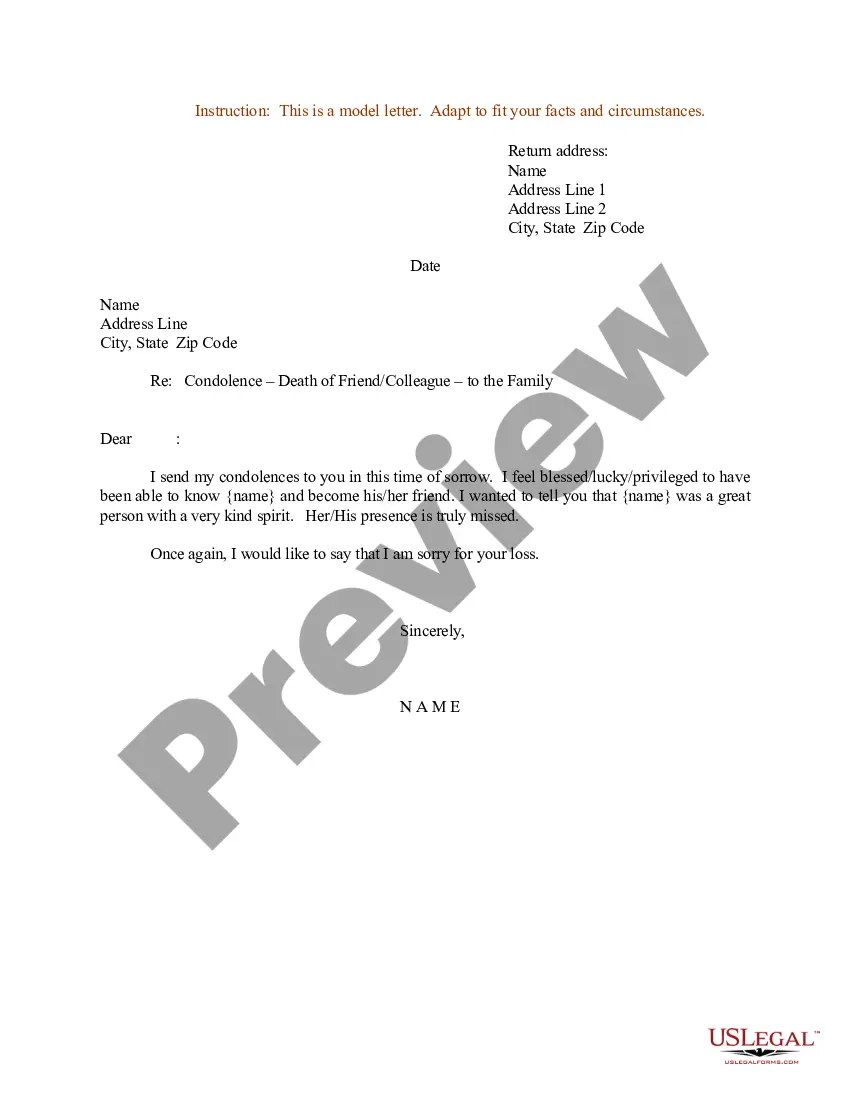
When writing the letter, it's important to be sincere, express your feelings, and offer support. Here's a simple structure you can follow: Opening: Acknowledge the loss. Personal Reflection: Share a memory or quality of the deceased if appropriate. Expression of Sympathy: Offer your condolences and express your sorrow.
Sympathy Phrases to Avoid When Writing Bereavement Cards It's for the best. He's with God now. She lived a long life. Time heals all wounds. They are in a better place. I know how you feel.
``I'm so very Sorry for your loss.'' ``My heart goes out to you and your family during this difficult time.'' ``You are in my thoughts and prayers.'' ``Sending you love and strength as you navigate through this challenging period.'' ``Please accept my deepest sympathies.'' ``I am here for you if you need anything.''
How to write a condolence letter Write the letter by hand. Keep it short and simple. Express your condolences. Share a memory. Offer your help and support. Close the letter with some thoughtful words.
E.g. “Please accept my/our heartfelt sympathy for you and your family during this difficult time. It was with a heavy heart that I/we heard about the recent loss of your (write down the name of the family member/friend/colleague) and I/we wanted to reach out and express my condolences during such a difficult time.”
What do you say when someone dies? "I'm sorry for your loss. I'm here for you." "My condolences on your loved one's passing. May their memory bring you comfort.“ “I extend my deepest sympathy to you. "Thinking of you, sending love and support.“ "We're saddened by the news. "Heartfelt condolences. "You're not alone.
``I'm so very Sorry for your loss.'' ``My heart goes out to you and your family during this difficult time.'' ``You are in my thoughts and prayers.'' ``Sending you love and strength as you navigate through this challenging period.'' ``Please accept my deepest sympathies.'' ``I am here for you if you need anything.''