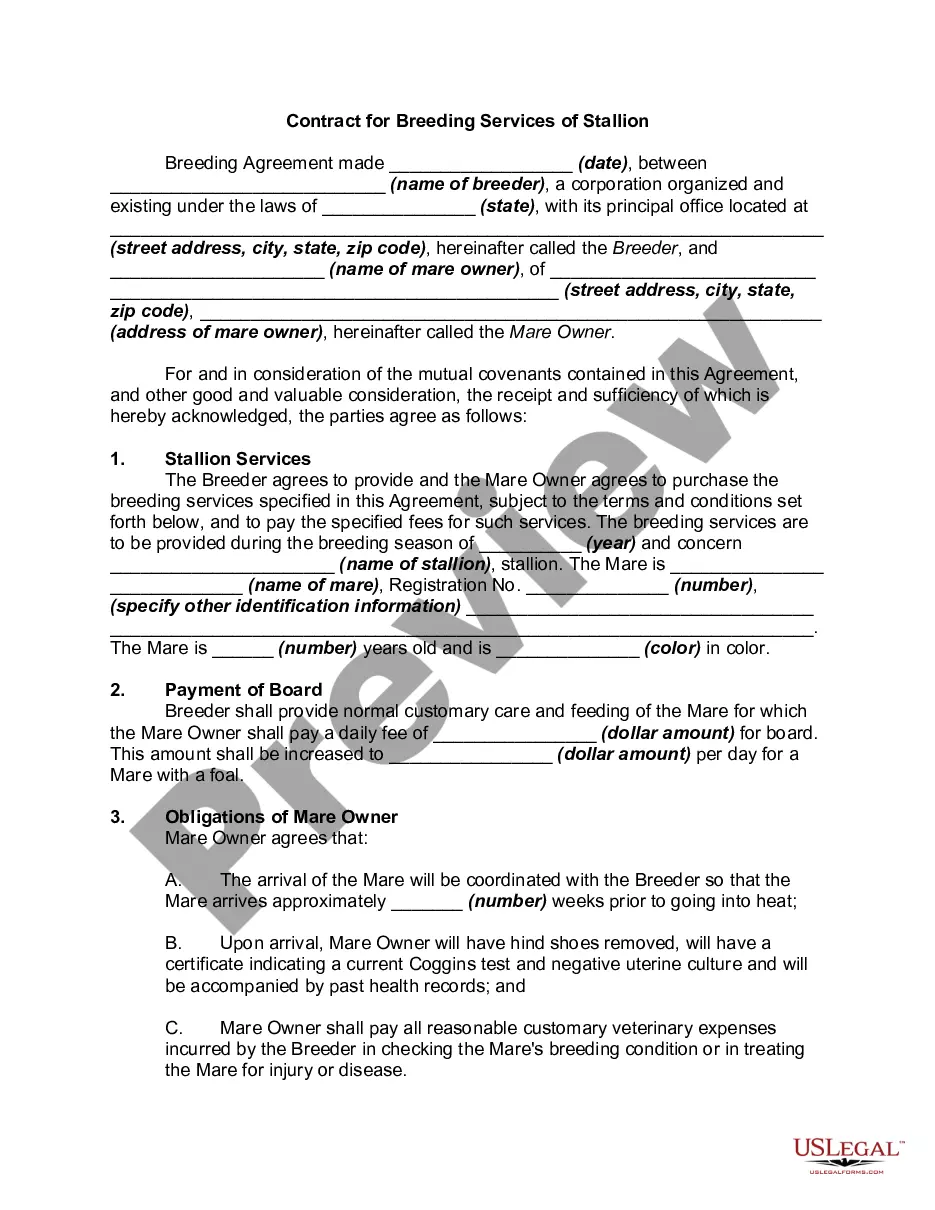
Stallion Breeding Contract Forms In Chicago
Description
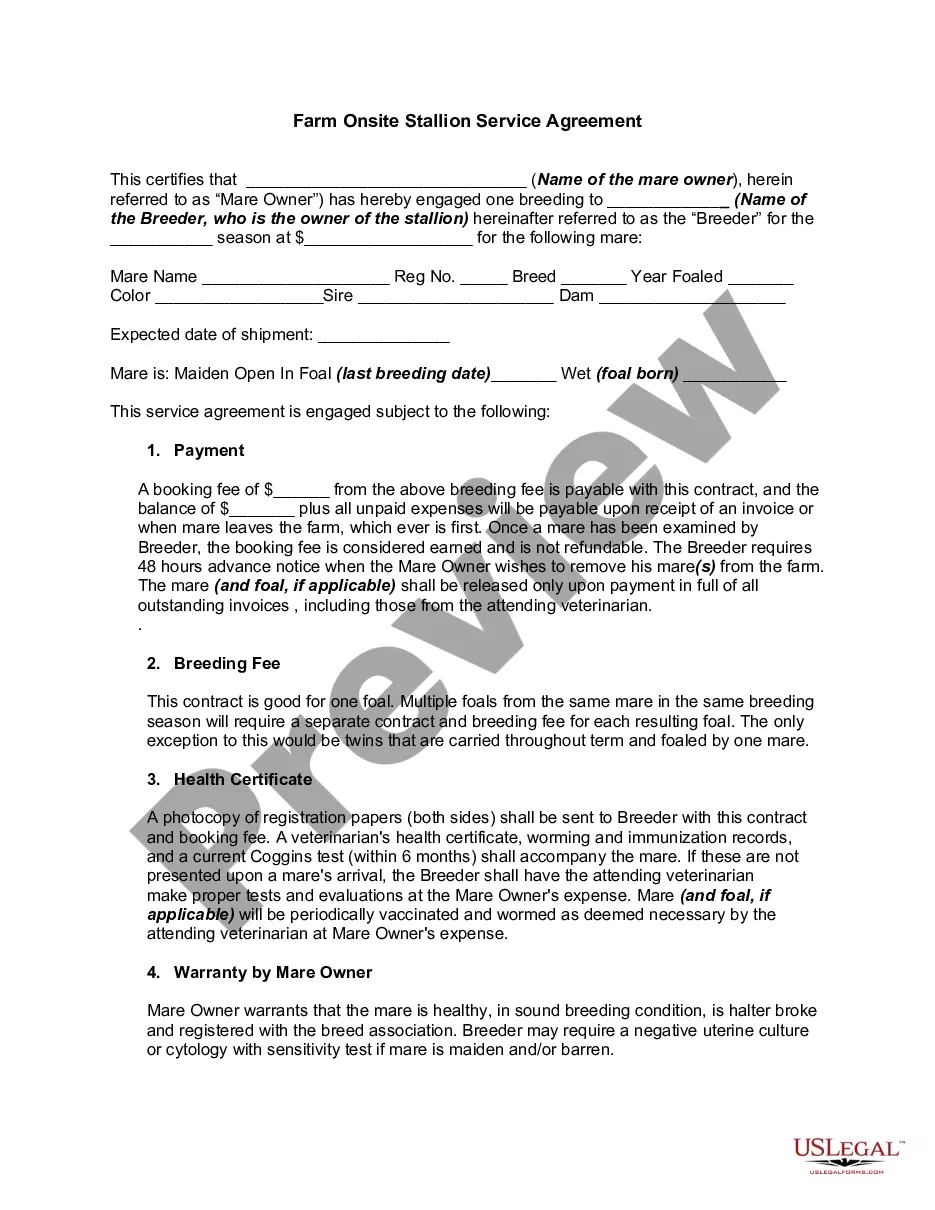
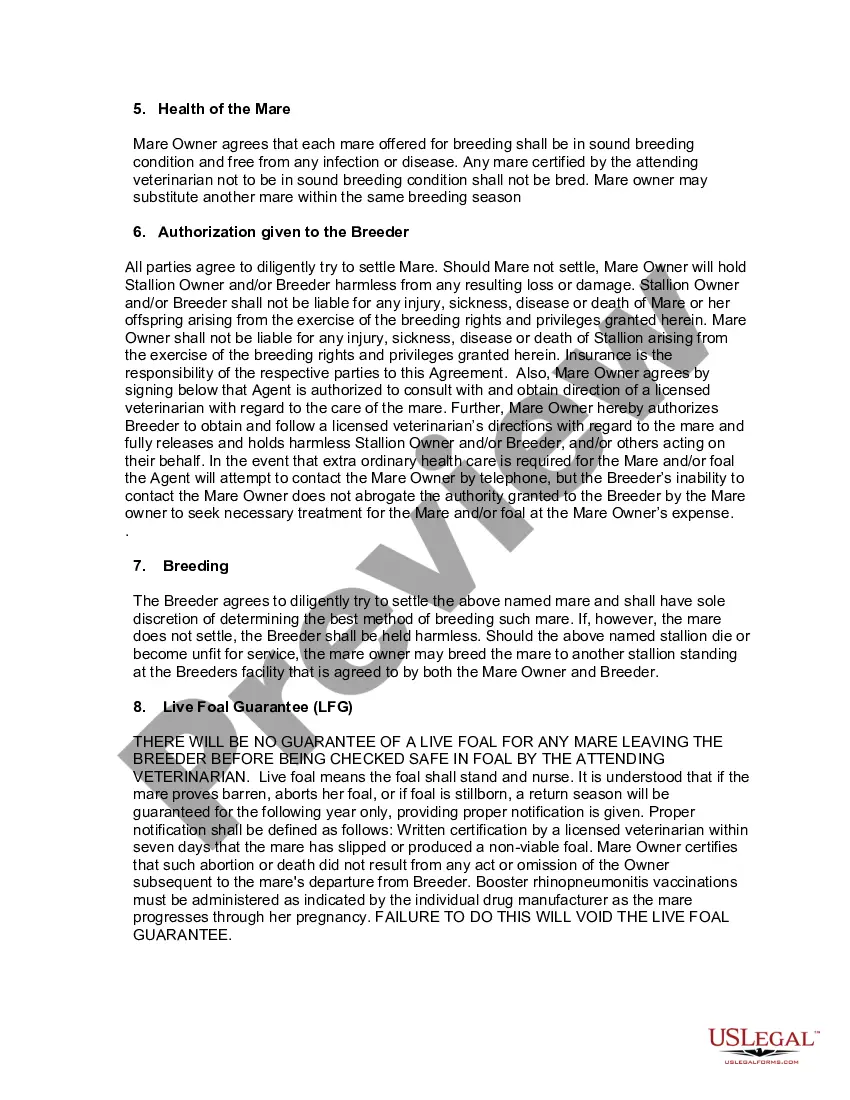
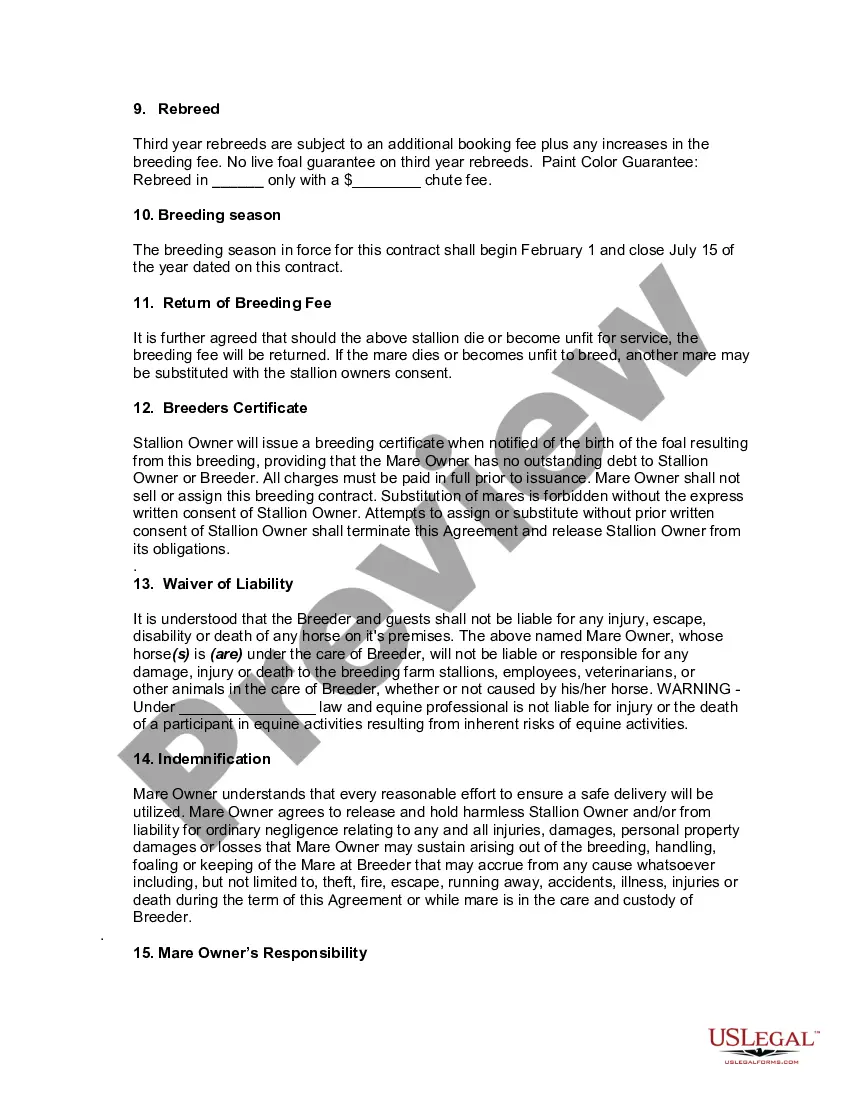
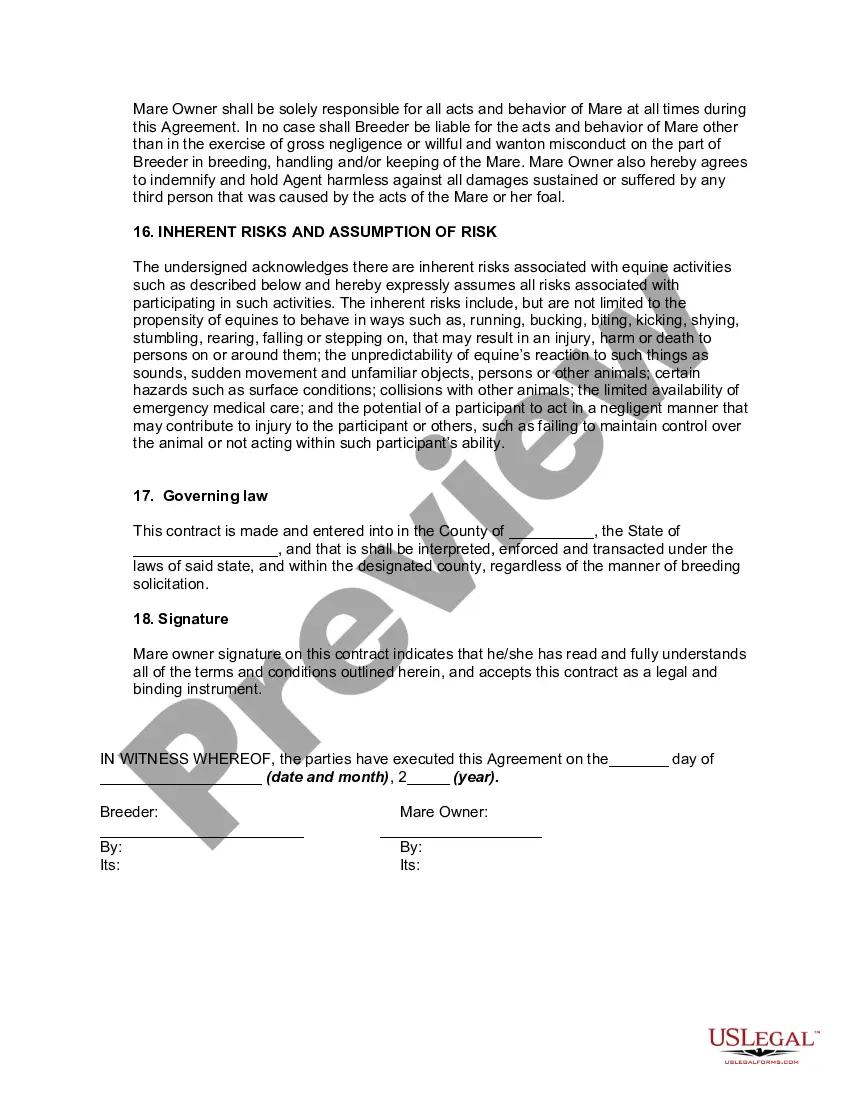
Get your form ready online
Our built-in tools help you complete, sign, share, and store your documents in one place.
Make edits, fill in missing information, and update formatting in US Legal Forms—just like you would in MS Word.
Download a copy, print it, send it by email, or mail it via USPS—whatever works best for your next step.
Sign and collect signatures with our SignNow integration. Send to multiple recipients, set reminders, and more. Go Premium to unlock E-Sign.
If this form requires notarization, complete it online through a secure video call—no need to meet a notary in person or wait for an appointment.
We protect your documents and personal data by following strict security and privacy standards.

Make edits, fill in missing information, and update formatting in US Legal Forms—just like you would in MS Word.

Download a copy, print it, send it by email, or mail it via USPS—whatever works best for your next step.

Sign and collect signatures with our SignNow integration. Send to multiple recipients, set reminders, and more. Go Premium to unlock E-Sign.

If this form requires notarization, complete it online through a secure video call—no need to meet a notary in person or wait for an appointment.

We protect your documents and personal data by following strict security and privacy standards.
Looking for another form?









Form popularity
FAQ
Most veterinarians agree the ideal time to castrate is between 6-12 months of age, but one must first ensure two testicles are present. Presence of only one testicle in the scrotum could indicate a condition known as cryptorchidism.
On average, however, males become fertile after six months of age and reach full sexual maturity by 12 to 15 months.
Colts -occasionally- can be fertile enough to get a mare pregnant at 6 months old. However, the majority will certainly be able to get a mare pregnant from 10-14 months of age. However, there are never any hard and fast rules in equine repro...
If the young horse has done well on the racetrack during his 2- and 3-year-old years, for instance, he may begin breeding mares as a 4-year-old. Before entering the breeding shed, he needs some re-training, a fertility evaluation, and some time to refocus on his new job and prepare for his first breeding season.
Generally, assuming a filly is healthy and on a good plan of nutrition, she can be bred as early as two years of age, although many breeders suggest waiting until three years of age. Mares can continue to produce foals well into their late teens or early to mid 20's.
Mature stallions can breed two or three mares a day throughout a long breeding season and maintain a good level of fertility, but young stallions should not be expected to handle this level of work.
Horse-trading and teaching are, hands down, the most profitable aspects of any horse business. But these things require expertise.
How to Start a Horse Breeding Farm Finding the Right Land. Setting Up Your Farm. Stocking All the Necessary Supplies. Purchasing the Horses. Starting Your Breeding Program. Marketing Your Horse Breeding Business.
A 65% conception (pregnancy) rate is considered average for a horse breeding farm. That means that 35% of all the mares bred are left open until the next breeding season.
8 Steps for Breeding Your Mare Step 1: Consider the mare's overall health. Step 2: Schedule a breeding soundness examination and address any problems. Step 3: Get the mare cycling. Step 4: Track the mare's estrous cycle to know when she's ovulating. Step 5: Determine when to breed the mare.
