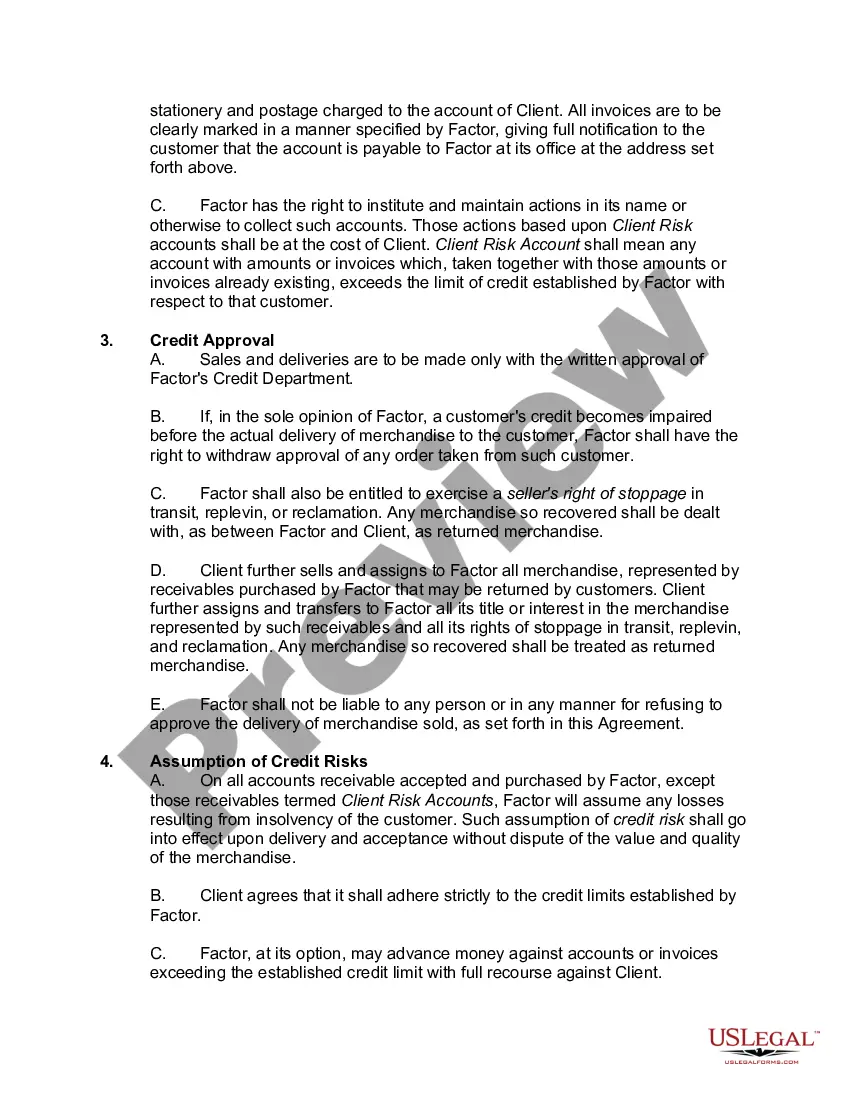
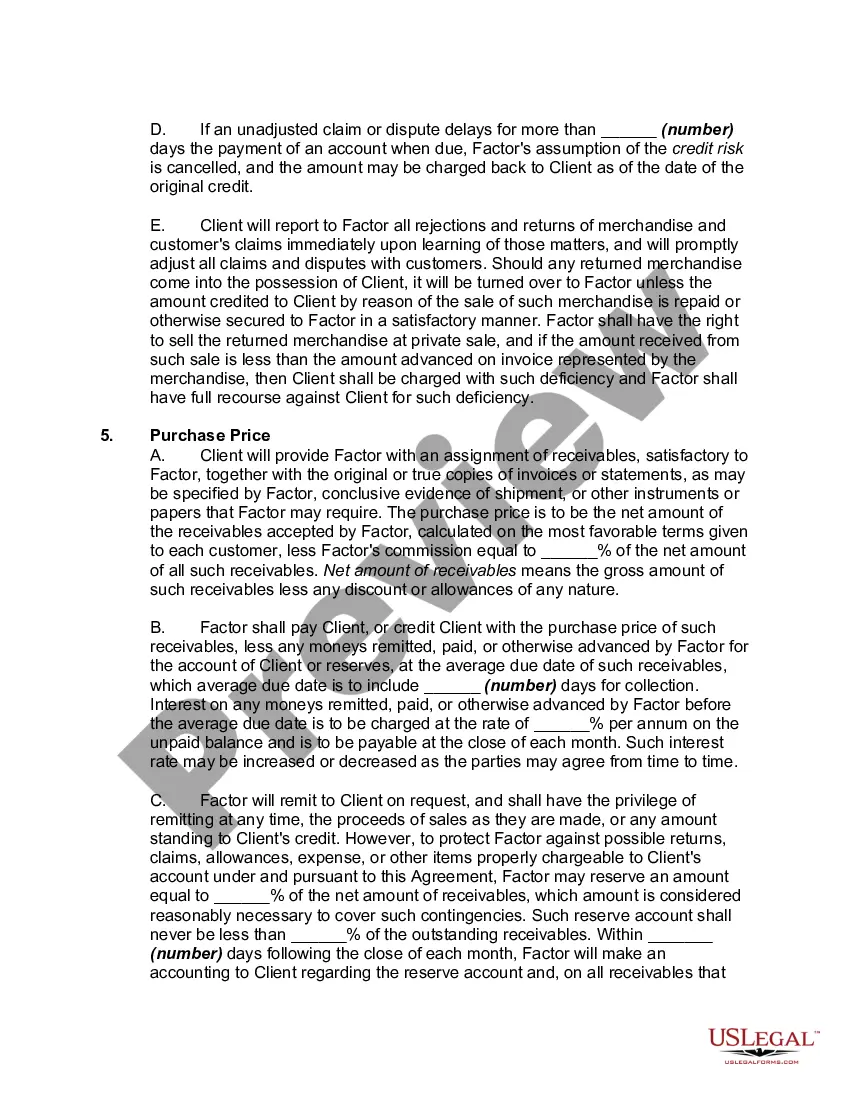
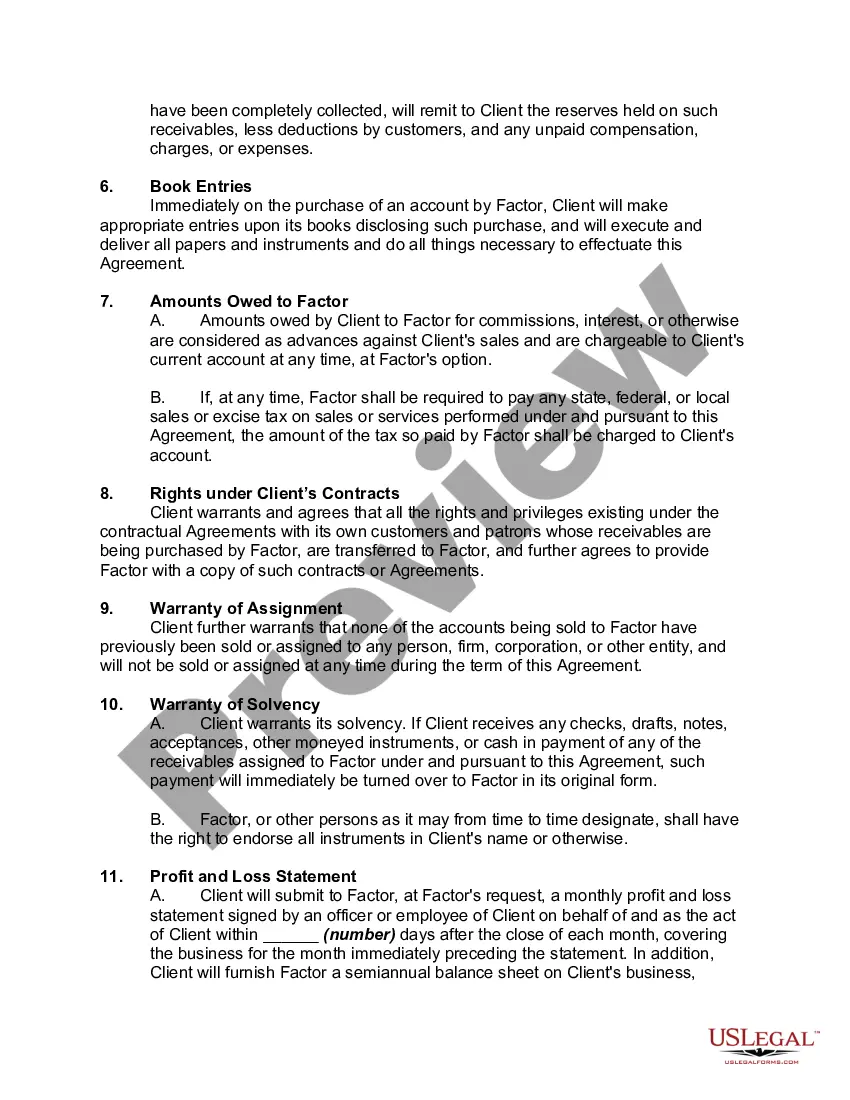
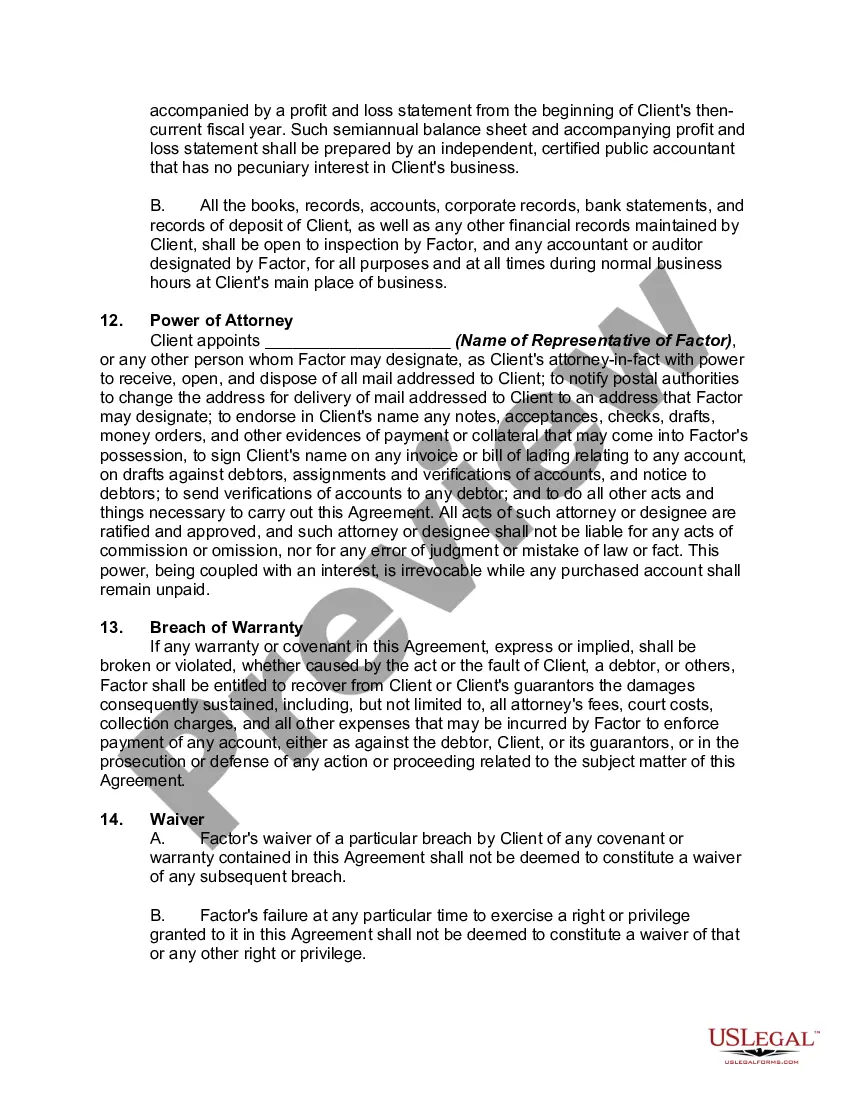
Factoring Agreement Document Without Comments In Washington
Description



Get your form ready online
Our built-in tools help you complete, sign, share, and store your documents in one place.
Make edits, fill in missing information, and update formatting in US Legal Forms—just like you would in MS Word.
Download a copy, print it, send it by email, or mail it via USPS—whatever works best for your next step.
Sign and collect signatures with our SignNow integration. Send to multiple recipients, set reminders, and more. Go Premium to unlock E-Sign.
If this form requires notarization, complete it online through a secure video call—no need to meet a notary in person or wait for an appointment.
We protect your documents and personal data by following strict security and privacy standards.

Make edits, fill in missing information, and update formatting in US Legal Forms—just like you would in MS Word.

Download a copy, print it, send it by email, or mail it via USPS—whatever works best for your next step.

Sign and collect signatures with our SignNow integration. Send to multiple recipients, set reminders, and more. Go Premium to unlock E-Sign.

If this form requires notarization, complete it online through a secure video call—no need to meet a notary in person or wait for an appointment.

We protect your documents and personal data by following strict security and privacy standards.
Looking for another form?





Form popularity
FAQ
In disclosed factoring, the sale of the receivables is made known to the customers of the factoring customer. In the case of undisclosed (confidential) factoring, on the other hand, the debtors have no knowledge of the sale of the receivables.
Recourse factoring is the most common and means that your company must buy back any invoices that the factoring company is unable to collect payment on. You are ultimately responsible for any non-payment. Non-recourse factoring means the factoring company assumes most of the risk of non-payment by your customers.
Factoring Application Applications vary depending on the factor's needs, but most of them ask for things like business and personal phone numbers, email addresses, and business details. Applications also normally ask for your business' industry sector and your monthly invoicing volume.
There are two types of debts: recourse and nonrecourse. A recourse debt holds the borrower personally liable. All other debt is considered nonrecourse. In general, recourse debt (loans) allows lenders to collect what is owed for the debt even after they've taken collateral (home, credit cards).
Recourse and non-recourse factoring, along with invoice discounting, are different methods of financing businesses using their accounts receivable. In recourse factoring, the business retains the risk of non-payment by customers, while in non-recourse factoring, the factor assumes the risk.
While advantageous, non-recourse factoring also has some drawbacks: Higher Costs: Non-recourse arrangements may involve slightly higher fees compared to traditional financing options. Limited Flexibility: Factors may have stricter criteria, leading to fewer approvals and smaller credit lines.
You need to consider the fees associated with switching before committing to the change. Once you've decided to leave your current factor, you will need to give notice. All factoring companies require written notice to terminate the contract. The expectation is usually 30 – 60 days prior to the renewal date.
How To Get Out Of Factoring Check your factoring contract. Get some guidance. Identify your problems with factoring. Consider product migration. Plan any product migration. Take over the credit control function. Calculate the residual funding gap. Plan your funding migration.
