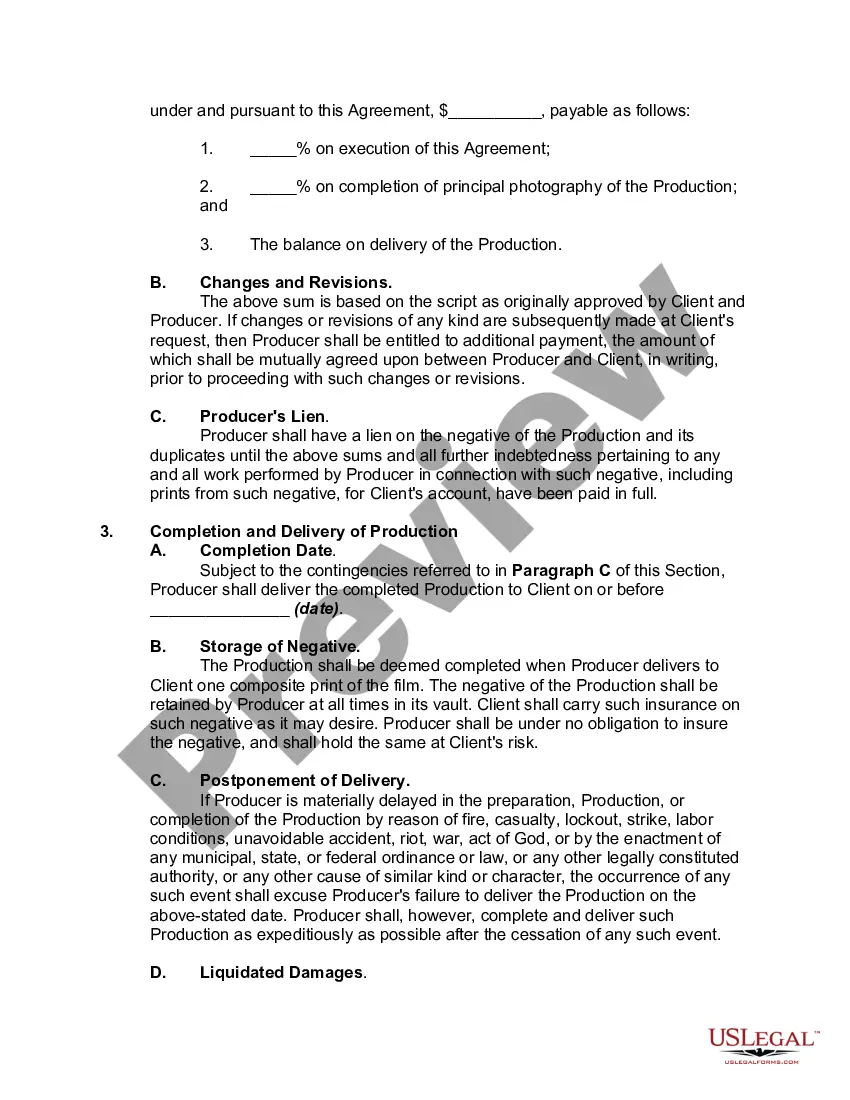
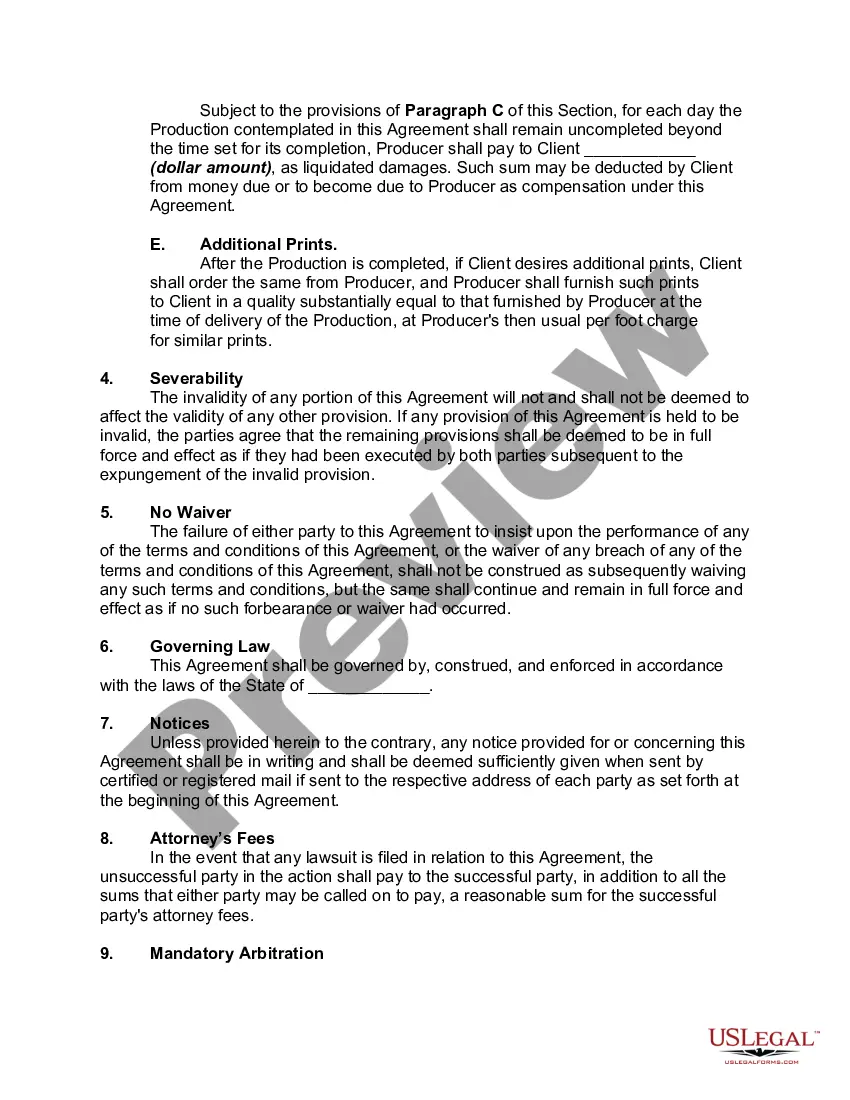
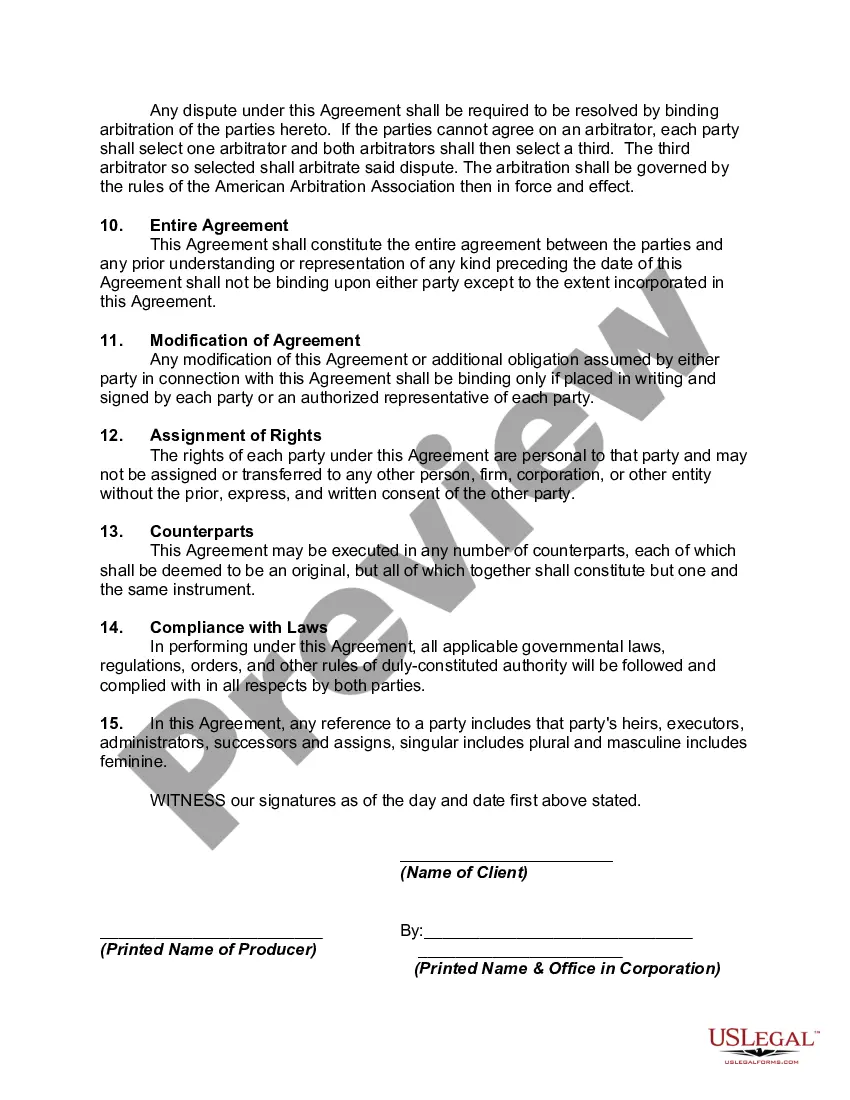
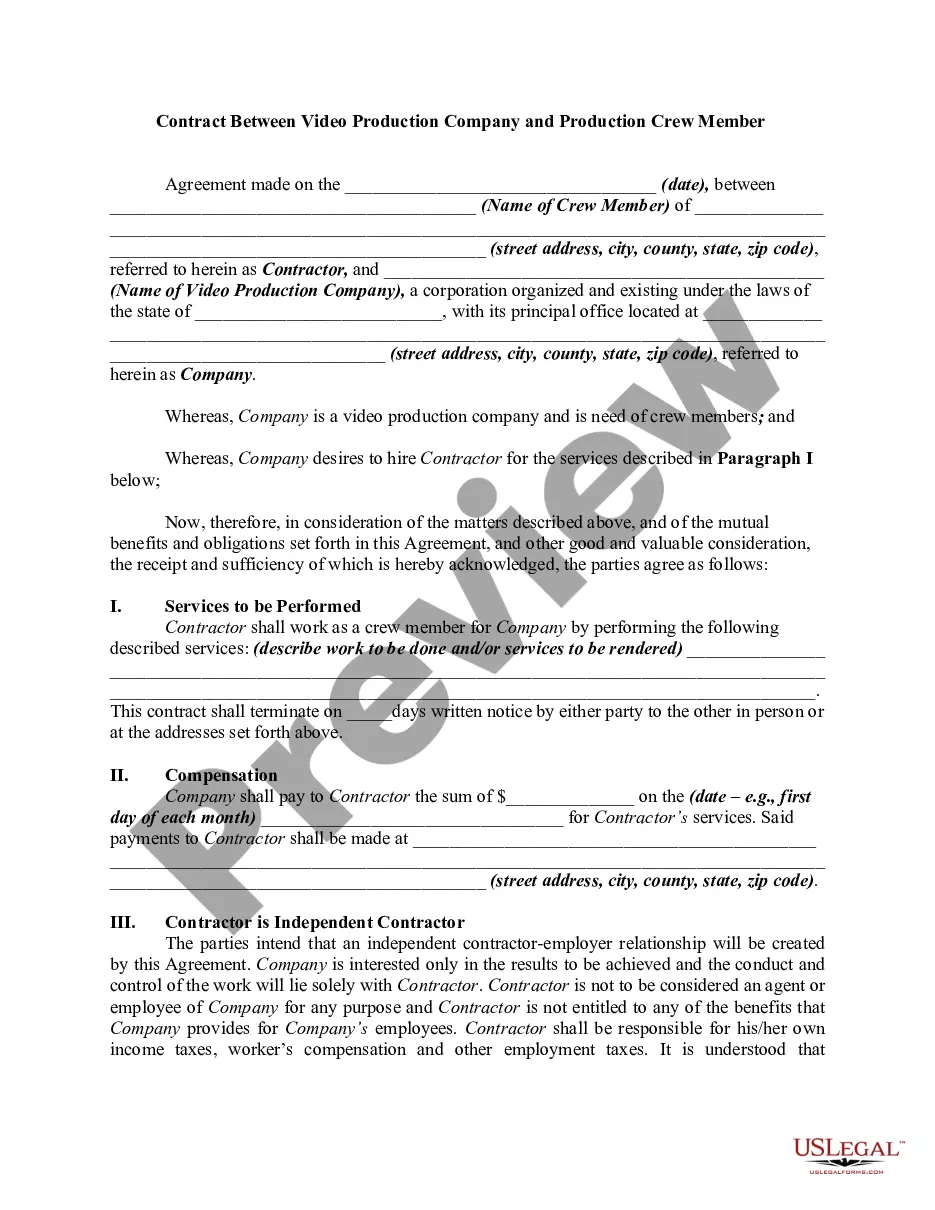
Film Agreement Sample With Collateral In Santa Clara
Description

Get your form ready online
Our built-in tools help you complete, sign, share, and store your documents in one place.
Make edits, fill in missing information, and update formatting in US Legal Forms—just like you would in MS Word.
Download a copy, print it, send it by email, or mail it via USPS—whatever works best for your next step.
Sign and collect signatures with our SignNow integration. Send to multiple recipients, set reminders, and more. Go Premium to unlock E-Sign.
If this form requires notarization, complete it online through a secure video call—no need to meet a notary in person or wait for an appointment.
We protect your documents and personal data by following strict security and privacy standards.

Make edits, fill in missing information, and update formatting in US Legal Forms—just like you would in MS Word.

Download a copy, print it, send it by email, or mail it via USPS—whatever works best for your next step.

Sign and collect signatures with our SignNow integration. Send to multiple recipients, set reminders, and more. Go Premium to unlock E-Sign.

If this form requires notarization, complete it online through a secure video call—no need to meet a notary in person or wait for an appointment.

We protect your documents and personal data by following strict security and privacy standards.
Looking for another form?








Form popularity
FAQ
Contracts in film production secure the rights and obligations of all parties involved, from actors and directors to producers and screenwriters. They cover aspects like compensation, working conditions, and intellectual property rights.
A licensing agreement allows one party (the licensee) to use and/or earn revenue from the property of the owner (the licensor). Licensing agreements generate revenues, called royalties, earned by a company for allowing its copyrighted or patented material to be used by another company.
An actor contract is more than just an agreement; it's a legally binding document that protects all parties involved and outlines the expectations, responsibilities, and rights.
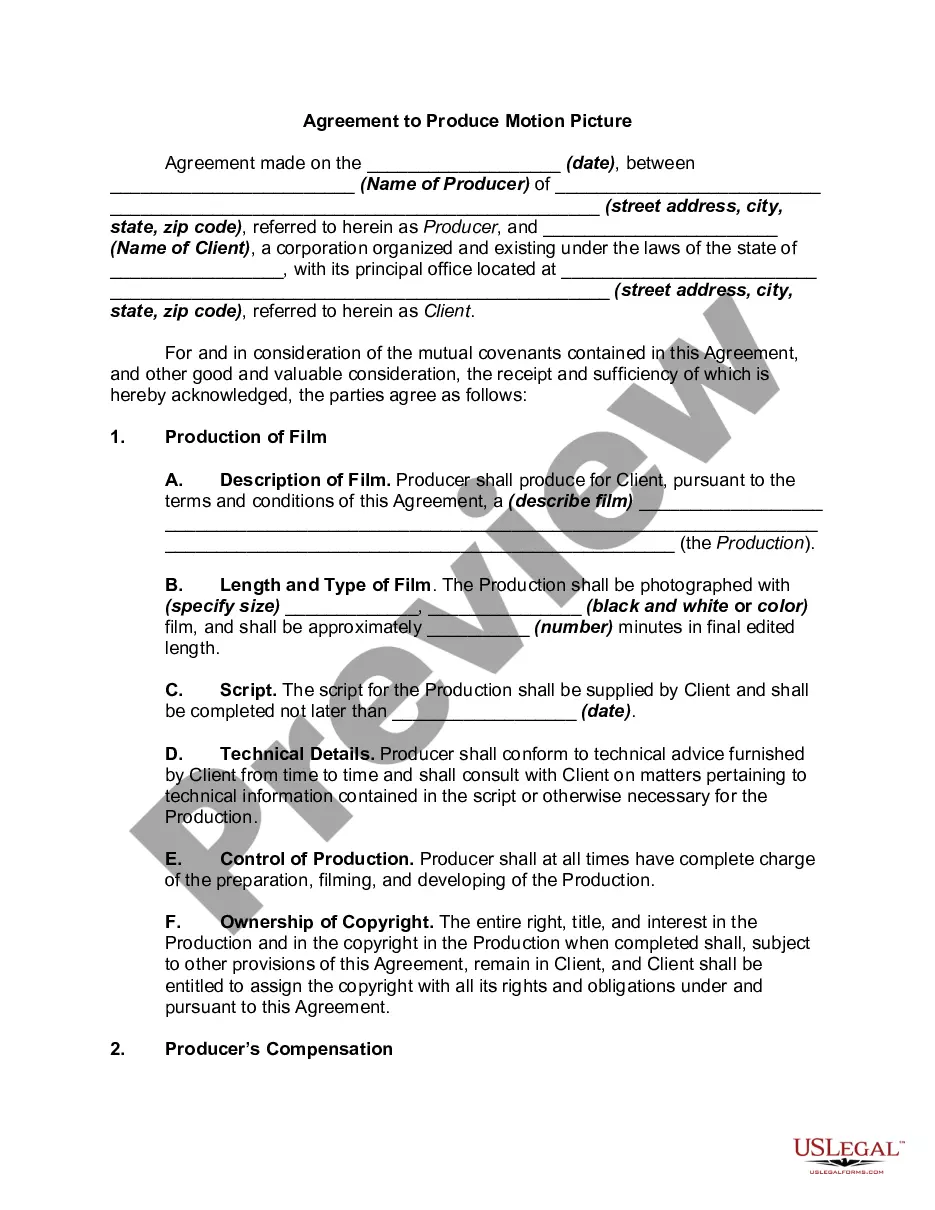
Sample Movie Production Agreement Description of Project. . Production Specifications. The Project will be produced in color on , using both studio and location recording techniques. Budget. Script. Date of Delivery. Ownership of Rights in Project. Credits. Right to Enter Project in Competitions.
A collateral contract is one where the parties to one contract enter into or promise to enter into another contract. Thus, the two contracts are connected and it may be enforced even though it forms no constructive part of the original contract.
Examples of collateral documents are a security agreement, guarantee and collateral agreement, pledge agreement, deposit account control agreement, securities account control agreement, mortgage, and UCC-1s.
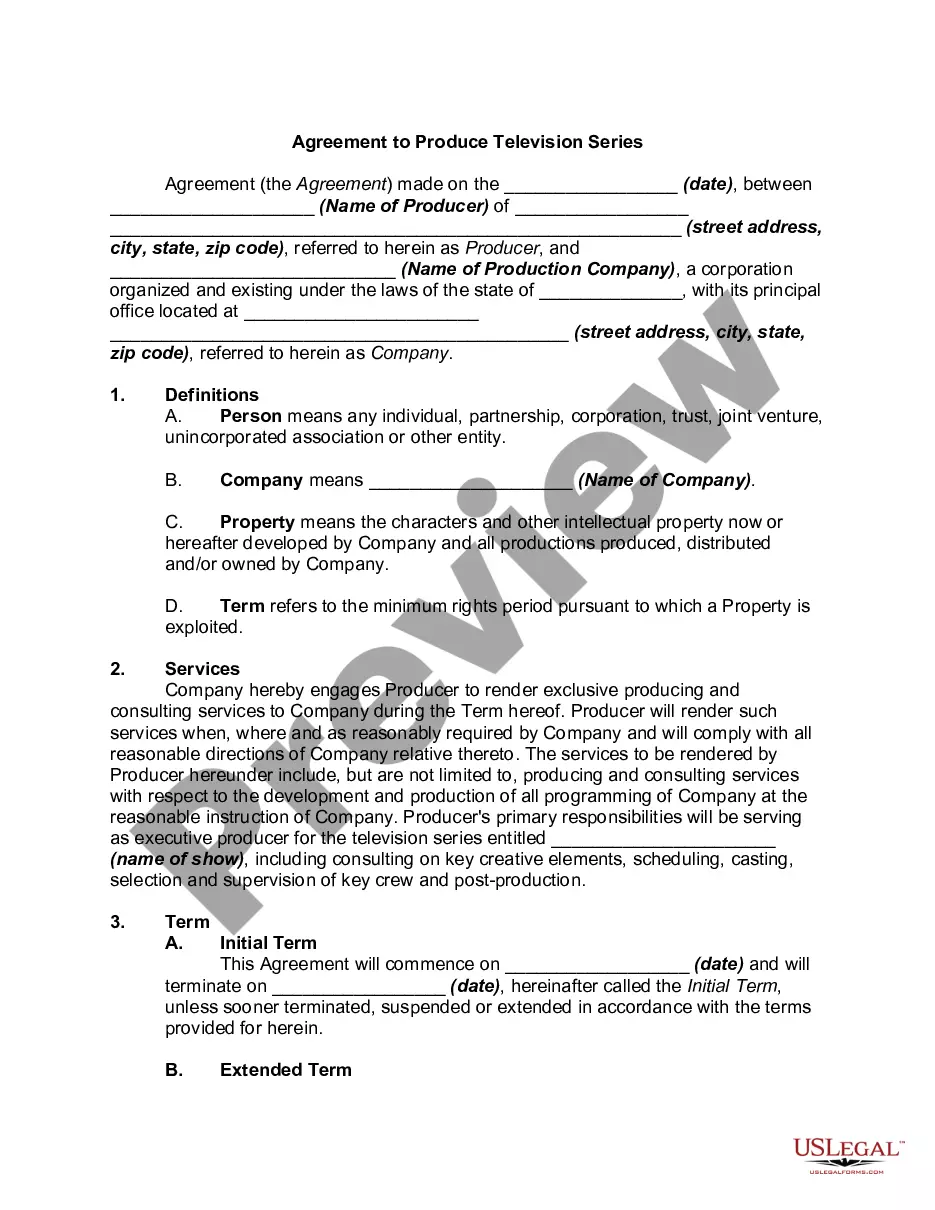
A film production services agreement will identify the nature and scope of the project, the people involved in the project, and the script that will be produced. It also will outline all the services provided under the contract, possibly identifying the individuals who will be responsible for performing each service.
The collateral contract is usually made to induce one of the parties to enter into the main contract. For example, if a person is buying a car from a dealer, the dealer may make a collateral contract with the buyer to provide a warranty for the car.
