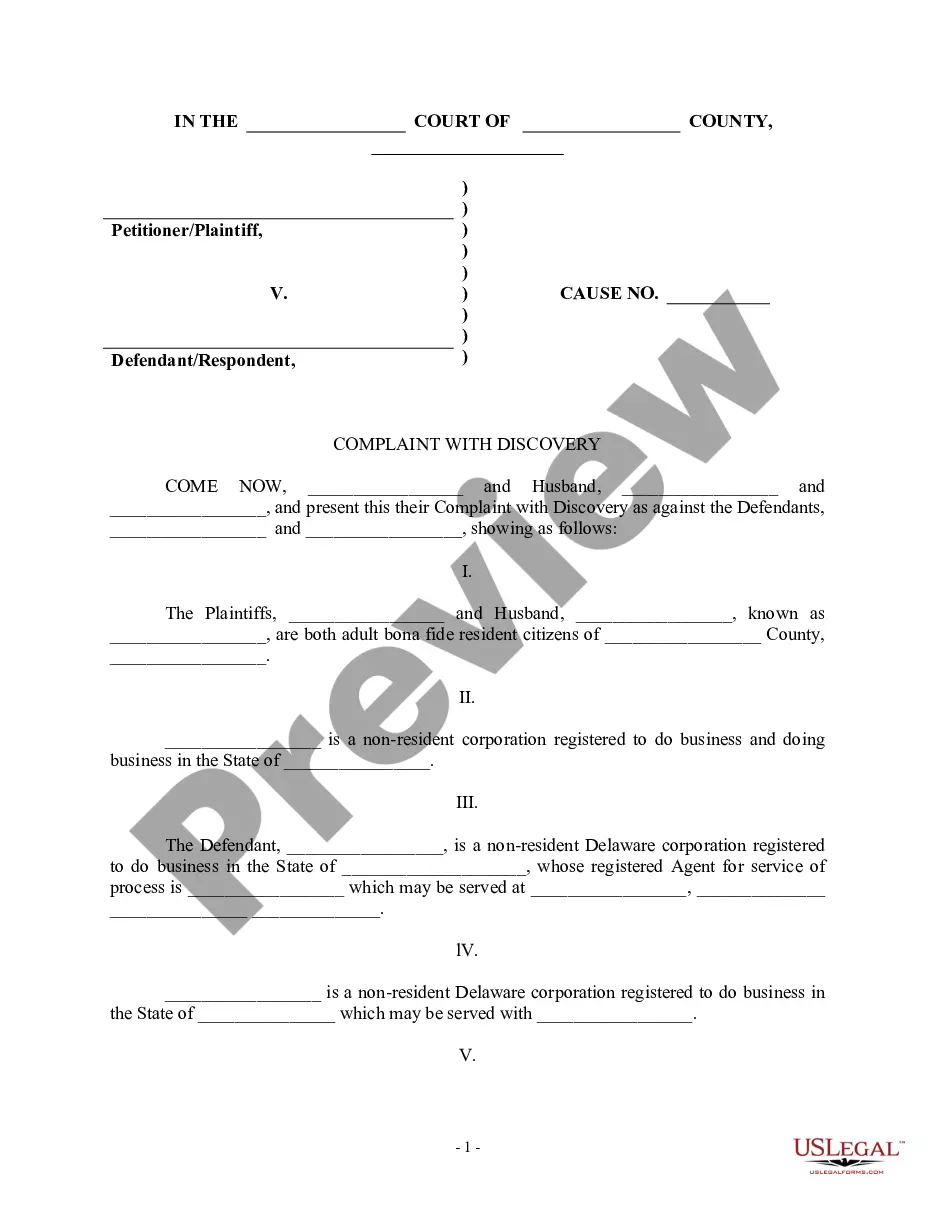
Movie Agreement Contract For Loan In Queens
Description

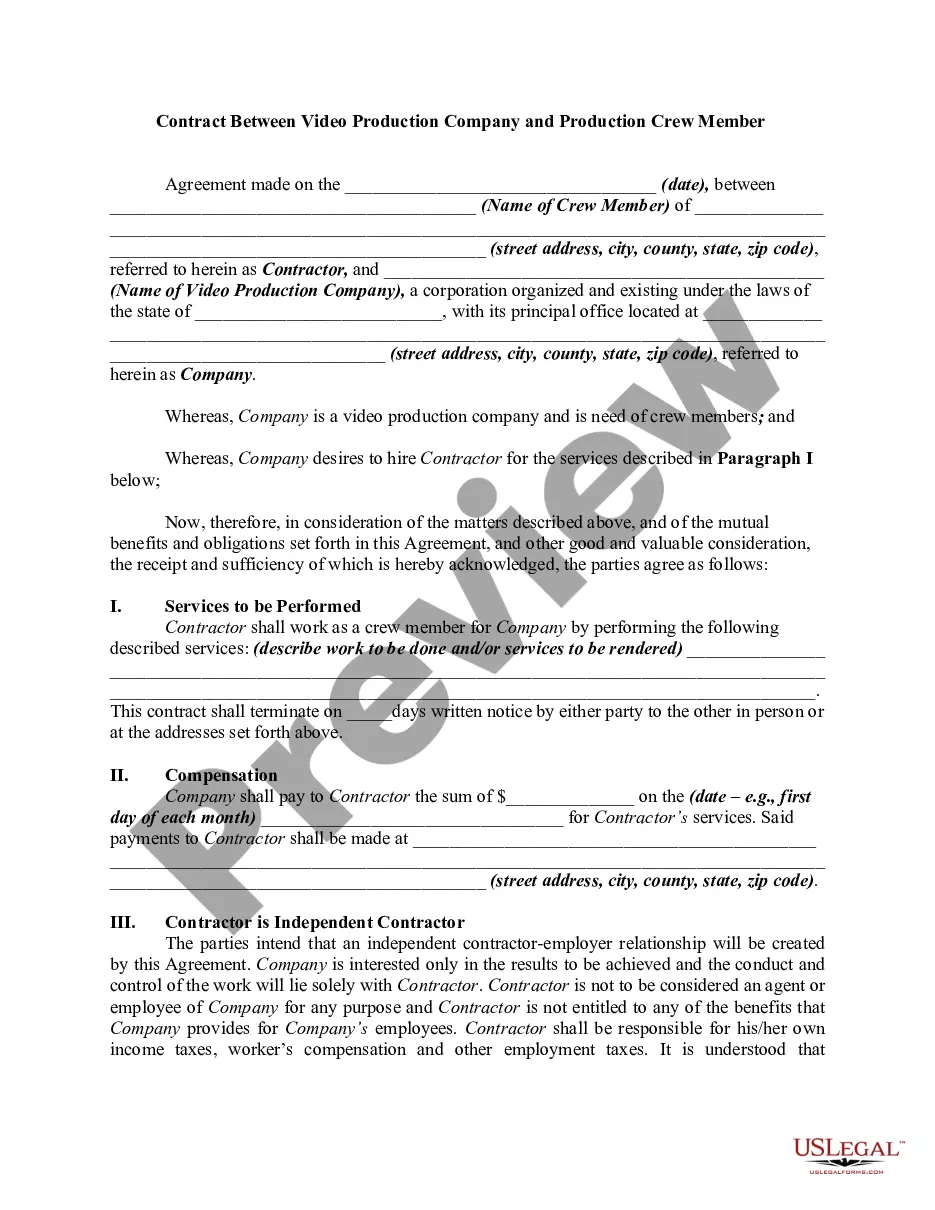
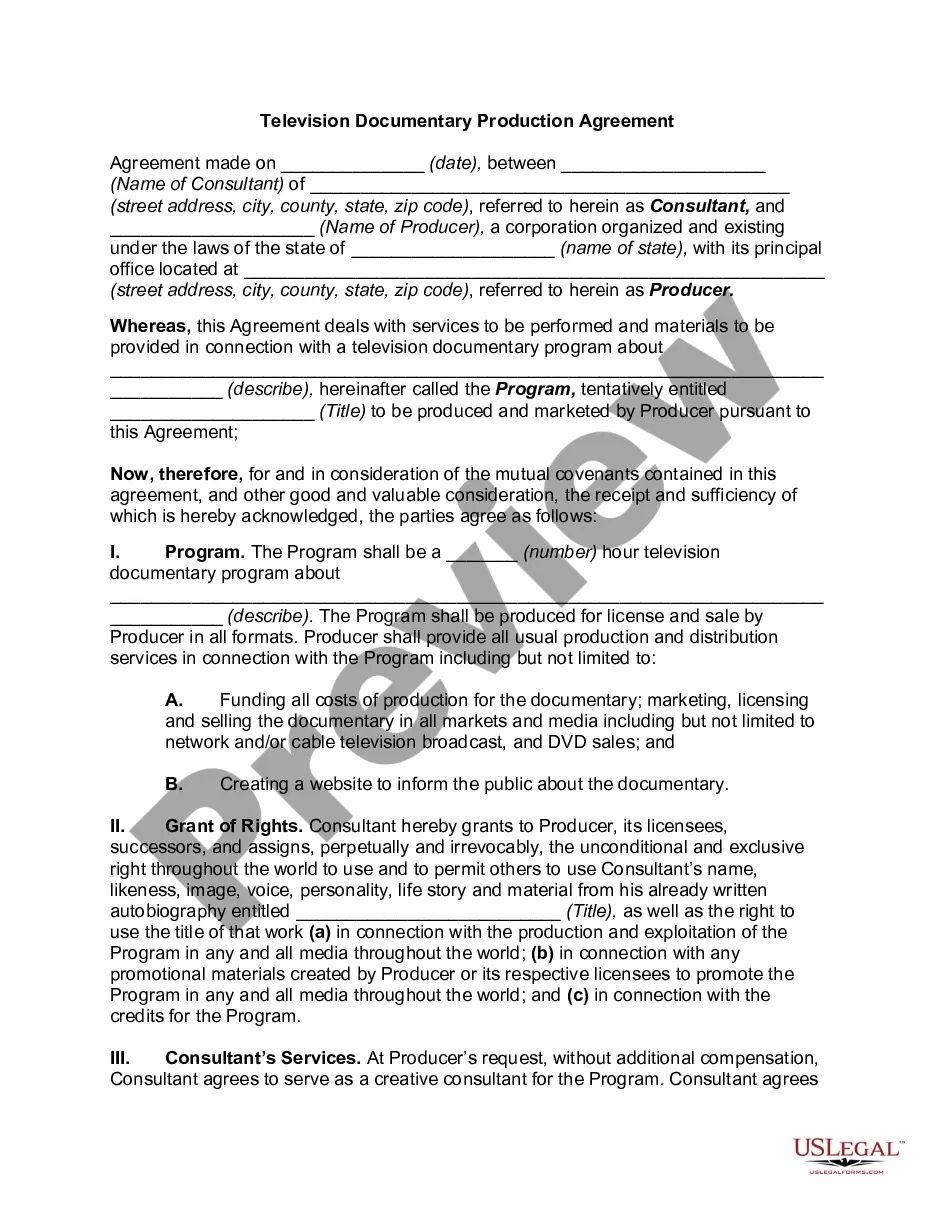
Get your form ready online
Our built-in tools help you complete, sign, share, and store your documents in one place.
Make edits, fill in missing information, and update formatting in US Legal Forms—just like you would in MS Word.
Download a copy, print it, send it by email, or mail it via USPS—whatever works best for your next step.
Sign and collect signatures with our SignNow integration. Send to multiple recipients, set reminders, and more. Go Premium to unlock E-Sign.
If this form requires notarization, complete it online through a secure video call—no need to meet a notary in person or wait for an appointment.
We protect your documents and personal data by following strict security and privacy standards.

Make edits, fill in missing information, and update formatting in US Legal Forms—just like you would in MS Word.

Download a copy, print it, send it by email, or mail it via USPS—whatever works best for your next step.

Sign and collect signatures with our SignNow integration. Send to multiple recipients, set reminders, and more. Go Premium to unlock E-Sign.

If this form requires notarization, complete it online through a secure video call—no need to meet a notary in person or wait for an appointment.

We protect your documents and personal data by following strict security and privacy standards.
Looking for another form?
Form popularity
FAQ
There's a multitude of ways to fund a film, but three methods are the most common: Debt, Equity, and Public Funding. Most independent films are a combination of all three. As a comparison, Hollywood blockbuster films tend to fall completely under equity financing, with high-level financiers sharing in the profits.
The New York State Film Production Tax Credit program provides qualifying film and television productions a 25% credit for qualified production expenditures. All eligible productions shot in New York City may qualify for this program.
How to Finance a Film Government Funding. Most governments dedicate funding for the arts, film and cultural projects. Tax Incentives. Pre Sales. Negative Pickup Deal. Gap Financing. Fiscal Sponsorship. Film Grants. Private Investors.
Requirements (For all applicants): Completed application form. Letter of motivation. A synopsis. Treatment Chain of Title and Proof of Copyright where the work is not the original idea and letters of commitment from public figures in documentaries. Producer's CV. Writer's CV.
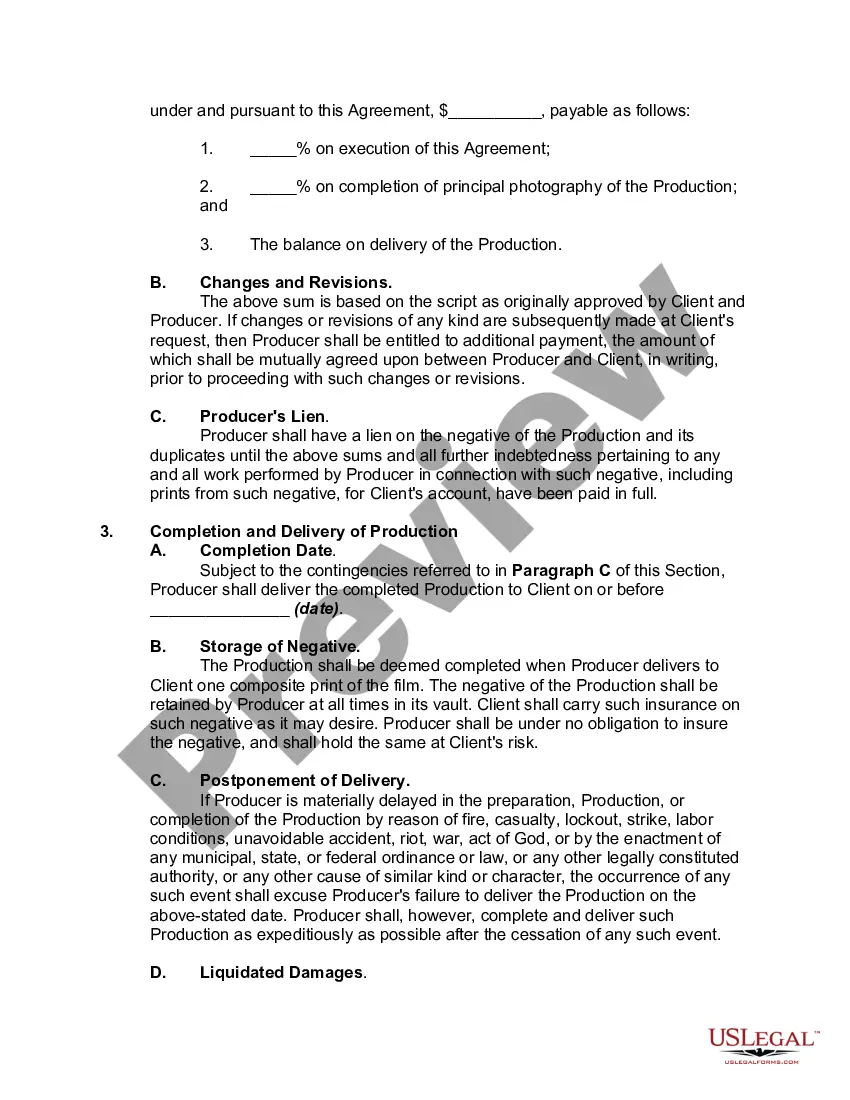
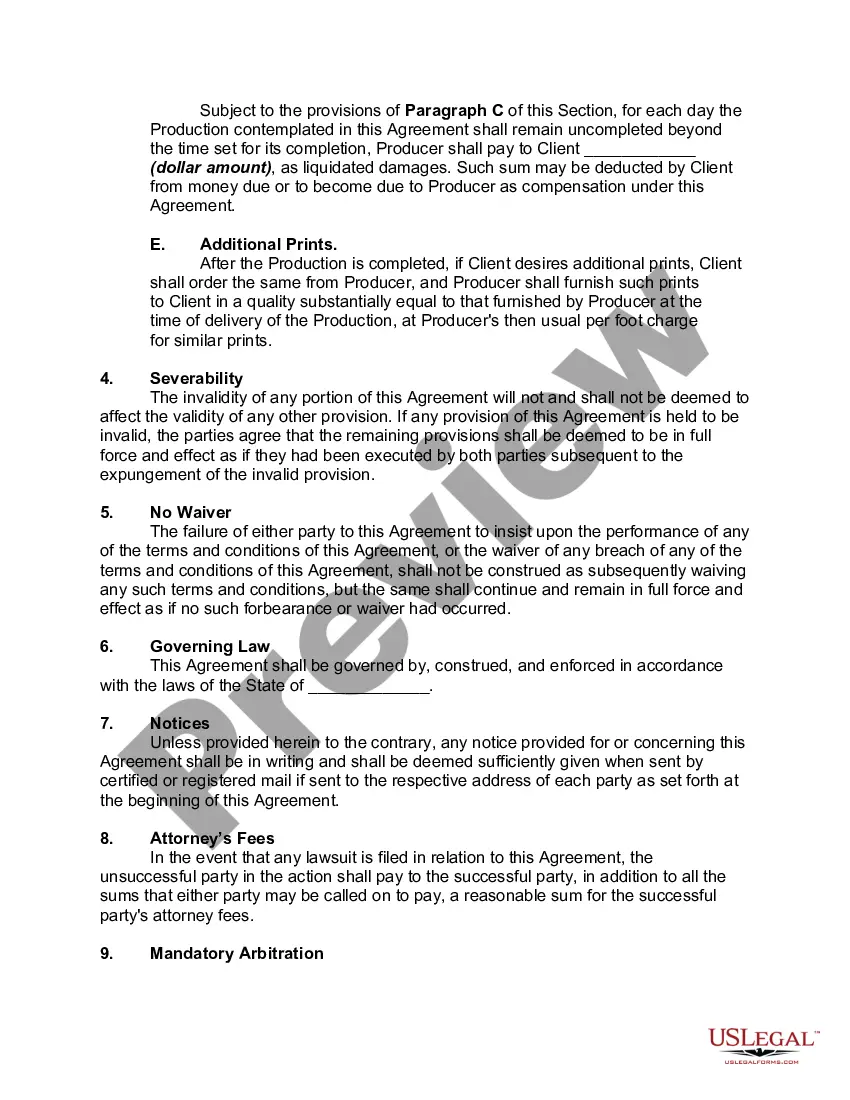
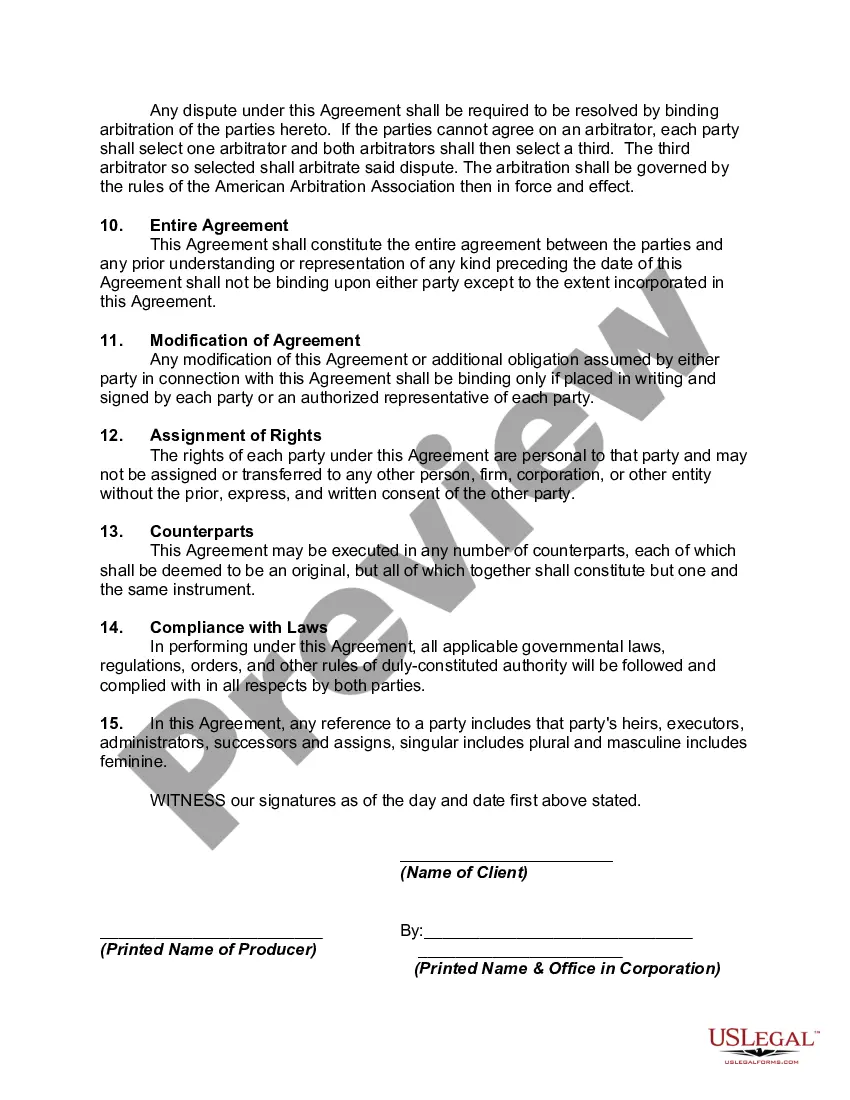
A film production contract is a legally binding agreement between parties for the production of a film. It covers the details of the project, payment arrangements, ownership, supply, and more.
How to create a film budget? Add costs for pre-production and wrap crew. Add your shooting crew expenses. Materials and expenses during pre-production and wrap. Location expenses. Wardrobe/puppets/animatronics/specialty make-up/animals. Studio rental and related expenses. Costs for set construction labor.
Film funding can be sourced from a variety of sources such as Government Funding, Tax Incentives, Pre Sales, Negative pick-up deal, Gap Financing, Fiscal Sponsorships, Film Grants, Product Placement, Private Investors and Crowdfunding.
These contracts specify the actor's role and cover aspects such as compensation (salary, bonuses and profit-sharing arrangements), work schedule (filming dates, call times and duration of the shoot), rights and obligations (the actor's responsibilities, confidentiality agreements and moral clauses) and perks and ...
Most actor contracts are between two and three pages long. The typical term for an actor contract is a certain a number of months after the film or play premieres, although some go on indefinitely. Term lengths can vary greatly! The typical term for an agent or manager contract for actors is about 12 to 18 months.
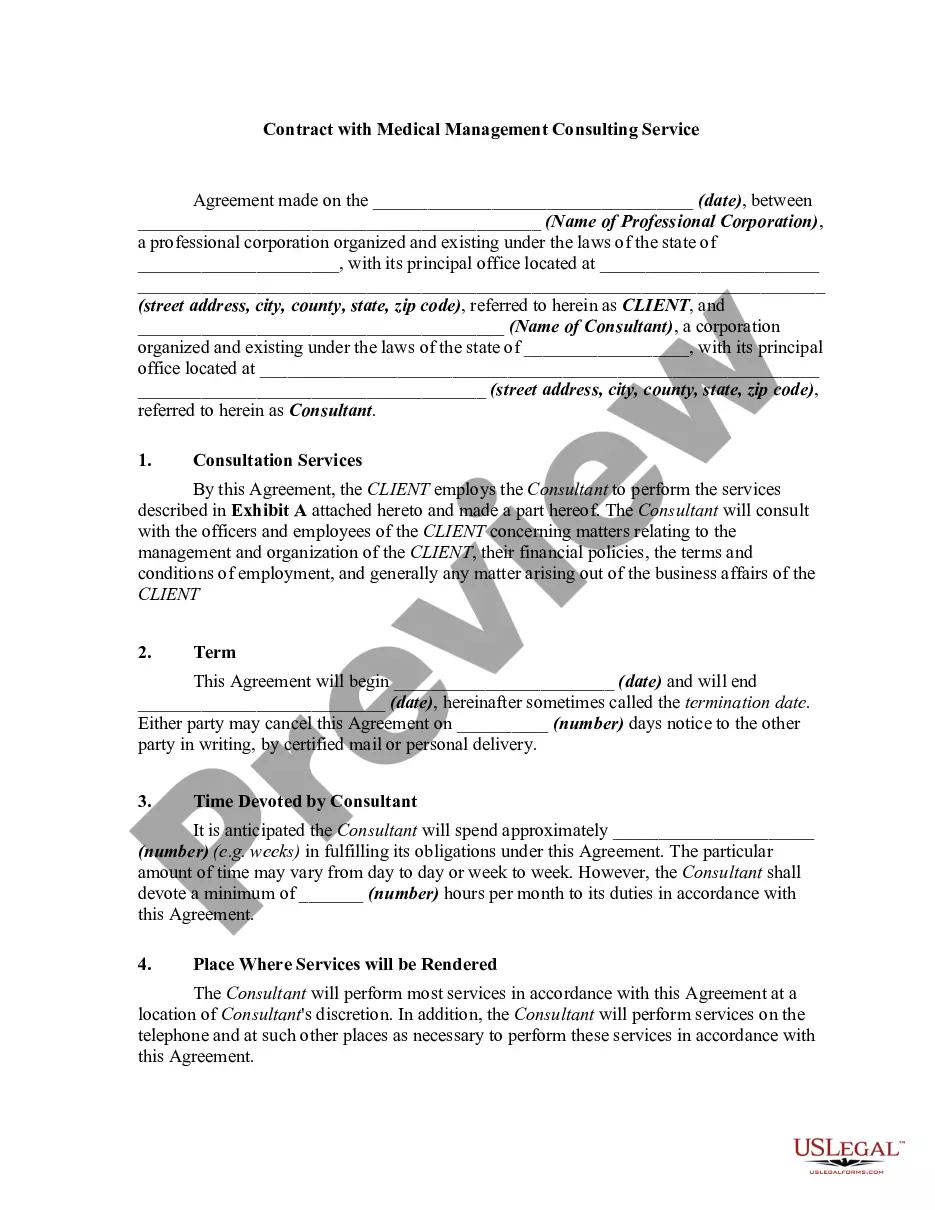
The production agreement sets forth the term between two or more producers, individuals, or companies, who together agree to produce a feature film based on an existing screenplay. The production agreement may include financing elements.