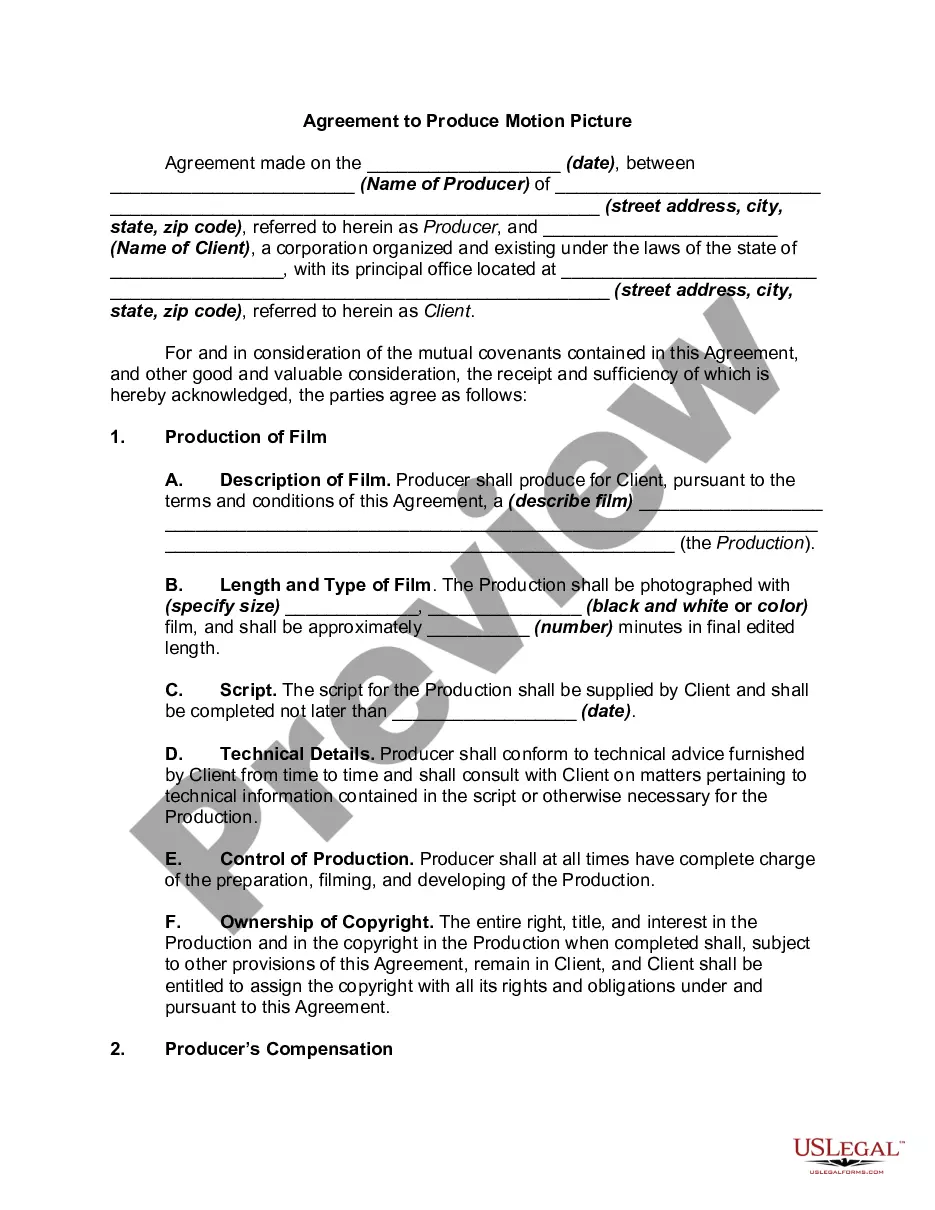
Manufacturing Agreement Format In Nassau
Description

Get your form ready online
Our built-in tools help you complete, sign, share, and store your documents in one place.
Make edits, fill in missing information, and update formatting in US Legal Forms—just like you would in MS Word.
Download a copy, print it, send it by email, or mail it via USPS—whatever works best for your next step.
Sign and collect signatures with our SignNow integration. Send to multiple recipients, set reminders, and more. Go Premium to unlock E-Sign.
If this form requires notarization, complete it online through a secure video call—no need to meet a notary in person or wait for an appointment.
We protect your documents and personal data by following strict security and privacy standards.

Make edits, fill in missing information, and update formatting in US Legal Forms—just like you would in MS Word.

Download a copy, print it, send it by email, or mail it via USPS—whatever works best for your next step.

Sign and collect signatures with our SignNow integration. Send to multiple recipients, set reminders, and more. Go Premium to unlock E-Sign.

If this form requires notarization, complete it online through a secure video call—no need to meet a notary in person or wait for an appointment.

We protect your documents and personal data by following strict security and privacy standards.
Looking for another form?







Form popularity
FAQ
This is a manufacturing agreement, under which the manufacturer is obligated to produce and supply products that are specified by the customer. Typically, a detailed product specification will be provided, and this may be incorporated into the agreement or supplied as and when required by the customer.
Manufacturing contracts are the backbone of any successful partnership between businesses and manufacturers. These legally binding agreements define the scope of work, establish clear expectations, and mitigate risks associated with production.
While contract manufacturing offers many benefits, there are also some risks associated with it. One of the most significant risks is the risk of intellectual property theft. By outsourcing production to a third-party manufacturer, the company is essentially handing over control of its intellectual property.
Your manufacturing contract should include: intellectual property (since the contract manufacturer(s) will be producing your proprietary creation). an assessment of manufacturing costs. clearly-written obligations of both parties. liabilities. product quality standards (if a quality control clause is included).
Sometimes, a contract covers a one-time action between parties, but what happens when the relationships or circumstances are ongoing? When signing parties know they will continue to work together in the future, a Master Service Agreement (MSA) can simplify those future agreements and speed up the negotiation process.
Many companies wish to outsource manufacturing of their product to third party manufacturers. A manufacturing agreement should set out the terms of the arrangement in a legally binding agreement. This will provide a good basis for an effective working relationship in which both parties know what is expected.
It's a global network starting from the initial collection of raw materials all the way to distributors and wholesalers receiving final products.
A supply agreement is a contractual arrangement between a supplier and a buyer, outlining terms and conditions for purchasing and delivering goods or services. Both parties' rights and obligations are laid out, offering protection and clarity in their commercial partnership.
What Should be Included in an Operating Agreement? Names, addresses, and titles of each member. Ownership percentages. Member rights and responsibilities. Responsibility, liability, and powers of members and/or managers. Profit and loss distribution. Buying and selling rules. Dissolution instructions. Meeting guidelines.
