Film Contracts For Crew In Miami-Dade
Description

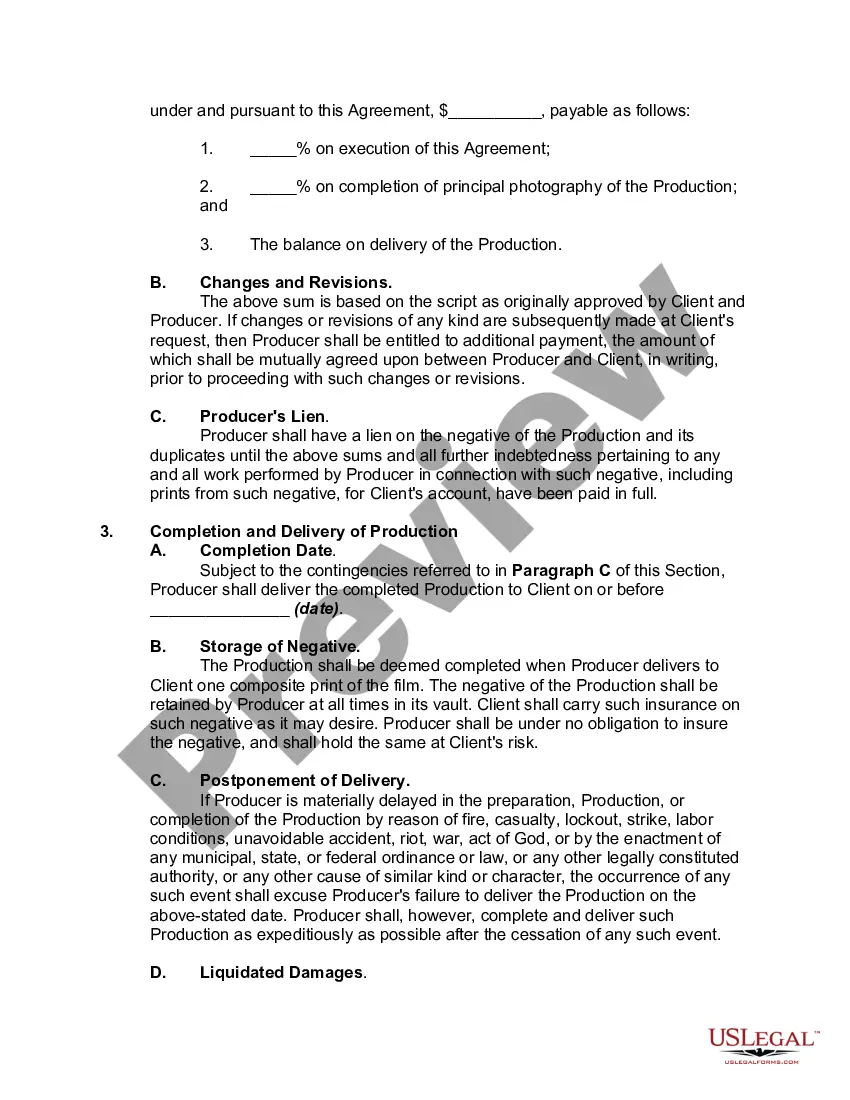
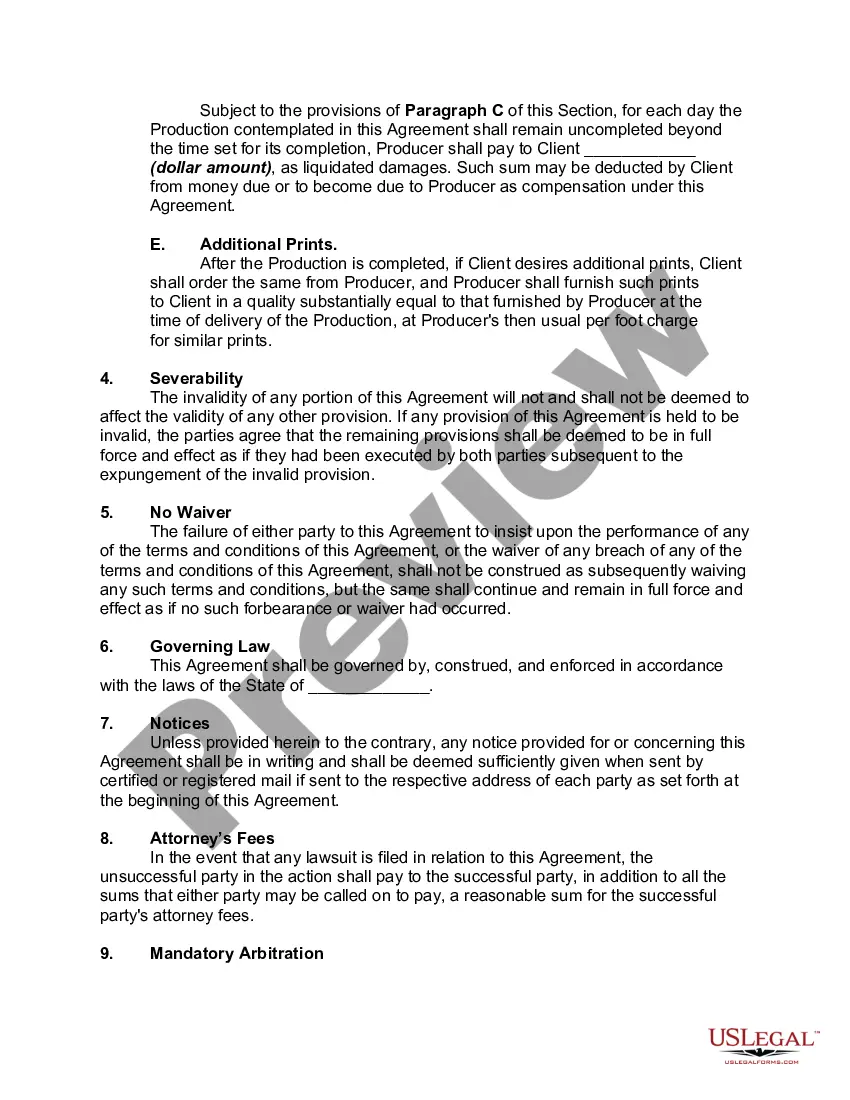
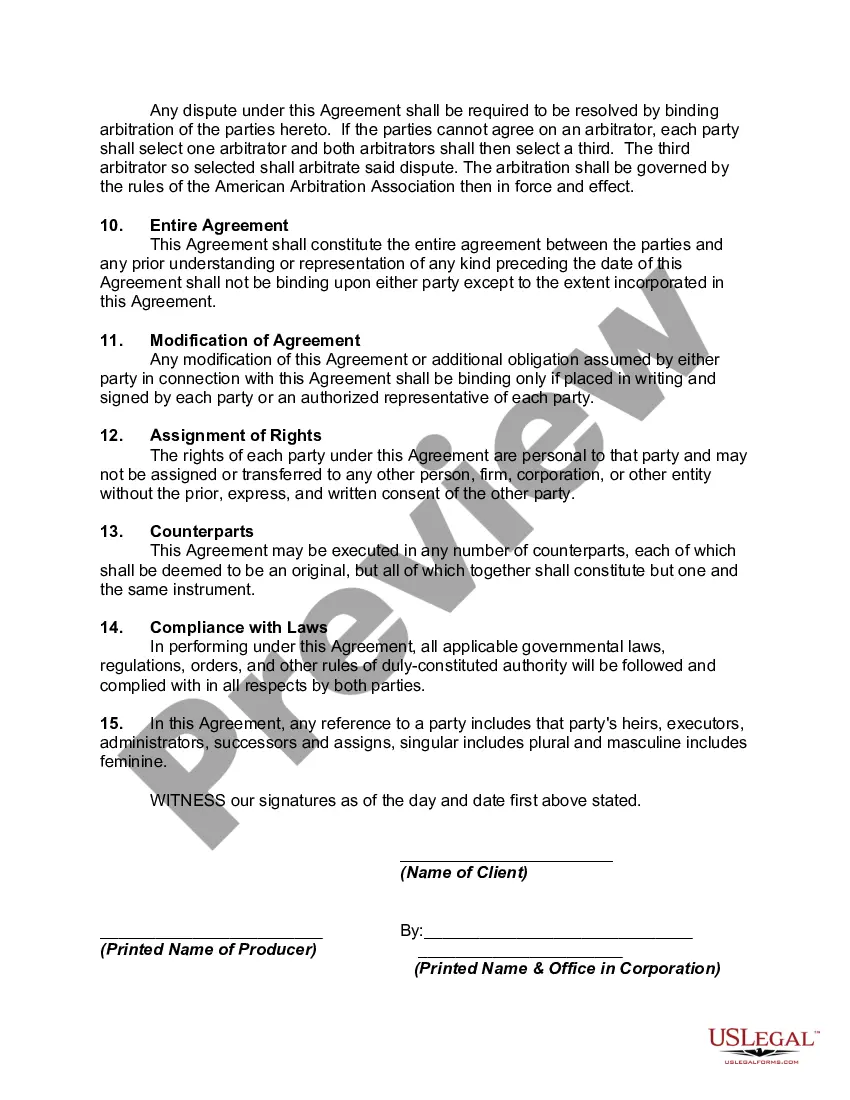
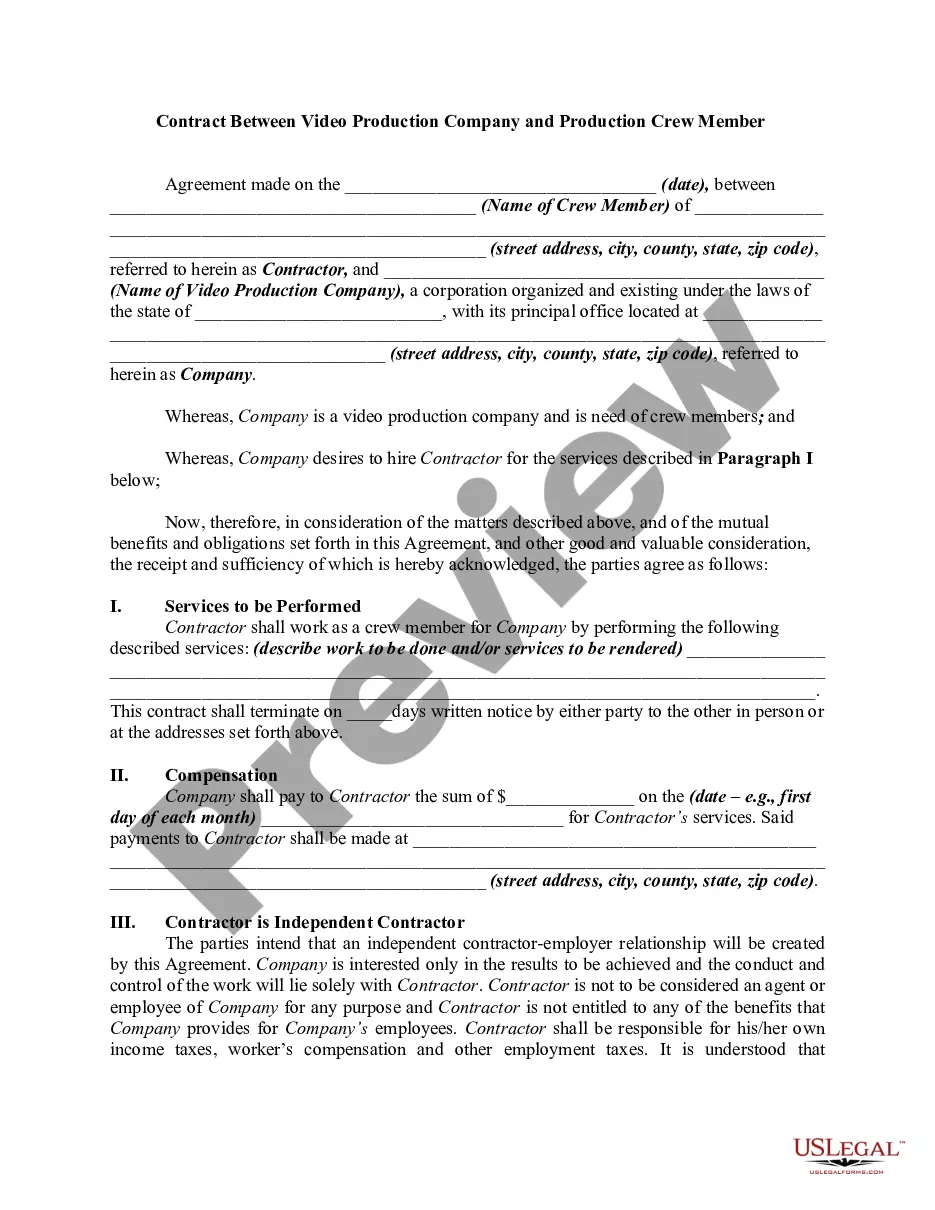
Get your form ready online
Our built-in tools help you complete, sign, share, and store your documents in one place.
Make edits, fill in missing information, and update formatting in US Legal Forms—just like you would in MS Word.
Download a copy, print it, send it by email, or mail it via USPS—whatever works best for your next step.
Sign and collect signatures with our SignNow integration. Send to multiple recipients, set reminders, and more. Go Premium to unlock E-Sign.
If this form requires notarization, complete it online through a secure video call—no need to meet a notary in person or wait for an appointment.
We protect your documents and personal data by following strict security and privacy standards.

Make edits, fill in missing information, and update formatting in US Legal Forms—just like you would in MS Word.

Download a copy, print it, send it by email, or mail it via USPS—whatever works best for your next step.

Sign and collect signatures with our SignNow integration. Send to multiple recipients, set reminders, and more. Go Premium to unlock E-Sign.

If this form requires notarization, complete it online through a secure video call—no need to meet a notary in person or wait for an appointment.

We protect your documents and personal data by following strict security and privacy standards.
Looking for another form?







Form popularity
FAQ
The State of Florida does not require a blanket permit for producing content in the state. Permitting is done through local film commissions and other entities. Browse our film commission database and the information below to determine which local entity you should contact about your permit.
For basic permits, we typically need 3-7 business days to process a permit. Processing times vary based on activity and jurisdiction. More complicated permits (street closures, gunfire, special effects, etc.) and those with locations in other jurisdictions that we serve may need 5 to 7 business days.
Film Permits are generally required throughout Miami-Dade County and each of its municipalities for film, video or still photo shoots that are conducted on public property; on roads, streets, sidewalks, parks, beaches or public buildings.
How to become a crew member Explore the different roles. Each industry offers different crew member positions. Obtain necessary education. Acquire relevant skills. Apply for jobs. Start working and gain experience. Communication skills. Teamwork. Physical stamina.
Honestly, the best way to start is to take a set PA (production assistant) job and any TV or film production that you can get. Once you are there, start talking with the department members (sound in this case) about getting a job and getting in the union. The best way is to be there and to know somebody.
Louisiana Louisiana's Motion Picture Production Incentive Program offers as much as a 40% tax credit for film projects with eligible in-state expenditures. This includes both resident and non-resident labor. That 40% credit breaks down into several categories of movie tax breaks.
Honestly, the best way to start is to take a set PA (production assistant) job and any TV or film production that you can get. Once you are there, start talking with the department members (sound in this case) about getting a job and getting in the union. The best way is to be there and to know somebody.
Miami is one of the world's leading filming locations. With glorious sunny beaches, world-renown nightlife hotspots and beautiful outdoor spaces, as well as incredible production-friendly hotels and local crews, Miami is a one-stop location for any film production needs.
Runner. If you're wondering how to get into the film industry, you'll find that while the runner is the most junior position in any film production department, it's often the entry point into this career. It's a runner's job to carry out administrative tasks and aid the smooth running of film production.
