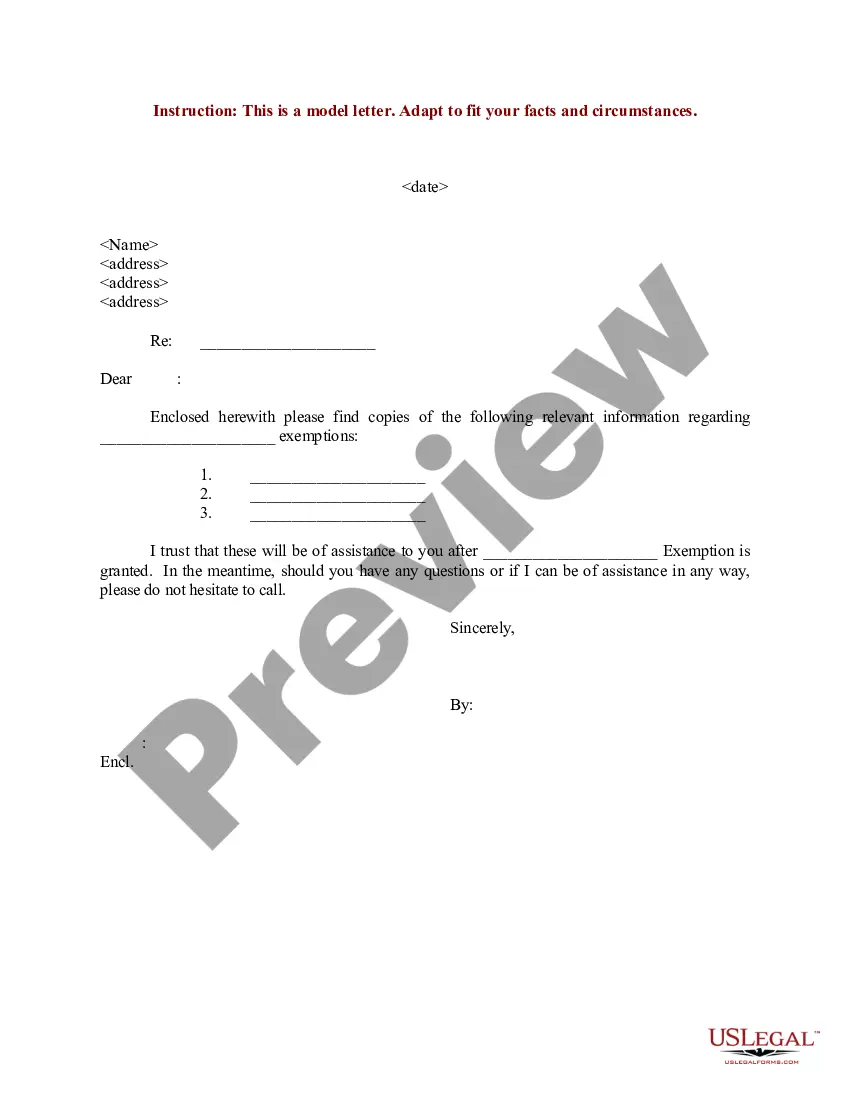
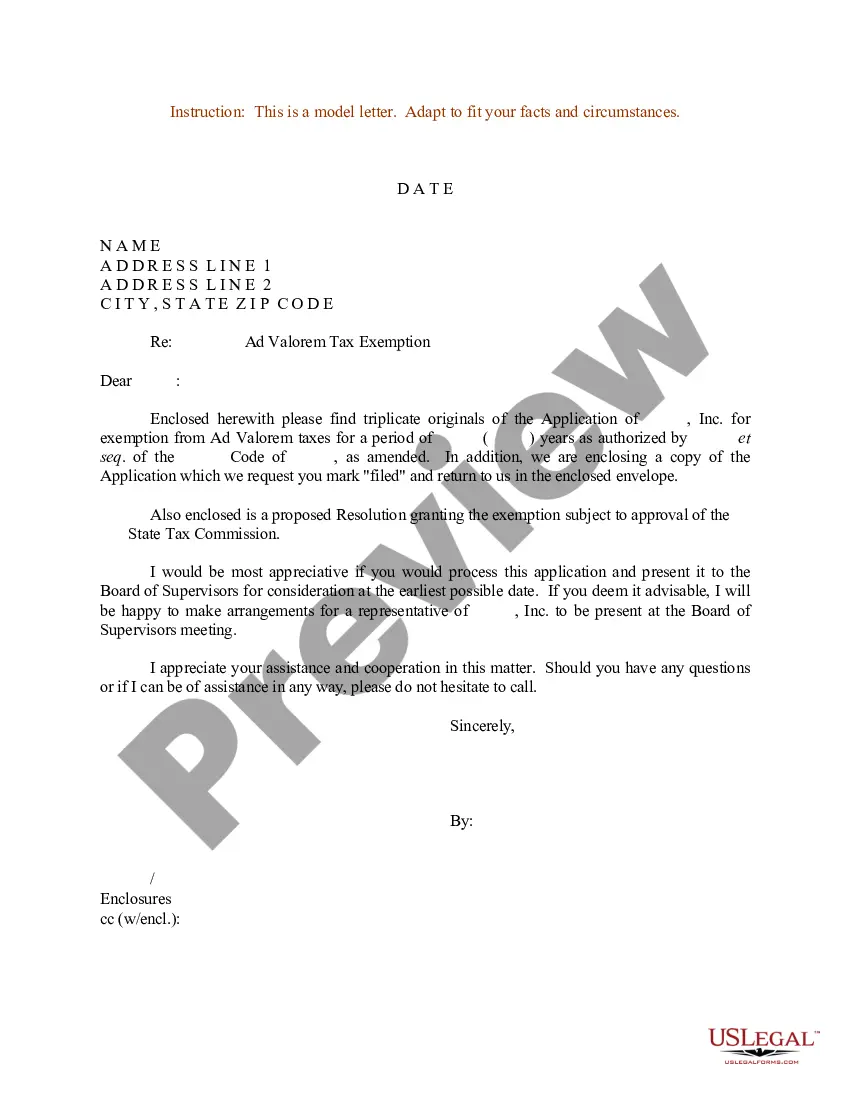
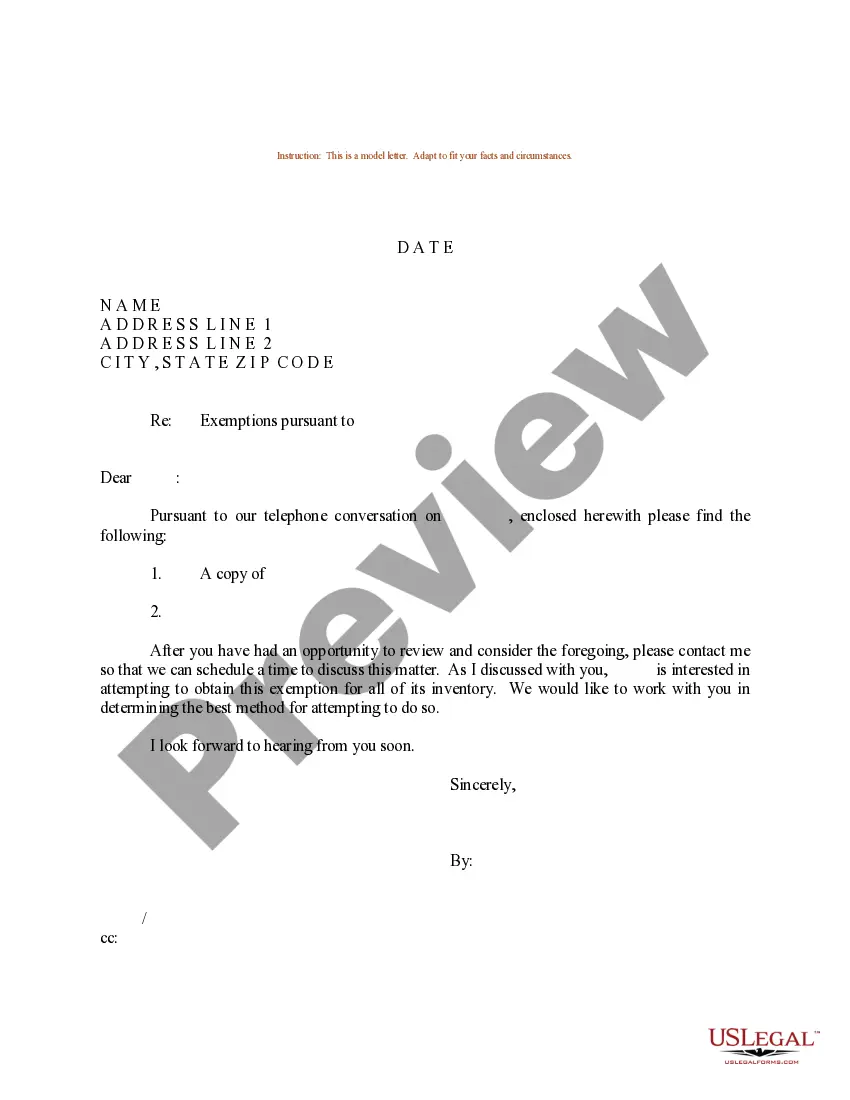
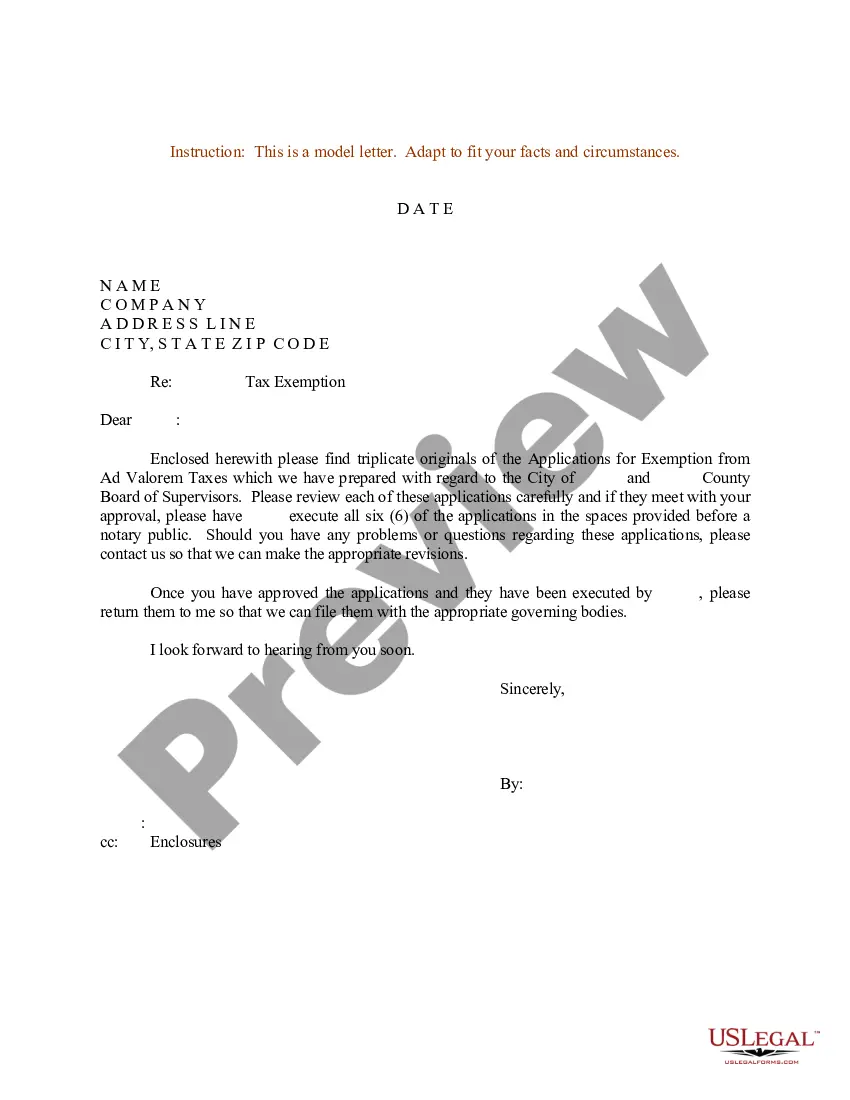
Sample Letter For Exemption In Contra Costa
Description
Get your form ready online
Our built-in tools help you complete, sign, share, and store your documents in one place.
Make edits, fill in missing information, and update formatting in US Legal Forms—just like you would in MS Word.
Download a copy, print it, send it by email, or mail it via USPS—whatever works best for your next step.
Sign and collect signatures with our SignNow integration. Send to multiple recipients, set reminders, and more. Go Premium to unlock E-Sign.
If this form requires notarization, complete it online through a secure video call—no need to meet a notary in person or wait for an appointment.
We protect your documents and personal data by following strict security and privacy standards.

Make edits, fill in missing information, and update formatting in US Legal Forms—just like you would in MS Word.

Download a copy, print it, send it by email, or mail it via USPS—whatever works best for your next step.

Sign and collect signatures with our SignNow integration. Send to multiple recipients, set reminders, and more. Go Premium to unlock E-Sign.

If this form requires notarization, complete it online through a secure video call—no need to meet a notary in person or wait for an appointment.

We protect your documents and personal data by following strict security and privacy standards.
Looking for another form?







Form popularity
FAQ
How to make a Claim of Exemption Fill out forms. Fill out two court forms. File the Claim of Exemption with the levying officer. Wait to see if the claim is opposed. Reply to the opposition (if any) ... Check if your court uses tentative rulings. Go to the hearing.
There are 2 ways to get tax-exempt status in California: Exemption Application (Form 3500) Download the form. Determine your exemption type , complete, print, and mail your application. Submission of Exemption Request (Form 3500A) If you have a federal determination letter:
Exempt employees in California generally must earn a minimum monthly salary of no less than two times the state minimum wage for full time employment. Simply paying an employee a salary does not make them exempt, nor does it change any requirements for compliance with wage and hour laws.
How to make a Claim of Exemption Fill out forms. Fill out two court forms. File the Claim of Exemption with the levying officer. Wait to see if the claim is opposed. Reply to the opposition (if any) ... Check if your court uses tentative rulings. Go to the hearing.
To obtain the exemption for a property, you must be its owner or co-owner (or a purchaser named in a contract of sale), and you must live in the property as your principal place of residence. You must also file the appropriate exemption claim form with the Assessor.
Complete form BOE-266, Claim for Homeowners' Property Tax Exemption. Obtain the claim form from the County Assessor's office where the property is located. Submit the completed form to the same office.
If you own and occupy your home as your principal place of residence on January 1, you may apply for an exemption of $7,000 off your assessed value for an annual savings of approximately $70 on your property taxes. New property owners will automatically receive an exemption application.
In some instances, Qualified School District Special Taxes may qualify for one of the following exemptions: Persons who are 65 years of age or older. Persons receiving Supplemental Security Income for a disability, regardless of age.
(Art XIII Sec 3 of the CA Constitution, Rev & Tax 218). How do I qualify for the Homeowners' Exemption? To obtain the exemption for a property, you must be its owner or co-owner (or a purchaser named in a contract of sale), and you must live in the property as your principal place of residence.