Bonus Template For Employees In Utah
Description
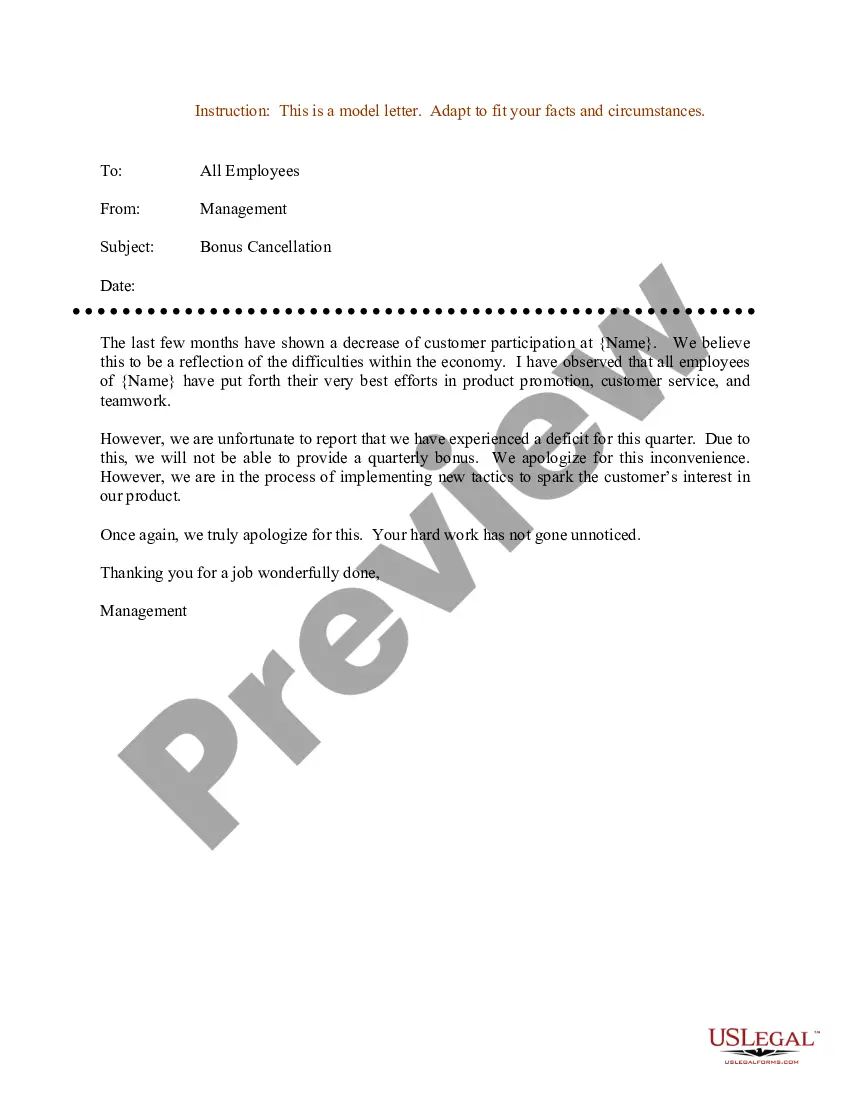
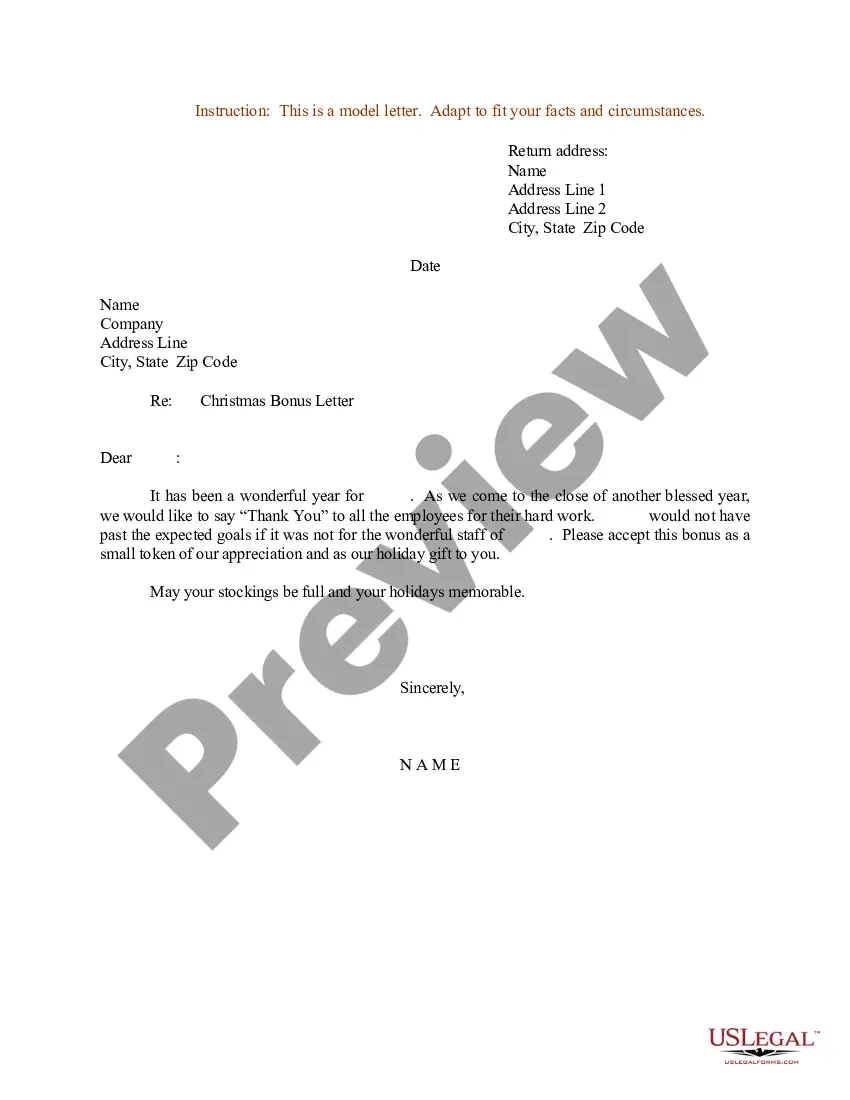
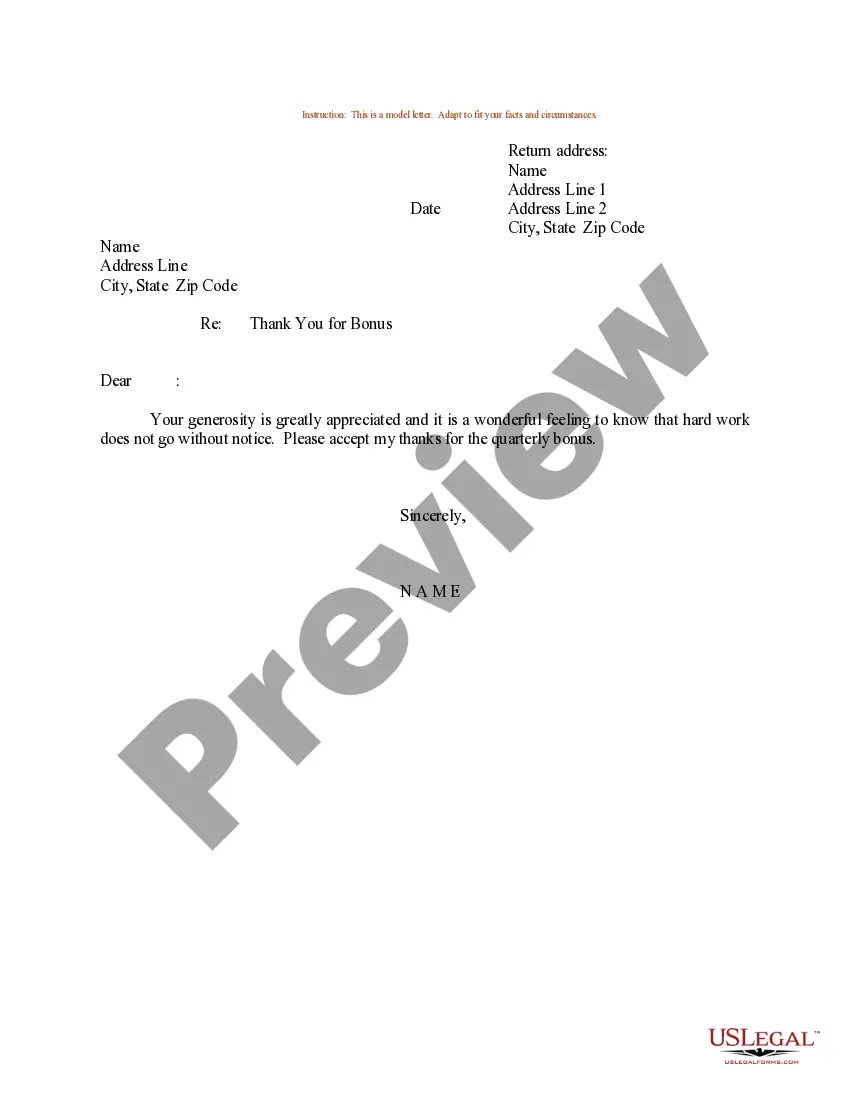
Get your form ready online
Our built-in tools help you complete, sign, share, and store your documents in one place.
Make edits, fill in missing information, and update formatting in US Legal Forms—just like you would in MS Word.
Download a copy, print it, send it by email, or mail it via USPS—whatever works best for your next step.
Sign and collect signatures with our SignNow integration. Send to multiple recipients, set reminders, and more. Go Premium to unlock E-Sign.
If this form requires notarization, complete it online through a secure video call—no need to meet a notary in person or wait for an appointment.
We protect your documents and personal data by following strict security and privacy standards.

Make edits, fill in missing information, and update formatting in US Legal Forms—just like you would in MS Word.

Download a copy, print it, send it by email, or mail it via USPS—whatever works best for your next step.

Sign and collect signatures with our SignNow integration. Send to multiple recipients, set reminders, and more. Go Premium to unlock E-Sign.

If this form requires notarization, complete it online through a secure video call—no need to meet a notary in person or wait for an appointment.

We protect your documents and personal data by following strict security and privacy standards.
Looking for another form?




Form popularity
FAQ
Bonuses are not explicitly addressed in Utah wage laws. Generally, discretionary bonuses are not considered wages, while nondiscretionary bonuses can be considered wages and protected under wage laws. A nondiscretionary bonus is one where the amount and criteria for getting the bonus are announced in advance.
Executives receive higher bonuses that can multiply based on performance, while most employees earn bonuses equal to 1% to 5% of their overall salary.
How to write a bonus letter Address the letter. In the beginning of the letter, label and address it like you start any correspondence with your team. Announce the bonus. After you address your recipient, try to immediately explain why you're writing them a letter. Give details. Congratulate them. End the letter.
Consider saying ``Thank you for the bonus. I am so appreciative of it. I will continue giving my best every day''. Adding that second and third line makes all the difference.
Be honest and don't lie and say bonuses are coming back. Tell them what your needs are and communicate with upper management to see what can be improved to ensure they potentially can get these back. Basically if you believe in what you're doing, then keep doing it and others will too.
Employers usually base holiday bonuses on a percentage of your salary. They usually range from 5-10% of your year's earnings. For example, if your salary is $50,000 a year, your holiday bonus can vary from $2,500 to $5,000.
You may get a bonus one year but nothing the next, so be sure you understand how your employer selects people to receive a year-end bonus. Executives receive higher bonuses that can multiply based on performance, while most employees earn bonuses equal to 1% to 5% of their overall salary.
The typical bonus amount can range from 1% to 15% of an employee's salary, usually depending on a number of factors such as industry, company performance, and individual or team accomplishments. The average bonus for employees continues to rise over time. In 2020, the average employee bonus was only 8.1%.
Before deciding on the amount of bonus to give, check the trends on overhead payroll vs. revenue and COGS payroll vs. revenue ratios. The healthiest way to provide employee bonuses is to base the reward on overall company performance and profitability to get everyone on the same page.

