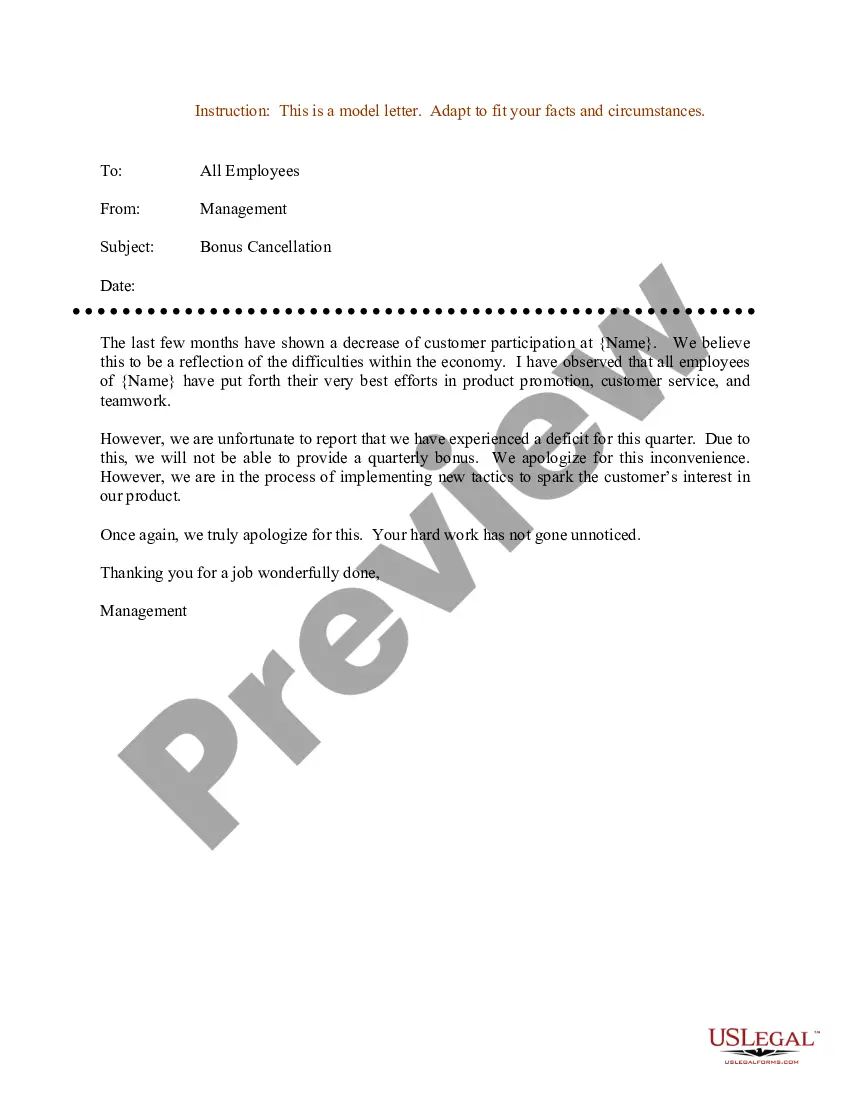
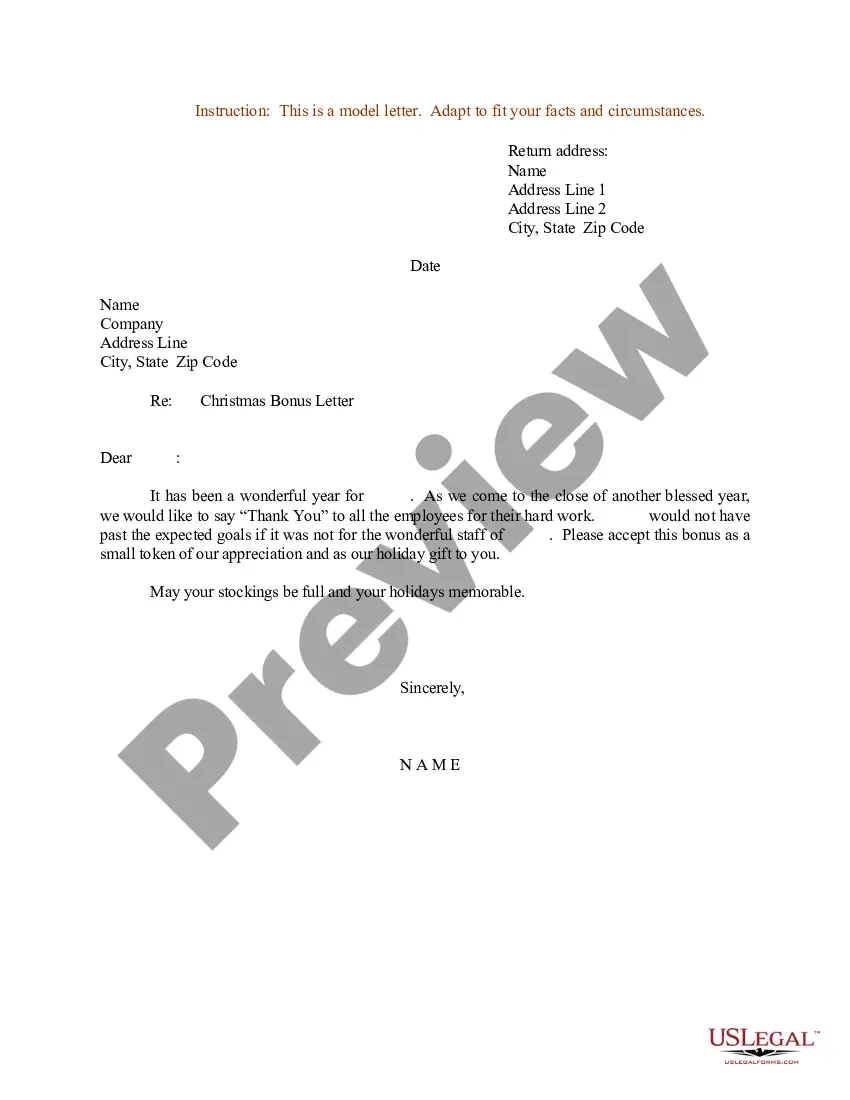
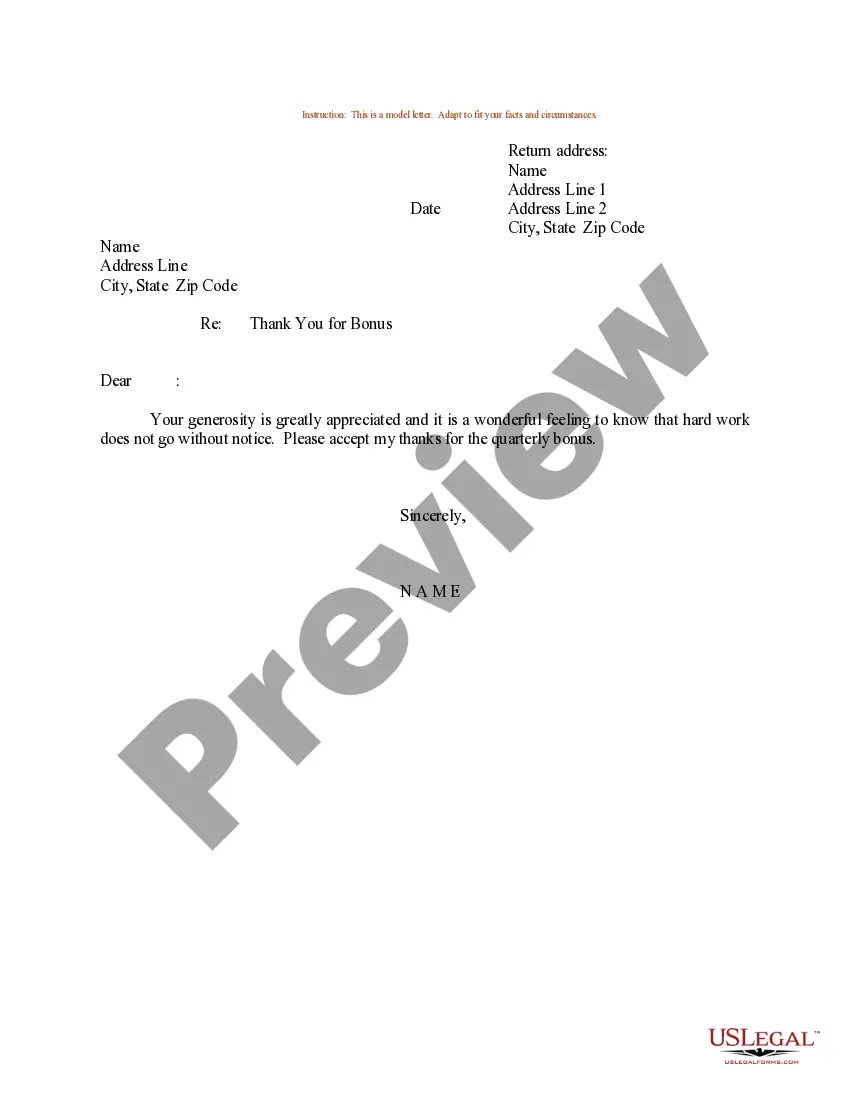
Sample Bonus Template For Giving In Riverside
Description
Get your form ready online
Our built-in tools help you complete, sign, share, and store your documents in one place.
Make edits, fill in missing information, and update formatting in US Legal Forms—just like you would in MS Word.
Download a copy, print it, send it by email, or mail it via USPS—whatever works best for your next step.
Sign and collect signatures with our SignNow integration. Send to multiple recipients, set reminders, and more. Go Premium to unlock E-Sign.
If this form requires notarization, complete it online through a secure video call—no need to meet a notary in person or wait for an appointment.
We protect your documents and personal data by following strict security and privacy standards.

Make edits, fill in missing information, and update formatting in US Legal Forms—just like you would in MS Word.

Download a copy, print it, send it by email, or mail it via USPS—whatever works best for your next step.

Sign and collect signatures with our SignNow integration. Send to multiple recipients, set reminders, and more. Go Premium to unlock E-Sign.

If this form requires notarization, complete it online through a secure video call—no need to meet a notary in person or wait for an appointment.

We protect your documents and personal data by following strict security and privacy standards.
Looking for another form?


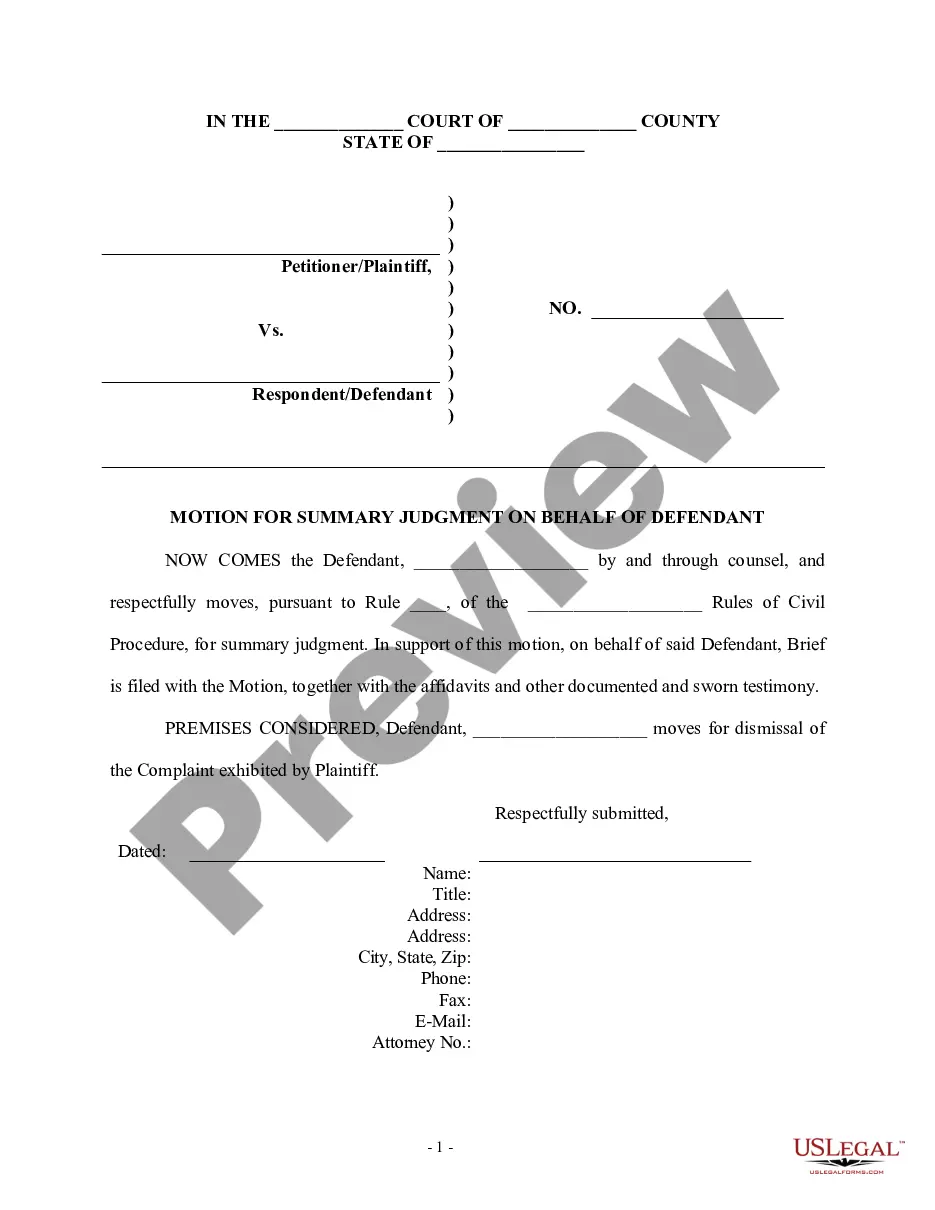
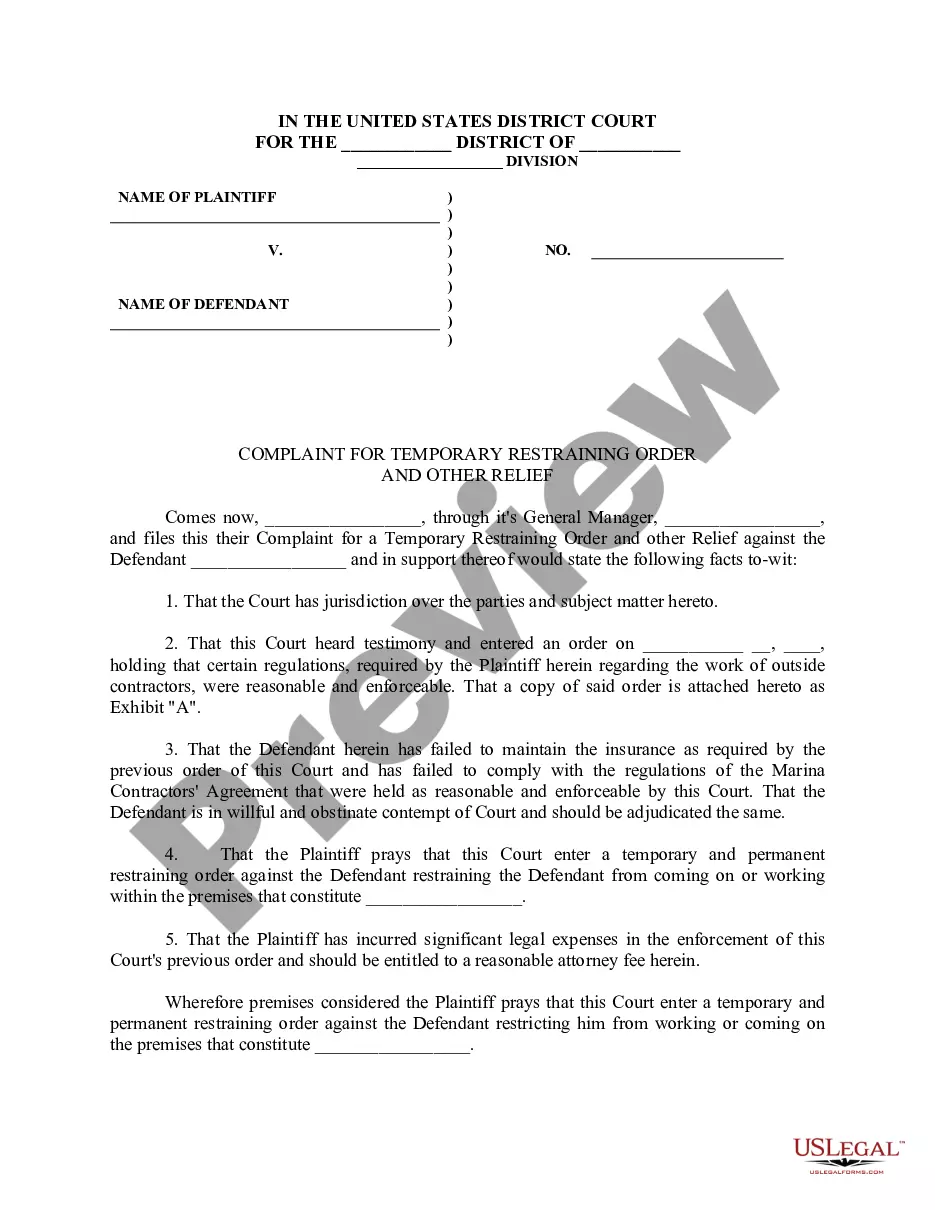



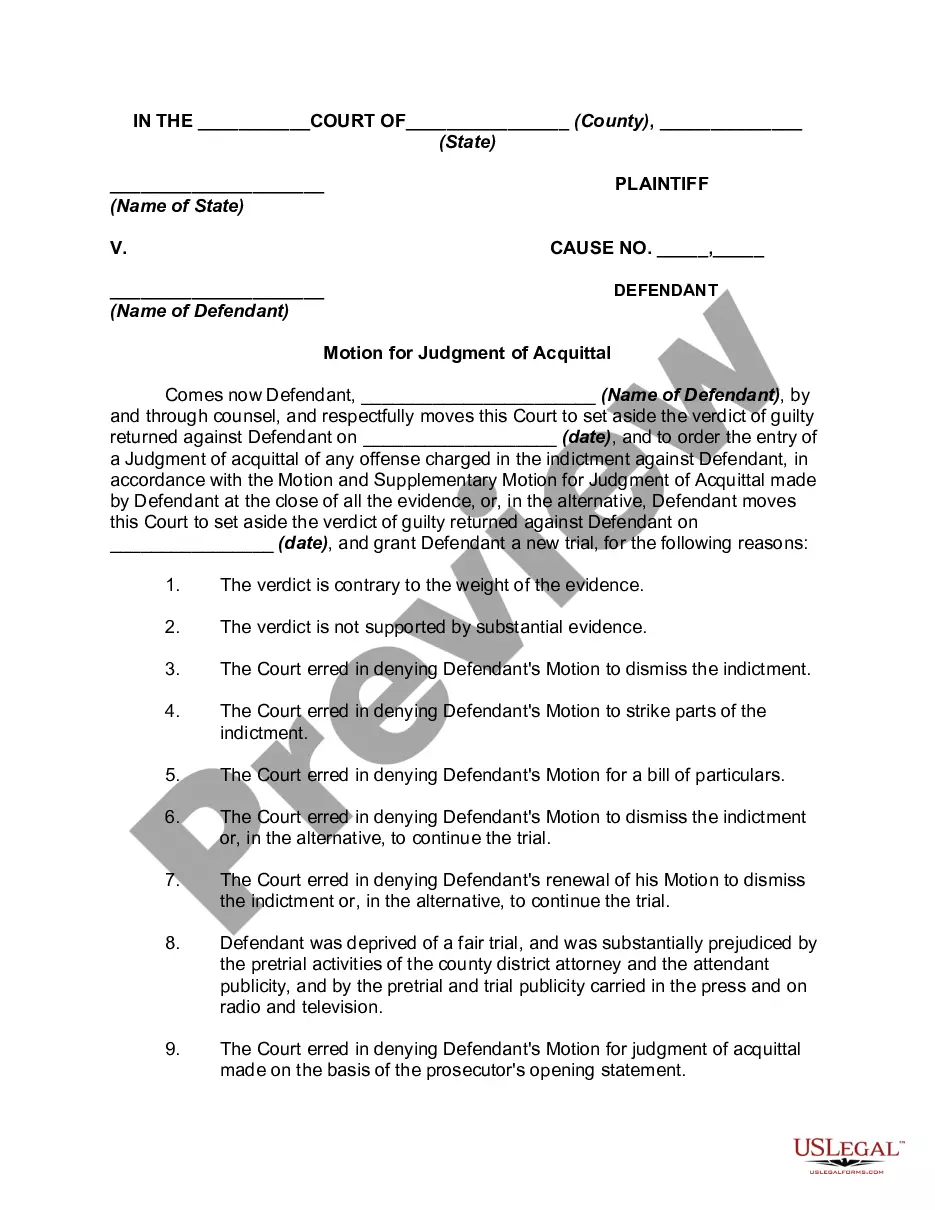

Form popularity
FAQ
Write one or two paragraphs summarizing the episode or movie as objectively as possible. Try to include the major plot points, characters, and conflicts. Write a paragraph that transitions from summary to response: what were your reactions to the episode or movie? What do you think produced those reactions?
A podcast summary is a short description (usually 1-2 paragraphs) that defines the topics discussed throughout the episode. It's a concise version of the entire podcast written in an engaging and compelling tone without revealing the whole thing.
How to write a podcast summary step by step Listen to the podcast episode critically. Assuming you weren't in the podcast yourself, start by listening to the episode. Identify your most important point. Add the rest of the summary in 1 - 3 sentences. Mention guests. Edit for clarity and brevity.
“The idea is that you're going to tell one story over the course of a season… and it's going to have a beginning, middle, and end.” Similarly, your bio should tell a clear, concise story of who you are, what you do, and what listeners can expect from your podcast.
Here are some tips on what to cover. Highlight the main topic and guests. If you are interviewing a guest (or multiple guests), you should mention it in your podcast summary. Include teasers. Do your keyword research. Give them a reason. Think about your audience. Include a compelling CTA. Don't waste space. Use AI tools.
What Should Be Included in Meeting Minutes? Date and time of the meeting. Names of the meeting participants and those unable to attend (e.g., “regrets”) Acceptance or corrections/amendments to previous meeting minutes. Decisions made about each agenda item, for example: Actions taken or agreed to be taken. Next steps.
5 tips when writing your podcast summary Use bullet points. Readers should be able to see exactly what your podcast will be including at a glance, so bullet point the different topics you discuss in your episode. Be engaging. Mention your guests. Optimize for keywords. Include a clear Call To Action.
You should keep your podcast description between 600 and 900 characters, or 120-170 words. Some hosting services allow 4,000 character-long show descriptions, but that's much too long for an effective podcast description. Your podcast description should act as a quick pitch -- an elevator speech.
How to write meeting minutes Organization name. Meeting purpose. Start and end times. Date and location. List of attendees and absentees, if necessary. Space for important information like motions passed or deadlines given. Space for your signature and the meeting leader's signature.
The key elements of effective meeting minutes Date of the meeting: Start with this information so it's easy to reference this specific meeting in the future. Time the meeting was called to order: This is essential to record and acknowledge that a quorum was present and the presiding board member has opened the meeting.

