Sample Bonus Template With 30 Days In Pennsylvania
Description
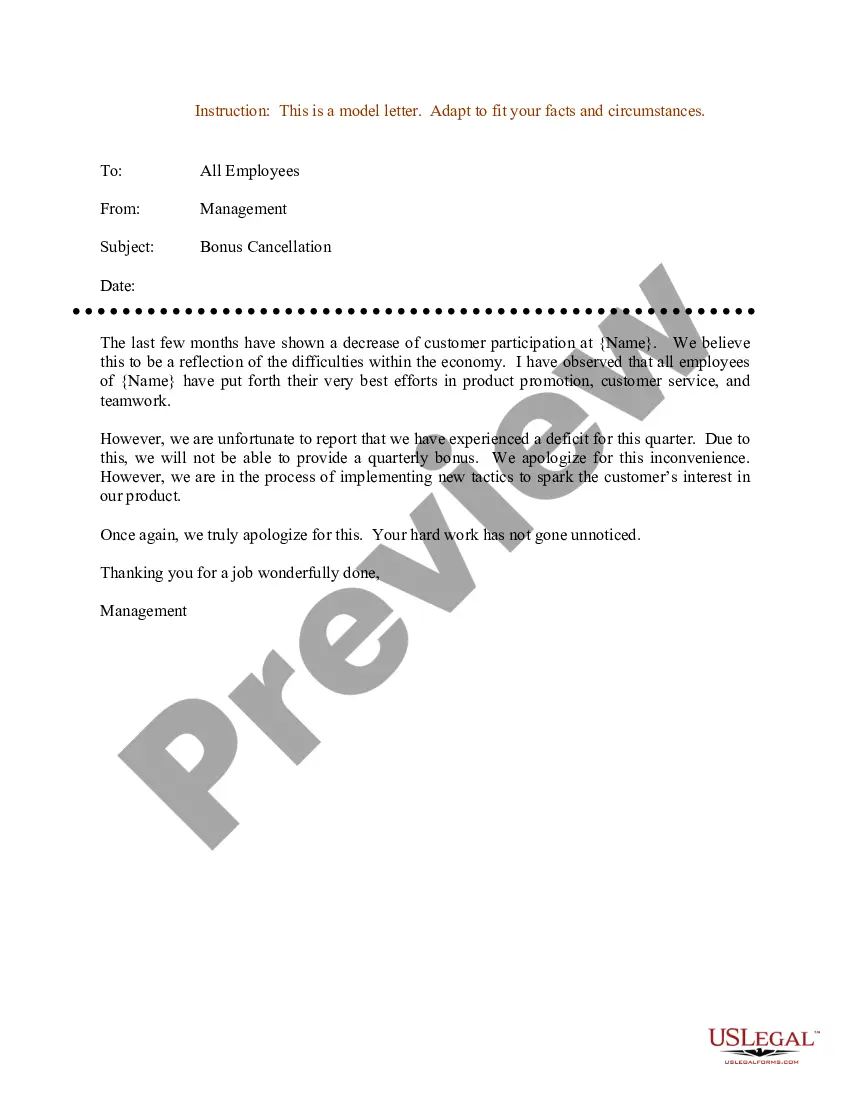
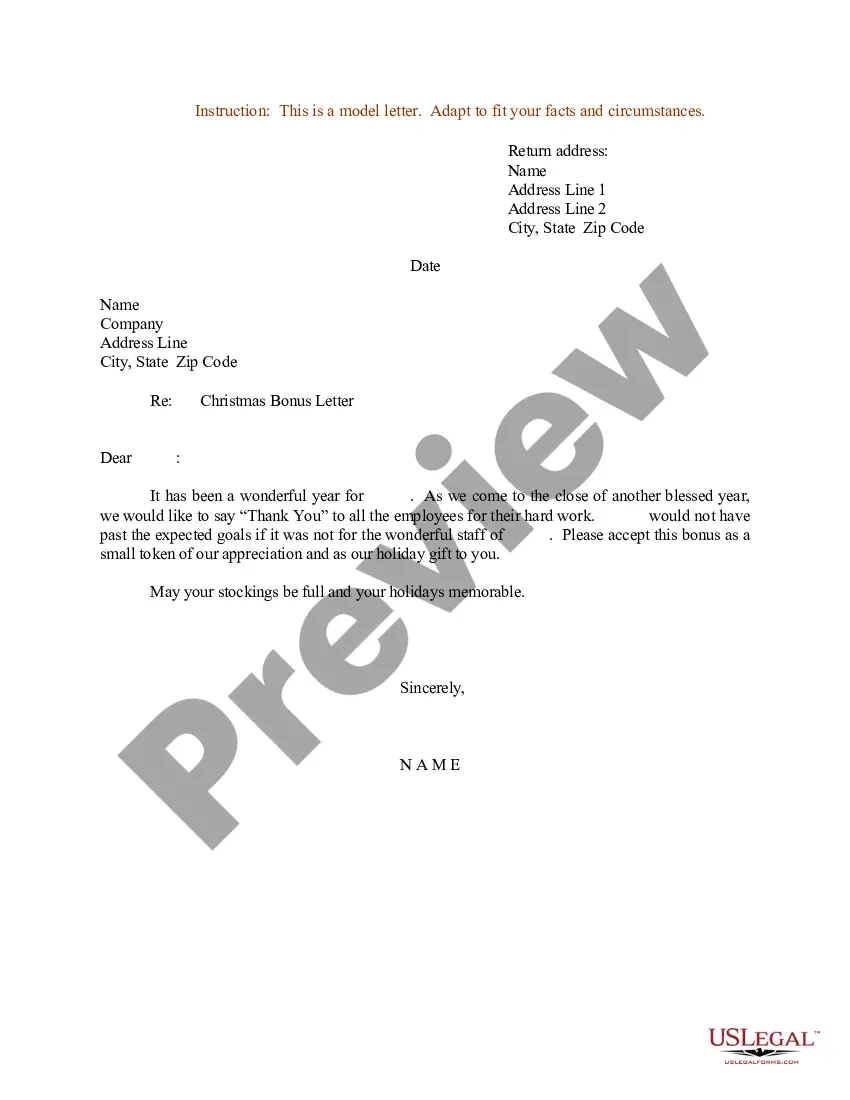
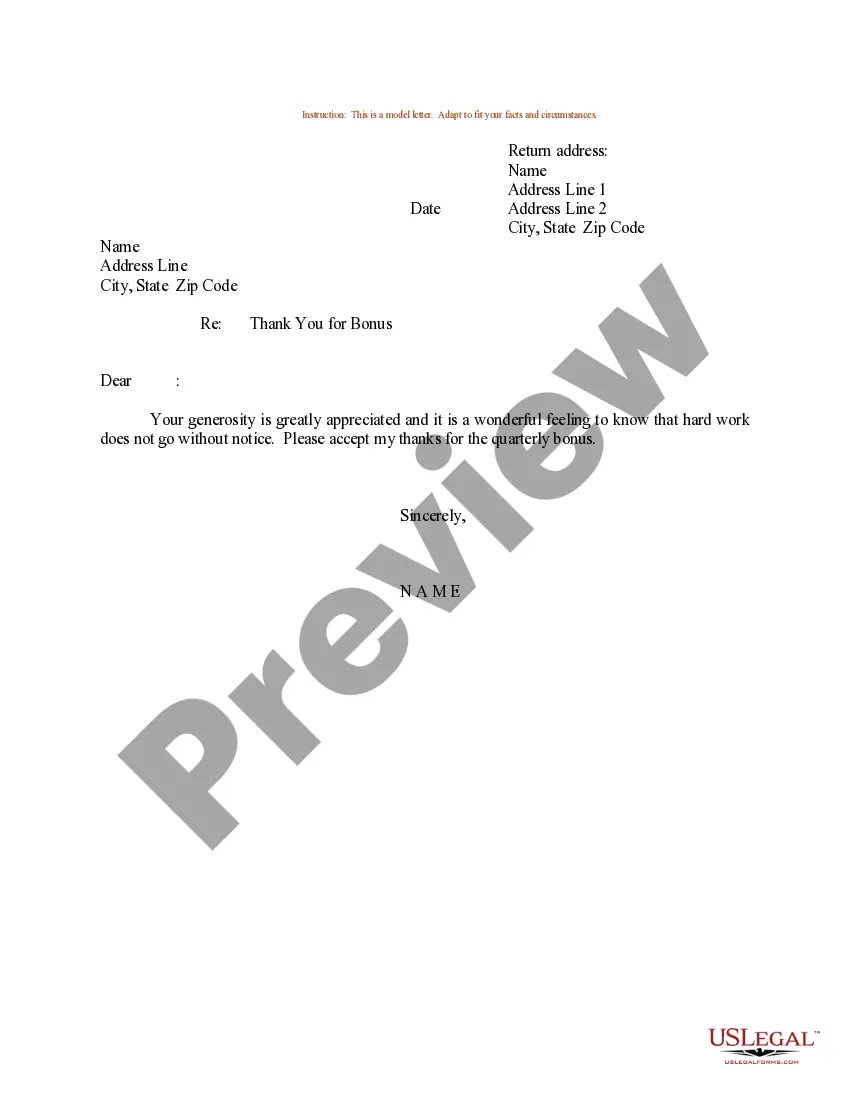
Get your form ready online
Our built-in tools help you complete, sign, share, and store your documents in one place.
Make edits, fill in missing information, and update formatting in US Legal Forms—just like you would in MS Word.
Download a copy, print it, send it by email, or mail it via USPS—whatever works best for your next step.
Sign and collect signatures with our SignNow integration. Send to multiple recipients, set reminders, and more. Go Premium to unlock E-Sign.
If this form requires notarization, complete it online through a secure video call—no need to meet a notary in person or wait for an appointment.
We protect your documents and personal data by following strict security and privacy standards.

Make edits, fill in missing information, and update formatting in US Legal Forms—just like you would in MS Word.

Download a copy, print it, send it by email, or mail it via USPS—whatever works best for your next step.

Sign and collect signatures with our SignNow integration. Send to multiple recipients, set reminders, and more. Go Premium to unlock E-Sign.

If this form requires notarization, complete it online through a secure video call—no need to meet a notary in person or wait for an appointment.

We protect your documents and personal data by following strict security and privacy standards.
Looking for another form?
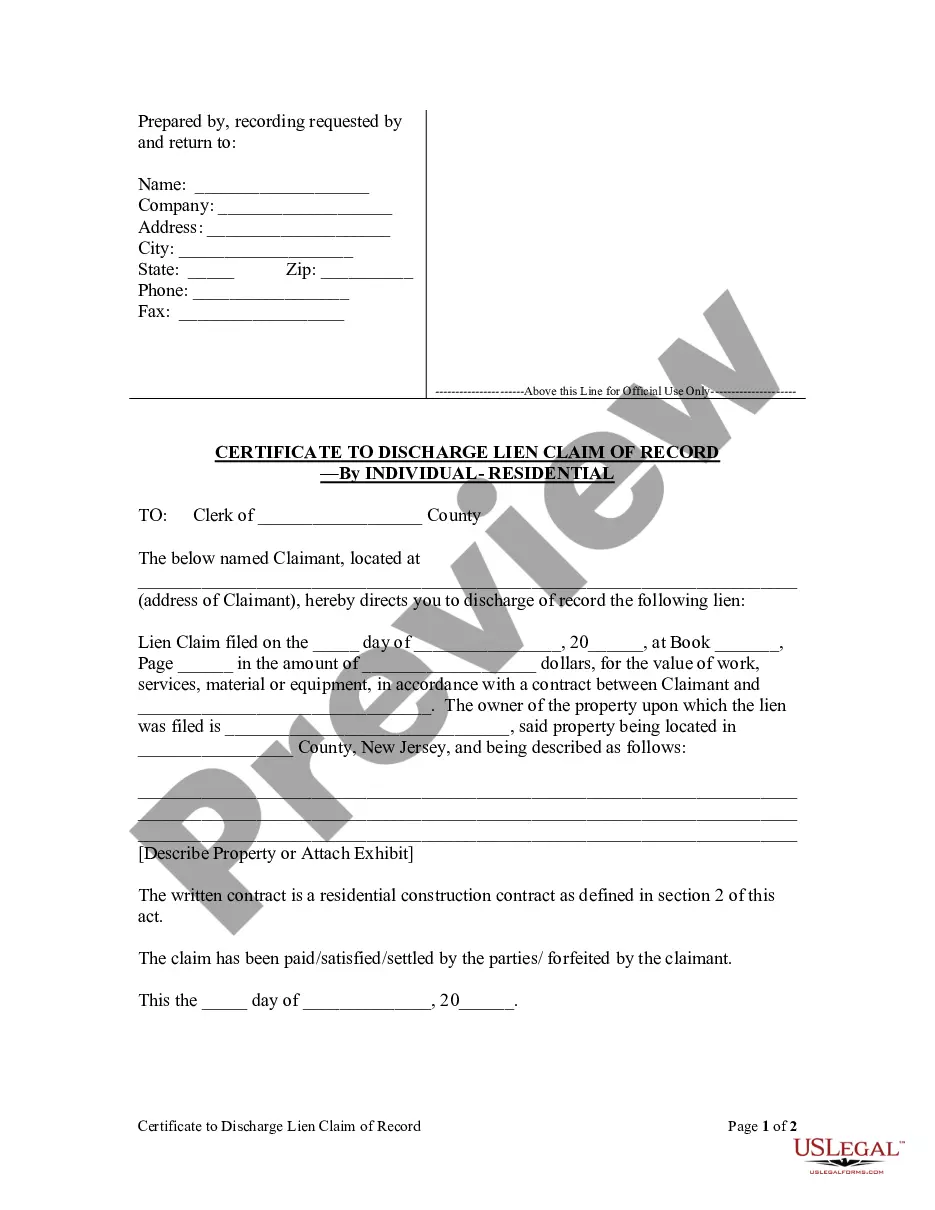







Form popularity
FAQ
Industry: More traditional sectors like banking or finance may offer higher percentages, ranging from 10% to 30% of your base salary. In tech and startups, it can be lower, around 5% to 15%. Position: Executive-level roles usually have higher percentages, while mid-level managers may receive 10% to 20%.
Discretionary bonuses are subject to the employer's discretion and are not tied to specific performance metrics. On the other hand, performance bonuses are awarded based on meeting or exceeding specified performance criteria that are established in advance.
Some businesses might base their bonus structure on the overall performance of the company, giving managers a percentage of the profit. Others may take a more individual approach, looking at each manager's performance and contribution to the business, perhaps in cutting costs or in increasing business.
An employee bonus policy provides guidelines on how a company rewards its employees with additional financial incentives. It details eligibility, types of bonuses, and the procedures for granting them, ensuring fairness and transparency.
A management bonus clause outlines the conditions under which a company's managers are eligible to receive additional compensation beyond their regular salary. It typically specifies performance metrics, financial targets, or other criteria that must be met for the bonus to be awarded.
Details to Include: Bonus Amount: Clearly state the amount of the bonus being awarded. Performance Period: Define the time frame for which the bonus is applicable. Performance Metrics or Criteria: Include any performance benchmarks or company-wide metrics that influenced the bonus calculation.
The typical bonus amount can range from 1% to 15% of an employee's salary, usually depending on a number of factors such as industry, company performance, and individual or team accomplishments. The average bonus for employees continues to rise over time. In 2020, the average employee bonus was only 8.1%.
Simply put, these bonuses are awarded based on how well the company performs as a whole. A typical profit-sharing bonus would be 2.5% to 7.5% of payroll, and bonuses might be given across the board or in larger proportions of compensation for high earners within your organization.
The typical bonus amount can range from 1% to 15% of an employee's salary, usually depending on a number of factors such as industry, company performance, and individual or team accomplishments. The average bonus for employees continues to rise over time. In 2020, the average employee bonus was only 8.1%.
The 9.6% average is a good bonus percentage benchmark, but it isn't one-size-fits-all. You should shift this percentage based on industry factors and what's feasible for your company.

