Sample Bonus Plans For Employees In Nevada
Description
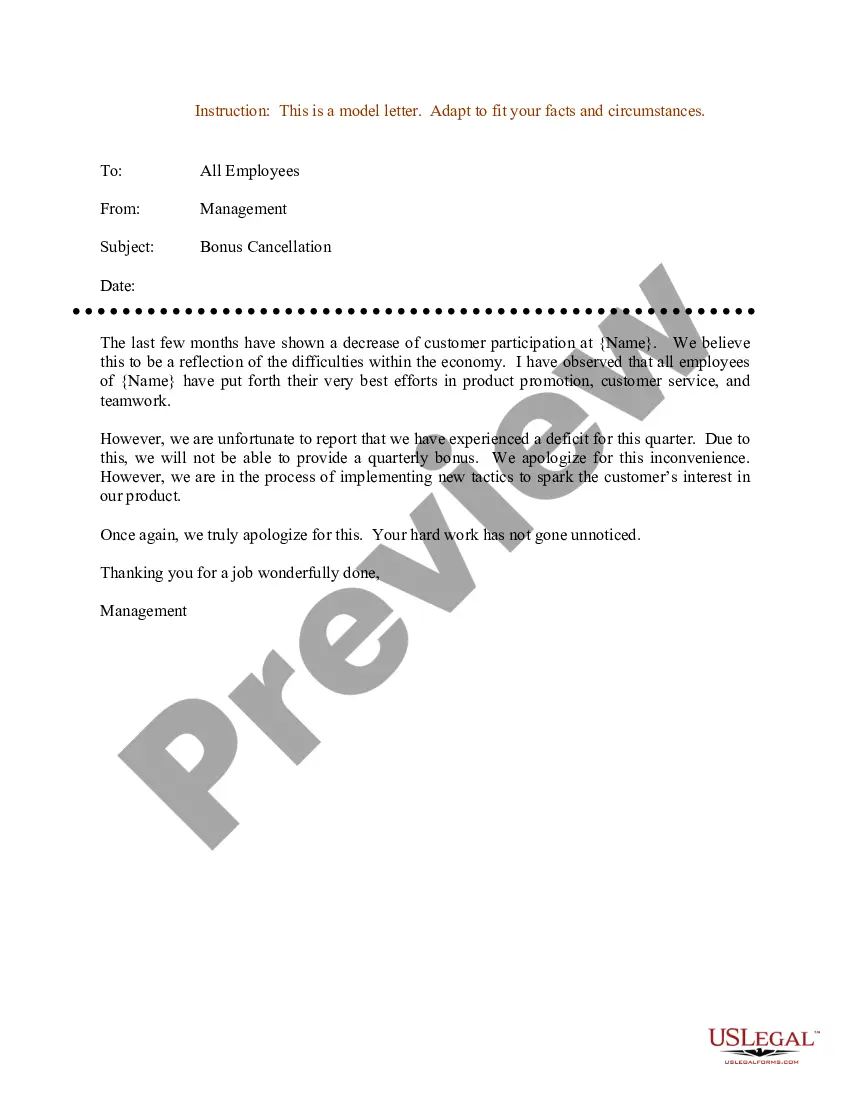
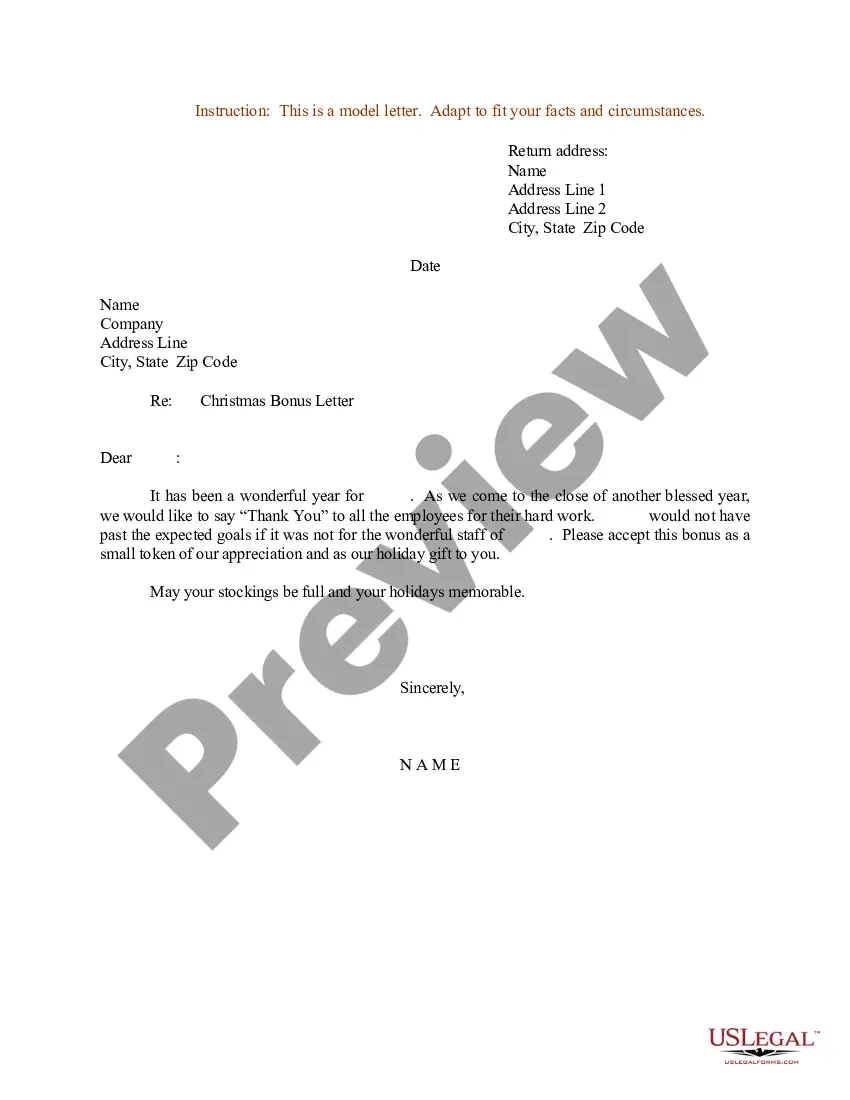
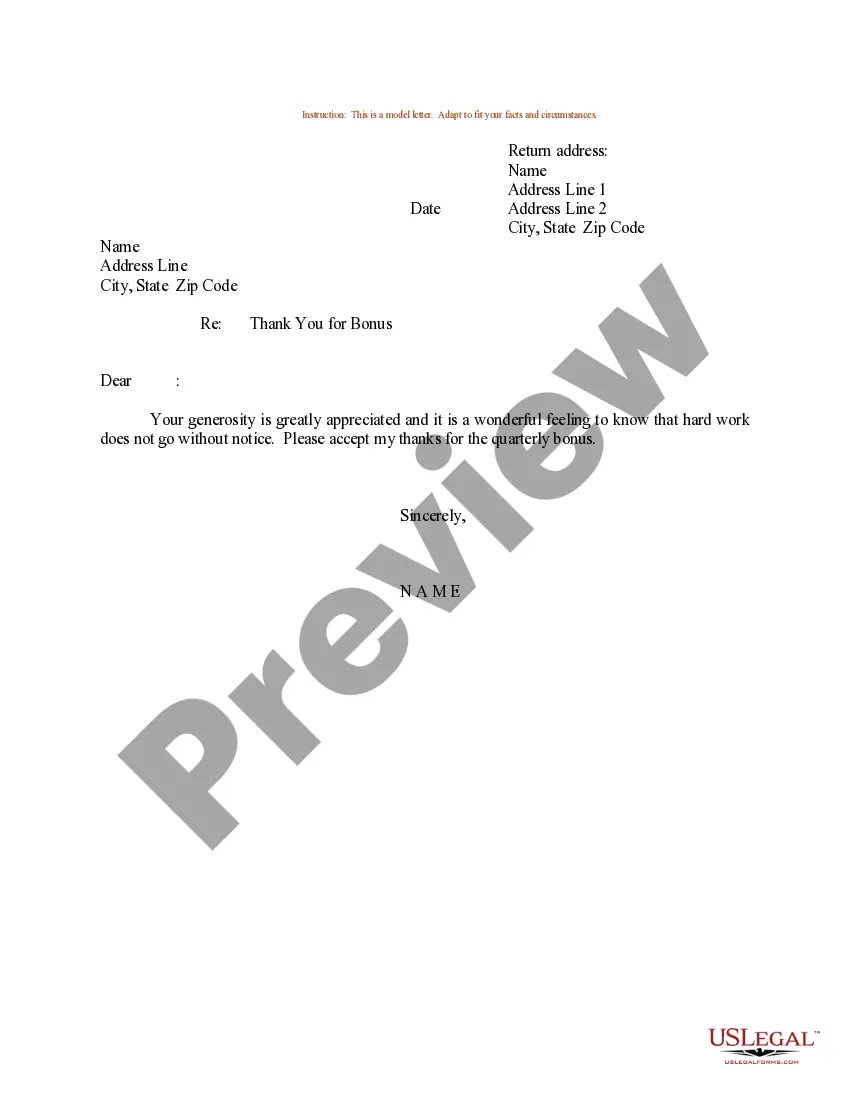
Get your form ready online
Our built-in tools help you complete, sign, share, and store your documents in one place.
Make edits, fill in missing information, and update formatting in US Legal Forms—just like you would in MS Word.
Download a copy, print it, send it by email, or mail it via USPS—whatever works best for your next step.
Sign and collect signatures with our SignNow integration. Send to multiple recipients, set reminders, and more. Go Premium to unlock E-Sign.
If this form requires notarization, complete it online through a secure video call—no need to meet a notary in person or wait for an appointment.
We protect your documents and personal data by following strict security and privacy standards.

Make edits, fill in missing information, and update formatting in US Legal Forms—just like you would in MS Word.

Download a copy, print it, send it by email, or mail it via USPS—whatever works best for your next step.

Sign and collect signatures with our SignNow integration. Send to multiple recipients, set reminders, and more. Go Premium to unlock E-Sign.

If this form requires notarization, complete it online through a secure video call—no need to meet a notary in person or wait for an appointment.

We protect your documents and personal data by following strict security and privacy standards.
Looking for another form?







Form popularity
FAQ
Nevada wage law excludes bonuses in its definition of wages. However, commissions are considered wages.
The average bonus for employees in the US is 9.6% of salary, ing to reliable data from BLS and Gusto. The typical bonus amount can range from 1% to 15% of an employee's salary, usually depending on a number of factors such as industry, company performance, and individual or team accomplishments.
Components of Bonus Plan Bonus Structure: The structure and calculation of the bonus, including the amount and timing of payments. Payout Frequency: The frequency of bonus payouts, such as annually, quarterly, or upon achieving specific milestones.
Executives receive higher bonuses that can multiply based on performance, while most employees earn bonuses equal to 1% to 5% of their overall salary.
An average annual bonus is usually a percentage of an employee's salary and can be a significant portion of a compensation plan. However, this can vary depending on the industry and internal company policies. In the U.S., the average bonus as a percentage of annual salary is around 9.6%.
Bonuses are additional incentives offered to employees on top of their regular salary, often aimed at increasing productivity and enhancing employee retention. Most bonuses can be categorized as either discretionary (not guaranteed) or nondiscretionary (guaranteed, as shown in your employment contract).
You may get a bonus one year but nothing the next, so be sure you understand how your employer selects people to receive a year-end bonus. Executives receive higher bonuses that can multiply based on performance, while most employees earn bonuses equal to 1% to 5% of their overall salary.
Allocate bonuses to each division or work group. Give each employee in a certain group -- for example, the administration division -- the same bonus. This method rewards and encourages cohesive group performance, but rewards non-performing team members at the same level as the hardest workers.
How to set up an employee benefits package Set goals. Determine your budget. Know your legal obligations. Choose a provider. Develop internal policy. Use benefits technology. Communicate with employees. Seek feedback.
Once you have both performance percentage and salary percentage for each individual, you can multiply them together by an individual. Add up all individuals to get a total ratio. Divide each individual's share by the full rate, and that's the portion of the bonus pool that an individual receives.

