Sample Bonus Plans For Employees In Kings
Description
Get your form ready online
Our built-in tools help you complete, sign, share, and store your documents in one place.
Make edits, fill in missing information, and update formatting in US Legal Forms—just like you would in MS Word.
Download a copy, print it, send it by email, or mail it via USPS—whatever works best for your next step.
Sign and collect signatures with our SignNow integration. Send to multiple recipients, set reminders, and more. Go Premium to unlock E-Sign.
If this form requires notarization, complete it online through a secure video call—no need to meet a notary in person or wait for an appointment.
We protect your documents and personal data by following strict security and privacy standards.

Make edits, fill in missing information, and update formatting in US Legal Forms—just like you would in MS Word.

Download a copy, print it, send it by email, or mail it via USPS—whatever works best for your next step.

Sign and collect signatures with our SignNow integration. Send to multiple recipients, set reminders, and more. Go Premium to unlock E-Sign.

If this form requires notarization, complete it online through a secure video call—no need to meet a notary in person or wait for an appointment.

We protect your documents and personal data by following strict security and privacy standards.
Looking for another form?

Form popularity
FAQ
A 20% bonus often falls within the standard range for directors, making it a less-than-exceptional reward. Average bonus amounts: The average bonus in the US is currently 9.6% of salary, with a range of 1% to 15% being typical.
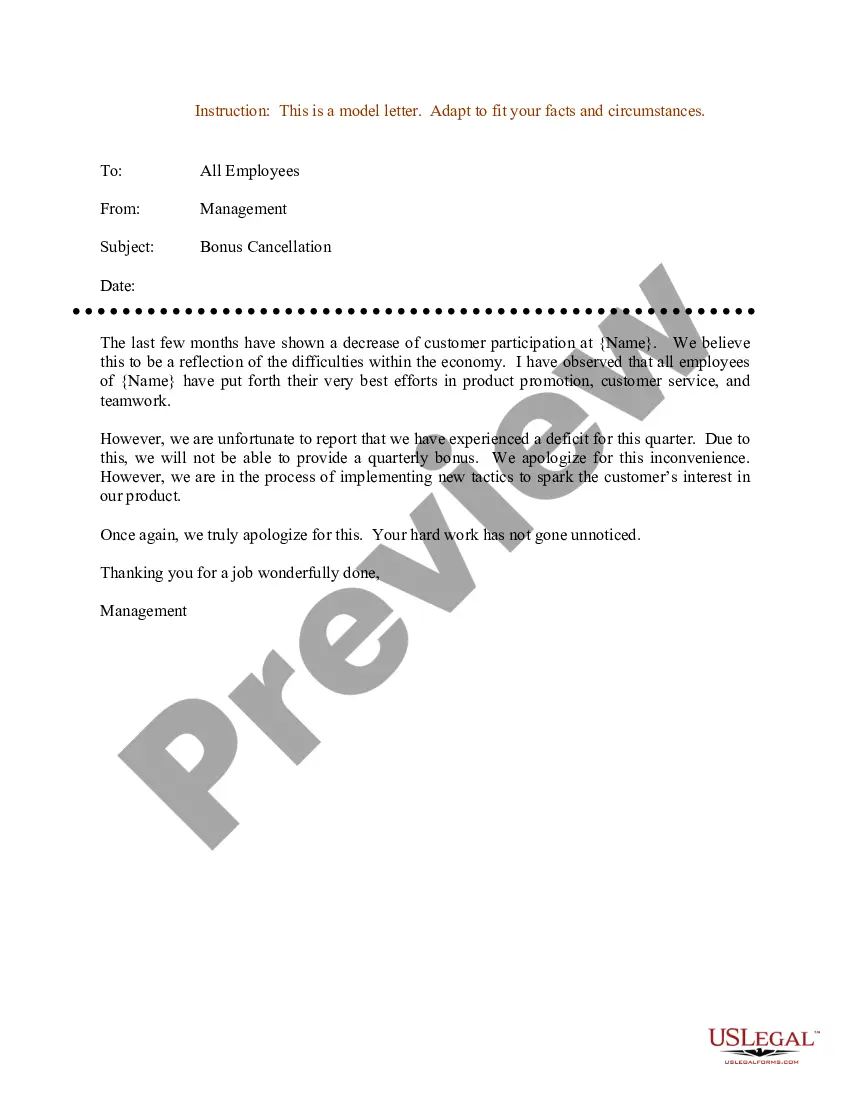
Executives receive higher bonuses that can multiply based on performance, while most employees earn bonuses equal to 1% to 5% of their overall salary.
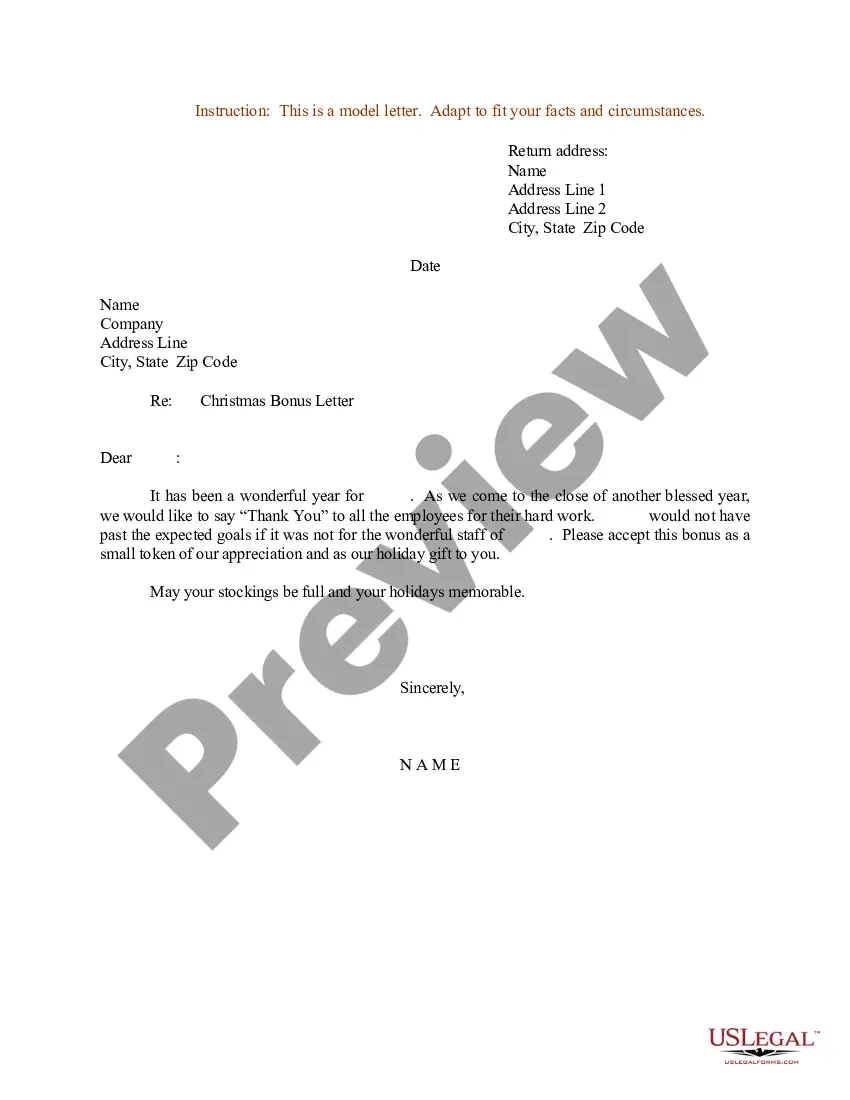
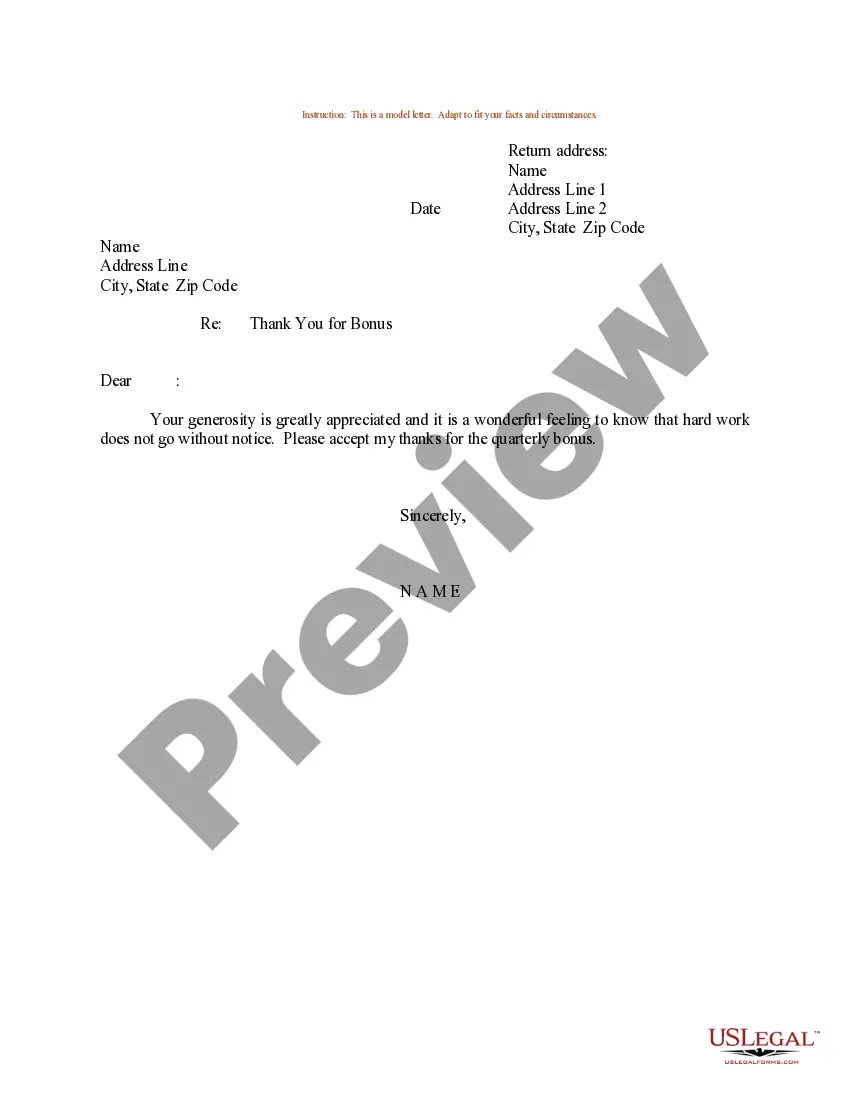
Each bonus offers a slightly different type of compensation. Bonuses are considered supplemental income and will be taxed at a higher rate than normal income. A great bonus would be about 10-15% of your annual salary. But most people receive offers closer to 5% of their annual salary.
Eligibility for Statutory Bonus For an employee to qualify for a statutory bonus, their salary should not exceed Rs. 21,000 per month.
Standard Range: An annual bonus of 5-10% of your yearly salary is considered standard in many industries, similar to a 5-10% annual raise (1).
The typical bonus amount can range from 1% to 15% of an employee's salary, usually depending on a number of factors such as industry, company performance, and individual or team accomplishments. The average bonus for employees continues to rise over time. In 2020, the average employee bonus was only 8.1%.
Designing your scheme Bonus Schemes can be single-factor or multi-factor. A single factor scheme will focus on one specific goal, e.g. an individual employee achieving more sales. A multi-factor scheme includes other goals and is multi-layered (but don't make it too complicated!).
You can use a journal entry to record employee bonuses in a similar way to how you use a journal entry to record payroll. As with a journal entry for payroll, a journal entry for employee bonuses credits either a Salaries (Bonuses) Payable account or a Payroll Checking account .
Allocate bonuses to each division or work group. Give each employee in a certain group -- for example, the administration division -- the same bonus. This method rewards and encourages cohesive group performance, but rewards non-performing team members at the same level as the hardest workers.

