Bonus Letter Sample For Business Proposal In Fulton
Description
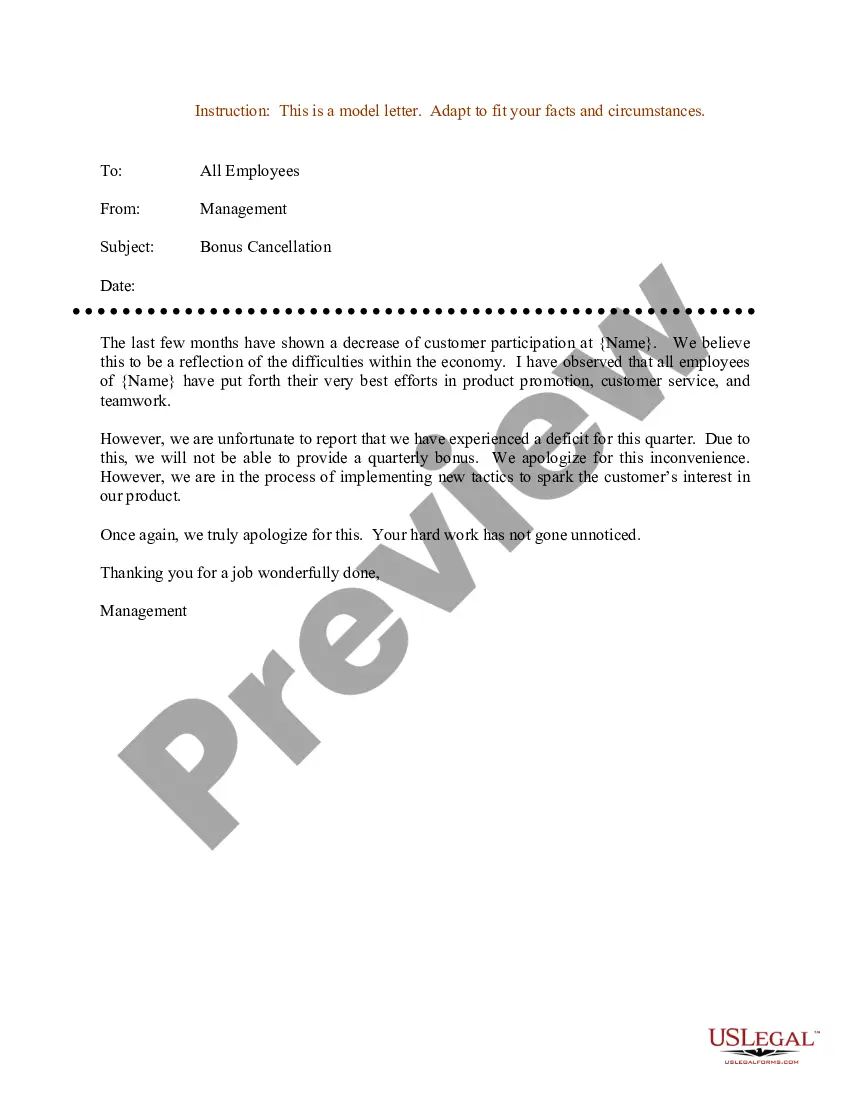
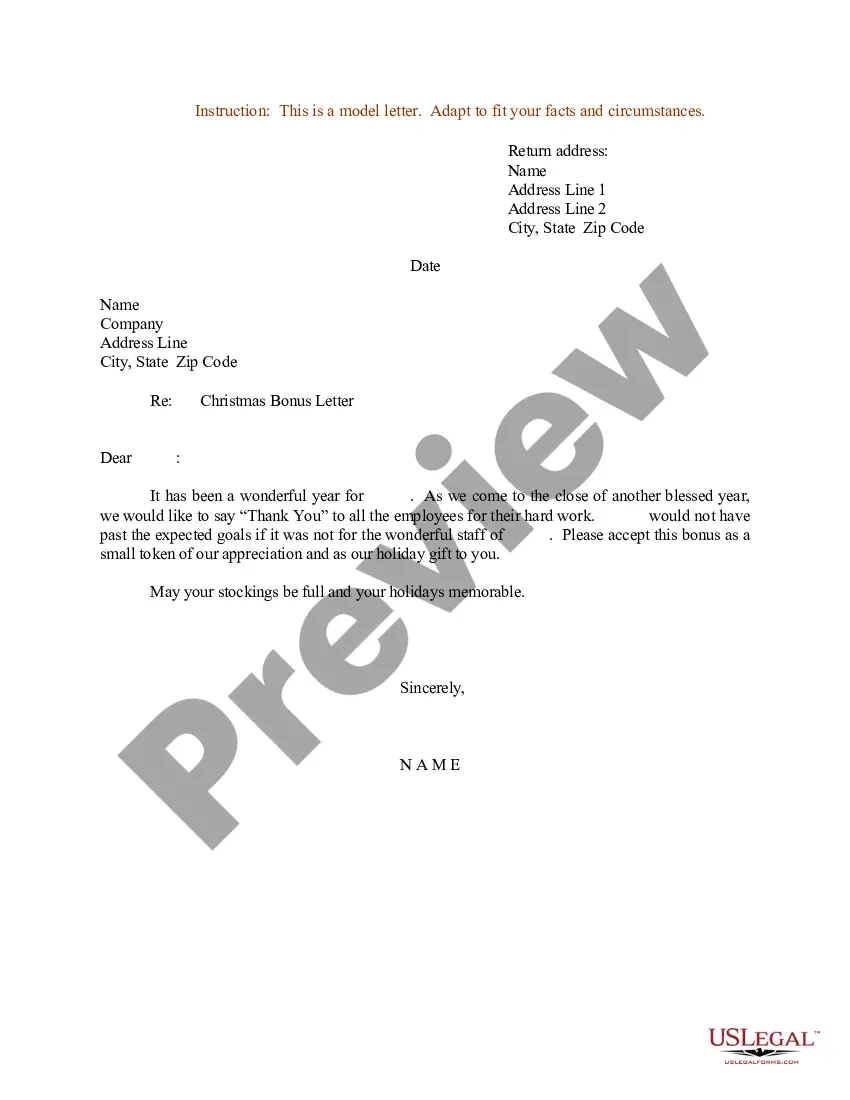
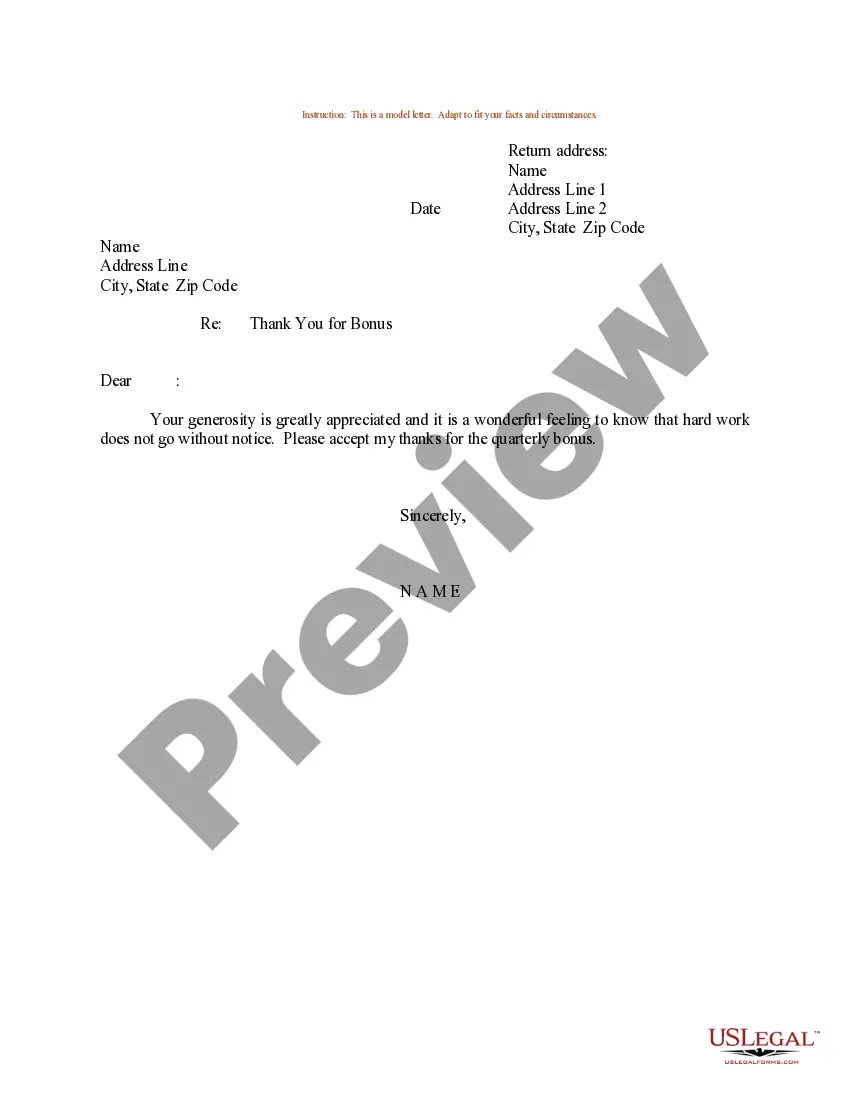
Get your form ready online
Our built-in tools help you complete, sign, share, and store your documents in one place.
Make edits, fill in missing information, and update formatting in US Legal Forms—just like you would in MS Word.
Download a copy, print it, send it by email, or mail it via USPS—whatever works best for your next step.
Sign and collect signatures with our SignNow integration. Send to multiple recipients, set reminders, and more. Go Premium to unlock E-Sign.
If this form requires notarization, complete it online through a secure video call—no need to meet a notary in person or wait for an appointment.
We protect your documents and personal data by following strict security and privacy standards.

Make edits, fill in missing information, and update formatting in US Legal Forms—just like you would in MS Word.

Download a copy, print it, send it by email, or mail it via USPS—whatever works best for your next step.

Sign and collect signatures with our SignNow integration. Send to multiple recipients, set reminders, and more. Go Premium to unlock E-Sign.

If this form requires notarization, complete it online through a secure video call—no need to meet a notary in person or wait for an appointment.

We protect your documents and personal data by following strict security and privacy standards.
Looking for another form?








Form popularity
FAQ
How to write a letter of intent for business Write the introduction. Describe the transaction and timeframes. List contingencies. Go through due diligence. Include covenants and other binding agreements. State that the agreement is nonbinding. Include a closing date.
A letter of intent (also known as an LOI) is often written to initiate a business transaction and help define expectations with customers, partners, and vendors before creating a binding agreement. They also help with negotiating terms.
Usually, these letters will be short and sweet. However, they should give a clear idea about what kind of services they offer. Often, companies send proposals out to get their foot in the door. A Letter of Intent is like a proposal, but it is less formal.
Generally speaking, you can use the following structure when writing a business proposal letter: Introduction and background. Statement of the problem. Goals and objectives. Evaluation. Budget. Call to action and contact information.
A business proposal letter is an effective tool that can be used to introduce a new product or service to a prospective client or customer, or provide business solutions to stakeholders or potential collaborators.
The LOI is, in many ways, a significantly “condensed” full proposal. Your LOI's opening paragraph might be the most important part of your letter because it is at this point that readers decide if your proposal is to be further considered.
A letter of intent (LOI) is a preliminary document outlining the mutual intentions of two or more parties before entering into a detailed agreement. While they are common across various industries, LOIs are pivotal in business transactions like mergers, acquisitions, and real estate deals.
Clearly announce the bonus or benefit. Ensure values are communicated as to how they have contributed to this. Information relevant to the benefit should be stated. Repeat appreciation and recognition in your bonus award letter sample.
Dear Sir/Madam On behalf of XYZ Team, I request you to award bonus for the entire team since they have worked very hard throughout the COVID-19 pandemic. Despite of the hard times, limited staff and havoc caused by pandemic, our team diligently...
Bonus letters are double consonants found at the end of the word. There are only four consonants that are consistently doubled: f, l, s, and z. These letters are doubled when they directly follow a vowel in a closed syllable. In other words, these letters are 'stuck' to the short vowel.

