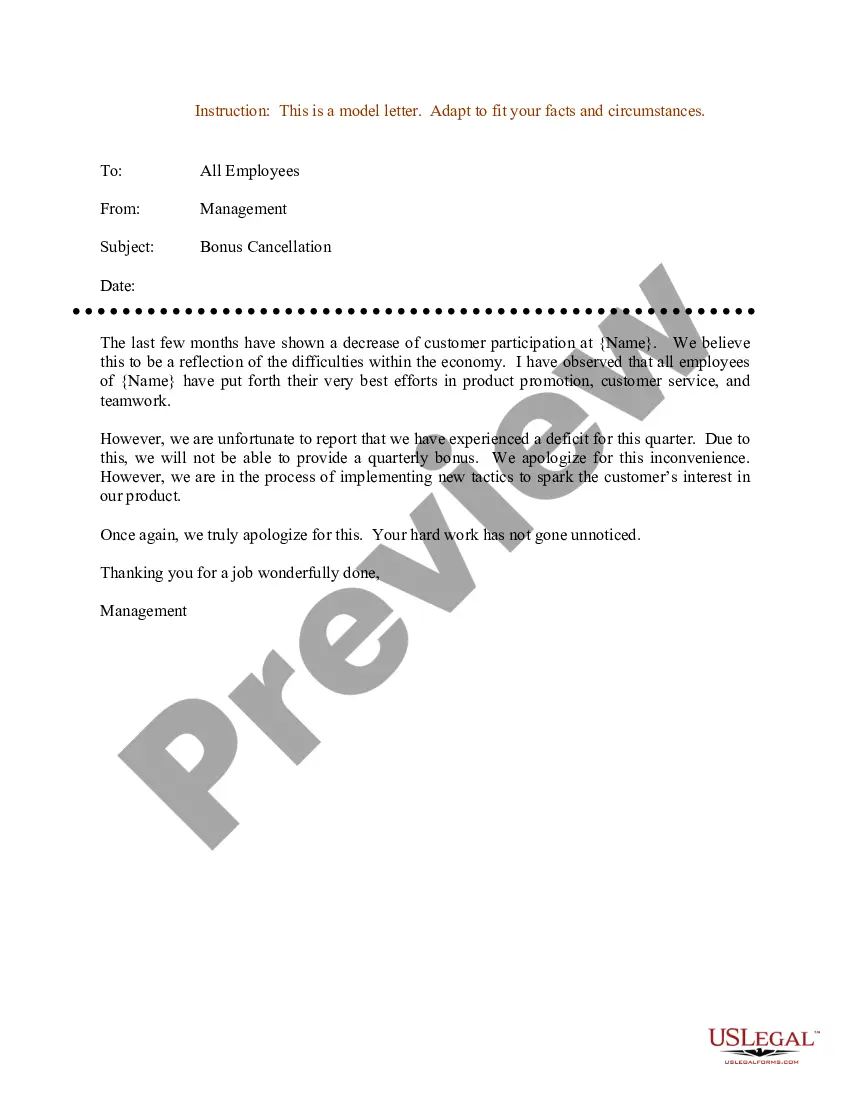
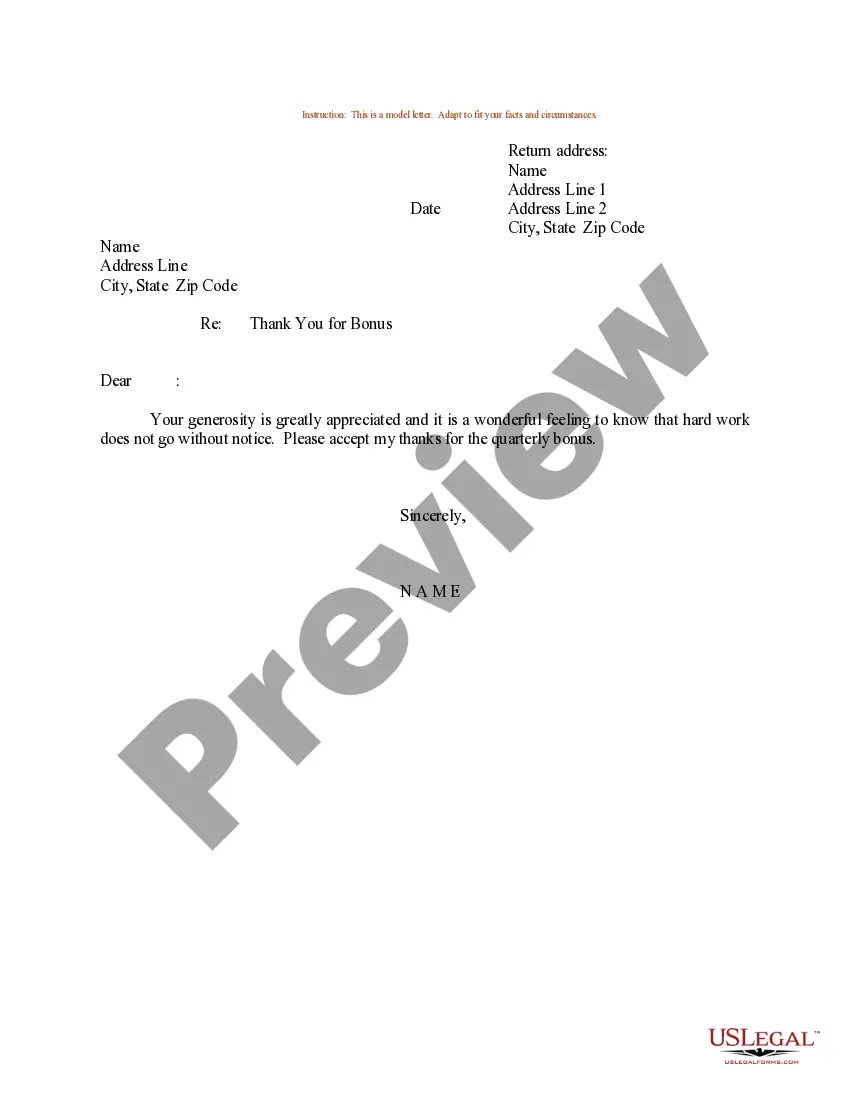
Sample Bonus Plans For Managers In Dallas
Description

Get your form ready online
Our built-in tools help you complete, sign, share, and store your documents in one place.
Make edits, fill in missing information, and update formatting in US Legal Forms—just like you would in MS Word.
Download a copy, print it, send it by email, or mail it via USPS—whatever works best for your next step.
Sign and collect signatures with our SignNow integration. Send to multiple recipients, set reminders, and more. Go Premium to unlock E-Sign.
If this form requires notarization, complete it online through a secure video call—no need to meet a notary in person or wait for an appointment.
We protect your documents and personal data by following strict security and privacy standards.

Make edits, fill in missing information, and update formatting in US Legal Forms—just like you would in MS Word.

Download a copy, print it, send it by email, or mail it via USPS—whatever works best for your next step.

Sign and collect signatures with our SignNow integration. Send to multiple recipients, set reminders, and more. Go Premium to unlock E-Sign.

If this form requires notarization, complete it online through a secure video call—no need to meet a notary in person or wait for an appointment.

We protect your documents and personal data by following strict security and privacy standards.
Looking for another form?

Form popularity
FAQ
What's considered “typical” or “good” for a bonus amount really depends on the type of bonus you're receiving. An annual bonus of 5-10% of your yearly salary is standard in a lot of industries, just as a 5-10% annual raise is considered standard.
You can set bonus amounts as a percentage of each manager's annual salary, perhaps as much as 20 percent. Alternatively, you might set aside a percentage of the company's profits for bonuses and divide this among your managers based on how successfully they attained their goals.
Anything close to the nationwide average of 8% or above might be considered a good bonus percentage. If 8% isn't possible, employers could go down to around 5% for it to still be seen as worthwhile. Around 20% of an annual salary is usually considered generous but this could still depend on the industry.
Over 90% of a project manager's time is spent in communicating. Communication-related issues are the most frequent problems faced by the project manager.
A Management Bonus is a form of incentive payment given to managers within an organization. It is typically awarded based on the company's performance, the achievement of specific goals, or the individual performance of the manager.
Example: A construction business might implement a system where project managers receive a 5% bonus if their project's CSAT exceeds 75%. They could even consider a stretched target/bonus of 10% if the satisfaction score exceeds 90%. These spurs help cultivate a service-oriented culture across the organization.
With an average salary of £47,500 for 2023, Full APM members (MAPM) earn an average of £67,500 – 42% above the standard – while the average salary of Fellow members is £72,500. For those in the earlier stages of their careers, Student members earn an average of £27,500, and Associate members £42,500.
How much does a project manager earn? Project manager salaries vary widely by industry and geography. ing to April 2024 estimates from Payscale, the average annual salary for a project manager in the US is $93,600, with average bonuses ranging from $2,000 to $17,000, and commissions from $15,000 to $25,000.
One of the most common types of bonus is an annual bonus, which employers give out once a year. Annual bonuses are usually based on your overall performance, although companies who use profit-sharing rewards may distribute bonuses based on company success and profits.
Once you have both performance percentage and salary percentage for each individual, you can multiply them together by an individual. Add up all individuals to get a total ratio. Divide each individual's share by the full rate, and that's the portion of the bonus pool that an individual receives.

