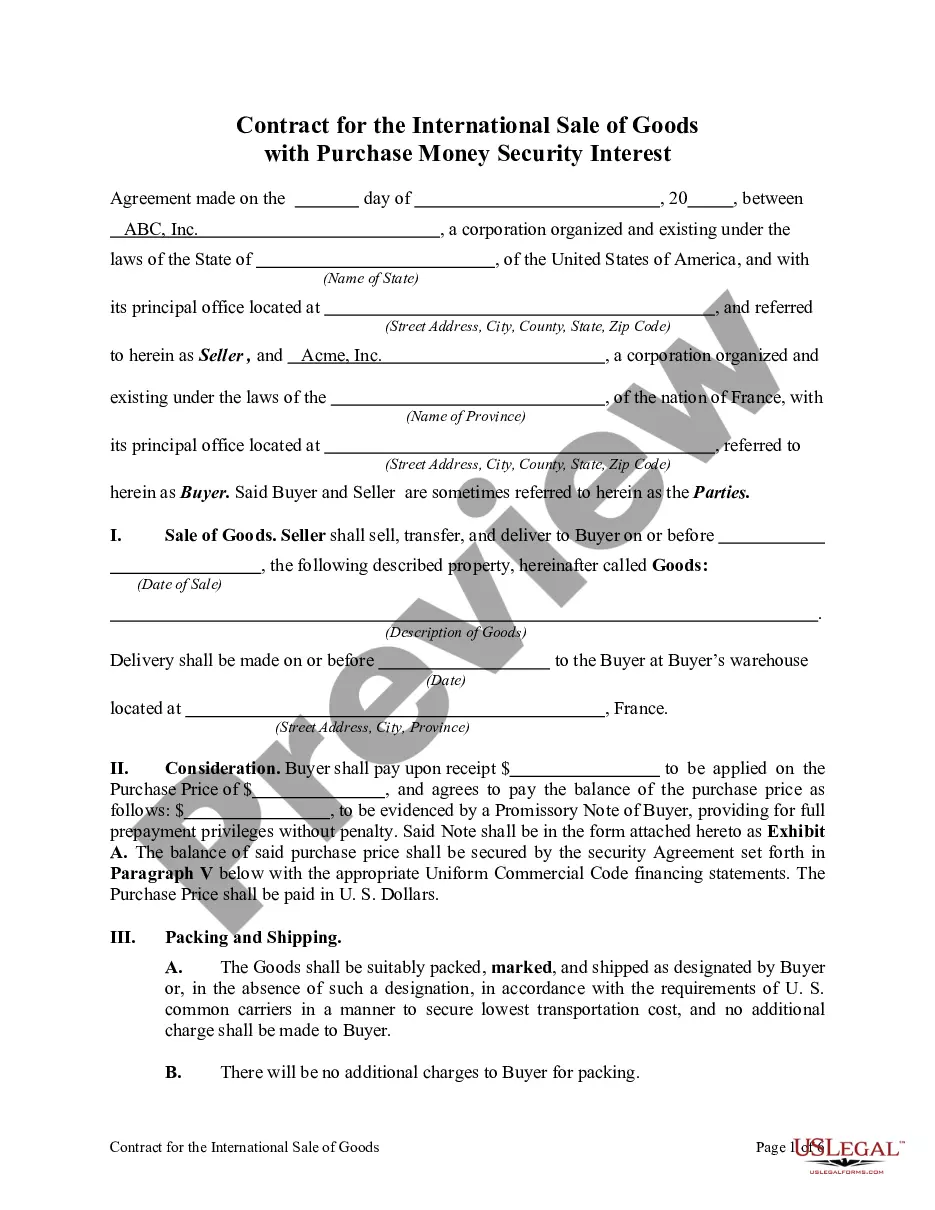
Contract International Purchase Sample For Job In Bronx
Description


Get your form ready online
Our built-in tools help you complete, sign, share, and store your documents in one place.
Make edits, fill in missing information, and update formatting in US Legal Forms—just like you would in MS Word.
Download a copy, print it, send it by email, or mail it via USPS—whatever works best for your next step.
Sign and collect signatures with our SignNow integration. Send to multiple recipients, set reminders, and more. Go Premium to unlock E-Sign.
If this form requires notarization, complete it online through a secure video call—no need to meet a notary in person or wait for an appointment.
We protect your documents and personal data by following strict security and privacy standards.

Make edits, fill in missing information, and update formatting in US Legal Forms—just like you would in MS Word.

Download a copy, print it, send it by email, or mail it via USPS—whatever works best for your next step.

Sign and collect signatures with our SignNow integration. Send to multiple recipients, set reminders, and more. Go Premium to unlock E-Sign.

If this form requires notarization, complete it online through a secure video call—no need to meet a notary in person or wait for an appointment.

We protect your documents and personal data by following strict security and privacy standards.
Looking for another form?








Form popularity
FAQ
An international contractor is an individual hired by a business to provide services or perform work in a foreign country. Unlike traditional employees, international contractors are typically hired on a temporary or project basis.
International contracts include all of the common elements of an employment contract, like compensation, benefits, overtime, and termination while taking into account all of the foreign market's local regulations. Below is a noncomprehensive list of key elements a foreign employment contract should include.
The international commercial contracts are governed by the bodies of International Principles such as UNIDROIT, UNCISG and European Contract Law. Domestic contracts are governed by the national laws of the respective parties in respective jurisdictions.
10 Different Types of Contracts Type of ContractEveryday Use Implied Contracts Common in everyday transactions like dining out. Express Contracts Standard in formal business agreements. Simple Contracts Used for straightforward services or transactions. Unconscionable Contracts Often challenged in court for fairness.10 more rows •
International contracts refer to legally binding agreements between parties from different countries. These contracts govern a wide range of business transactions, including the sale of goods, provision of services, joint ventures, and licensing agreements.
Contents Identifying the Parties Involved. Identify all relevant governments, organizations, and businesses involved in the agreement. Determine the roles and responsibilities of all parties involved. Establishing Objectives. Establish the overall goal of the agreement. Identify the objectives of each party involved.
International agreements are formal understandings or commitments between two or more countries. An agreement between two countries is called “bilateral,” while an agreement between several countries is “multilateral.” The countries bound by an international agreement are generally referred to as “States Parties.”
Top ten tips in drafting and negotiating an international contract Avoiding retaliation claims. The language of the contract. Clear contract prose. Common law versus civil law. Jurisdictional issues. Terms of art. Personnel. In negotiations, expect the unexpected.
In an international business contract, it's essential to define the jurisdiction that will govern the contract and the laws that will apply in the event of a dispute. Your dispute resolution section should also detail the agreed-upon dispute resolution mechanism.
