Motion For Temporary Orders Sample Without Notice In Fulton
Description
















Get your form ready online
Our built-in tools help you complete, sign, share, and store your documents in one place.
Make edits, fill in missing information, and update formatting in US Legal Forms—just like you would in MS Word.
Download a copy, print it, send it by email, or mail it via USPS—whatever works best for your next step.
Sign and collect signatures with our SignNow integration. Send to multiple recipients, set reminders, and more. Go Premium to unlock E-Sign.
If this form requires notarization, complete it online through a secure video call—no need to meet a notary in person or wait for an appointment.
We protect your documents and personal data by following strict security and privacy standards.

Make edits, fill in missing information, and update formatting in US Legal Forms—just like you would in MS Word.

Download a copy, print it, send it by email, or mail it via USPS—whatever works best for your next step.

Sign and collect signatures with our SignNow integration. Send to multiple recipients, set reminders, and more. Go Premium to unlock E-Sign.

If this form requires notarization, complete it online through a secure video call—no need to meet a notary in person or wait for an appointment.

We protect your documents and personal data by following strict security and privacy standards.
Looking for another form?






Form popularity
FAQ
Latin term meaning "by or for one party." The term refers to an attorney's communication with: A judge or arbitrator without notice to, and outside the presence of, the other parties.
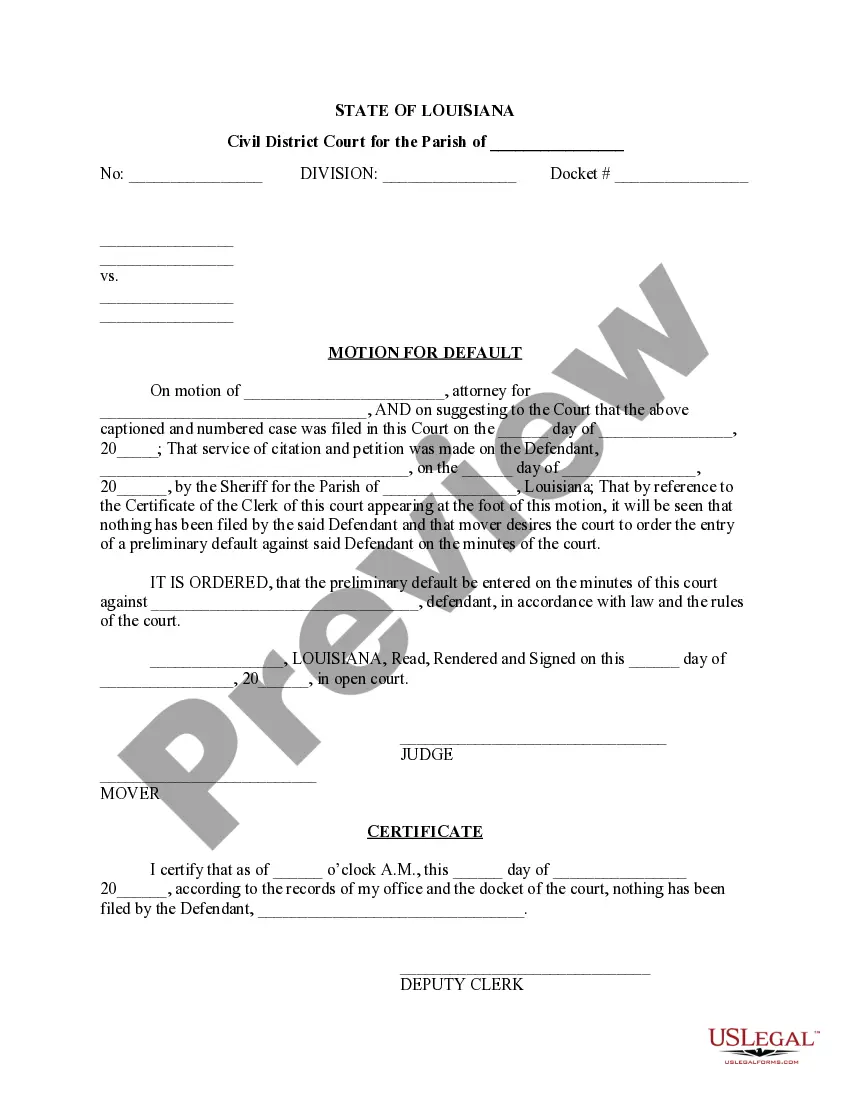
In civil procedure, ex parte is used to refer to motions for orders that can be granted without waiting for a response from the other side. Generally, these are orders that are only in place until further hearings can be held, such as a temporary restraining order.
Ex parte meaning and uses Here are some examples of situations that might warrant an ex parte hearing: Domestic violence cases: A victim seeks immediate protection through a temporary restraining order. Child custody matters: A parent requests temporary sole custody when there's immediate danger to the child's safety.
Outlining the required elements of an Order to Show Cause Identify the parties involved in the legal action. Set forth the relief requested. Specify the legal basis for the requested relief. Specify the timely filing of the Order to Show Cause. Identify a date and time for the hearing.
To modify the order, you must show the judge there is an issue that cannot wait to be resolved at trial. These matters include such issues as child endangerment or a parent violating the terms of the order. To modify temporary custody orders, you will need to include your reasoning for filing a motion to modify.
While ex parte orders are essential for urgent protection, they have some disadvantages: Lack of Representation: Since ex parte orders are issued without the other party being present, the accused parent doesn't have a chance to defend themselves initially.
Here are some examples of Ex Parte Motions: Motion to "quash" a subpoena: This cancels a subpoena. Motion for order shortening time to serve a motion: This is a court order that gives you more time to serve the other person.
If you want to file a motion, the process is generally something like this: You write your motion. You file your motion with the court clerk. The court clerk inserts the date and time your motion will be heard by the judge. You “serve” (mail) your motion to the other side.
Respected Sir/Madam, This letter is to inform you that your ward…………………………………………………………… (Name of the Trainee) studying in Trade………………………………….has been found indulge in Unbearable acts/indiscipline behavior/Intolerable behavior/Misconduct/not to follow Instructor's instruction/ Fighting/Brawling/ any other reason).
When drafting a show cause letter, it is essential to include the following key elements: Clear and Concise Introduction. Detailed Description of the Concern. Reference to Relevant Policies or Procedures. Employee's Right to Respond. Consequences of Non-Compliance. Contact Information and Signature.
