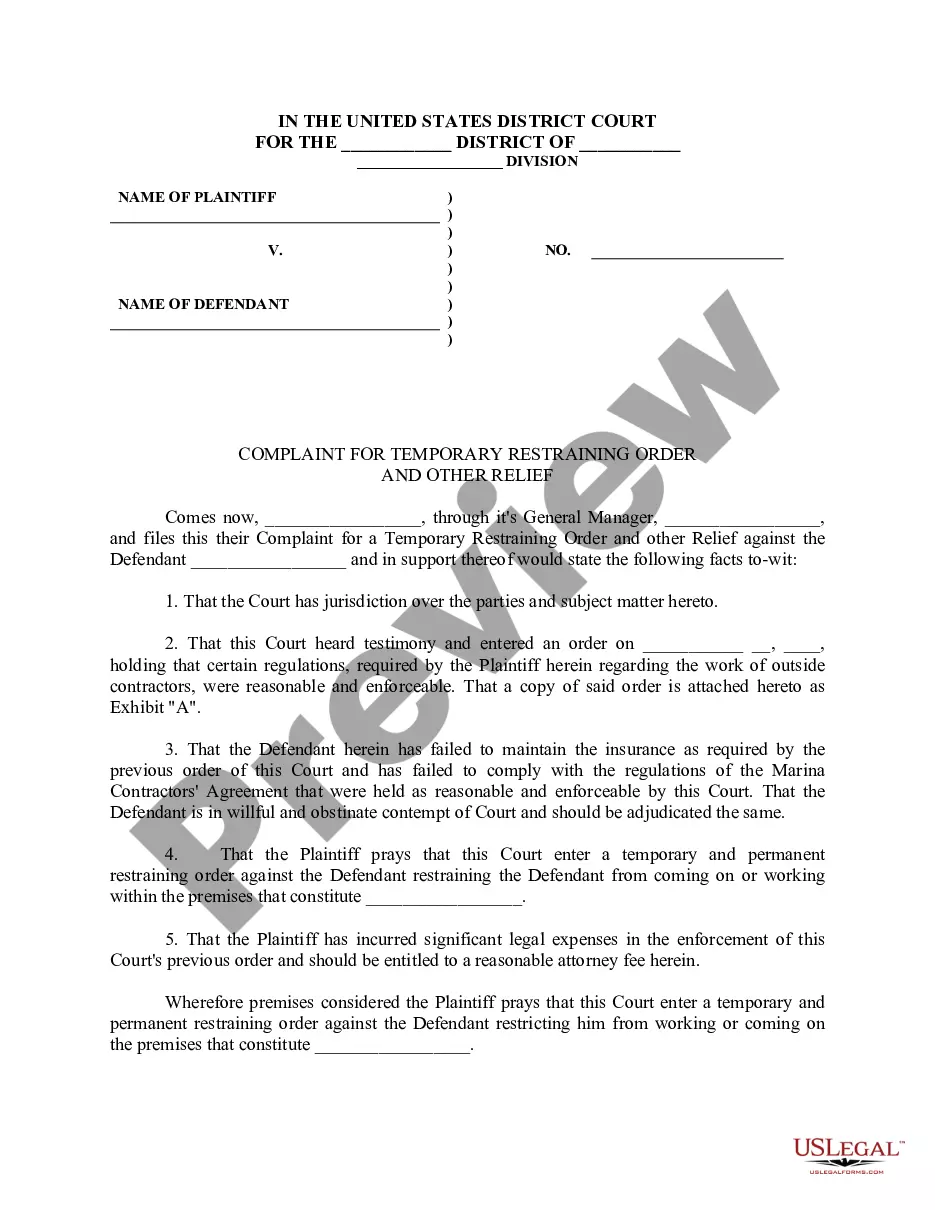
Permanent Injunction On Agricultural Land In Broward
Description
















Get your form ready online
Our built-in tools help you complete, sign, share, and store your documents in one place.
Make edits, fill in missing information, and update formatting in US Legal Forms—just like you would in MS Word.
Download a copy, print it, send it by email, or mail it via USPS—whatever works best for your next step.
Sign and collect signatures with our SignNow integration. Send to multiple recipients, set reminders, and more. Go Premium to unlock E-Sign.
If this form requires notarization, complete it online through a secure video call—no need to meet a notary in person or wait for an appointment.
We protect your documents and personal data by following strict security and privacy standards.

Make edits, fill in missing information, and update formatting in US Legal Forms—just like you would in MS Word.

Download a copy, print it, send it by email, or mail it via USPS—whatever works best for your next step.

Sign and collect signatures with our SignNow integration. Send to multiple recipients, set reminders, and more. Go Premium to unlock E-Sign.

If this form requires notarization, complete it online through a secure video call—no need to meet a notary in person or wait for an appointment.

We protect your documents and personal data by following strict security and privacy standards.
Looking for another form?







Form popularity
FAQ
Process For Obtaining An Injunction A petition (application) for an injunction for protection is available through the Clerk of the Court. You can call the Florida Coalition Against Domestic Violence at 800-500-1119 or your local domestic violence center for more information on how to proceed.
To dissolve a restraining order in Florida, the respondent must prove that the circumstances that granted the injunction no longer exist. If the court considers that the petitioner is no longer in danger, the injunction could be removed. Dissolving a restraining order is up to the judge's discretion.
If a Permanent Injunction is granted, it will be effective until it is changed or ended by the judge at either party's request, after notice and hearing, or until a specific date set by the judge (i.e., 1 year, 3 years, 5 years, etc.).
An injunction is a court order requiring a person to do or cease doing a specific action. There are three types of injunctions: Permanent injunctions, Temporary restraining orders and preliminary injunctions.
Injunctions can last a week, a month, 6 months, a year, 2 years, 5 years, or forever. How long an injunction lasts is really up to the judge. An injunction can last any amount of time.
Standard of Proof In Florida, a petitioner for an injunction must establish by “preponderance of the evidence” (i.e. greater weight of the evidence) that he or she is either a victim of domestic violence or is in imminent danger of being a victim of domestic violence.
If your want to lift the injunction, you have to file a Motion to Dismiss the injunctions and set it for hearing in front of the court that issued the injunction. You will have to attend the hearing and explain to the judge the reasons you are no longer in fear of the Respondent and why you want the injunction dropped.
Temporary Injunction Plaintiff will suffer irreparable harm; Plaintiff has no adequate remedy at law; Plaintiff has a substantial likelihood of success on the merits; and. A temporary injunction will serve the public interest.
