Discrimination Definition For Class 6
Description
Get your form ready online
Our built-in tools help you complete, sign, share, and store your documents in one place.
Make edits, fill in missing information, and update formatting in US Legal Forms—just like you would in MS Word.
Download a copy, print it, send it by email, or mail it via USPS—whatever works best for your next step.
Sign and collect signatures with our SignNow integration. Send to multiple recipients, set reminders, and more. Go Premium to unlock E-Sign.
If this form requires notarization, complete it online through a secure video call—no need to meet a notary in person or wait for an appointment.
We protect your documents and personal data by following strict security and privacy standards.

Make edits, fill in missing information, and update formatting in US Legal Forms—just like you would in MS Word.

Download a copy, print it, send it by email, or mail it via USPS—whatever works best for your next step.

Sign and collect signatures with our SignNow integration. Send to multiple recipients, set reminders, and more. Go Premium to unlock E-Sign.

If this form requires notarization, complete it online through a secure video call—no need to meet a notary in person or wait for an appointment.

We protect your documents and personal data by following strict security and privacy standards.
Looking for another form?
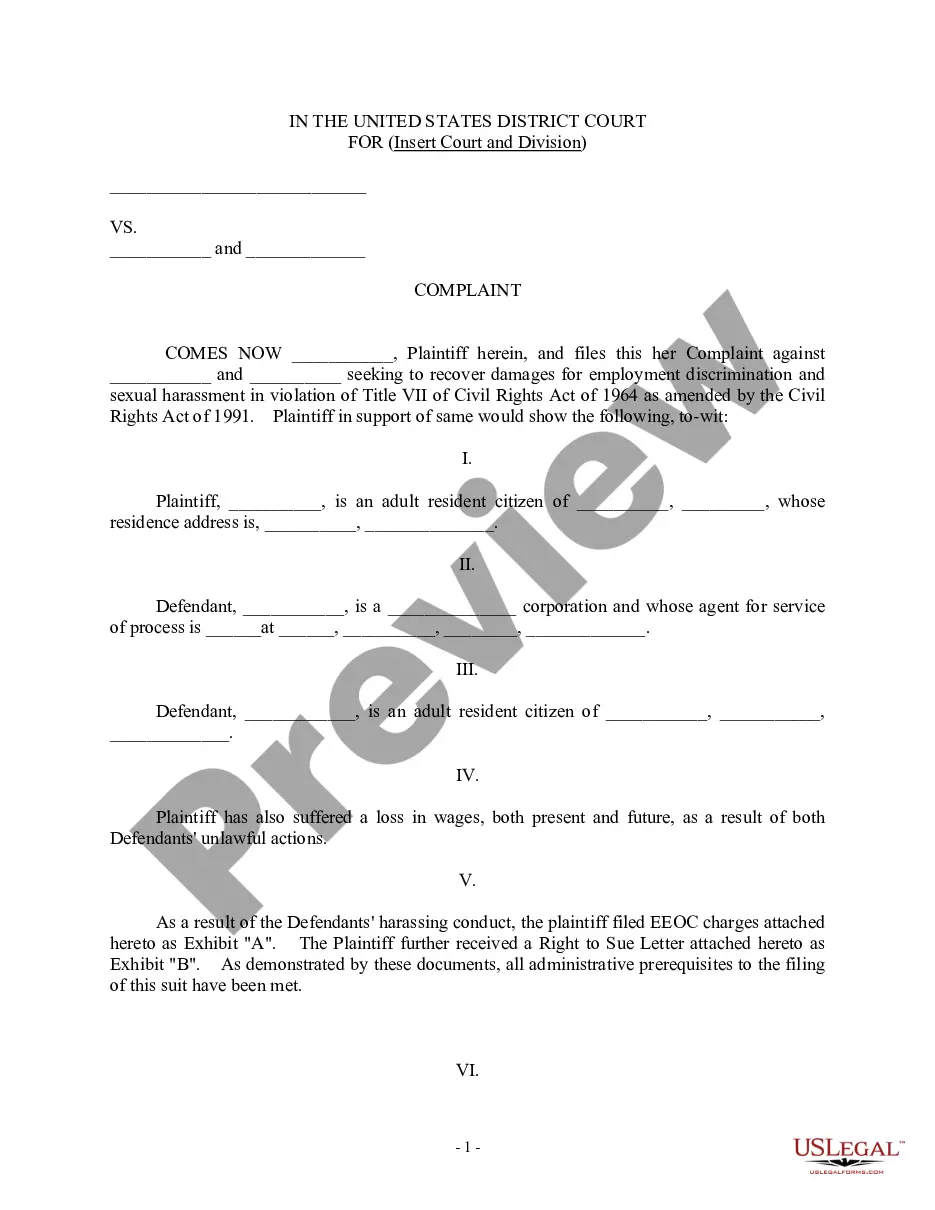
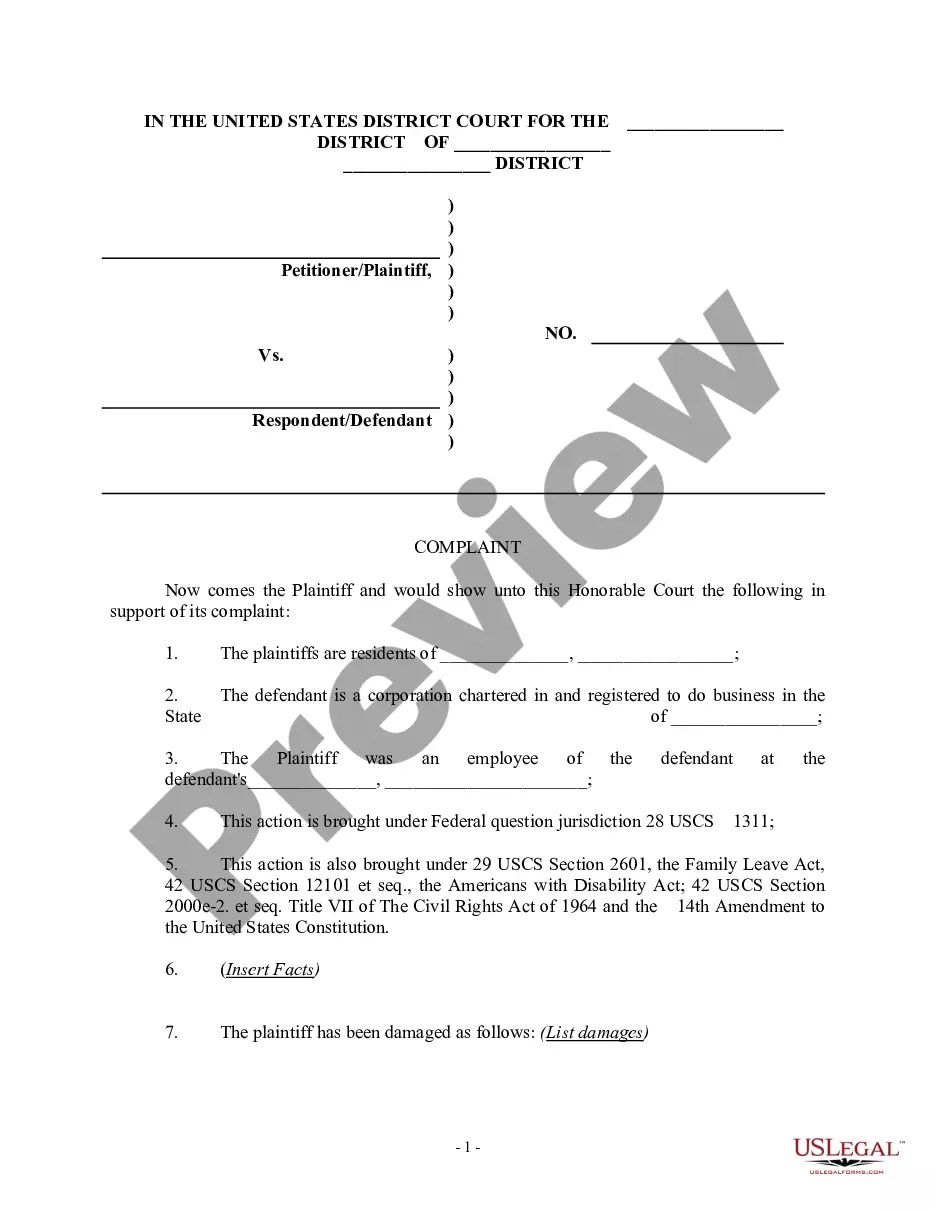
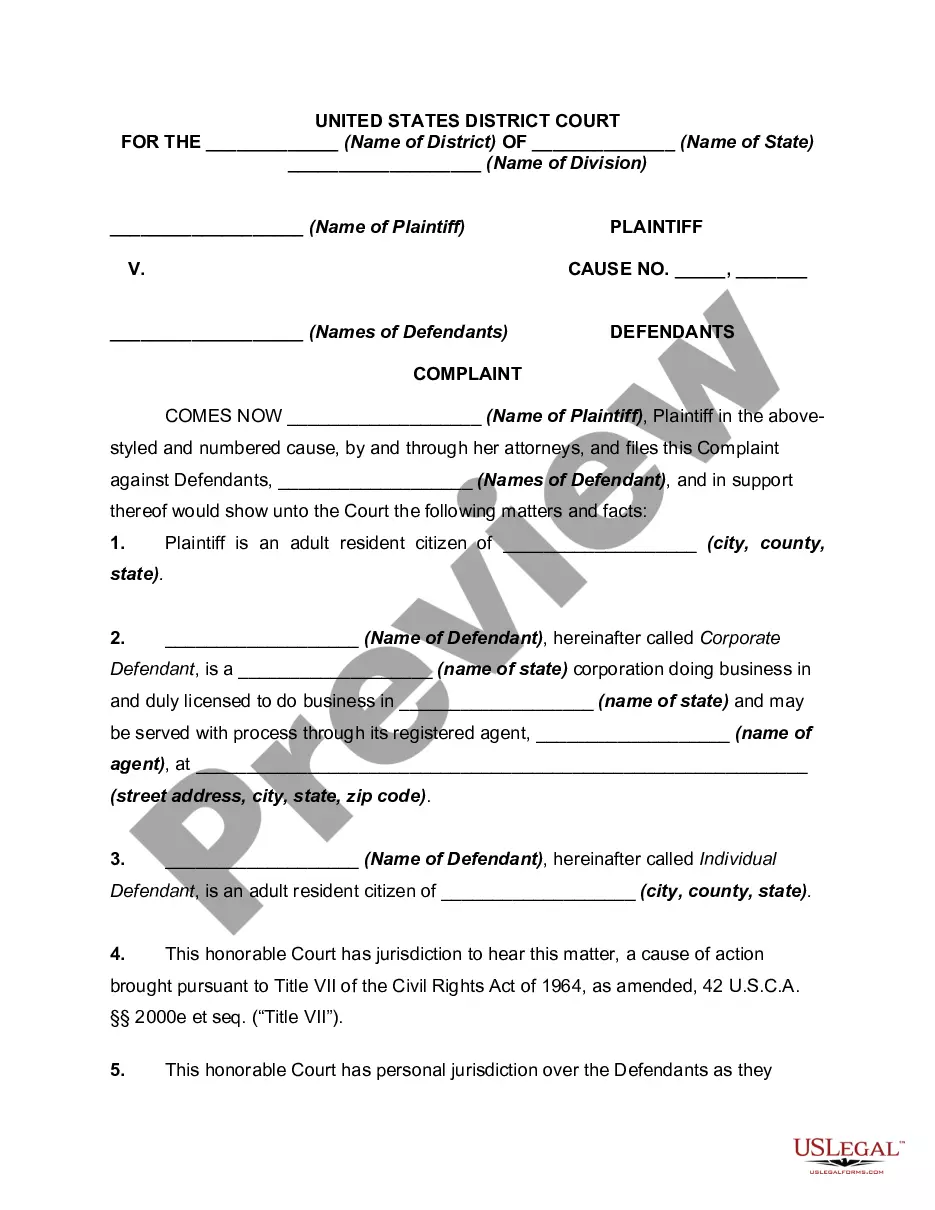
How to fill out Complaint For Employment Or Workplace Discrimination And Sexual Harassment - Title VII Civil Rights Act?
Accessing legal documents that comply with federal and local laws is essential, and the web provides numerous choices to select from.
However, what is the use of spending time searching for the properly crafted Discrimination Definition For Class 6 example online when the US Legal Forms online library has already compiled such documents in one location.
US Legal Forms is the largest online legal repository with more than 85,000 fillable forms created by lawyers for any business or personal situation. They are simple to navigate with all files categorized by state and intended use. Our specialists stay updated with legislative changes, so you can always be confident that your documents are current and compliant when acquiring a Discrimination Definition For Class 6 from our site.
Click Buy Now once you’ve located the right form and select a subscription option. Create an account or Log In and complete payment via PayPal or a credit card. Select the appropriate format for your Discrimination Definition For Class 6 and download it. All documents you find through US Legal Forms are reusable. To re-download and complete previously obtained forms, access the My documents section in your profile. Enjoy the most comprehensive and user-friendly legal document service!
- Acquiring a Discrimination Definition For Class 6 is easy and quick for both existing and new users.
- If you have an account with an active subscription, Log In and save the document sample you need in your preferred format.
- If you are new to our site, follow the steps below.
- Review the template using the Preview feature or through the text outline to ensure it meets your requirements.
- Use the search function at the top of the page to find another sample if needed.
Form popularity
FAQ
The easy definition of discrimination is when someone is treated badly for reasons that are not fair, such as their race, age, or gender. This unfair treatment can happen anywhere, including schools and playgrounds. By learning this definition, kids can become advocates for fairness and help create a more inclusive environment, supporting the broader understanding encapsulated in the discrimination definition for class 6.
Discrimination explained for kids is about understanding that everyone deserves equal treatment, regardless of their differences. It means recognizing when someone is treated poorly for things they cannot change, like their skin color or the way they speak. When kids learn about these concepts, they can stand up against unfairness, reflecting the discrimination definition for class 6.
To teach a child about discrimination, start with open conversations about fairness and respect for everyone. Use stories or real-life examples to illustrate what discrimination looks like and why it is harmful. Engaging resources like U.S. Legal Forms can provide worksheets or activities that reinforce the principles of equality and the discrimination definition for class 6.
The definition of discrimination for kids is treating someone unfairly based on specific characteristics, such as their race, gender, or abilities. It can happen when a child is excluded or bullied because of who they are, not because of their actions. By grasping this definition, children can better understand the importance of kindness and inclusivity as explained in the discrimination definition for class 6.
A common example of discrimination for kids can occur at school when one child gets picked on because of their appearance, like their clothing or hair. Another situation might be when a group of children refuses to include someone in a game because of their background or abilities. Understanding these examples helps kids recognize unfair treatment and the impact it can have on others, aligning with the discrimination definition for class 6.
An example of a discrimination definition can be seen when discussing how people are denied service in shops because of their looks. This is a concrete illustration of discrimination in action and shows how it affects real lives. Understanding this example helps clarify the broader concept of the discrimination definition for class 6.
For kids, discrimination means treating someone unfairly because of who they are. This could involve not allowing a child to play with others based on their appearance or background. By simplifying the meaning, children can grasp the importance of treating everyone equally, which reflects the essence of the discrimination definition for class 6.
Three examples of discrimination include: refusing to hire a qualified candidate because of their race, paying women less than men for the same job, and not allowing an individual with a disability to access public services. These scenarios highlight how discrimination can manifest in daily life. Recognizing these examples reinforces the deeper understanding of discrimination definition for class 6.
An example of discrimination for class 6 students might be a teacher giving better grades to boys than girls, regardless of their performance. This unfair practice shows how one group can receive preferential treatment, which is unjust. By illustrating such examples, we can better understand the discrimination definition for class 6, making it relatable for young learners.
The eight types of discrimination include age, disability, race, gender, religion, sexual orientation, national origin, and pregnancy. Each type represents aspects that should never result in unfavorable treatment or bias. Knowing these categories helps you recognize and fight against unfair practices. This knowledge complements the discrimination definition for class 6.