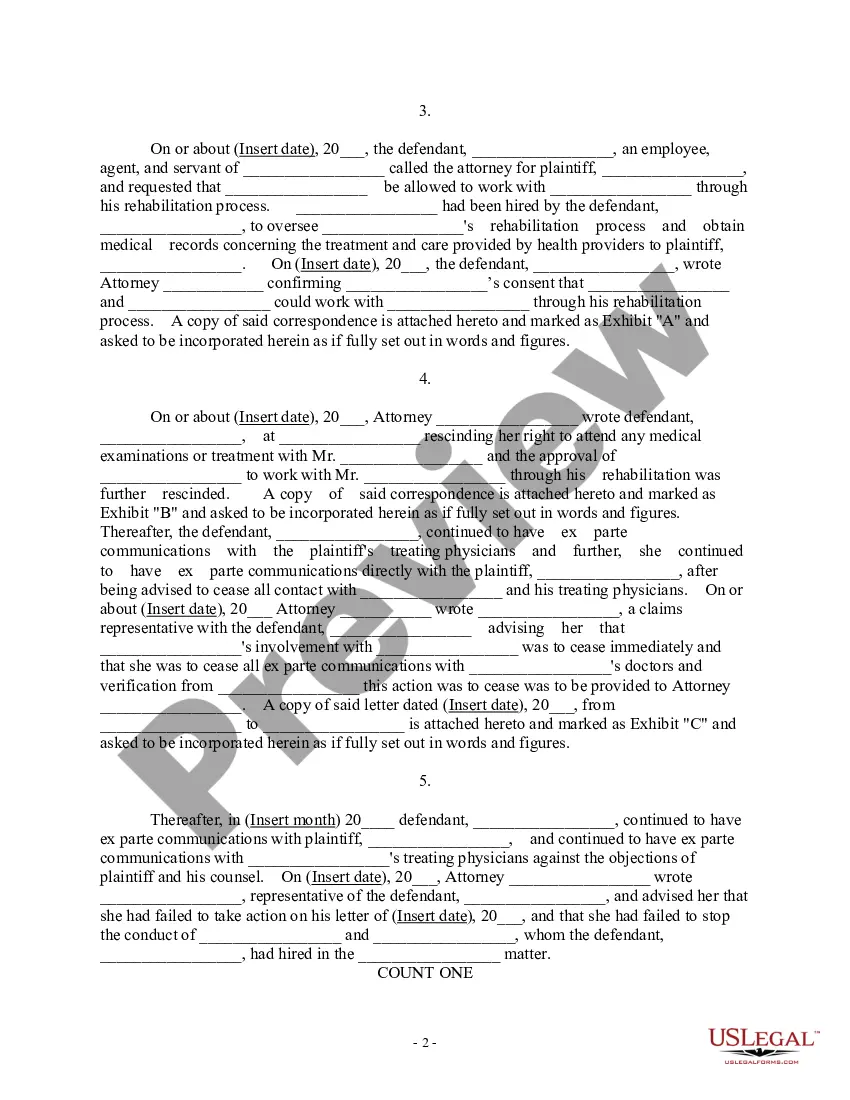
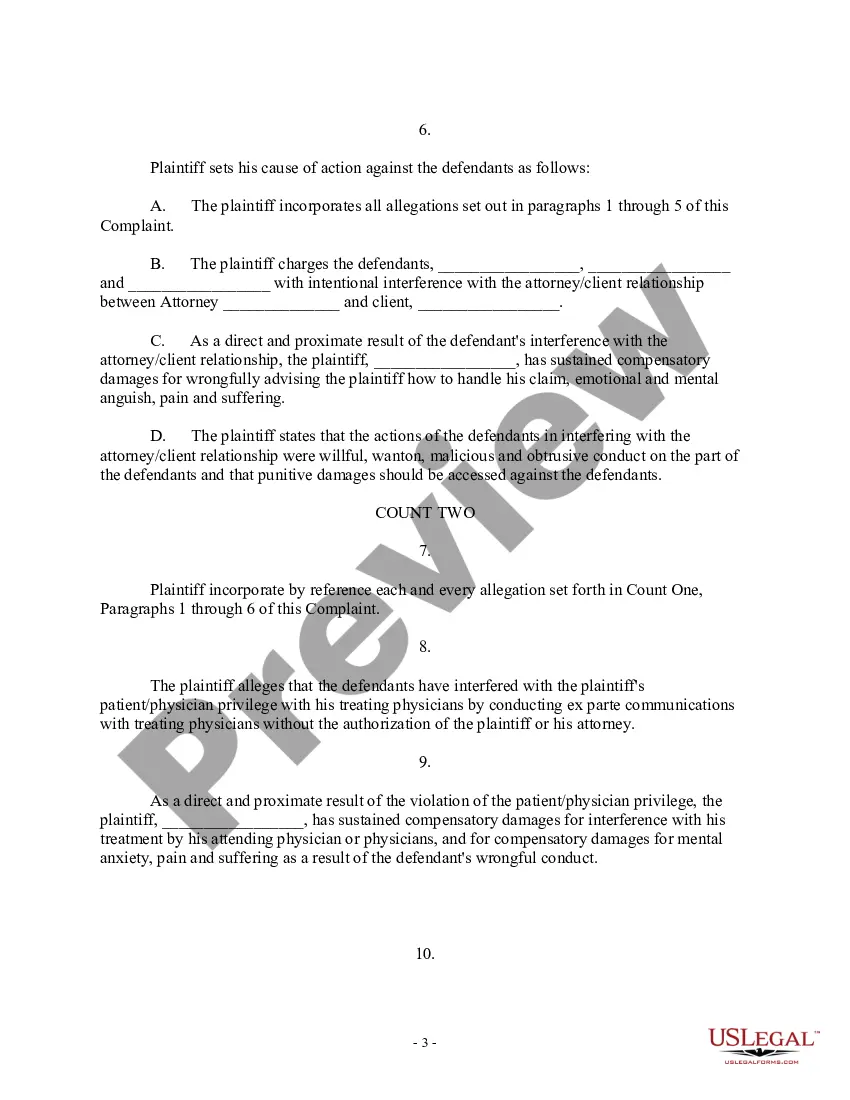
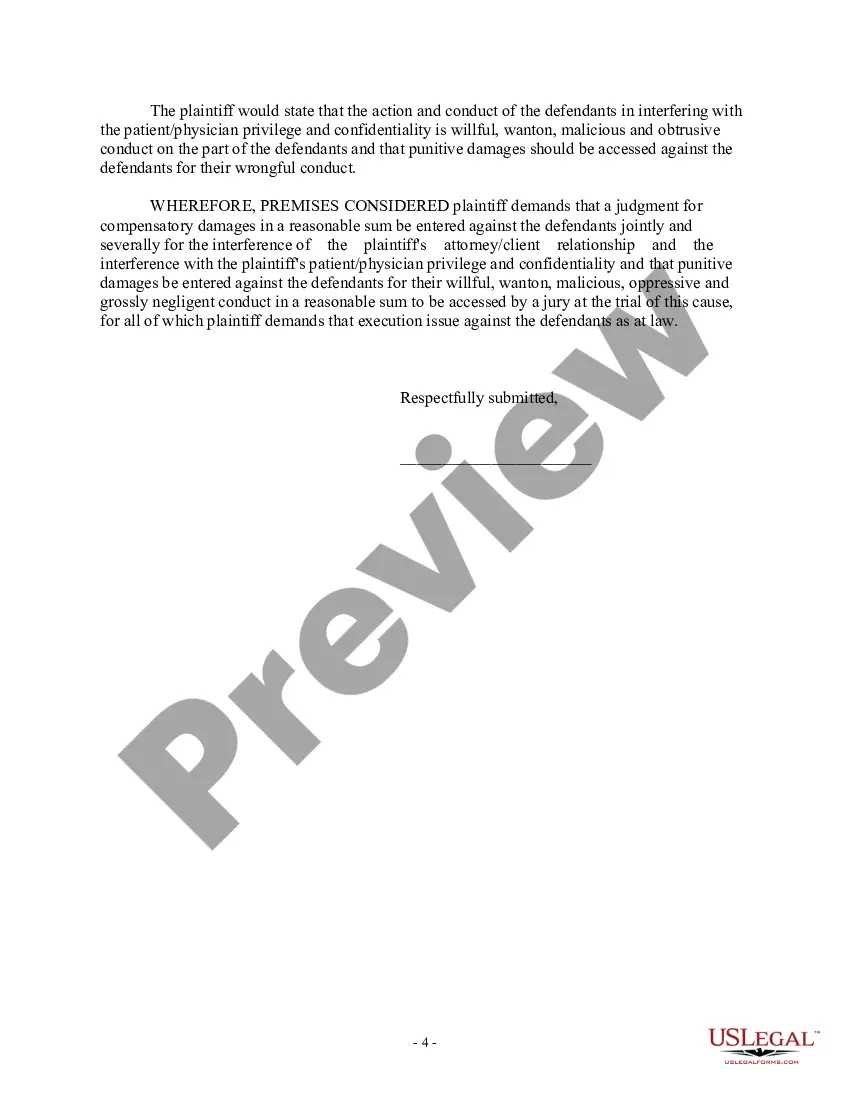
Interference With Attorney Client Relationship In Collin
Description



Get your form ready online
Our built-in tools help you complete, sign, share, and store your documents in one place.
Make edits, fill in missing information, and update formatting in US Legal Forms—just like you would in MS Word.
Download a copy, print it, send it by email, or mail it via USPS—whatever works best for your next step.
Sign and collect signatures with our SignNow integration. Send to multiple recipients, set reminders, and more. Go Premium to unlock E-Sign.
If this form requires notarization, complete it online through a secure video call—no need to meet a notary in person or wait for an appointment.
We protect your documents and personal data by following strict security and privacy standards.

Make edits, fill in missing information, and update formatting in US Legal Forms—just like you would in MS Word.

Download a copy, print it, send it by email, or mail it via USPS—whatever works best for your next step.

Sign and collect signatures with our SignNow integration. Send to multiple recipients, set reminders, and more. Go Premium to unlock E-Sign.

If this form requires notarization, complete it online through a secure video call—no need to meet a notary in person or wait for an appointment.

We protect your documents and personal data by following strict security and privacy standards.
Looking for another form?

Form popularity
FAQ
A conflict of interest refers to the ethical problems that may arise between parties with a preexisting relationship. In law, a conflict of interest arises between an attorney and a client if the interests of the attorney, a different client, or a third-party conflict with the interests of the present client.
Lawyer fears may be described in a variety of ways, but most (or all) are ultimately the fear of mistakes. We don't want to appear foolish or incompetent, and we certainly don't want to cause a bad outcome.
1. Terminating Your Current Attorney: You can terminate your attorney-client relationship at any time. However, it is crucial to do so in writing. A formal letter stating your intention to end the relationship should be sent to your attorney. This letter serves as a record of your decision and its date. 2.
Attorney misconduct may include: conflict of interest, overbilling, false or misleading statements, knowingly pursuing frivolous and meritless lawsuits, concealing evidence, abandoning a client, failing to disclose all relevant facts, arguing a position while neglecting to disclose prior law which might counter the ...
Personal Opinions or Bias: Do not share personal opinions or biases that aren't relevant to the legal advice or the case. The focus should be on legal counsel, not personal beliefs. Inappropriate Jokes or Comments: Avoid making jokes or comments that could be seen as unprofessional, insensitive, or offensive.
Undisclosed conflicts of interest are also unethical, as are any illegal or unscrupulous activities, such as suppression of evidence or misleading statements made to courts.
Client Neglect – not returning phone calls, or answering correspondence. Conflicts of Interest – a lawyer may not be representing a client to the best of their ability due to allegiance to another client, or the opposition. Fraudulent Activity – forged documents, doctored evidence, or dishonorable witnesses.
Attorney misconduct may include: conflict of interest, overbilling, false or misleading statements, knowingly pursuing frivolous and meritless lawsuits, concealing evidence, abandoning a client, failing to disclose all relevant facts, arguing a position while neglecting to disclose prior law which might counter the ...