This is a multi-state form covering the subject matter of the title.
Wrongful Termination Court Withdraw In Middlesex
Category:
State:
Multi-State
County:
Middlesex
Control #:
US-000291
Format:
Word;
Rich Text
Instant download
Description
Free preview

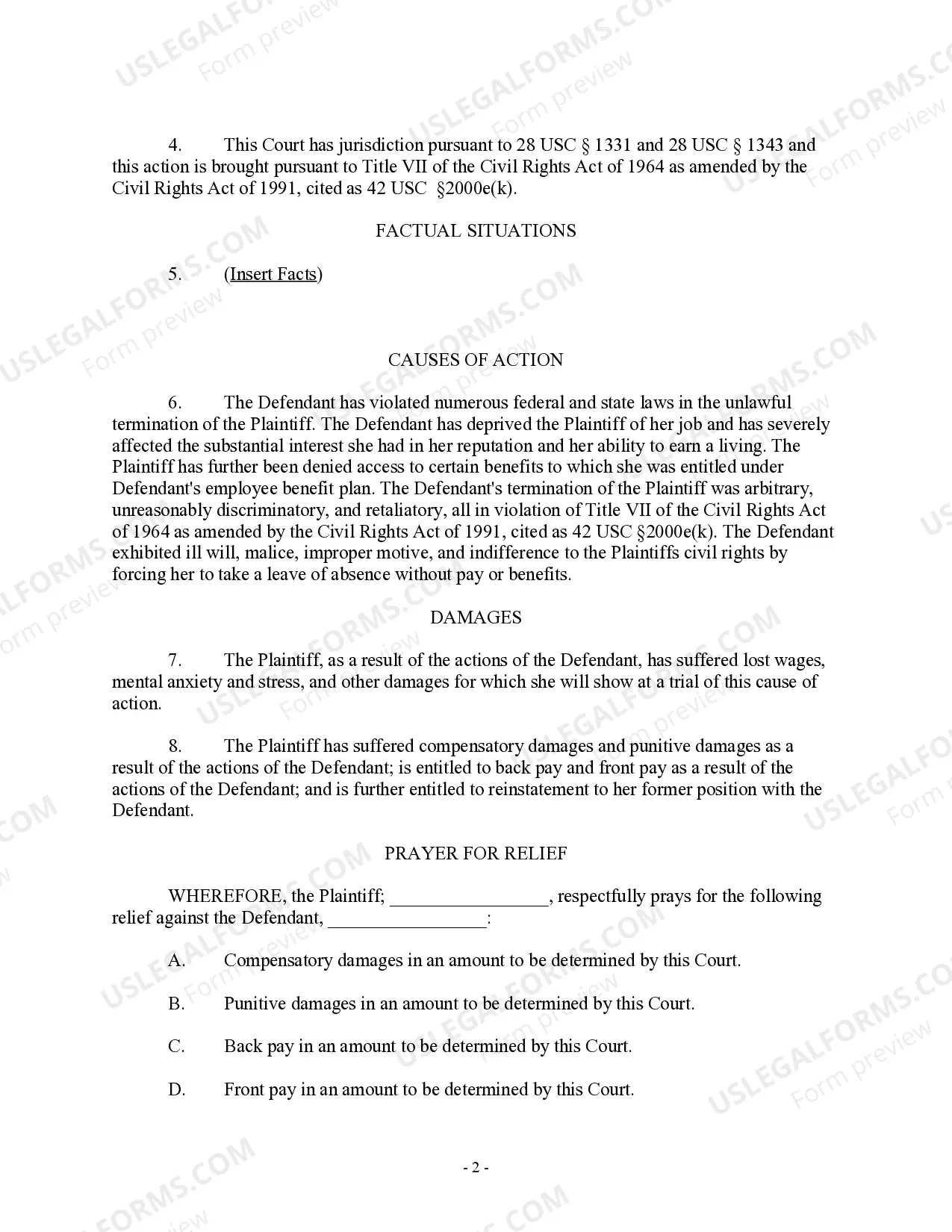



Get your form ready online
Our built-in tools help you complete, sign, share, and store your documents in one place.
Built-in online Word editor
Make edits, fill in missing information, and update formatting in US Legal Forms—just like you would in MS Word.
Export easily
Download a copy, print it, send it by email, or mail it via USPS—whatever works best for your next step.
E-sign your document
Sign and collect signatures with our SignNow integration. Send to multiple recipients, set reminders, and more. Go Premium to unlock E-Sign.
Notarize online 24/7
If this form requires notarization, complete it online through a secure video call—no need to meet a notary in person or wait for an appointment.
Store your document securely
We protect your documents and personal data by following strict security and privacy standards.

Make edits, fill in missing information, and update formatting in US Legal Forms—just like you would in MS Word.

Download a copy, print it, send it by email, or mail it via USPS—whatever works best for your next step.

Sign and collect signatures with our SignNow integration. Send to multiple recipients, set reminders, and more. Go Premium to unlock E-Sign.

If this form requires notarization, complete it online through a secure video call—no need to meet a notary in person or wait for an appointment.

We protect your documents and personal data by following strict security and privacy standards.
Looking for another form?








Form popularity
FAQ
You will need to file a motion asking the court to grant your request for a modification. To that you'll need to attach a copy of the court order you want to change, a copy of a prior and current case information statement or statements, supporting affidavits (sworn statements) and briefs (legal arguments).
In your letter, you must identify who you are, state specifically what your change in circumstance is, and definitively request a review of your case. You will send this letter to the CSE caseworker assigned to your case in the regional office that enforces your order. You can find that information on the CSE website.
The Application/Cross Application to Modify a Court Order is a written request in which you ask the court to change or enforce an existing court order. The court will change an order only if important facts or circumstances have changed from the time the order was issued.
What is a Cross Application for Modification of Court Order in NJ? A Cross Application for Modification of Court Order is a written request submitted to the court asking that a change be made to an existing order. This same instrument is used to get enforcement of the original order.
Modification via Mediation Alternative dispute resolution (ADR) is a popular avenue for parents trying to arrange or modify custody agreements in California. Through ADR, you could achieve an official, legal custody modification without going to court. ADR is not a custody trial.
Trial:The trial itself will typically last a few hours, depending on the complexity of the case. After the trial, the judge will issue a decision, which can take a few weeks. If your case is for $5,000 or less, it can be handled in small claims court.
The procedure to establish contempt is straightforward. The person seeking the finding must file a motion in court with supporting documents stating how a court order was allegedly violated. The court will set a hearing date. The accused party must be properly served with the motion and notice of hearing.
You must complete and submit an original and two copies of the enclosed complaint form as well as the Civil Cover Sheet. You should also keep an additional copy of any document filed with the Court for your own records. All copies of the complaint must be identical to the original.
Conclusion: Going to small claims court may be worth it for $500, but it will determine how you weigh your costs versus benefits. At a minimum, it is worth it to send a demand letter.