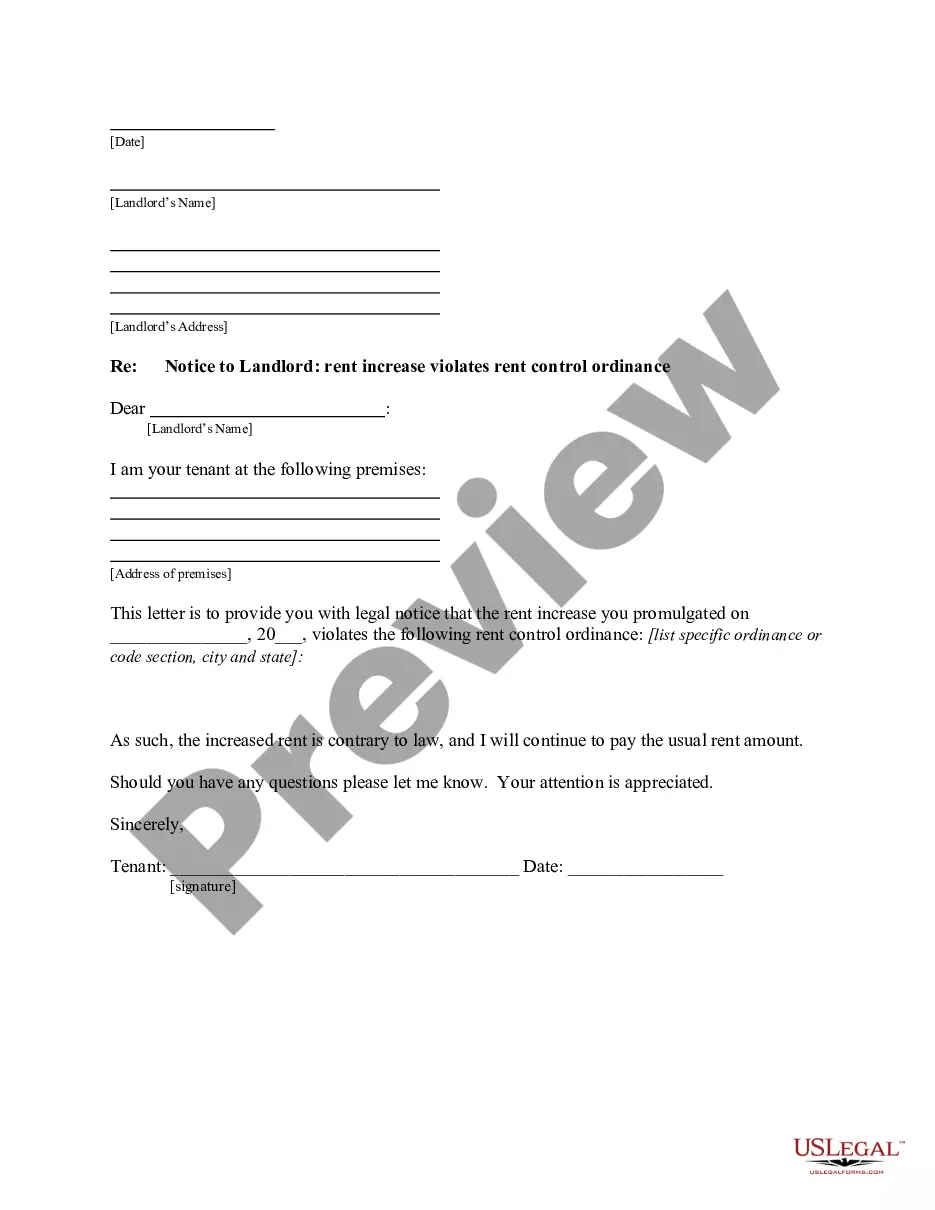
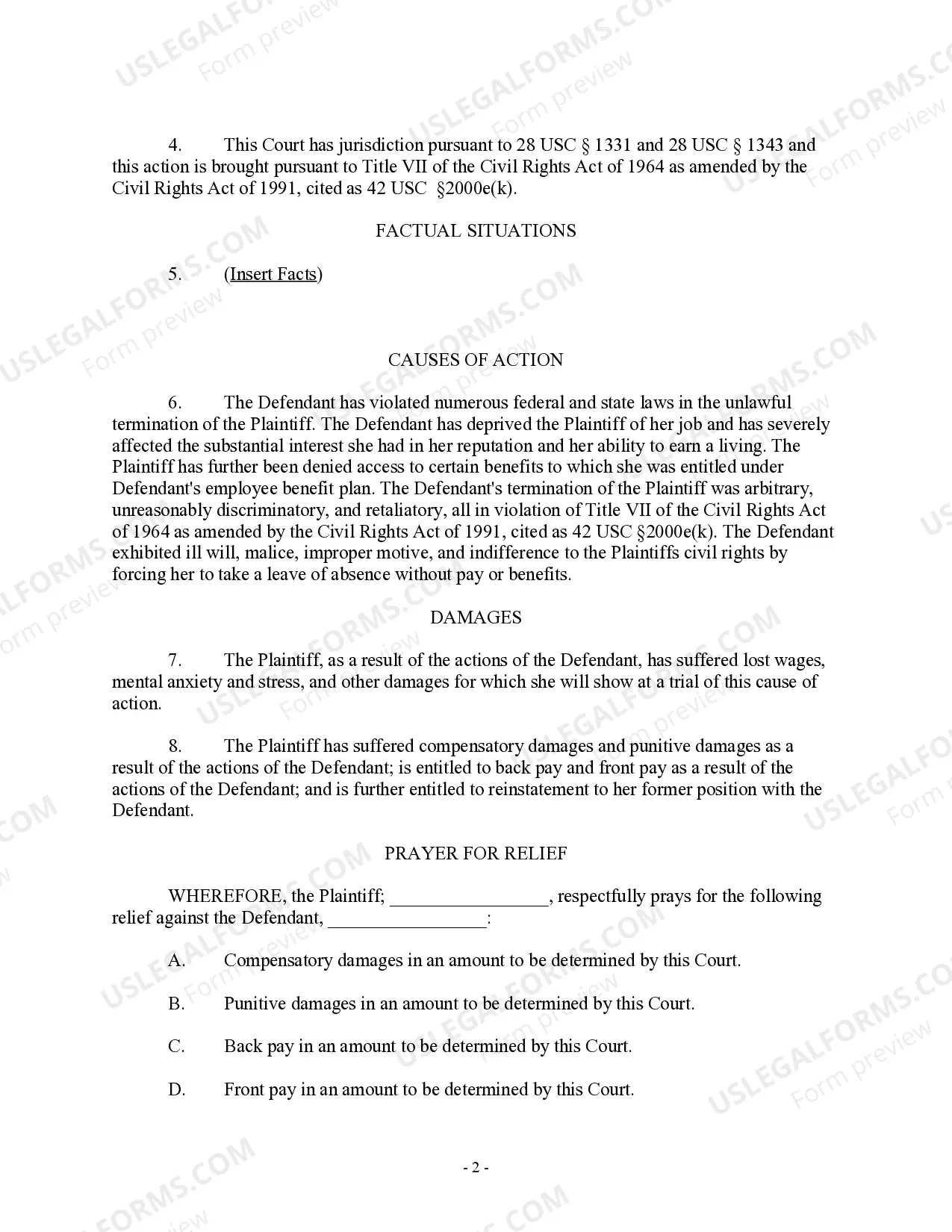
This is a multi-state form covering the subject matter of the title.
Wrongful Termination Court With At Will Employment In Cuyahoga
Category:
State:
Multi-State
County:
Cuyahoga
Control #:
US-000291
Format:
Word;
Rich Text
Instant download
Description
Free preview





Get your form ready online
Our built-in tools help you complete, sign, share, and store your documents in one place.
Built-in online Word editor
Make edits, fill in missing information, and update formatting in US Legal Forms—just like you would in MS Word.
Export easily
Download a copy, print it, send it by email, or mail it via USPS—whatever works best for your next step.
E-sign your document
Sign and collect signatures with our SignNow integration. Send to multiple recipients, set reminders, and more. Go Premium to unlock E-Sign.
Notarize online 24/7
If this form requires notarization, complete it online through a secure video call—no need to meet a notary in person or wait for an appointment.
Store your document securely
We protect your documents and personal data by following strict security and privacy standards.

Make edits, fill in missing information, and update formatting in US Legal Forms—just like you would in MS Word.

Download a copy, print it, send it by email, or mail it via USPS—whatever works best for your next step.

Sign and collect signatures with our SignNow integration. Send to multiple recipients, set reminders, and more. Go Premium to unlock E-Sign.

If this form requires notarization, complete it online through a secure video call—no need to meet a notary in person or wait for an appointment.

We protect your documents and personal data by following strict security and privacy standards.
Looking for another form?





Form popularity
FAQ
Key Exceptions to At-Will Employment Implied Contracts. An implied contract exists when an employer's words, actions, or policies create a reasonable expectation of continued employment. Public Policy Violations. Discrimination and Harassment. Retaliation. Fraud or Misrepresentation.
The exception to the employment-at-will doctrine, which occurs when an employer and employee form an implied contract even though there is no express, written instrument regarding the employment relationship, is called the: Public policy exception.
Common types of evidence that can help establish wrongful termination include: Communication such as emails, text messages, and direct messages. A timeline of events that led up to your termination – such as notes you have taken. Documentation, such as employee handbooks, employment contracts, and other documents.
In general: Jobs can end for any reason. Most employment in Ohio is “at will.” That means an employer can end your job any time for almost any reason, and you can leave your job any time for almost any reason. Some employees have more protections.
If your termination violates state or federal employment laws, it may be deemed wrongful. Common reasons for wrongful termination include discrimination based on race, gender, age, disability, religion, national origin, or sexual orientation.
Implied contract — Even if a contract is not in writing, the circumstances may imply a contract. In such cases, an at-will employment exception applies. Promissory estoppel — Promissory estoppel occurs when an employer makes a clear and unambiguous promise regarding employment that the employee reasonably relies upon.
Providing the proper evidence is essential when suing your former employer for wrongful termination in Ohio. With that in mind, you can further establish your case as an act of wrongful termination by doing the following: Documenting any communication with your employer, such as emails, digital messages, and letters.
Factors That Must be Present to Sue for Emotional Distress Your employer acted with ill intent or was reckless. Your emotional stress was very severe. The actions that were taken against you caused your emotional distress. The action that caused your distress was extreme, outrageous, or illegal.