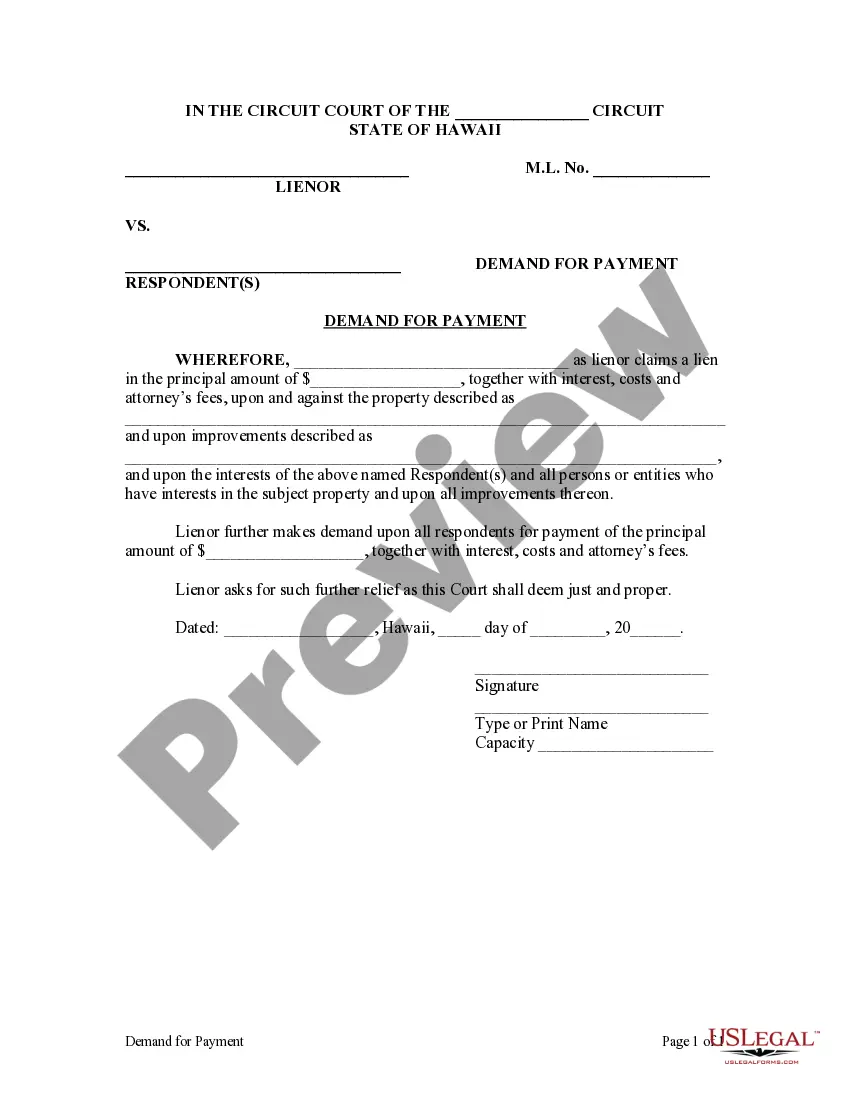
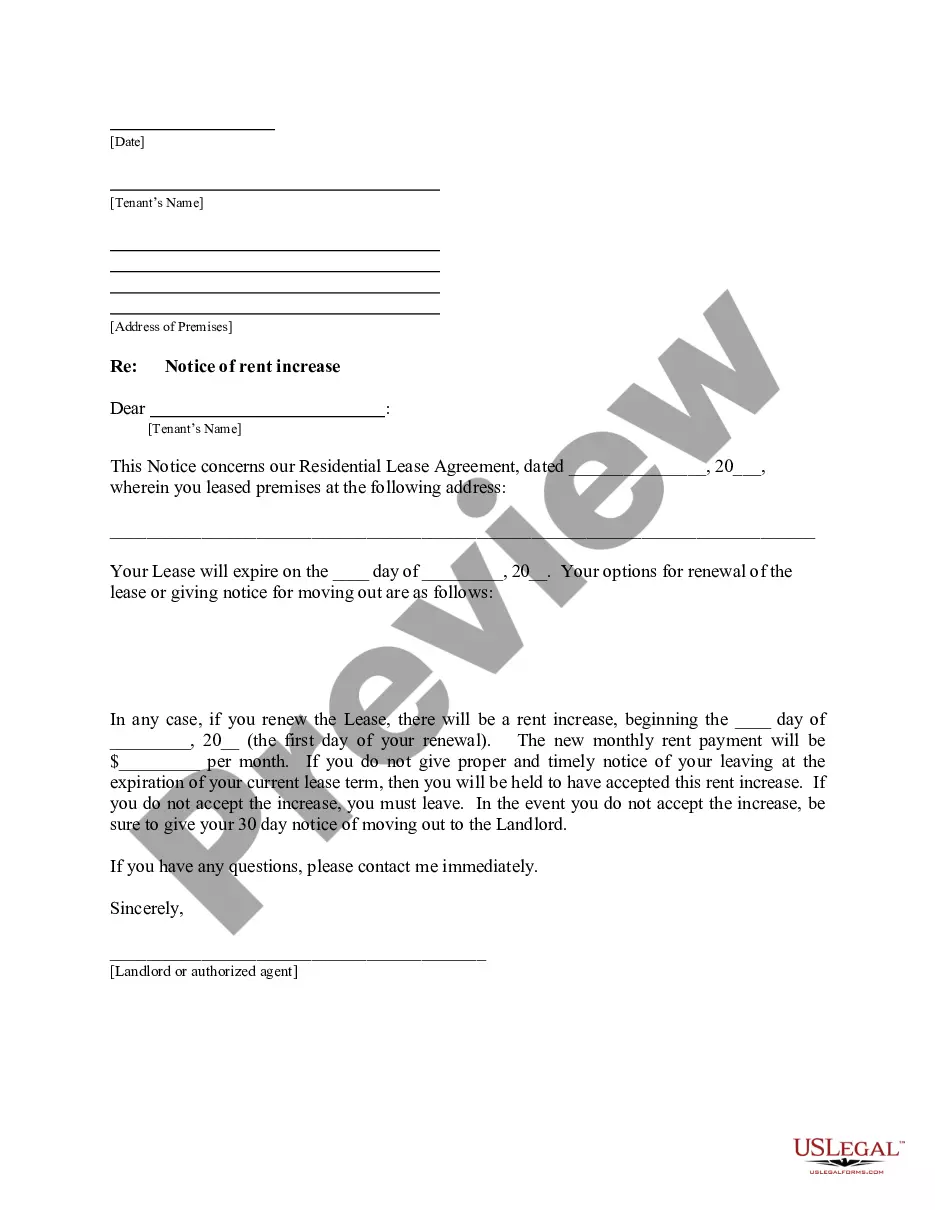
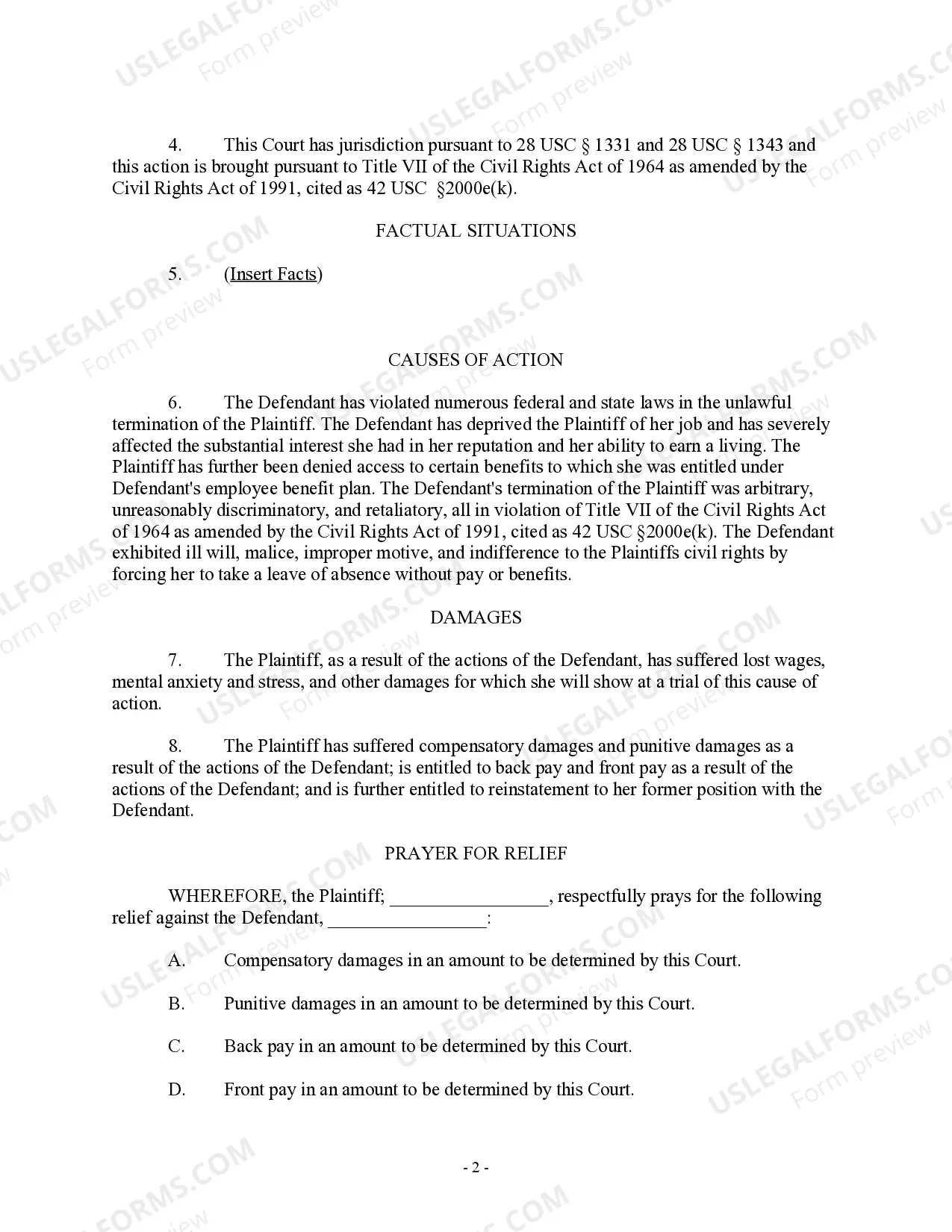
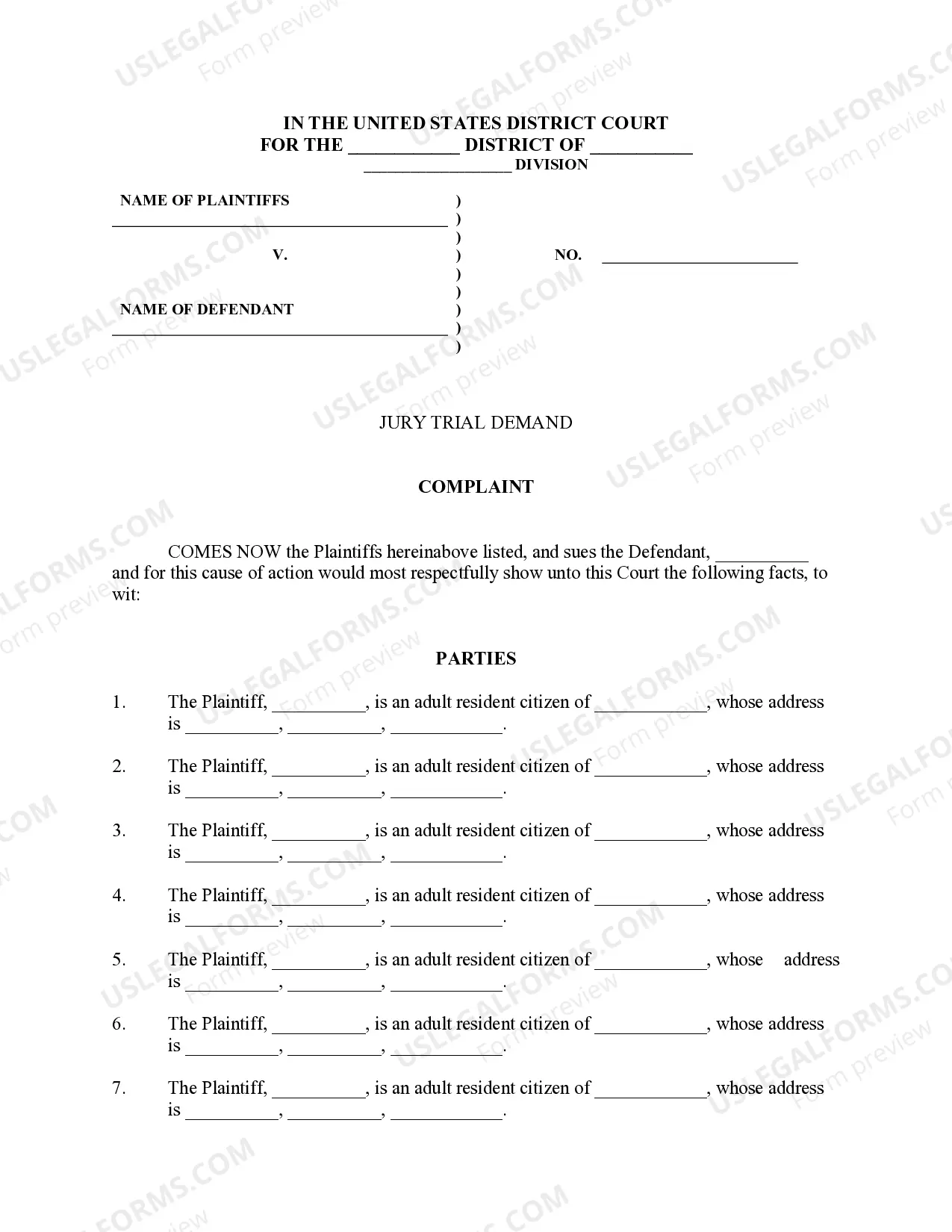
This is a multi-state form covering the subject matter of the title.
Wrongful Termination Court With Federal In Chicago
State:
Multi-State
Category:
City:
Chicago
Control #:
US-000291
Format:
Word;
Rich Text
99 downloads
Description
Free preview





Get your form ready online
Our built-in tools help you complete, sign, share, and store your documents in one place.
Built-in online Word editor
Make edits, fill in missing information, and update formatting in US Legal Forms—just like you would in MS Word.
Export easily
Download a copy, print it, send it by email, or mail it via USPS—whatever works best for your next step.
E-sign your document
Sign and collect signatures with our SignNow integration. Send to multiple recipients, set reminders, and more. Go Premium to unlock E-Sign.
Notarize online 24/7
If this form requires notarization, complete it online through a secure video call—no need to meet a notary in person or wait for an appointment.
Store your document securely
We protect your documents and personal data by following strict security and privacy standards.

Make edits, fill in missing information, and update formatting in US Legal Forms—just like you would in MS Word.

Download a copy, print it, send it by email, or mail it via USPS—whatever works best for your next step.

Sign and collect signatures with our SignNow integration. Send to multiple recipients, set reminders, and more. Go Premium to unlock E-Sign.

If this form requires notarization, complete it online through a secure video call—no need to meet a notary in person or wait for an appointment.

We protect your documents and personal data by following strict security and privacy standards.
Looking for another form?






Form popularity
FAQ
When you have a lawyer for a wrongful termination case the likelihood of receiving compensation is 64% and the likelihood of receiving compensation without a lawyer is 30%.
Wrongful termination cases can be difficult to win since the employee must provide evidence that their discharge was unlawful. Although assembling solid proof and hiring legal counsel improves the odds, employers frequently contend the dismissal was justified due to performance-related issues.
In Illinois, the Illinois Department of Human Rights enforces the state's discrimination laws. The first step is to file your case with the Equal Employment Opportunity Commission (EEOC). Once the case is considered, it can file a lawsuit on your behalf.
Precise statistics showing the win rates on wrongful termination cases each year compared to the overall number of wrongful termination lawsuits are hard to come by. Nevertheless, estimates range from as low as 30% of wrongful termination cases being successful to as high as 90% of cases succeeding.
What Can a Federal Employee Sue the Federal Government For? Wrongful termination and workplace discrimination are the most common lawsuits employees bring against their employers. Yes, you can sue the federal government for either of these reasons, though the process is different than with a private employer.
Wrongful termination cases can be difficult to win since the employee must provide evidence that their discharge was unlawful. Although assembling solid proof and hiring legal counsel improves the odds, employers frequently contend the dismissal was justified due to performance-related issues.
Although employers may legally let employees go from their jobs for no reason (when employment is “at will”), it is against federal and state laws to fire someone because of their race, ethnicity, country of origin, gender or sexual orientation, age and/or disability.
Many wrongful termination cases result in favorable outcomes for the employee, either through settlements or court verdicts. Successful cases can result in compensation for lost wages, damages for emotional distress, and even punitive damages in some instances.
A wrongful termination claim may arise when an employer terminates an employee for a reason that violates a clearly mandated public policy. Illinois common law recognizes a species of tort liability for wrongful termination or wrongful discharge known as retaliatory discharge.
When you have a lawyer for a wrongful termination case the likelihood of receiving compensation is 64% and the likelihood of receiving compensation without a lawyer is 30%.